
AIRWORTHINESS DIRECTIVE AD/CESSNA 170/79 Crew Seat Back Cylinder Lock Modification
Service Bulletins for the Cessna 170B
PDF, 2 pages, 24 KB, from Sprinkle’s own files.
What it covers
This document is an Airworthiness Directive (AD) issued by the Civil Aviation Safety Authority (CASA) of Australia, specifically addressing safety modifications required for the Cessna 170 and related models. The directive outlines necessary actions to be taken regarding the crew seat back cylinder lock assembly to prevent potential failures that could lead to unsafe conditions during flight. The AD applies to specific serial numbers of the Cessna 172R and 172S models, detailing compliance timelines based on the aircraft's time-in-service. The document is crucial for maintaining airworthiness and ensuring pilot and passenger safety.
Key points
- The AD applies to Cessna 170, 172, F172, FR172, and 175 series aircraft.
- Modification Kits MK172-25-10C must be installed if previous kits are not present.
- Compliance timelines vary based on aircraft time-in-service: 4 months for over 1,000 hours, 8 months for 501-1,000 hours, and 12 months for 0-500 hours.
- Inspection of installed modification kits is required within 30 days of the AD's effective date.
- Failure to comply may result in unsafe flight conditions.
Main sections
Applicability
The AD applies to Cessna 172R (Serial Numbers 17280001 through 17281262) and Cessna 172S (Serial Numbers 172S8001 through 172S9994). It specifies which aircraft require modifications to their crew seat back cylinder lock.
Requirement
The directive outlines two main requirements: 1) For aircraft without Modification Kits MK172-25-10A or MK172-25-10B, install Modification Kit MK172-25-10C or fabricate a steel lock rod/bar. 2) For aircraft with the aforementioned kits, perform an installation inspection and take corrective actions if discrepancies are found.
Compliance
Compliance timelines are specified based on the aircraft's time-in-service (TIS). For aircraft over 1,000 hours TIS, actions must be completed within 4 months; for 501 to 1,000 hours TIS, within 8 months; and for 0 to 500 hours TIS, within 12 months. Additional requirements for inspection and corrective actions are also detailed.
Background
The AD was prompted by reports of failures in the crew seat back cylinder lock assembly, which could lead to uncontrolled seat movement during flight. This could result in safety hazards, including abrupt pitch-up and difficulty exiting the aircraft.
Safety notes
- Failure of the crew seat back cylinder lock assembly could cause uncontrolled movement of the seat back during flight.
- Backward collapse of the crew seat could lead to abrupt pitch-up and difficulty exiting the aircraft.
The document’s text
Show the text read from the PDF
COMMONWEALTH OF AUSTRALIA (Civil Aviation Safety Regulations 1998), PART 39 - 105 CIVIL AVIATION SAFETY AUTHORITY SCHEDULE OF AIRWORTHINESS DIRECTIVES Page 1 of 2 AIRWORTHINESS DIRECTIVE For the reasons set out in the background section, the CASA delegate whose signature appears below issues the following Airworthiness Directive (AD) under subregulation 39.001(1) of CASR 1998. The AD requires that the action set out in the requirement section (being action that the delegate considers necessary to correct the unsafe condition) be taken in relation to the aircraft or aeronautical product mentioned in the applicability section: (a) in the circumstances mentioned in the requirement section; and (b) in accordance with the instructions set out in the requirement section; and (c) at the time mentioned in the compliance section. Cessna 170, 172, F172, FR172 and 175 Series Aeroplanes AD/CESSNA 170/79 Crew Seat Back Cylinder Lock Modification 5/2007 DM Applicability: Cessna 172R (Serial Numbers 17280001 through 17281262) and Cessna 172S (Serial Numbers 172S8001 through 172S9994). Requirement: 1) Aeroplanes that do not have Modification Kit MK172-25-10A or Modification Kit MK172-25-10B installed, for each crew seat (pilot and copilot), install Modification Kit MK172-25-10C or fabricate and install a steel lock rod/bar. Follow Cessna Single Engine Service Bulletin SB04-25-01, Revision 4, dated December 26, 2006, for installing Modification Kit MK172-25-l0C, or, follow Cessna Single Engine Service Bulletin SB04-25-02, Revision 1, dated October 17, 2005, or Revision 2, dated June 5, 2006, for fabricating and installing a steel lock rod/bar. 2) Aeroplanes that have Modification Kit MK172-25-10A or Modification Kit MK172-25-10B installed: (i) For each crew seat (pilot and co-pilot), perform an installation inspection in accordance with Cessna Single Engine Service Bulletin SB04-25-01, Revision 4, dated 26 December 2006. (ii) If you do not find any discrepancies during the inspection required in paragraph (2)(i) of this AD, make a log book entry showing compliance with this AD and no further action is required. (iii) If you find discrepancies during the inspection required in paragraph (2)(i) of this AD, make all necessary corrective actions in accordance with Cessna Single Engine Service Bulletin SB04-25-01, Revision 4, dated 26 December 2006. Note: FAA AD 2007-05-10 Amdt 39-14971 and Cessna Service Bulletins SB04-25-01 and SB04-25-02 refer. Compliance: 1) For aeroplanes over 1,000 hours time-in-service (TIS) on the effective date of this AD, perform the action within the next 4 months after the effective date of this AD; or For aeroplanes from 501 to 1,000 hours TIS on the effective date of this AD, perform the action within the next 8 months after the effective date of this AD; or -- 1 of 2 -- COMMONWEALTH OF AUSTRALIA (Civil Aviation Safety Regulations 1998), PART 39 - 105 CIVIL AVIATION SAFETY AUTHORITY SCHEDULE OF AIRWORTHINESS DIRECTIVES Cessna 170, 172, F172, FR172 and 175 Series Aeroplanes AD/CESSNA 170/79 (continued) Page 2 of 2 For aeroplanes from 0 to 500 hours TIS on the effective date of this AD, perform the action within the next 12 months after the effective date of this AD. 2) For aeroplanes meeting Requirement 2: (i) Within the next 30 days after the effective date of this AD. (ii) Before further flight after the inspection required in paragraph 2(i) of this AD. (iii) Before further flight after the inspection required in paragraph 2(i) of this AD. This Airworthiness Directive becomes effective on 11 April 2007. Background: This AD results from reports of the crew seat back cylinder lock assembly failing at the aft end area and other cylinder lock assemblies found cracked. The actions specified in this AD are intended to prevent the crew seat cylinder lock assembly from bending, cracking, or failing. This failure could cause uncontrolled movement of the seat back, resulting in possible backward collapse during flight. Backward collapse of either crew seat back could result in an abrupt pitch-up if the affected crew member continues to hold on to the control yoke during this failure and could cause difficulty in exiting the airplane from an aft passenger seat after landing. David Villiers Delegate of the Civil Aviation Safety Authority 9 March 2007 -- 2 of 2 --
Read from the PDF by machine, so tables and diagrams come out rough. The PDF is the document.
More Cessna 170B documents
All 28 →- Service Bulletin: SB-001 Rev C
This Service Bulletin (SB-001 Rev C) issued by Stratus Tool Technologies addresses mandatory inspections and maintenance procedures for oil filter adapters used in various Continental aircraft engines, including the Cessna 170. The bulletin emphasizes the importance of proper installation and maintenance to prevent oil leaks that could lead to engine power loss. It outlines specific compliance instructions that must be completed within a defined timeframe, ensuring that aircraft owners and operators maintain their aircraft in accordance with the latest safety standards. The document serves as a critical reference for mechanics and pilots to ensure the integrity of the oil filter adapter system.
- Airworthiness Directive Schedule Aeroplanes Cessna 170 Series
This document is an Airworthiness Directive (AD) schedule for the Cessna 170 series aircraft, specifically applicable to the Cessna 170A and 170B models. Issued on June 30, 2011, it outlines mandatory inspections, modifications, and compliance requirements to ensure the safety and airworthiness of these aircraft. The document includes specific directives related to various components and systems, such as the windshield, mainplane rear spar, fuel system, and shoulder harnesses. Each directive specifies the applicability, requirements, compliance timelines, and effective dates, ensuring that operators maintain their aircraft in accordance with regulatory standards.
- AIRWORTHINESS DIRECTIVE AD/CESSNA 170/78 Amdt 1
This document is an Airworthiness Directive (AD) issued by the Civil Aviation Safety Authority (CASA) of Australia, specifically addressing safety concerns related to the Cessna 170 and 172 series aircraft. The directive outlines mandatory inspections and corrective actions required to ensure the airworthiness of these aircraft, particularly focusing on the flexible fuel hose end fittings. The AD is applicable to specific serial numbers of the Cessna 172R and 172S models, detailing the necessary inspection procedures and compliance timelines. The intent is to prevent potential in-flight engine failures due to loose fuel lines, which could lead to loss of engine power or fire hazards. Pilots and maintenance personnel are advised to adhere strictly to the outlined requirements to maintain safety standards.
- Airworthiness Directives; Cessna Models 170A, 170B, 172, 172A through 172P, 175, 175A, 175B, 175C, P172D and R172E (USAF T-41B) Airplanes
This document outlines an Airworthiness Directive (AD) issued by the FAA, applicable to various Cessna aircraft models, including the Cessna 170B. The directive mandates a one-time inspection and potential modification of the engine crankcase breather tube to prevent blockage due to ice. The AD is crucial for ensuring the safety and airworthiness of the affected aircraft, as ice blockage could lead to increased crankcase pressure, resulting in oil loss and engine failure. Compliance is required within specified timeframes to mitigate risks associated with this condition.
Service Bulletins · 1982PDF · 5 pages · 1.5 MB of Airworthiness Directives; Cessna Models 170A, 170B, 172, 172A through 172P, 175, 175A, 175B, 175C, P172D and R172E (USAF T-41B) Airplanes, opens in a new tabRequest removal of Airworthiness Directives; Cessna Models 170A, 170B, 172, 172A through 172P, 175, 175A, 175B, 175C, P172D and R172E (USAF T-41B) Airplanes - Weight & Balance for CESSNA 170B
This Service Newsletter provides critical information regarding the balancing of flight control surfaces for various Cessna models, including the 170B. It supersedes previous newsletters and offers updated instructions for using the flight control surface balancing fixture. The newsletter emphasizes the importance of adhering to established procedures and government regulations to ensure safety and effectiveness in balancing control surfaces. It includes specific instructions for balancing ailerons with piano-type hinges and provides a table of limits and specifications for control surface balancing on models including the 170B. The balancing process is essential for maintaining aircraft control and performance, and this document serves as a valuable resource for technicians and maintenance personnel.
- CESSNA 170B Model Guide
The CESSNA 170B is a single-engine piston, tailwheel, high-wing airplane. The New Zealand type acceptance report describes it as a four-seat, all-metal light aeroplane built from 1952 to 1956, originally known as the Model 171. The library data gives a Continental O-300 of 145 hp, a 100 kt cruise, 500 nm of range and 40 gal of fuel. Because it is a tailwheel airplane from the 1950s, a buyer should focus on the age-related airworthiness directives, the tailwheel bracket and the fuel system.
- Cessna 170 & C305A (USAF O‐1A) T3 Tailwheel Suspension System Installation Instructions
This document provides installation instructions for the T3 Tailwheel Suspension System (P/N ABI-51525) specifically designed for the Cessna 170 series and Cessna 305A (USAF O-1A). It is intended for qualified maintenance personnel responsible for the installation and airworthiness of the tailwheel suspension system. The manual outlines the necessary procedures for replacing the existing tail spring with the new suspension system, including detailed steps for installation and weight and balance considerations. It also includes information on the components of the kit and the importance of maintaining the system for optimal performance.
- Instructions for Continued Airworthiness
This document provides instructions for the continued airworthiness of McFarlane Aviation's PMA Fuel Selector Valve assemblies, specifically designed for various Cessna aircraft including the Cessna 170B. It outlines the installation, maintenance, and inspection procedures necessary to ensure the proper functioning of the fuel selector valve. The document is intended for aircraft maintenance personnel and provides detailed steps for disassembly, inspection, assembly, and testing of the fuel selector valve. It emphasizes the importance of adhering to specified torque values and inspection criteria to maintain safety and compliance with FAA regulations.
Cessna 170 for sale now
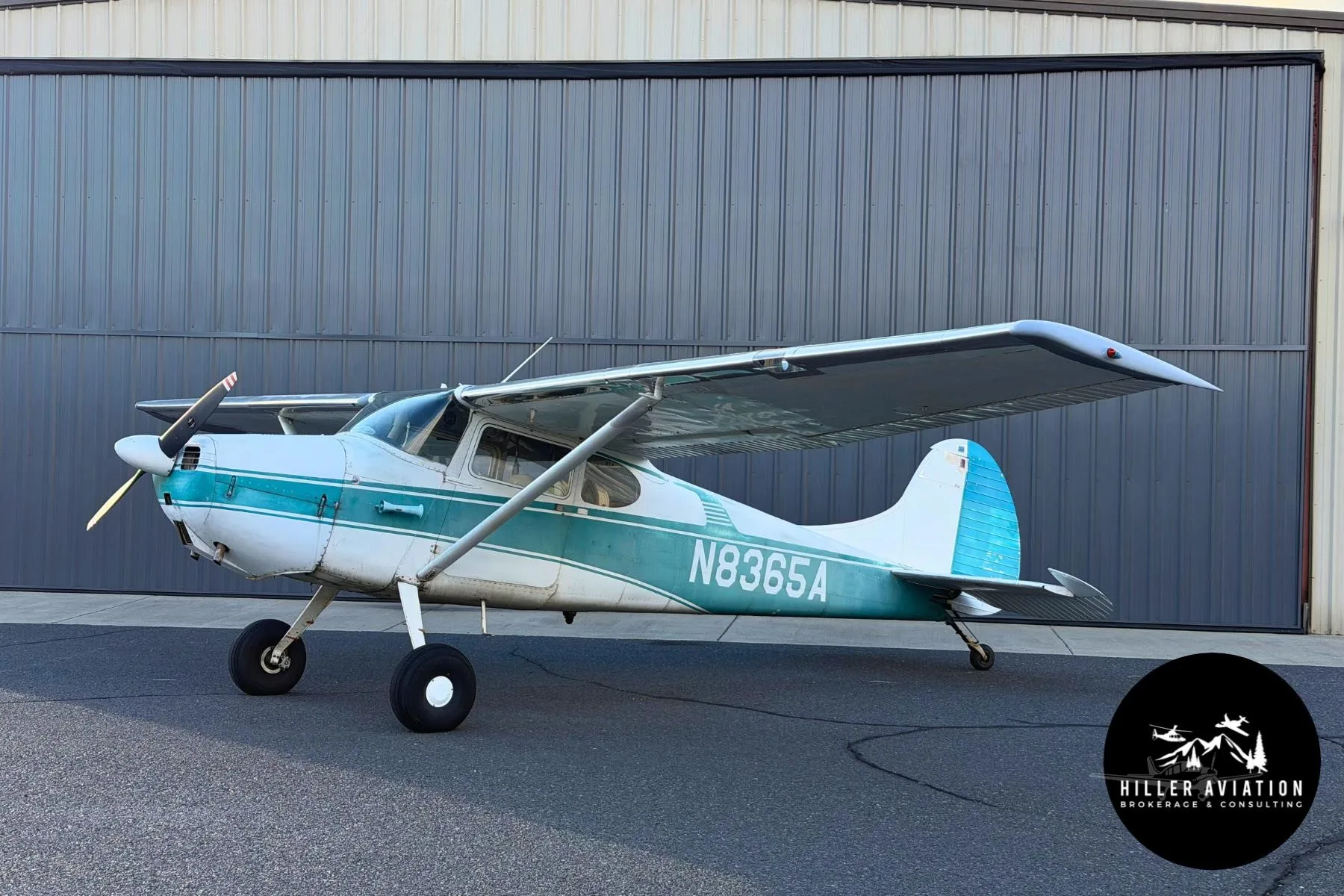
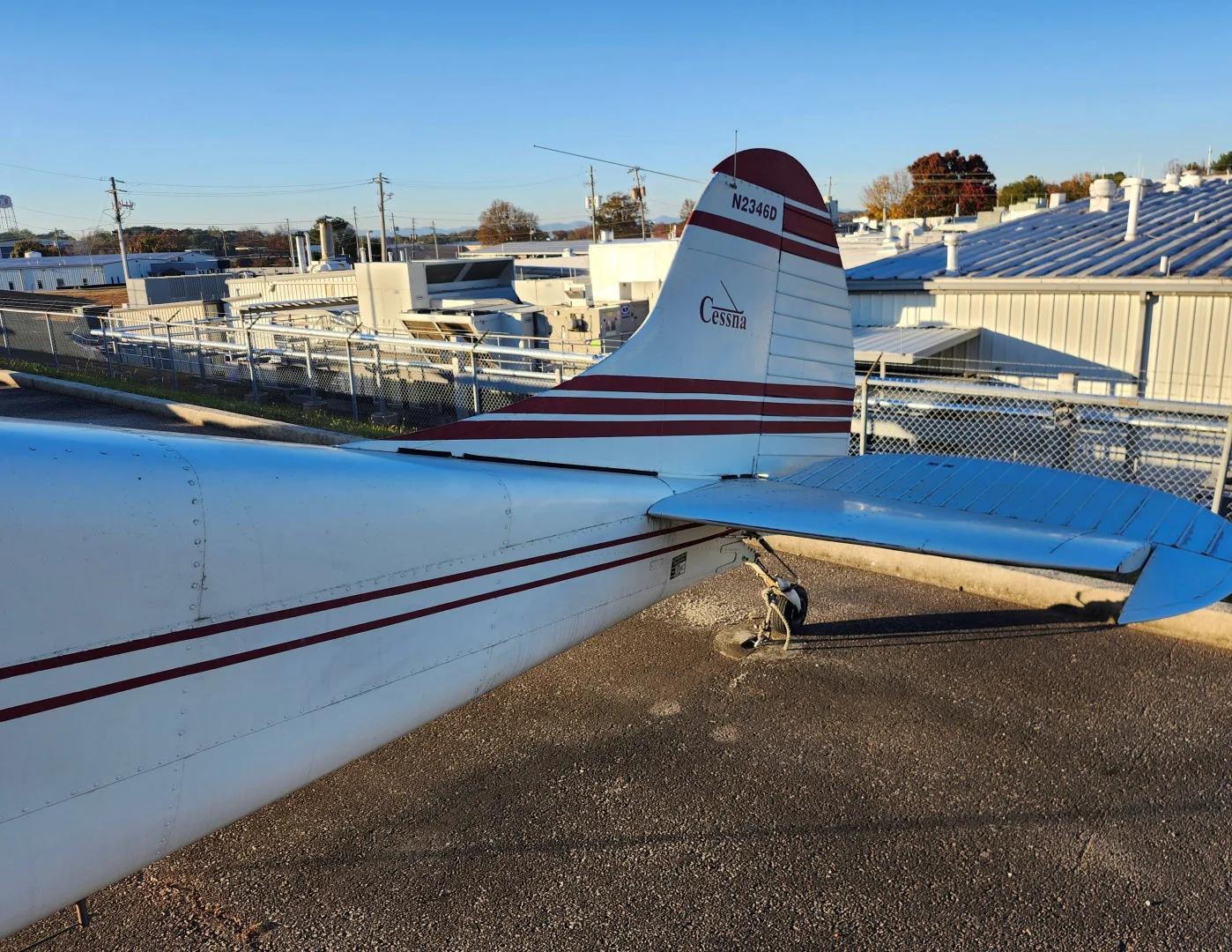
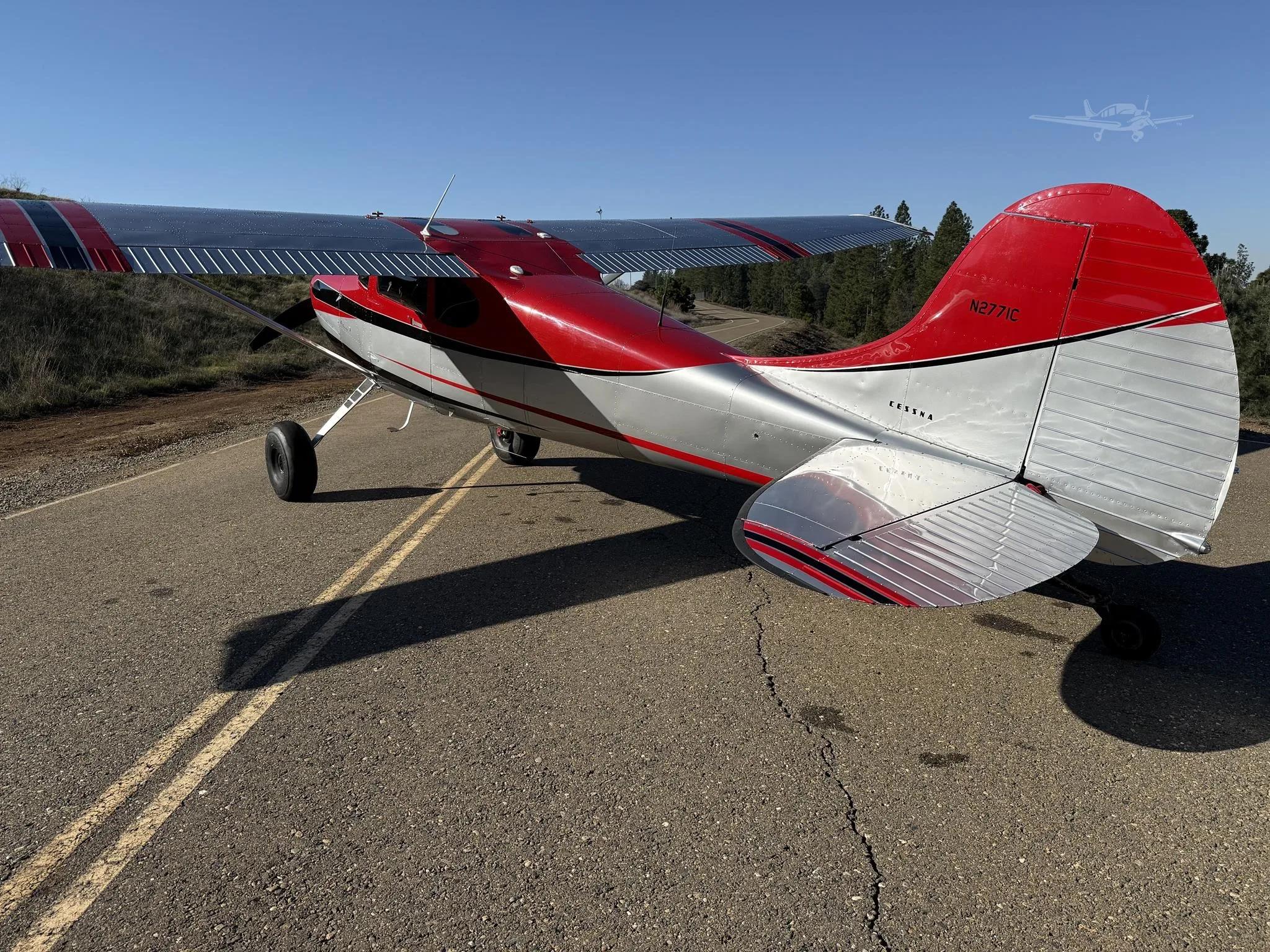
View all 4 for sale →Aircraft that this service bulletins covers, listed on the sites Sprinkle reads. Asking prices, not sales. Cessna 170 asking prices by year built.
Also useful for the Cessna 170B
From Sprinkle’s library of aircraft documents. PDFs open from Sprinkle’s own files. Read Apr 15, 2026.
Want this document taken down? Request removal