Cessna 175 Skylark Model Guide
Cessna 175 Skylark · Model Guide
Overview
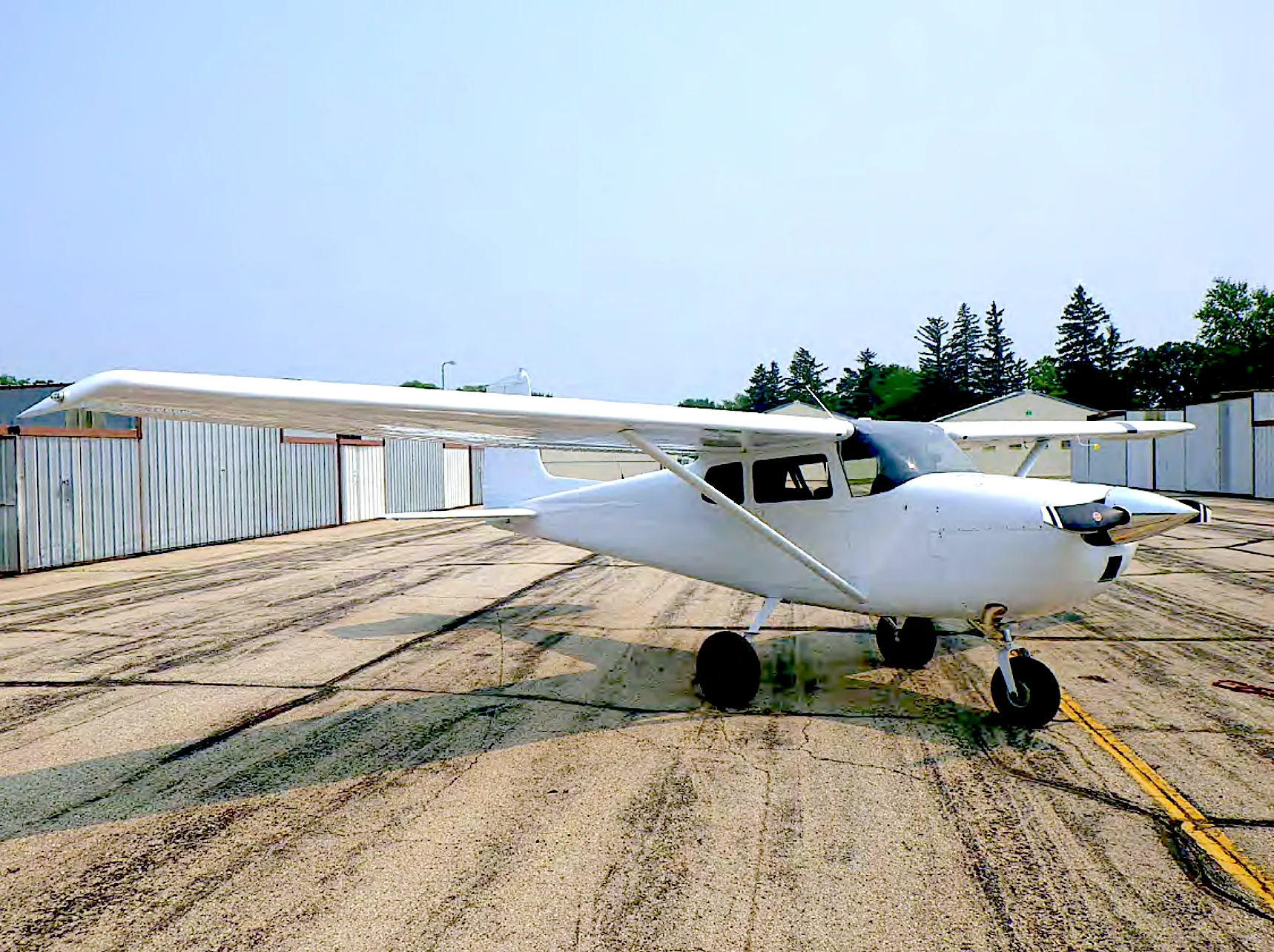
The Cessna 175 Skylark is a high-wing, all-metal, four-seat single with fixed landing gear, built from 1958 to 1962 as the 175, 175A, 175B and 175C. It is essentially a Cessna 172 with a geared 175 hp Continental GO-300 engine in a redesigned cowling. It did not prove popular and was produced for only four years.
- Geared Continental GO-300 makes 175 hp at 3,200 rpm, against 145 hp for the Cessna 172 Skyhawk. Fuel capacity is 52 gal, about 43 usable.
- Maximum weight is 2350 lbs for the 175, 175A and 175B landplane and 2450 lbs for the 175C. Baggage limit is 120 lbs.
- Fuel management shows up in the accident reports: a 175C ran out of fuel, and a 175B owner saw fuel drawn from only one tank. Check tanks, selector and gauges.
- The family is listed at up to 118 kt cruise, 510 nm range and a 16,000 ft ceiling. Treat these as family maxima, not figures for one variant.
Summary written by AI from the source document. Check the original before relying on it. See which parts of Sprinkle are written by AI.
Reference only, not for flight. Use the current approved manual for your aircraft. See terms, section 5.
Document
Source
Copy found at sprinkle.com. Sprinkle hosts a reference copy with an added summary, specifications and searchable full text.
Document details
- Type ·
- Model Guide
- Year ·
- 2026
- File size ·
- 49 KB
- Copy found at ·
- sprinkle.com
Specifications & performance
Extracted from this document.
Specifications
- Engine power (hp) ·
- 175
- Max baggage (lb) ·
- 120
- Usable fuel (gal) ·
- 43
- Fuel capacity (gal) ·
- 52
- Max takeoff weight (lb) ·
- 2,350
Performance
- Fuel burn (gph) ·
- 10
- Landing ground roll (ft) ·
- 590
- Landing distance over 50ft (ft) ·
- 1,155
V-speeds
- MANEUVERING_SPEED_KTS ·
- 107
- NEVER_EXCEED_SPEED_KTS ·
- 153
- FLAPS_EXTENDED_SPEED_KTS ·
- 87
- MAX_STRUCTURAL_CRUISING_SPEED_KTS ·
- 122
Weight & balance
- Max baggage (lb) ·
- 120
- Fuel capacity (gal) ·
- 52
- Max takeoff weight (lb) ·
- 2,350
- Max takeoff weight 175c (lb) ·
- 2,450
What engine does the Cessna 175 Skylark use?
The Cessna 175 Skylark uses a geared Continental GO-300 (A, C, D or E, depending on variant) rated at 175 hp at 3,200 rpm. It runs on 80/87 minimum grade fuel.
How much can the Cessna 175 Skylark carry?
The Cessna 175 Skylark seats 4 and allows 120 lbs of baggage. Maximum weight is 2350 lbs for the 175, 175A and 175B landplane, and 2450 lbs for the 175C. Fuel capacity is 52 gal.
How many Cessna 175 Skylark aircraft were built?
The file gives no production count. It says the Cessna 175 Skylark did not prove popular and was built for only four years, from 1958, in four versions: 175, 175A, 175B and 175C.
What are the key speed limits of the Cessna 175 Skylark?
For the 175, 175A and 175B: maneuvering 107 kt, maximum structural cruising 122 kt, never exceed 153 kt and flaps extended 87 kt. The 175C maneuvering speed is 109 kt.
What is the Cessna 175 Skylark Model Guide?
The Cessna 175 Skylark Model Guide is a model guide for the Cessna 175 Skylark, dated 2026.
What year was the Cessna 175 Skylark Model Guide published?
The Cessna 175 Skylark Model Guide — the Cessna 175 Skylark model guide on file — is dated 2026.
Common. More common than 96% of the aircraft models we track.
Most owners only have the POH. Here's the essential set for the Cessna 175 Skylark.
- Pilot's Operating Handbook / AFM
- Checklist
- Maintenance Manual
- Parts Catalog (IPC)
- Systems & Wiring
- Service Bulletins on file
- Type Certificate (TCDS)
Cessna 175 Skylark for sale now

Free — save the 175 to your watchlist and track it in one place.
More Cessna 175 Skylarkmanuals & documents
- Cessna 175 Skylark Training ManualTraining Manual
- Type Acceptance Report TAR 95/14 – Cessna 175/R172K/172RGOther Documents
- AAIB Bulletin No: 4/2004Service Bulletins
- TYPE CERTIFICATE DATA SHEET NO. 3A17Type Certificate
- Emergency Procedures for the Cessna 175 SkylarkEmergency Procedures
- Cessna 175B Skylark, G-ARFLOther Documents
- Cessna 175 Skylark Parts CatalogParts Catalog
- General Aviation/Business Aircraft Application ChartsFlight Manual
- Garmin Supplemental ManualTraining Manual
- Service BulletinService Bulletins
Related documents
- CESSNA 182F Skylane Model GuideCESSNA 182F Skylane · Model Guide
- CESSNA 175 Model GuideCESSNA 175 · Model Guide
- Cessna 182 Skylane Model GuideCessna 182 Skylane · Model Guide
- CESSNA 182D Skylane Model GuideCESSNA 182D Skylane · Model Guide
- Cessna R182 Skylane RG Model GuideCessna R182 Skylane RG · Model Guide
If you fly the Cessna 175 Skylark, you may also be researching these.


In this document
Fuel, engine and loading
Fuel is two 26 gal wing tanks, 52 gal total. Usable fuel is 43 gal on the 175, 42 gal on the 175A/B and 41.5 gal on the 175C. Minimum fuel grade is 80/87. Oil capacity is 10 qt, 3 qt of it unusable. One accident report estimated about 10 US gph, with ground speeds of 100 to 105 kt. The propeller may be fixed pitch or constant speed.
Handling and landing
Wings-level stall speeds from the owner's manual: 60 mph flaps up, 56 mph at 20° and 51 mph at 40°. Approach speed with 40° flap is 54 mph at 1,700 lbs and 63 mph at 2,350 lbs. Landing over 50 ft at maximum weight is 1,155 ft, 590 ft of it ground roll. Adding power with flaps down gives a strong nose-up pitch. The investigator noted that go-arounds are easier with 30° flap than 40°.
What to check when buying
Confirm the exact variant (175, 175A, 175B or 175C), since weight, usable fuel and engine suffix differ. Test both fuel tanks, the selector and the gauges. Inspect the nose gear: a 175C's nose leg separated at the firewall after a rough-field landing. Tires are 6.00-6 (4 ply) on the main wheels and 5.00-5 (4 ply) on the nose wheel. Check these with the manufacturer.
Safety notes
- A 175C lost power with the left fuel gauge fluctuating to empty. The pilot concluded he had run out of fuel. Verify fuel quantity physically, not just by gauge.
- Go-around with full nose-up trim, power and flaps down caused an uncontrollable nose-up pitch in a 175B. Anticipate the pitch change and trim carefully.
- Fuel may drain from the vent if the aircraft is parked on a slope. One 175A report estimated about 5 US gallons lost this way, so re-check fuel quantity before flight.
Full document text
Cessna 175 Skylark Model Guide The Cessna 175 Skylark is a high-wing, all-metal, four-seat single with fixed landing gear, built from 1958 to 1962 as the 175, 175A, 175B and 175C. It is essentially a Cessna 172 with a geared 175 hp Continental GO-300 engine in a redesigned cowling. It did not prove popular and was produced for only four years. • Geared Continental GO-300 makes 175 hp at 3,200 rpm, against 145 hp for the Cessna 172 Skyhawk. Fuel capacity is 52 gal, about 43 usable. • Maximum weight is 2350 lbs for the 175, 175A and 175B landplane and 2450 lbs for the 175C. Baggage limit is 120 lbs. • Fuel management shows up in the accident reports: a 175C ran out of fuel, and a 175B owner saw fuel drawn from only one tank. Check tanks, selector and gauges. • The family is listed at up to 118 kt cruise, 510 nm range and a 16,000 ft ceiling. Treat these as family maxima, not figures for one variant. Fuel, engine and loading Fuel is two 26 gal wing tanks, 52 gal total. Usable fuel is 43 gal on the 175, 42 gal on the 175A/B and 41.5 gal on the 175C. Minimum fuel grade is 80/87. Oil capacity is 10 qt, 3 qt of it unusable. One accident report estimated about 10 US gph, with ground speeds of 100 to 105 kt. The propeller may be fixed pitch or constant speed. Handling and landing Wings-level stall speeds from the owner's manual: 60 mph flaps up, 56 mph at 20° and 51 mph at 40°. Approach speed with 40° flap is 54 mph at 1,700 lbs and 63 mph at 2,350 lbs. Landing over 50 ft at maximum weight is 1,155 ft, 590 ft of it ground roll. Adding power with flaps down gives a strong nose-up pitch. The investigator noted that go-arounds are easier with 30° flap than 40°. What to check when buying Confirm the exact variant (175, 175A, 175B or 175C), since weight, usable fuel and engine suffix differ. Test both fuel tanks, the selector and the gauges. Inspect the nose gear: a 175C's nose leg separated at the firewall after a rough-field landing. Tires are 6.00-6 (4 ply) on the main wheels and 5.00-5 (4 ply) on the nose wheel. Check these with the manufacturer. Safety notes: • A 175C lost power with the left fuel gauge fluctuating to empty. The pilot concluded he had run out of fuel. Verify fuel quantity physically, not just by gauge. • Go-around with full nose-up trim, power and flaps down caused an uncontrollable nose-up pitch in a 175B. Anticipate the pitch change and trim carefully. • Fuel may drain from the vent if the aircraft is parked on a slope. One 175A report estimated about 5 US gallons lost this way, so re-check fuel quantity before flight.