CESSNA 175 Model Guide
CESSNA 175 · Model Guide
Overview
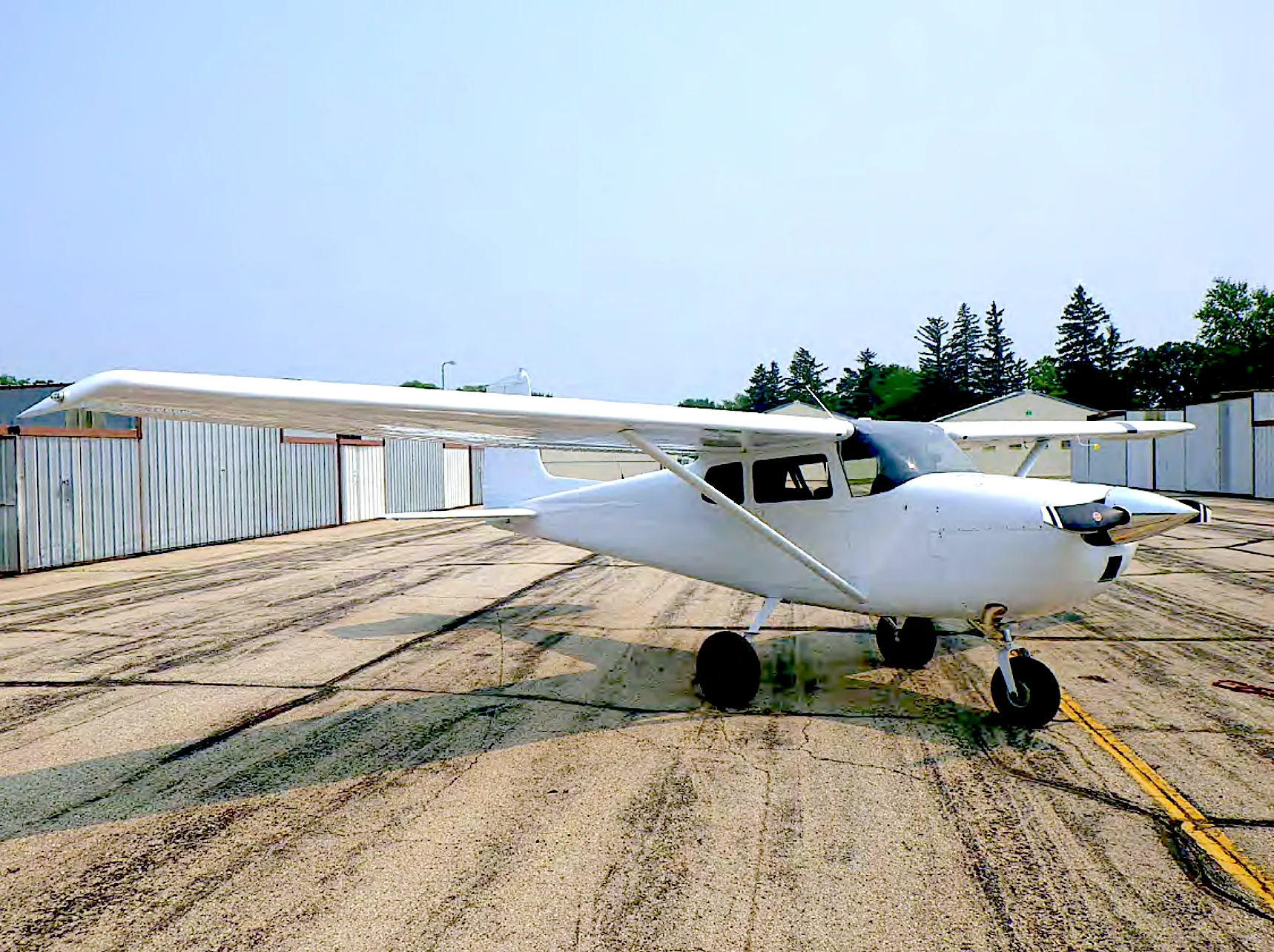
The CESSNA 175 is a single-engine piston Cessna. Its registry family covers the 175, 175A, 175B and 175C. Family figures reach up to 4 passengers, 118 kt cruise, 510 nm range and a 16000 ft ceiling. The inputs give no production years or standard factory specs, so check any airplane against its logs and papers.
- Family figures (175 to 175C, up to): 4 passengers, 118 kt cruise, 510 nm range, 16000 ft ceiling, 1000 kg MTOW.
- Check AD compliance: fuel tank venting (AD 79-10-14 R1), nose gear forks, seat tracks, shoulder harness and static selector items.
- Modified examples exist. One 1958 listing has a 230 hp engine conversion, STOL kit, float kit and 76 gal fuel.
- Support exists for floats (Wipaire 2350 parts manual) and for autopilot installs (TruTrak Vizion covers the 175).
Summary written by AI from the source document. Check the original before relying on it. See which parts of Sprinkle are written by AI.
Reference only, not for flight. Use the current approved manual for your aircraft. See terms, section 5.
Document
Source
Copy found at sprinkle.com. Sprinkle hosts a reference copy with an added summary, specifications and searchable full text.
Document details
- Type ·
- Model Guide
- Year ·
- 2026
- File size ·
- 50 KB
- Copy found at ·
- sprinkle.com
Specifications & performance
Extracted from this document.
Specifications
- Example listing engine (hp) ·
- 230
- Example listing fuel capacity (gal) ·
- 76
Performance
- Family max range (nm) ·
- 510
- Family max cruise speed (kt) ·
- 118
- Family max service ceiling (ft) ·
- 16,000
Weight & balance
- Example listing useful load (lb) ·
- 862.7
- Example listing gross weight (lb) ·
- 2,450
How many people does the CESSNA 175 carry?
The registry shows up to 4 passengers across the CESSNA 175 family (175, 175A, 175B, 175C). The 1958 example listing describes a 4-place interior.
What cruise speed and range can I expect from the CESSNA 175?
Family-level maxima for the CESSNA 175 are 118 kt cruise, 510 nm range and a 16000 ft service ceiling. These are the highest values across variants, not figures for one airplane.
Which ADs should I check on a CESSNA 175?
For a CESSNA 175, check fuel tank venting (AD 79-10-14 R1), nose gear forks, seat tracks, shoulder harness adjusters, mufflers and the alternate static source selector. Each should have its own log entry.
What is the CESSNA 175 Model Guide?
The CESSNA 175 Model Guide is a model guide for the CESSNA 175, dated 2026.
What year was the CESSNA 175 Model Guide published?
The CESSNA 175 Model Guide — the CESSNA 175 model guide on file — is dated 2026.
Common. More common than 96% of the aircraft models we track.
Most owners only have the POH. Here's the essential set for the CESSNA 175.
- Pilot's Operating Handbook / AFM
- Checklist
- Maintenance Manual
- Parts Catalog (IPC)
- Systems & Wiring
- Service Bulletins on file
- Type Certificate (TCDS)
CESSNA 175 for sale now

Free — save the 175 to your watchlist and track it in one place.
More CESSNA 175manuals & documents
- PARTS MANUAL FOR WIPLINE MODEL 2100 FLOATS ON CESSNA 172 & 175Wiring Diagrams
- PARTS MANUAL FOR WIPLINE MODEL 2350 FLOATS ON CESSNA 172 & 175 SERIESWiring Diagrams
- SERVICE LETTER 228Service Manual
- Vizion Install Appendix C C175/C172Wiring Diagrams
- Airworthiness Directive Schedule Aeroplanes Cessna 175 SeriesService Bulletins
- Airworthiness Directives; CESSNA Models 140A, 150, A150, 170, 172, 175, P172D, R172, 177, 180, 182, 185, A185, 188, A188, 205, 206, U206, TU206, P206, TP206, 207, T207, 210, T210, 336, 337, T337, M337B Series AirplanesAirworthiness Directives
- PART 39— AIRWORTHINESS DIRECTIVES Cessna Series AirplanesAirworthiness Directives
- 1958 Cessna 175 SpecificationsSpecifications
- Instructions for Continued AirworthinessSystems Description
If you fly the CESSNA 175, you may also be researching these.


In this document
What a real listing shows
One 1958 CESSNA 175 listing shows 2450 lbs gross weight and 862.7 lbs useful load. It has 1540.5 hours airframe time and a Continental O-470-R, 230 hp, with 141.5 SMOH. The engine was torn down in 2017 after metal in the oil from a failed starter adapter. The prop overhaul entry is missing from the books. The seller tells the buyer to verify all times and equipment.
Airworthiness directives to verify
AD 79-10-14 R1 applies to the CESSNA 175 and requires vented fuel caps within 100 hours of its effective date, with a log entry. The New Zealand AD schedule also lists FAA ADs on mufflers, nose gear fork cracks, seat tracks, shoulder harness adjusters, the fuel selector valve cam and the alternate static source selector. Confirm each is logged separately.
Doors, floats and upgrades
Both the 172 and the CESSNA 175 have two cabin doors, each on two hinges. Original Cessna hinge pins are not reusable, and McFarlane makes PMA hinges with reusable pins. Wipaire 2350 floats have a parts manual that covers the 175. Service Letter 228 offers an optional replacement for discontinued hydraulic pumps on 2100A and 2350A floats. TruTrak publishes a Vizion autopilot install for the 175.
Safety notes
- AD 79-10-14 R1: confirm vented fuel caps are fitted and the compliance entry is in the maintenance records.
- Early-type nose gear forks must be replaced at 1,500 hours total time under the 1971 AD amendment. Check the fork type and the logs.
- Shoulder harness adjusters: inspect for a retainer spring per FAA AD 2004-19-01 and look for the log entry.
Full document text
CESSNA 175 Model Guide The CESSNA 175 is a single-engine piston Cessna. Its registry family covers the 175, 175A, 175B and 175C. Family figures reach up to 4 passengers, 118 kt cruise, 510 nm range and a 16000 ft ceiling. The inputs give no production years or standard factory specs, so check any airplane against its logs and papers. • Family figures (175 to 175C, up to): 4 passengers, 118 kt cruise, 510 nm range, 16000 ft ceiling, 1000 kg MTOW. • Check AD compliance: fuel tank venting (AD 79-10-14 R1), nose gear forks, seat tracks, shoulder harness and static selector items. • Modified examples exist. One 1958 listing has a 230 hp engine conversion, STOL kit, float kit and 76 gal fuel. • Support exists for floats (Wipaire 2350 parts manual) and for autopilot installs (TruTrak Vizion covers the 175). What a real listing shows One 1958 CESSNA 175 listing shows 2450 lbs gross weight and 862.7 lbs useful load. It has 1540.5 hours airframe time and a Continental O-470-R, 230 hp, with 141.5 SMOH. The engine was torn down in 2017 after metal in the oil from a failed starter adapter. The prop overhaul entry is missing from the books. The seller tells the buyer to verify all times and equipment. Airworthiness directives to verify AD 79-10-14 R1 applies to the CESSNA 175 and requires vented fuel caps within 100 hours of its effective date, with a log entry. The New Zealand AD schedule also lists FAA ADs on mufflers, nose gear fork cracks, seat tracks, shoulder harness adjusters, the fuel selector valve cam and the alternate static source selector. Confirm each is logged separately. Doors, floats and upgrades Both the 172 and the CESSNA 175 have two cabin doors, each on two hinges. Original Cessna hinge pins are not reusable, and McFarlane makes PMA hinges with reusable pins. Wipaire 2350 floats have a parts manual that covers the 175. Service Letter 228 offers an optional replacement for discontinued hydraulic pumps on 2100A and 2350A floats. TruTrak publishes a Vizion autopilot install for the 175. Safety notes: • AD 79-10-14 R1: confirm vented fuel caps are fitted and the compliance entry is in the maintenance records. • Early-type nose gear forks must be replaced at 1,500 hours total time under the 1971 AD amendment. Check the fork type and the logs. • Shoulder harness adjusters: inspect for a retainer spring per FAA AD 2004-19-01 and look for the log entry.