
Cessna 310L Pilot's Operating Handbook
Pilot's Operating Handbook for the Cessna 310L
PDF, 84 pages, 29 MB, from Sprinkle’s own files.
What it covers
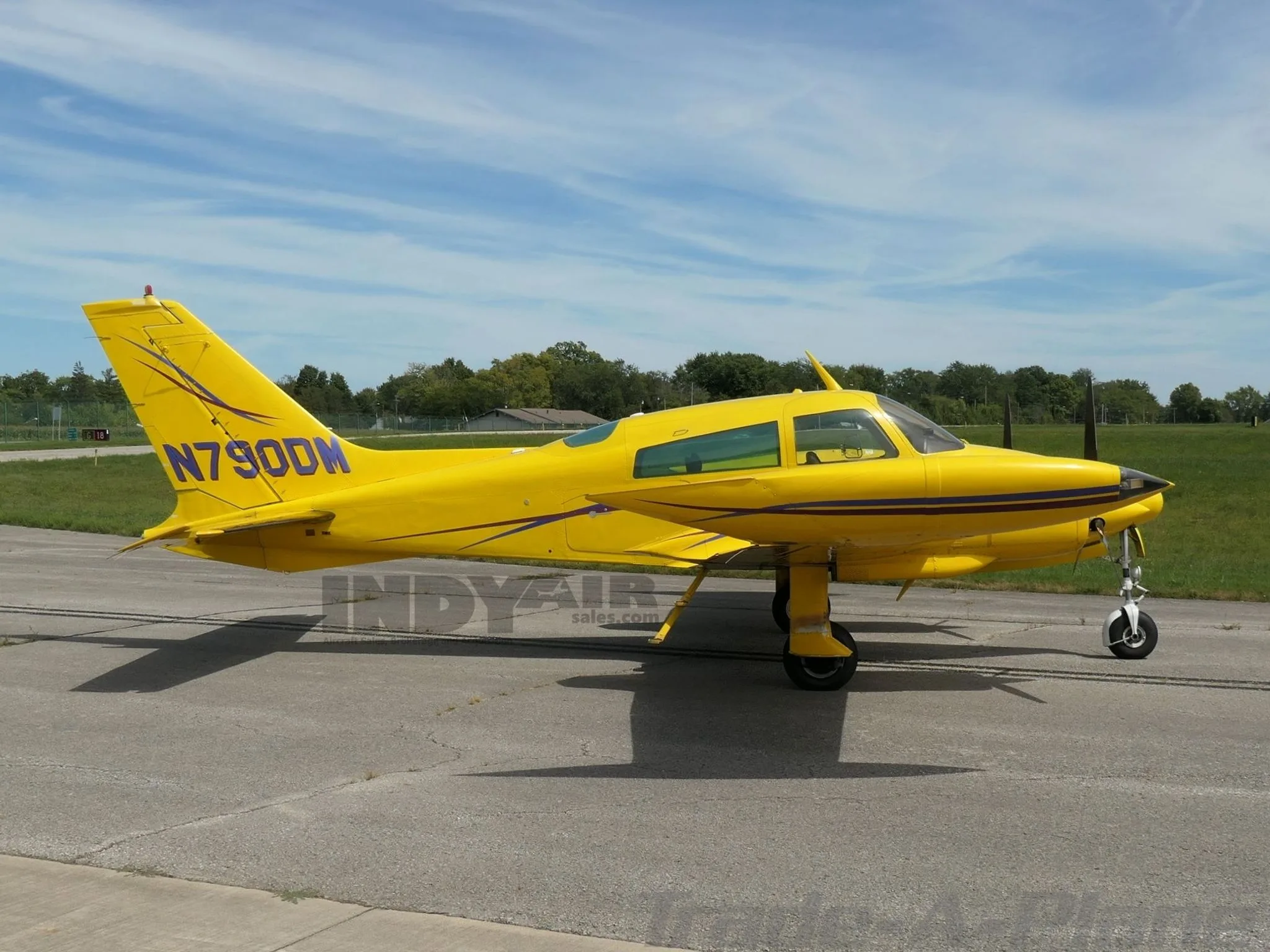
This Pilot's Operating Handbook (POH) is designed for the Cessna 310L, a twin-engine aircraft known for its reliability and performance. The handbook provides essential information for pilots, including operating procedures, performance data, and safety guidelines. It serves as a comprehensive reference for both flight planning and in-flight operations, ensuring that pilots can operate the aircraft safely and efficiently. The POH includes detailed specifications, weight and balance information, and emergency procedures, making it an indispensable tool for Cessna 310L pilots.
Key points
- Wingspan: 36 ft 0 in
- Max Takeoff Weight: 5,200 lbs
- Cruise Speed: 170 knots
- Service Ceiling: 20,000 ft
- Rate of Climb: 1,200 ft/min
Figures in this document
As the document states them. Check them against the PDF before you rely on one.
Specifications
- Engine (hp)
- 260
- Height (ft)
- 8.83
- Length (ft)
- 28.75
- Propeller
- McCauley 3-blade
- Wingspan (ft)
- 36
- Engine model
- Continental IO-520
- Empty weight (lb)
- 3,200
- Fuel capacity (gal)
- 80
- Rate of climb (fpm)
- 1,200
- Service ceiling (ft)
- 20,000
- Max takeoff weight (lb)
- 5,200
Performance
- Takeoff distance (ft)
- 2,500
Weight and balance
- Useful load (lb)
- 2,000
- Max ramp weight (lb)
- 5,200
- Baggage allowance (lb)
- 300
- Basic empty weight (lb)
- 3,200
- Max takeoff weight (lb)
- 5,200
Main sections
Aircraft Specifications
The Cessna 310L features a wingspan of 36 feet 0 inches, a length of 28 feet 9 inches, and a height of 8 feet 10 inches. The empty weight is approximately 3,200 lbs, with a maximum takeoff weight of 5,200 lbs. The fuel capacity is 80 gallons, allowing for extended flight range.
Performance Data
The Cessna 310L has a maximum speed of 200 knots and a cruise speed of 170 knots. The aircraft can achieve a service ceiling of 20,000 feet and has a rate of climb of 1,200 feet per minute. Takeoff distance over a 50-foot obstacle is approximately 2,500 feet.
Weight and Balance
The basic empty weight of the Cessna 310L is 3,200 lbs, with a maximum ramp weight of 5,200 lbs. The useful load is 2,000 lbs, and the baggage allowance is 300 lbs. The center of gravity (CG) range is from 35 to 45 inches.
V-Speeds
Key V-speeds for the Cessna 310L include: VSO (stalling speed in landing configuration) at 60 knots, VS1 (stalling speed in clean configuration) at 70 knots, VY (best rate of climb speed) at 90 knots, and VNE (never exceed speed) at 200 knots.
Emergency Procedures
The handbook outlines critical emergency procedures, including engine failure during takeoff, electrical failure, and emergency landing techniques. Pilots are advised to familiarize themselves with these procedures to ensure safety in flight.
Safety notes
- Always perform a preflight inspection before each flight.
- Ensure weight and balance are within limits before takeoff.
- Be familiar with emergency procedures and V-speeds.
The document’s text
Show the text read from the PDF
-- 1 of 84 -- -- 2 of 84 -- -- 3 of 84 -- -- 4 of 84 -- -- 5 of 84 -- -- 6 of 84 -- -- 7 of 84 -- -- 8 of 84 -- -- 9 of 84 -- -- 10 of 84 -- -- 11 of 84 -- -- 12 of 84 -- -- 13 of 84 -- -- 14 of 84 -- -- 15 of 84 -- -- 16 of 84 -- -- 17 of 84 -- -- 18 of 84 -- -- 19 of 84 -- -- 20 of 84 -- -- 21 of 84 -- -- 22 of 84 -- -- 23 of 84 -- -- 24 of 84 -- -- 25 of 84 -- -- 26 of 84 -- -- 27 of 84 -- -- 28 of 84 -- -- 29 of 84 -- -- 30 of 84 -- -- 31 of 84 -- -- 32 of 84 -- -- 33 of 84 -- -- 34 of 84 -- -- 35 of 84 -- -- 36 of 84 -- -- 37 of 84 -- -- 38 of 84 -- -- 39 of 84 -- -- 40 of 84 -- -- 41 of 84 -- -- 42 of 84 -- -- 43 of 84 -- -- 44 of 84 -- -- 45 of 84 -- -- 46 of 84 -- -- 47 of 84 -- -- 48 of 84 -- -- 49 of 84 -- -- 50 of 84 -- -- 51 of 84 -- -- 52 of 84 -- -- 53 of 84 -- -- 54 of 84 -- -- 55 of 84 -- -- 56 of 84 -- -- 57 of 84 -- -- 58 of 84 -- -- 59 of 84 -- -- 60 of 84 -- -- 61 of 84 -- -- 62 of 84 -- -- 63 of 84 -- -- 64 of 84 -- -- 65 of 84 -- -- 66 of 84 -- -- 67 of 84 -- -- 68 of 84 -- -- 69 of 84 -- -- 70 of 84 -- -- 71 of 84 -- -- 72 of 84 -- -- 73 of 84 -- -- 74 of 84 -- -- 75 of 84 -- -- 76 of 84 -- -- 77 of 84 -- -- 78 of 84 -- -- 79 of 84 -- -- 80 of 84 -- -- 81 of 84 -- -- 82 of 84 -- -- 83 of 84 -- -- 84 of 84 --
Read from the PDF by machine, so tables and diagrams come out rough. The PDF is the document.
More Cessna 310L documents
All 15 →- PILOT'S OPERATING HANDBOOK - flight examiners
This Pilot's Operating Handbook (POH) is designed for the Cessna 310R and 310R I aircraft, providing essential information for pilots regarding the operation, performance, and maintenance of these twin-engine airplanes. It includes detailed specifications, limitations, emergency procedures, and normal operating procedures. The handbook is intended to enhance the flying experience by ensuring that pilots have access to critical data and guidelines necessary for safe and efficient flight operations. Pilots are encouraged to familiarize themselves with the contents and refer to the handbook regularly to maintain operational proficiency and safety.
- Cessna 310L Pilot's Operating Handbook
The Cessna 310L Pilot's Operating Handbook (POH) provides essential information for the operation of the Cessna 310L aircraft. It is designed for pilots and aviation enthusiasts, offering detailed guidance on the aircraft's systems, performance, and operational procedures. This handbook includes critical data such as weight and balance, performance specifications, and emergency procedures, ensuring safe and efficient flight operations. The POH serves as a comprehensive reference for preflight planning, in-flight operations, and post-flight procedures, making it an indispensable tool for anyone flying the Cessna 310L.
- CESSNA 310L Model Guide
CESSNA 310L is a piston light twin from the Cessna 310 family, where family-level figures reach up to 6 passengers. Listed figures are 5200 lb max takeoff weight, 2000 lb useful load, 170 kt cruise and 80 gal fuel. Accident reports in the files show two Continental IO-470 engines on 1966 examples, so confirm the engine fit of any aircraft you inspect.
- PMA Application and Pump Cross Reference - Aircraft Spruce
This document serves as a service bulletin for various aircraft models, specifically focusing on fuel boost and prop unfeathering pumps. It provides a cross-reference of FAA-PMA parts, OEM parts, and Dukes parts for different aircraft, including the Piper PA-42 Cheyenne III. The bulletin is intended for maintenance personnel and pilots who need to ensure the correct parts are used for repairs and replacements. It includes detailed specifications for each aircraft model listed, allowing for easy identification of compatible parts. The document is crucial for maintaining the operational integrity of the aircraft and ensuring compliance with FAA regulations.
- EASA - J.P. Instruments
This document is a Supplemental Type Certificate (STC) issued by the European Aviation Safety Agency (EASA) for the installation of the J P Instruments (JPI) EDM-960 Primary Engine Data Management System on the Cessna 414A. It certifies that the design change meets the applicable Type Certification Basis and environmental protection requirements. The STC outlines the limitations and conditions for the installation and operation of the system, ensuring that it does not adversely affect the airworthiness of the aircraft. The document is intended for aircraft owners, maintenance personnel, and operators who are involved in the installation and operation of the EDM-960 system on the Cessna 414A.
Supplemental Type Certificate · 2015PDF · 5 pages · 471 KB of EASA - J.P. Instruments, opens in a new tabRequest removal of EASA - J.P. Instruments - 28V Alternator Controller Units (ACU) Cross Reference
This document serves as a cross-reference for 28V Alternator Controller Units (ACUs) applicable to various Cessna aircraft models, including the Cessna 310L. It provides detailed specifications, voltage regulation features, and part numbers for replacement units. The document is intended for aircraft maintenance personnel and technicians who require accurate information for electrical system components. It includes information on voltage regulation, ground-fault protection, and troubleshooting features, ensuring that users can select the appropriate alternator controller for their specific aircraft model.
- AAIB Bulletin No: 2/2004
This document is an AAIB (Air Accidents Investigation Branch) Bulletin detailing an incident involving a Cessna 310L aircraft, registration G-AZUY. The bulletin outlines the circumstances of the flight, the malfunction of the landing gear system, and the subsequent investigation findings. The incident occurred on September 29, 2003, when the pilot experienced issues with the landing gear not locking down properly during the approach for landing. The report provides insights into the mechanical failure that led to the collapse of the main landing gear upon touchdown, as well as recommendations for maintenance and operational procedures to prevent similar occurrences in the future.
- Schedule Of Airworthiness Directives
This document is an Airworthiness Directive (AD) issued by the Civil Aviation Safety Authority of Australia, specifically addressing the Cessna 310 series of aeroplanes. The directive outlines mandatory requirements for all models in the 310 series, including the 310L, regarding the installation of specific placards related to fuel management and operational limits. The purpose of these placards is to enhance safety by informing pilots of critical operational limitations, particularly concerning fuel levels and flap usage. Compliance with these directives is required to ensure the airworthiness of the aircraft and to mitigate risks associated with fuel management during flight operations.
Cessna 310 for sale now
View all 35 for sale →Aircraft that this pilot's operating handbook covers, listed on the sites Sprinkle reads. Asking prices, not sales. Cessna 310 asking prices by year built.


Also useful for the Cessna 310L
From Sprinkle’s library of aircraft documents. PDFs open from Sprinkle’s own files. Read Jul 1, 2026.
Want this document taken down? Request removal