
Schedule Of Airworthiness Directives
Maintenance Manual for the Cessna 414
PDF, 4 pages, 36 KB, from Sprinkle’s own files.
What it covers
This document is an Airworthiness Directive (AD) issued by the Civil Aviation Safety Authority of Australia, specifically addressing safety concerns related to the avionics bus circuit breaker switch in various Cessna 400 series aircraft, including the Cessna 414. The directive outlines the necessary inspections and replacement procedures for affected circuit breaker switches to ensure the safety and airworthiness of the aircraft. It is crucial for maintenance personnel and operators of the Cessna 414 to comply with the requirements set forth in this directive to prevent potential failures that could compromise flight safety. The document includes detailed applicability, requirements, compliance timelines, and background information regarding the safety issues identified with the circuit breaker switches.
Key points
- The Cessna 414 is included in the Airworthiness Directive AD/CESSNA 400/113.
- Affected circuit breaker switches must be inspected for part number and date code.
- If the part number is CM3589-50, 593-250-101, 593-250-102, W31-X2M5A-50, or W31-X1000-50 and the date code is earlier than 0434, replacement is required within 1,000 hours TIS.
- Compliance timelines include inspections within 200 hours TIS or at the next scheduled inspection, and replacements before further flight if necessary.
- The directive is effective as of December 22, 2005.
Main sections
Applicability
The directive applies to specific serial numbers of Cessna Model 400 aeroplanes, including the Cessna 414, with serial numbers ranging from 414-0001 to 414-0965. It also includes other models in the Cessna 400 series, detailing their respective serial number ranges.
Requirement
The directive requires an inspection of the avionics bus circuit breaker switch to determine its part number and date code. If the part number matches certain specified numbers and the date code is earlier than 0434, the switch must be replaced within a 1,000-hour time limit. The directive outlines specific procedures for replacement and inspection.
Compliance
Compliance with the directive is required within specified timeframes: inspections must be completed within the next 200 hours of flight time, or at the next scheduled inspection, whichever comes first. Replacement of defective switches must occur before further flight.
Background
The background section explains that the FAA received reports of failures in certain Tyco Electronics circuit breaker switches, which could lead to internal shorts and potential smoke or burning smells in the cockpit. This could severely impact the pilot's ability to control the aircraft.
Safety notes
- Failure of the circuit breaker switch can lead to smoke and burning smells in the cockpit, affecting flight safety.
- Continued use of defective switches may result in reduced control of the aircraft.
The document’s text
Show the text read from the PDF
COMMONWEALTH OF AUSTRALIA (Civil Aviation Safety Regulations 1998), PART 39 - 105 CIVIL AVIATION SAFETY AUTHORITY SCHEDULE OF AIRWORTHINESS DIRECTIVES Page 1 of 4 AIRWORTHINESS DIRECTIVE For the reasons set out in the background section, the CASA delegate whose signature appears below issues the following Airworthiness Directive (AD) under subregulation 39.001(1) of CASR 1998. The AD requires that the action set out in the requirement section (being action that the delegate considers necessary to correct the unsafe condition) be taken in relation to the aircraft or aeronautical product mentioned in the applicability section: (a) in the circumstances mentioned in the requirement section; and (b) in accordance with the instructions set out in the requirement section; and (c) at the time mentioned in the compliance section. Cessna 400 Series Aeroplanes AD/CESSNA 400/113 Avionics Bus Circuit Breaker Switch 13/2005 Applicability: Cessna Model 400 aeroplanes as follows equipped with an avionics bus circuit breaker switch, part number (P/N) CM3589-50, 593-250-101, 593-250-102, W31-X2M5A-50 or W31-X1000-50: Model Serial Numbers 401 655 and 401-0001 through 401-0322 401A 655 and 401A0001 through 401A0132 401B 401B0001 through 401B0221 402 402-0001 through 402-0322 402A 402A0001 through 402A0129 402B 402B0001 through 402B0122, 402B0201 through 402B0249, 402B0301 through 402B0455, 402B0501 through 402B0640, 402B0801 through 402B0935, 402B1001 through 402B1100, 402B1201 through 402B1250 and 402B1301 through 402B1384 402C 689, 402C0001 through 402C0125, 402C0201 through 402C0355, 402C0401 through 402C0528, 402C0601 through 402C0653, 402C0801 through 402C0807 and 402C0808 through 402C1020 404 682, 404-0001 through 404-0136, 404-0201 through 404-0246, 404-0401 through 404-0460, 404-0601 through 404-0695 and 404-0801 through 404-0859 411 642 and 411-0001 through 411-0250 411A 411-0251 through 411-0300 414 667, 414-0001 through 414-0099, 414-0151 through 414-0175, 414-0251 through 414-0280, 414-0351 through 414-0437, 414-0451 through 414-0550, 414-0601 through 414-0655, 414-0801 through 414-0855 and 414-0901 through 414-0965 -- 1 of 4 -- COMMONWEALTH OF AUSTRALIA (Civil Aviation Safety Regulations 1998), PART 39 - 105 CIVIL AVIATION SAFETY AUTHORITY SCHEDULE OF AIRWORTHINESS DIRECTIVES Cessna 400 Series Aeroplanes AD/CESSNA 400/113 (continued) Page 2 of 4 414A 414A0001 through 414A0121, 414A0201 through 414A0340, 414A0401 through 414A0535, 414A0601 through 414A0680, 414A0801 through 414A0858 and 414A1001 through 414A1212 421 693 and 421-0001 through 421-0200 421A 421A0001 through 421A0158 421B 421B0001 through 421B0056, 421B0101 through 421B0147, 421B0201 through 421B0275, 421B0301 through 421B0486, 421B0501 through 421B0665 and 421B0801 through 421B0970 421C 421C0001 through 421C0171, 421C0201 through 421C0350, 421C0401 through 421C0525, 421C0601 through 421C0715, 421C0801 through 421C0910, 421C1001 through 421C1115, 421C1201 through 421C1257, 421C1401 through 421C1413 and 421C1801 through 421C1807 425 425-0001 through 425-0236 441 698 and 441-0001 through 441-0362 Requirement: 1. Inspect the avionics bus circuit breaker switch to determine the P/N and date code in accordance with the following: a. For Models 425 and 441 aeroplanes - Cessna Conquest Service Bulletin (SB) CQB05-2, dated 21 February 2005 and the applicable maintenance manual. b. For all other affected aeroplane models - Cessna Multi-engine SB MEB05-1 dated21 February 2005 and the applicable maintenance manual. If the P/N is CM3589-50, 593-250-101, 593-250-102, W31-X2M5A-50 or W31-X1000-50 and the date code is 0434 or later; then no further action is required. 2. If the P/N is CM3589-50, 593-250-101, 593-250-102, W31-X2M5A-50 or W31-X1000-50 and there is no date code, replace the avionics bus circuit breaker switch with a P/N CM3589-50 that has a date code of 0434 or later in accordance with the following: a. For Models 425 and 441 aeroplanes - SB CQB05-2, dated 21 February 2005 and the applicable maintenance manual. b. For all other affected aeroplane models - SB MEB05-1 dated21 February 2005 and the applicable maintenance manual. -- 2 of 4 -- COMMONWEALTH OF AUSTRALIA (Civil Aviation Safety Regulations 1998), PART 39 - 105 CIVIL AVIATION SAFETY AUTHORITY SCHEDULE OF AIRWORTHINESS DIRECTIVES Cessna 400 Series Aeroplanes AD/CESSNA 400/113 (continued) Page 3 of 4 3. If the P/N is CM3589-50, 593-250-101, 593-250-102, W31-X2M5A-50 or W31-X1000-50 and the date code is earlier than 0434, the part has a safe life limit of 1,000 hours time in service (TIS) and must be replaced within the 1,000 hour time limit with a P/N CM3589-50 that has a date code of 0434 or later in accordance with the following: a. For Models 425 and 441 aeroplanes - SB CQB05-2, dated 21 February 2005 and the applicable maintenance manual. b. For all other affected aeroplane models - SB MEB05-1 dated21 February 2005 and the applicable maintenance manual. 4. Avionics bus circuit breaker switches P/N CM3589-50, 593-250-101, 593-250-102, W31-X2M5A-50 or W31-X1000-50 that do not have a date code or have a date code earlier than 0434 may not be installed as a replacement spare. Later revisions of the above SB(s), approved by the United States Federal Aviation Administration (FAA) as an Alternate Method of Compliance (AMOC) to FAA AD 2005-20-25, are considered acceptable for compliance with the equivalent Requirements of this Directive. Note: FAA AD 2005-20-25 Amdt 39-14321 refers. Compliance: For Requirement 1 - Within the next 200 hours TIS, the next 12 months or at the next scheduled inspection, after the effective date of this Directive, whichever occurs first. For Requirement 2 - Before further flight after the Requirement 1 inspection. For Requirement 3 - Within the 1,000-hour TIS safe life limit. For Requirement 4 - As of the effective date of this Directive. This Airworthiness Directive becomes effective on 22 December 2005. Background: The FAA has received failure reports of certain Tyco Electronics circuit breaker switches installed on the master avionics bus of Cessna Model 400 aeroplanes. Analysis of the circuit breaker switch revealed the copper braid inside the switch had frayed. Continued use causes an internal short. The internal short could result in the internal switch components or external wiring melting because it is no longer protected by the circuit breaker. The affected circuit breaker switches have a date code earlier than 0434 or do not have a date code on them. The date code consists of four digits, the first two represent the year and the last two represent the week of the year the part was made. -- 3 of 4 -- COMMONWEALTH OF AUSTRALIA (Civil Aviation Safety Regulations 1998), PART 39 - 105 CIVIL AVIATION SAFETY AUTHORITY SCHEDULE OF AIRWORTHINESS DIRECTIVES Cessna 400 Series Aeroplanes AD/CESSNA 400/113 (continued) Page 4 of 4 Failure of these circuit breaker switches causes smoke and a burning smell in the cockpit. If not prevented failure could lead to reduced ability to control the aeroplane. This Directive requires the inspection of the circuit breaker switches and, if necessary, their replacement. James Coyne Delegate of the Civil Aviation Safety Authority 10 November 2005 -- 4 of 4 --
Read from the PDF by machine, so tables and diagrams come out rough. The PDF is the document.
More Cessna 414 documents
All 27 →- Cessna 414 Maintenance Manual
This document is the Maintenance Manual for the Cessna 414, providing essential information for maintenance personnel and technicians. It covers detailed procedures, specifications, and guidelines necessary for the proper upkeep and servicing of the aircraft. The manual is designed to ensure that maintenance is performed safely and effectively, adhering to the manufacturer's standards. Key topics include maintenance schedules, troubleshooting procedures, and component specifications, making it a vital resource for anyone involved in the maintenance of the Cessna 414.
- CESSNA 414 Model Guide
The CESSNA 414 is a pressurized, turbocharged twin-engine piston airplane. The registry family covers the 414 and 414A. Family-level highs are up to 7 passengers, 1310 nm range, 225 kt cruise, 30000 ft service ceiling and 3000 kg MTOW. These are not figures for one variant. The documents cover checklists, training, parts and airworthiness items.
- C-414A Transition Flight Training Student Guide
This document serves as a comprehensive training guide for pilots transitioning to the Cessna 414A aircraft. It outlines the necessary knowledge and skills required for safe operation, focusing on specific avionics and autopilot systems. The training is structured into blocks, each consisting of lessons that cover various aspects of flying the Cessna 414A, including maneuvers, emergency procedures, and performance calculations. The guide emphasizes the importance of meeting aeronautical skill and knowledge standards, ensuring pilots are well-prepared for both practical and theoretical evaluations. It is designed for pilots with at least a private pilot certificate and an instrument rating, providing a structured approach to mastering the aircraft's systems and operations.
- C-414 Initial/Transition Flight Training Student Guide - Tom Gorski
This document serves as a comprehensive guide for pilots transitioning to the Cessna 414 aircraft. It outlines the necessary flight training lessons, objectives, and completion standards required for proficiency in operating the aircraft. The training is structured into blocks, each focusing on specific skills such as automation, emergency procedures, and performance calculations. The guide emphasizes the importance of understanding the aircraft's systems and operational procedures, ensuring that pilots are well-prepared for both normal and abnormal situations during flight. It is intended for pilots with at least a private pilot certificate and an instrument rating, aiming to enhance their skills and knowledge for safe operation of the Cessna 414.
- C-414 Initial/Transition Ground Training Student Guide - Tom Gorski
The C-414 Initial/Transition Ground Training Student Guide is designed for pilots transitioning to the Cessna 414 aircraft. This guide provides comprehensive training on the aircraft's systems, operational procedures, and limitations. It covers essential topics such as standard operating procedures, flight planning, fuel management, and emergency procedures. The course consists of 20 hours of instruction, divided into lessons that include quizzes and reviews to ensure understanding and retention of critical information. The guide aims to equip pilots with the knowledge necessary to operate the Cessna 414 safely and effectively, preparing them for supervised flight training and eventual solo operations.
- Navigation - Stall Warning Horn Replacement
This service bulletin, MEB-34-07, addresses the replacement of the stall warning horn in various Cessna aircraft models, including the Cessna 414. The bulletin outlines the necessary parts and detailed instructions for removing the original stall warning horn and installing a new one. It specifies different configurations based on the aircraft's existing equipment and provides guidance for compliance. The document is intended for aircraft owners and maintenance personnel, ensuring that the stall warning system is updated correctly to maintain safety and operational integrity. Compliance with the bulletin is optional, but it is recommended to ensure the aircraft meets current standards.
- SERVICE BULLETIN No. 058 Rev. A Turbocharger - Back Plate Assembly Replacement at Overhaul
This service bulletin provides critical information regarding the replacement of the turbocharger back plate assembly for specific turbocharger models used in various aircraft, including the Cessna 414. It outlines the compliance requirements for replacing the obsolete back plate assembly P/N 406795-0058 with the new P/N 490006 or 490045-0000 during the next turbocharger overhaul. The document emphasizes the importance of adhering to the latest revisions and provides detailed instructions for inspection and corrective actions to ensure continued airworthiness. This bulletin is intended for maintenance personnel and technicians involved in the servicing of affected turbocharger systems.
- Aviation Accident Factual Report
This document is an Aviation Accident Factual Report detailing the circumstances surrounding the crash of a Cessna 414A aircraft, registration N959MJ, which occurred on October 29, 2019, in Colonia, New Jersey. The report provides a comprehensive analysis of the flight path, pilot communications, weather conditions, and the subsequent investigation findings. It is intended for aviation professionals, safety investigators, and those interested in understanding the factors contributing to aviation accidents. The report highlights critical data such as the aircraft's flight profile, the pilot's experience, and the environmental conditions at the time of the accident, ultimately aiming to enhance safety and prevent future incidents.
Cessna 414 for sale now
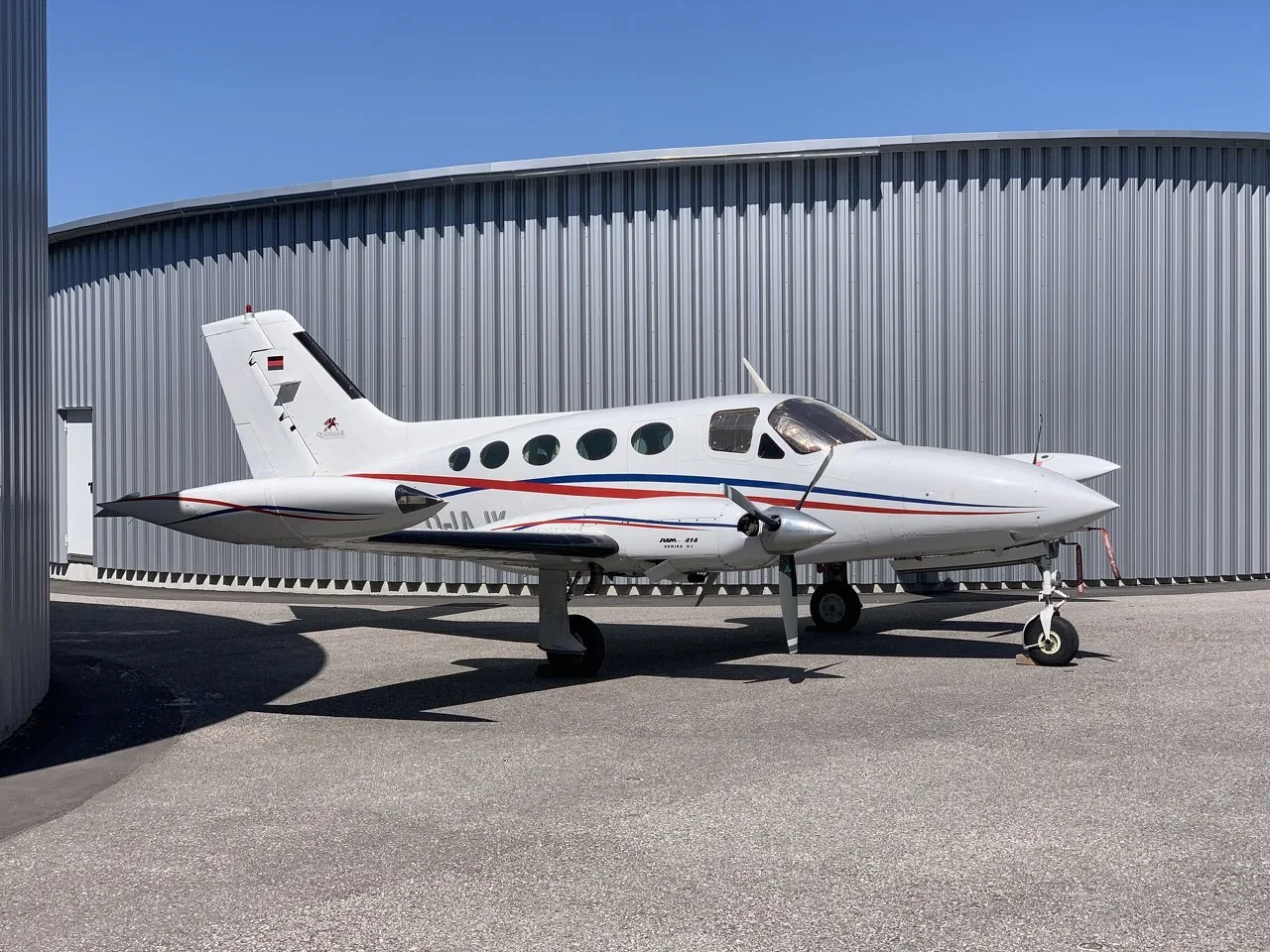
View all 36 for sale →Aircraft that this maintenance manual covers, listed on the sites Sprinkle reads. Asking prices, not sales. Cessna 414 asking prices by year built.


Also useful for the Cessna 414
From Sprinkle’s library of aircraft documents. PDFs open from Sprinkle’s own files. Read Apr 15, 2026.
Want this document taken down? Request removal