
AAIB Bulletin: 2/2017 G-FIND EW/G2016/09/19
Other Documents for the Cessna Reims-Cessna F406 Caravan II
PDF, 3 pages, 229 KB, from Sprinkle’s own files.
What it covers
This document is an AAIB (Air Accidents Investigation Branch) bulletin detailing an incident involving the Reims Cessna F406 Caravan II, registration G-FIND. The bulletin provides a comprehensive account of the incident that occurred on September 25, 2016, during a training flight. It outlines the circumstances leading up to the event, the actions taken by the crew, and the subsequent investigation findings. The report serves as a critical resource for pilots and aviation professionals, highlighting safety concerns and operational procedures related to the aircraft's autopilot and trim systems. It emphasizes the importance of understanding aircraft systems and the need for effective training and procedures to handle in-flight anomalies.
Key points
- The aircraft is a Reims Cessna F406 Caravan II, registration G-FIND.
- The incident occurred on September 25, 2016, during a training flight.
- The autopilot unexpectedly disengaged, causing a nose-down pitch that required manual correction.
- The handling pilot had difficulty controlling the aircraft until the pitch trim was adjusted manually.
- Previous incidents have raised concerns about autopilot and trim system reliability, prompting operator modifications.
Main sections
Incident Synopsis
The incident involved the Reims Cessna F406 Caravan II, where the aircraft unexpectedly pitched nose down during cruise flight with the autopilot engaged. The handling pilot struggled to regain control until the autopilot was disengaged and the pitch trim was manually adjusted to a normal setting.
Flight History
The flight was part of a series of training exercises for proficiency checks on two pilots. Prior to the incident, control checks indicated no issues with the pitch trim system, which later malfunctioned during the flight, leading to the nose-down pitch.
Previous Occurrences
The bulletin references previous incidents involving the same aircraft, including a 2007 incident with similar control issues. Investigations into these occurrences raised concerns about autopilot engagement and trim system reliability.
Operator Actions
Following the incident, the aircraft operator replaced the Air Data Computer and Autoflight Computer. They also initiated modifications to the autopilot system to enhance safety, including a new disconnect switch and warning light.
Safety notes
- Pilots should be aware of the autopilot and trim system behavior during flight.
- Regular checks and maintenance of the autopilot system are critical for safety.
- Training should include procedures for handling unexpected autopilot disengagements.
The document’s text
Show the text read from the PDF
44 © Crown copyright 2017 AAIB Bulletin: 2/2017 G-FIND EW/G2016/09/19 INCIDENT Aircraft Type and Registration: Reims Cessna F406 Caravan II, G-FIND No & Type of Engines: 2 Pratt & Whitney Canada PT6A-112 turboprop engines Year of Manufacture: 1989 (Serial no: 0045) Date & Time (UTC): 25 September 2016 at 1540 hrs Location: En route cruise Type of Flight: Training Persons on Board: Crew - 2 Passengers - 1 Injuries: Crew - None Passengers - None Nature of Damage: None notified Commander’s Licence: Airline Transport Pilot’s Licence Commander’s Age: 52 years Commander’s Flying Experience: 15,000 hours (of which 389 were on type) Last 90 days - 87 hours Last 28 days - 13 hours Information Source: Aircraft Accident Report Form submitted by the pilot and information supplied by the aircraft operator Synopsis While in cruising flight with the autopilot engaged, the aircraft suddenly pitched nose down. The handling pilot had difficulty controlling the aircraft until the autopilot was disengaged and the pitch trim, which had run significantly nose down, was returned to a normal setting. The autopilot was not re-engaged and the aircraft landed without further incident. History of the flight On the day of the incident, the aircraft was flying a series of four training flights for the purpose of conducting Proficiency Checks on two company pilots. On board were the aircraft commander, who was the examining pilot, and the two pilots undergoing check. Between flights, the occupants changed seats as necessary to meet the check requirements. While carrying out control checks before takeoff on the second of the series of flights, the crew noticed that the pitch trim wheel operated and the pitch trim ran forward (nose down sense). The crew were unsure if the movement, which appeared to be in three separate bursts, had been the result of inadvertent operation of the electric trim switch during the control checks. They therefore repeated the control checks three times before takeoff while monitoring the pitch trim, with no movement or other unusual indications evident. The aircraft then completed the second and third flights without incident. -- 1 of 3 -- 45 © Crown copyright 2017 AAIB Bulletin: 2/2017 G-FIND EW/G2016/09/19 The fourth flight originated at Coventry Airport and was to include a visual circuit at Coventry with one engine simulated inoperative. This was to be followed by restoration of normal engine power and a transit to East Midlands Airport (where the aircraft was based), where the proficiency check profile would be completed. The pilot under check occupied the right hand seat for the flight. Following the circuit at Coventry, the aircraft started a climb to 3,000 ft for the transit. The autopilot was engaged at 1,500 ft but, on passing 2,500 ft, it disconnected, accompanied by associated audio and visual warnings. The climb to 3,000 ft was completed manually and the autopilot re-engaged once in stable, cruise flight. It was engaged in ‘heading’ and ‘altitude hold’ modes. As the aircraft neared East Midlands, the aircraft suddenly pitched nose-down. The handling pilot reported that he immediately tried to correct the nose down pitch by pulling back on his control wheel and pressing the autopilot disconnect button mounted on it. Neither pilot heard an aural warning that would have indicated that the autopilot had disengaged, and increasing back pressure was required on the control wheel as the aircraft continued to pitch nose down. The handling pilot therefore reached across and operated the disconnect button on the left control wheel and also set the autopilot master switch on the main instrument panel to off. Again, neither pilot recalled hearing the autopilot disconnect aural warning. The aircraft was by this stage in a 10º nose-down pitch attitude with increasing airspeed. The handling pilot placed both hands on the control wheel and commented that he was having difficulty flying the aircraft. The commander noticed an abnormally forward pitch trim indication, so manually reset the trim to the takeoff setting (between one and a half and two revolutions of the pitch trim wheel were required). This allowed the handling pilot to fly the aircraft normally while making his own manual pitch trim inputs. Neither pilot had noticed the pitch trim in motion before or during the incident. The remainder of the flight was flown manually without further incident. Previous occurrences G-FIND, 6 September 2007 (AAIB Bulletin 6/2008) G-FIND was involved in an earlier incident which bore some similarities with this incident and which was the subject of an AAIB field investigation. In that incident, which also occurred during a crew training flight, control restrictions were encountered. Although the technical investigation was inconclusive, it was considered likely that an accidental and undiagnosed autopilot engagement had occurred during what was intended to be manual flight. G-TWIG, 22 October 2004 (AAIB Bulletin 7/2006) In this fatal accident, G-TWIG deviated suddenly from controlled flight and struck the ground in a steep dive and at high speed. There was extreme fragmentation of the wreckage and, although major airframe and power plant failures were discounted, there was insufficient evidence to draw firm conclusions about the reasons for the accident. -- 2 of 3 -- 46 © Crown copyright 2017 AAIB Bulletin: 2/2017 G-FIND EW/G2016/09/19 The investigation included a detailed examination of pitch trim system components, and concluded that the trim setting at the time of the accident equated to an almost fully nose down trim condition. The investigation could not discount the possibility of an electric trim malfunction, although flight tests carried out as part of the investigation indicated that the control forces associated with such a nose-down trim condition ‘could be overcome with little difficulty’. The investigation also considered the possibility of an autopilot malfunction. Specifically, a spurious nose down input followed by failure of a safety system which was intended to disengage the autopilot if the nose-down pitch angle exceeded 21°. It was determined that the control forces to counter to failure may have been significant, but that the expected response would have been to switch off the autopilot and manually re-trim the aircraft. Action by the aircraft operator The Air Data Computer and Autoflight Computer were removed from G-FIND and replacement units installed. The operator did not intend to refit the original units, but they were returned to the manufacturer for strip down and fault diagnosis. At the time of writing, the operator was awaiting reports on this work. As a result of the G-FIND incident of September 2007, the aircraft operator contracted an approved design organisation to develop an autopilot system modification. The modification introduced a prominent autopilot disconnect switch and warning light, allowing a pilot to isolate the autopilot servos and trim actuator to quickly establish manual flight if necessary. The switch introduced by the modification had been used successfully in the incident of 25 September 2016. As a result, three newly acquired F406 aircraft were being similarly equipped at the time of writing. -- 3 of 3 --
Read from the PDF by machine, so tables and diagrams come out rough. The PDF is the document.
More Cessna Reims-Cessna F406 Caravan II documents
All 8 →- AAIB Bulletin: 7/2021 G-RVLW
This document is an AAIB (Air Accidents Investigation Branch) bulletin detailing a serious incident involving the Reims-Cessna F406 Caravan II, registration G-RVLW. The incident occurred on March 6, 2021, during a commercial cargo flight from Göteborg Landvetter Airport to East Midlands Airport. The pilot experienced symptoms of hypoxia at an altitude of 18,000 feet, which were resolved by switching oxygen supply bottles. The bulletin provides insights into the nature of hypoxia, the aircraft's oxygen system, and the operator's response to the incident, including training and procedural updates. It serves as a critical reference for pilots and operators regarding the importance of oxygen management at altitude and the recognition of hypoxia symptoms.
- Type Acceptance Report
This Type Acceptance Report details the validation of the Model F406 by ASI Aviation based on the EASA Type Certificate A.109. It outlines the requirements for the aircraft to be accepted for operation in New Zealand, including compliance with airworthiness standards and operational regulations. The report specifies the aircraft's design, certification details, and any special conditions for import. It serves as a reference for operators and regulatory bodies to ensure that the F406 meets the necessary safety and operational standards for airworthiness certification in New Zealand.
- Kotzebue Airport Relocation
This document is a feasibility study focused on the Kotzebue Airport relocation project. It outlines the facility requirements necessary to accommodate current and future aircraft operations, including runway specifications, taxiway dimensions, and landside facilities. The study identifies the Reims-Cessna F406 as one of the B-II aircraft operating at the airport, providing insights into the design aircraft requirements and operational considerations. The document serves as a reference for airport planners, engineers, and aviation stakeholders involved in the development and improvement of Kotzebue Airport to meet FAA standards and operational demands.
- AAIB Bulletin: 7/2006 G-TWIG EW/C2004/10/04
This document is an accident report from the AAIB concerning the Reims-Cessna F406 Caravan II, registration G-TWIG. It details the circumstances surrounding the aircraft's crash on October 22, 2004, during a public transport flight. The report includes information about the flight history, the pilot's background, and the investigation findings regarding the accident. It aims to provide insights into the events leading up to the crash, the pilot's experience, and recommendations for safety improvements in aviation operations.
- Reims-Cessna F406 Caravan II Model Guide
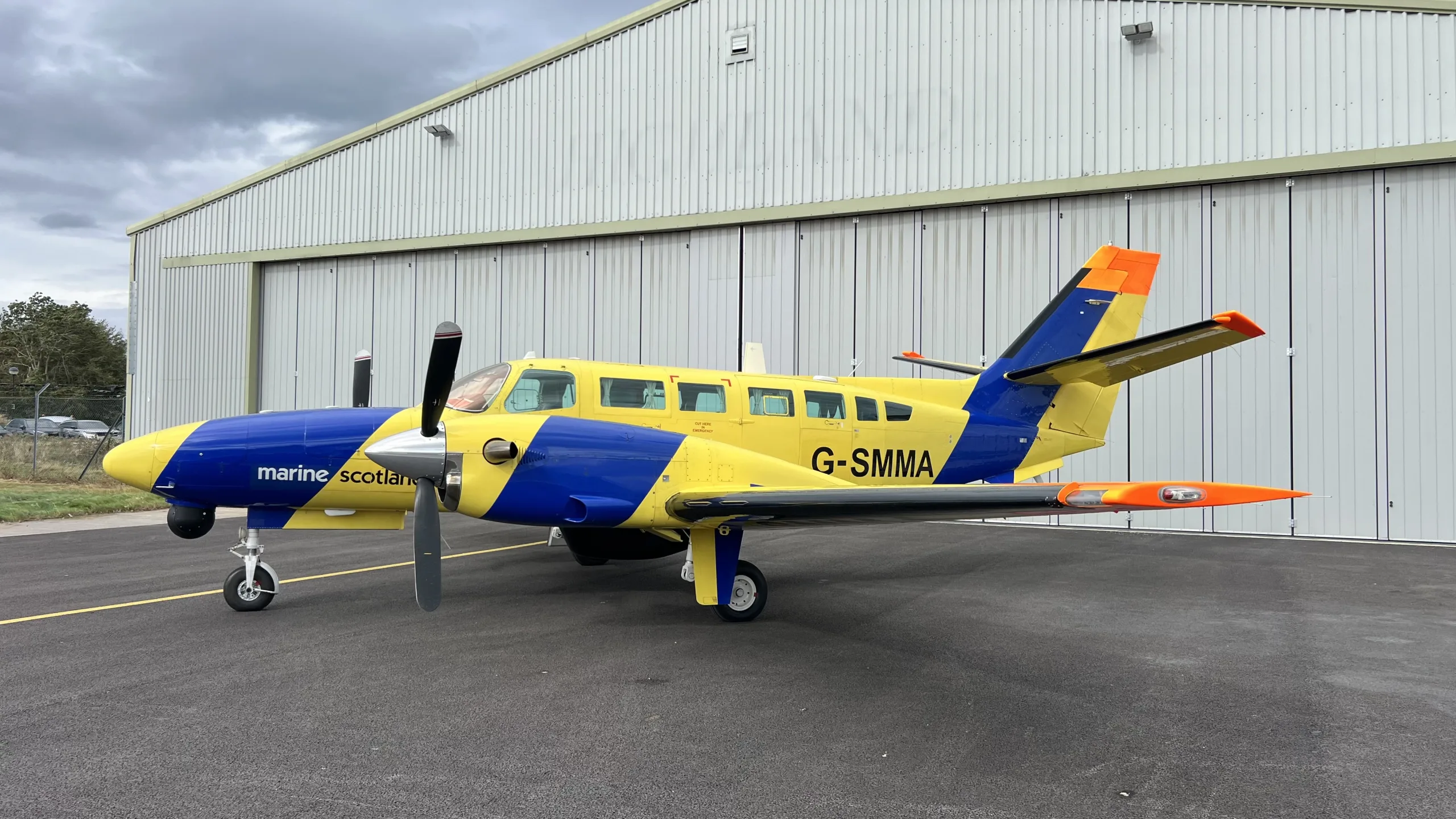
The Reims-Cessna F406 Caravan II is an unpressurised twin-turboprop in production from 1985. It has two Pratt & Whitney Canada PT6A-112 engines, each flat-rated to 500 shp. It is certified for 11 seats under FAR 23 or 14 under SFAR 41C, and has a 30,000 ft service ceiling. Operators in the records use it for freight, training and passenger work.
- Cessna Information Manual
This document is the Cessna Information Manual for the Model 406, originally issued on July 1, 1986. It serves as a comprehensive guide for pilots operating the Cessna 406, providing essential information on the aircraft's systems, performance, limitations, and procedures. The manual is structured into multiple sections, covering everything from general specifications to emergency procedures, ensuring that pilots have access to critical data necessary for safe operation. The manual is not intended as a training guide but rather as a reference for experienced pilots familiar with the aircraft's operation and regulations.
Pilot's Operating Handbook · 1986PDF · 692 pages · 25 MB of Cessna Information Manual, opens in a new tabRequest removal of Cessna Information Manual - AeroShell Turbine Oil 560
This document provides specifications and performance information for AeroShell Turbine Oil 560, particularly in relation to its use in turbine engines, including the Pratt & Whitney Canada PT6 engine series. It discusses the oil's capabilities, benefits, and testing results, emphasizing its suitability for modern turbine engines that operate at higher temperatures. The document is intended for operators and maintenance personnel in the aviation industry, focusing on how this oil can enhance engine performance and reduce maintenance costs.
Cessna 406 for sale now
View all 1 for sale →Aircraft that this other documents covers, listed on the sites Sprinkle reads. Asking prices, not sales. Cessna 406 asking prices by year built.
Also useful for the Cessna Reims-Cessna F406 Caravan II
From Sprinkle’s library of aircraft documents. PDFs open from Sprinkle’s own files. Read Feb 16, 2026.
Want this document taken down? Request removal