Emergency Procedures
CESSNA 170B · Emergency Procedures
Overview
This document outlines the emergency descent procedures specifically for the Cessna 170B. It is designed for pilots in training and provides a comprehensive understanding of how to execute an emergency descent in critical situations, such as in-flight fires or loss of cabin pressurization. The document includes instructional content for both ground lessons and flight maneuvers, emphasizing the importance of safety and proper technique during emergency situations. It also details completion standards for students, ensuring they can demonstrate proficiency in emergency descent maneuvers.
- Emergency descents are critical in situations like in-flight fires or cabin depressurization.
- Maintain a bank angle of 30 to 45 degrees during the descent to ensure positive load factors.
- Reduce thrust to idle and configure the aircraft to maximize drag without exceeding structural limits.
- Clear the area thoroughly before initiating the descent, especially below the aircraft.
- Recovery from the descent should begin no lower than 1,000 feet AGL.
Document
Source
Originally published by www.ryancbinns.com. Sprinkle hosts a reference copy with an added summary, specifications and searchable full text.
Document details
- Type
- Emergency Procedures
- Year
- 2020
- Pages
- 8
- File size
- 1.4 MB
- Publisher
- www.ryancbinns.com
Common. One of the most common aircraft types we track.
Full essential library on file for the CESSNA 170B.
CESSNA 170B for sale now


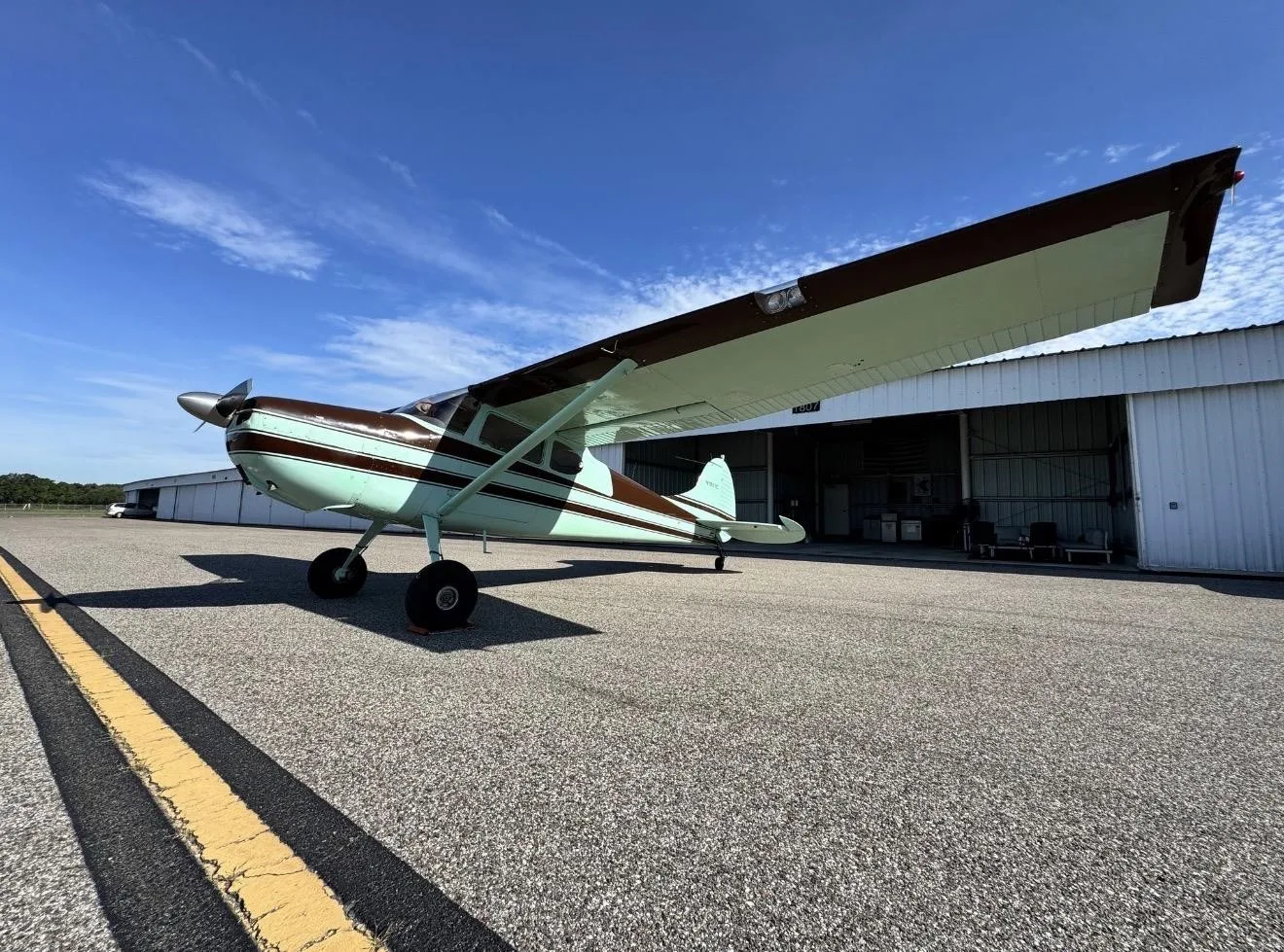
Free — save the 170B to your watchlist and track it in one place.
More CESSNA 170Bmanuals & documents
See all 41 →- Dynon Certified SkyView HDX Systems DescriptionSystems Description
- Cessna 170 & C305A (USAF O‐1A) T3 Tailwheel Suspension System Installation InstructionsWeight And Balance
- Instructions for Continued AirworthinessSystems Description
- Service Bulletin: SB-001 Rev CService Bulletins
- Component Maintenance Manual for External Design Wheels ...Maintenance Manual
- Instructions for Continued Airworthiness No. ICA17025Weight And Balance
- Technician’s Service GuideTraining Manual
- Aviation Safety Letter ASL 2/2020Emergency Procedures
- FAA PARTS MANUFACTURING APPROVALS (PMA) & SUPPLEMENTAL TYPE CERTIFICATE APPROVALS (STC)Supplemental Type Certificate
- Type Acceptance Report TAR 8/21B/24 – Cessna 170 SeriesMaintenance Manual
- Cessna Flyer - April 2015Other Documents
- FAA Safety BriefingChecklist
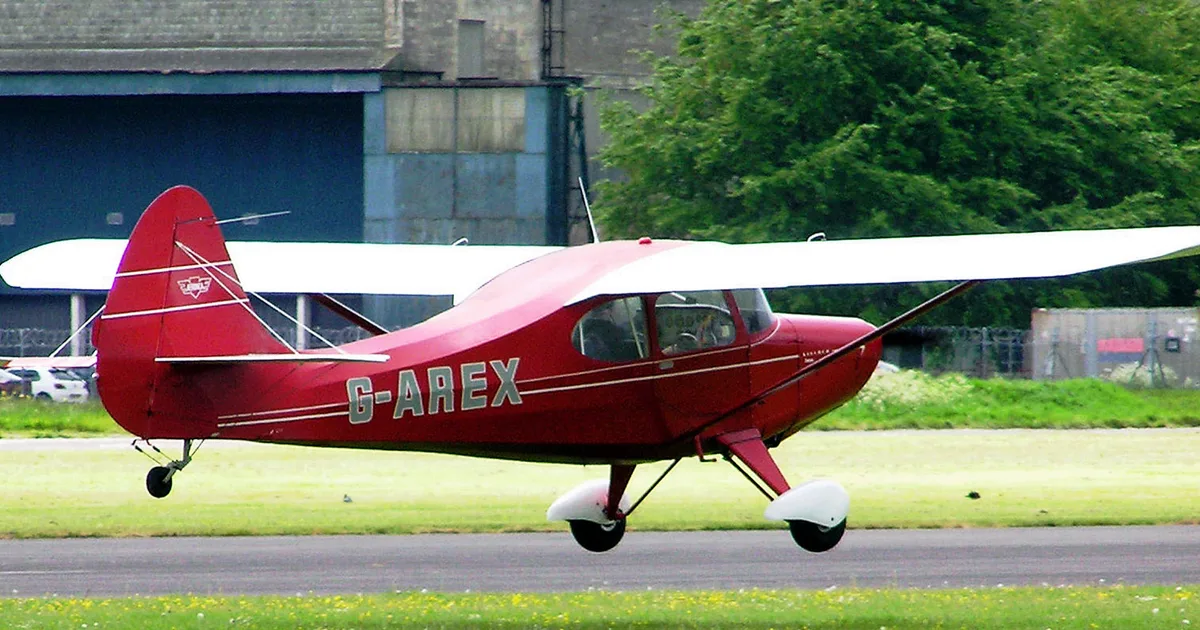
If you fly the CESSNA 170B, you may also be researching these.




In this document
Emergency Descent Overview
The emergency descent maneuver is crucial for pilots to quickly lose altitude in emergencies, such as fires or cabin depressurization. This section explains the importance of executing the maneuver safely and effectively, ensuring pilots can respond to emergencies with confidence.
Ground Lesson Content
The ground lesson covers the fundamentals of emergency descents, including the reasons for performing them and the techniques involved. It emphasizes the need for pilots to understand load factors and how to manage descent speed while maintaining control of the aircraft.
Maneuver Description
This section provides a step-by-step guide on how to initiate and execute an emergency descent. It includes instructions on clearing the area, configuring the aircraft, and selecting a suitable emergency landing area while maintaining a bank angle between 30 and 45 degrees.
Safety Considerations
Safety is paramount during an emergency descent. This section outlines critical safety measures, including the importance of clearing the area, using checklists, and managing the bank angle to avoid stalling or spinning.
Completion Standards
Completion standards detail the expectations for pilots during training. Pilots must demonstrate their ability to perform emergency descents according to specified criteria, including maintaining positive load factors and recovering at the correct altitude.
Safety notes
- Always clear the area before beginning an emergency descent.
- Never exceed Vne during the maneuver to avoid structural damage.
- Perform periodic engine checks to prevent fouling during extended idle.
Full document text
PPL (IX-A) / CAX (IX-A) / CFI (XIII-D) 1 Emergency Descent Objective To ensure the applicant learns the purpose of and can exhibit a clear understanding of the emergency descent maneuver and how to perform the maneuver properly. Purpose Some emergencies, such as fires, require that pilots get down on the ground immediately. The emergency descent introduces pilots to the procedures for handling these emergencies and demonstrates how to dissipate altitude extremely quickly in a safe, controlled manner. Schedule Equipment ● Ground Lesson: 15 minutes ● Initial ■ Flight 1: 40 minutes - Introduction to Maneuver ■ Flight 2: 50 minutes - Improve Proficiency (Dual) ● Pre-Checkride ■ Flight 3: 20 minutes - Demonstrate Proficiency ● Debrief: 10 minutes (per flight) ● Airplane Checklist ● Whiteboard / Markers (optional) Student Actions Instructor Actions ● Ask any questions, receive study material for the next lesson. ● Watch linked video. ● Review listed references. ● Deliver the ground lesson (below). ● Demonstrate the maneuver in flight. ● Debrief after each flight. Completion Standards ● Ground: Student can explain the purpose of the emergency descent maneuver, when the maneuver should be performed, and how load factor affects the performance of the maneuver. ● Flight: Student can perform the maneuver to the applicable ACS standards. ● At the direction of the instructor or examiner, determines the nature of the emergency and consult the appropriate emergency checklist. ● Clears the area, selects a suitable emergency landing area, configures the airplane, and begins a descent at the highest speed allowable for the configuration, -10/+0 knots. ● Maintains positive load factors and coordinated flight throughout the descent, with a bank angle between 30 and 45 degrees. ● The pilot clears the engine once per revolution, and recovers at the specified altitude, +/- 100 ft. ● See expanded Completion Standards below. Prepared by: Ryan Binns (ryancbinns.com/flying), February 2020 PPL (IX-A) / CAX (IX-A) / CFI (XIII-D) 2 References ● ERAUSpecialVFR - “Emergency Descent” ○ YouTube - https://www.youtube.com/watch?v=q1YRjSOfxsw ● FAA-H-8083-3B (Airplane Flying Handbook) - Chapter 17, Page 2-5 [Basic Safety Concepts], Chapter 17, Page 5-6 [Terrain Types], Chapter 17, Page 6 [Engine Failure After Takeoff], Chapter 17, Page 6-9 [Emergency Descents/In-Flight Fire] ● FAA-H-8083-25B (Pilot’s Handbook of Aeronautical Knowledge) - Chapter 5, Page 34 [Load Factors in Steep Turns] ● FAA-S-ACS-6B (Private Pilot ACS) - Area IX Task A ● FAA-S-ACS-7A (Commercial Pilot ACS) - Area IX Task A ● FAA-S-8081-6D (CFI PTS) - Area XIII Task D Ground Lesson Outline ● What is an Emergency Descent? ○ Get Down Fast ■ Fire In Flight ■ Loss of Cabin Pressurization ● How to Get Down Fast ○ Reduce Thrust to Idle ○ Increase Drag ■ Positive load factor / induced drag ■ High speed / parasite drag ■ Configuration - flaps/gear/etc ● Don’t Just Nose Over ○ Entry - Positive load factor ○ Spiral - Setup for emergency landing ● Diagnosis and Emergency Checklists ○ Remove fuel supply in fire emergencies! ● Managing the Bank Angle ● Recovery ● Safety considerations ○ Clearing Turns - especially below ○ Emergency Checklists ○ Visual traffic scanning ○ Clearing the engine - once per revolution ○ Never Exceed Speed ● Maneuver Description - step-by-step ○ Altitude, airspeed, etc. ● Expanded Completion Standards Common Errors ● The consequences of failing to identify reason for executing an emergency descent. ● Improper use of the prescribed emergency checklist to verify accomplishment of procedures for initiating the emergency descent. ● Improper use of clearing procedures for initiating the emergency descent. ● Improper procedures for recovering from an emergency descent. Prepared by: Ryan Binns (ryancbinns.com/flying), February 2020 PPL (IX-A) / CAX (IX-A) / CFI (XIII-D) 3 Ground Lesson Content ● What is an Emergency Descent? - In short, certain emergency situations may occur in flight where the pilot needs to get down now, where time is of critical importance. Many emergency descents would follow up with an emergency landing, perhaps in a field or on a road. The emergency descent is a maneuver designed to lose as much altitude as possible, as quickly as possible, while remaining within the structural limits of the airplane. Some situations that might require an emergency descent: ○ Fire In Flight - An engine or electrical fire in flight is one of the most dangerous emergencies a pilot can encounter. The smoke produced will make it difficult or impossible for the pilot to see and breathe, and the fire itself threatens to weaken the airplane structurally. In case of fire, pilots must land immediately. ■ Some fires may even be extinguished (be ‘blown out’) by descending at very high airspeeds, as the increased airflow can create an incombustible mixture, that is, too much airflow to sustain a fire. ■ Fires can spread rapidly and rapidly compromise an aircraft or a pilot, so they must be dealt with immediately to avoid catastrophe. ○ Loss of Cabin Pressurization - In pressurized airplanes (not typical training airplanes), a loss of cabin pressurization requires a rapid descent to lower altitudes to prevent the passengers or crew from experiencing hypoxia and losing consciousness. ● How to Get Down Fast - New pilots might assume that getting an airplane down quickly is easy, however it does take some skill. Simply pitching down and pointing the airplane at the ground will produce a rapid descent, however it will quickly cause the airplane to exceed Vne (never-exceed speed) and could structurally compromise the airplane. Pilots must manage the descent to fly as fast as possible while creating as much drag as possible, without exceeding any structural limits of the airplane. ○ Reduce Thrust to Idle - Engine thrust is counter to the desire to add drag, and so it should be reduced to idle. ○ Add Drag -
Show full textShow less
■ Increase Load Factor - Recall that as an airplane banks, it experiences a higher load factor (g-force), which causes the wing to produce more lift (fly at a higher angle of attack), thereby increasing induced drag. An airplane which is banking at 45 degrees, Prepared by: Ryan Binns (ryancbinns.com/flying), February 2020 PPL (IX-A) / CAX (IX-A) / CFI (XIII-D) 4 for example, has a load factor of 1.4g. As the load factor increases, the angle of attack increases, the induced drag increases exponentially. ■ Go Fast - Pilots also know from basic aerodynamics that drag also increases rapidly as airspeed increases. By flying as fast as possible (generally, at Vne if conditions allow, otherwise at Vno in turbulent air), drag can be increased. ■ Configure - Some airplanes specify that emergency descents should be made with landing gear extended (for retractable gear), or with flaps down, etc. These configuration changes all add drag, however they also generally reduce the maximum allowable airspeed. Refer to the Airplane POH to determine the correct configuration and airspeed for an emergency descent. ● Don’t Just Nose Over - When beginning the pitch down for Vne, pilots might attempt to just push the pitch down to accelerate. A rapid pushover creates a <1g load factor, which initially reduces drag, as well as creates a risk of a negative-g or 0-g situation. The emergency descent should be flown with a positive load factor continuously throughout the maneuver to maximize drag and avoid the <1g area of the envelope. Prepared by: Ryan Binns (ryancbinns.com/flying), February 2020 PPL (IX-A) / CAX (IX-A) / CFI (XIII-D) 5 ○ Entry - Generally, the proper entry for an emergency descent is to reduce power to idle, begin a 30-45 degree banked turn, and lower the pitch angle to accelerate to Vne or Vno, as appropriate. ○ Spiral - In order to maintain positive load factors throughout, and to remain over a potential emergency landing area, an emergency descent is often flown as a steep, spiraling descent. In most cases, the objective is to rapidly descend to a suitable landing area where an emergency approach and landing can be executed. Therefore, a good point on the ground to spiral over is the ‘downwind key position’ for the eventual emergency landing location. Prepared by: Ryan Binns (ryancbinns.com/flying), February 2020 PPL (IX-A) / CAX (IX-A) / CFI (XIII-D) 6 ● Diagnosis and Emergency Checklists - Before and during the emergency descent, it is important that pilots attempt to diagnose the problem, and perform the emergency checklists. The emergency checklist items may resolve the situation that is causing the emergency descent! ○ For example: In an engine fire emergency, the emergency checklist will instruct pilots to cut off the fuel supply to the engine, which may assist in extinguishing the fire. ● Managing the Bank Angle - In order to remain over the selected emergency landing area, the angle of bank must be varied throughout the maneuver to account for the wind. As groundspeed decreases while upwind, less bank is required, but as groundspeed increases while downwind, more bank is required. Constantly changing bank will require close attention to the coordination of the turns. The emergency descent should be flown between 30 and 45 degrees of bank. Prepared by: Ryan Binns (ryancbinns.com/flying), February 2020 PPL (IX-A) / CAX (IX-A) / CFI (XIII-D) 7 ● Recovery - Recovery from an emergency descent should be made gently, as the airplane is very likely being flown over maneuvering speed. Do not continue the emergency descent below 1,000ft AGL, and ensure that recovery is started early enough so that the airplane can slow to prepare for an emergency off-airport landing. ● Safety Considerations ○ Clearing Turns - An emergency descent will involve flight at very high speeds and across a very large vertical section of sky. It is important that pilots thoroughly clear the area, especially directly below the airplane. ○ Checklists - Pilots should complete a pre-maneuver checklist before beginning the maneuver. ○ Visual Traffic Scanning - Pilots must remember to keep up their traffic scan throughout the maneuver. ○ Clearing the Engine - Because the maneuver is performed while the engine is at idle for an extended period of time, carb heat may be required, and the engine should be periodically cleared (brought up to high power briefly), at least once per revolution, to prevent spark plug fouling. ○ Never Exceed Speed - For the purposes of simulation, it is often better to fly the airplane at Vno. The airplane can never be allowed to exceed Vne! Maneuver Description ● Maneuver Start - Usually the instructor or examiner will indicate that some kind of emergency is occurring. When a simulated emergency occurs that would warrant an emergency descent, initiate the maneuver. ● Clear The Area - Clear the area around the airplane, especially directly below. ● Emergency Checklist - Depending on the type of emergency, reference the appropriate emergency checklist and complete any steps necessary before beginning the emergency descent. ● Configuration and Airspeed - Depending on what the emergency checklist and POH call for, configure the airplane and descend at the appropriate speed. (Usually Vfe with flaps extended, or Vno/Vne with no flaps) ● Select a Suitable Emergency Landing Area - Once the descent has begun, find an open field or other area, free from obstacles, that will allow landing into the wind, or with a manageable crosswind. ● Bank Angle - Select a bank angle initially between 30 and 45 degrees, varying the bank angle to maintain a nearly constant radius over a possible emergency landing area. Because of the varying ground speed, this bank angle will not be constant. Aim to bank no less than 30 degrees, both to maintain positive load factors and to ensure each revolution will not lose excessive altitude and require the maneuver to be started at an impractically high entry altitude. ● Recovery Altitude - Generally, the emergency descent should be completed no lower than 1,500ft AGL. Allow for enough altitude to make it to a position from which a power-off approach and landing can be executed. ● Coordination - To spiral around the emergency landing area, the angle of bank will vary, which will require close attention to coordination. Proper coordination must be maintained at all times, as banking steeply at relatively low altitudes requires caution to avoid a stall or spin. Prepared by: Ryan Binns (ryancbinns.com/flying), February 2020 PPL (IX-A) / CAX (IX-A) / CFI (XIII-D) 8 ● This is a visual maneuver! Eyes should remain outside the cockpit as much as possible to scan for traffic and ensure proper tracking of the target emergency landing area. Expanded Completion Standards ● The pilot can explain the purpose of the emergency descent maneuver, when the maneuver should be performed, and how load factor affects the performance of the maneuver. ● The pilot can perform the maneuver to the following standards: ○ At the direction of the instructor or examiner, determine the nature of the emergency and consult the appropriate emergency checklist. ○ Pilot clears the area, selects a suitable emergency landing area, configures the airplane, and begins a descent at the highest speed allowable for the configuration, -10/+0 knots. ○ Pilot maintains positive load factors throughout the descent, with a bank angle between 30 and 45 degrees. ○ The pilot clears the engine once per revolution, maintains coordinated flight, and recovers at the specified altitude, +/- 100 ft. Prepared by: Ryan Binns (ryancbinns.com/flying), February 2020
What's in the CESSNA 170B TCDS
A Type Certificate Data Sheet (TCDS) is the FAA's record of what an aircraft type was approved as. It is the source of truth for weights, seating, fuel and the rules the design was certified against. Expand any line to see what it means.
261 CESSNA 170B parts for sale
See all →



Parts listed for sale by vetted eBay sellers — confirmed on eBay at checkout.