Best Glide Speed and Distance
CESSNA 172C · Other Documents
Overview
This document provides guidance on best glide speeds and techniques for general aviation pilots, specifically focusing on Cessna aircraft, including the Cessna 172. It emphasizes the importance of understanding glide speeds for safety during forced landings. The document outlines how best glide speed varies with weight and configuration, and it encourages pilots to practice and familiarize themselves with their aircraft's performance characteristics. It also includes tips for forced landings and resources for further training.
- Best glide speed is generally between Vx and Vy and increases with weight.
- Minimum sink speed is lower than best glide speed and is important for extended flight time.
- Cessna 172 can glide approximately 1.5 nautical miles per 1,000 feet of altitude.
- Practice power-off landings to enhance skills for forced landings.
- Reach a key position on base leg to ensure a successful landing.
Document
Source
Originally published by www.faa.gov. Sprinkle hosts a reference copy with an added summary, specifications and searchable full text.
Document details
- Type
- Other Documents
- Year
- 2018
- Pages
- 2
- File size
- 1.0 MB
- Publisher
- www.faa.gov
Common. One of the most common aircraft types we track.
Most owners only have the POH. Here's the essential set for the CESSNA 172C.
CESSNA 172C for sale now


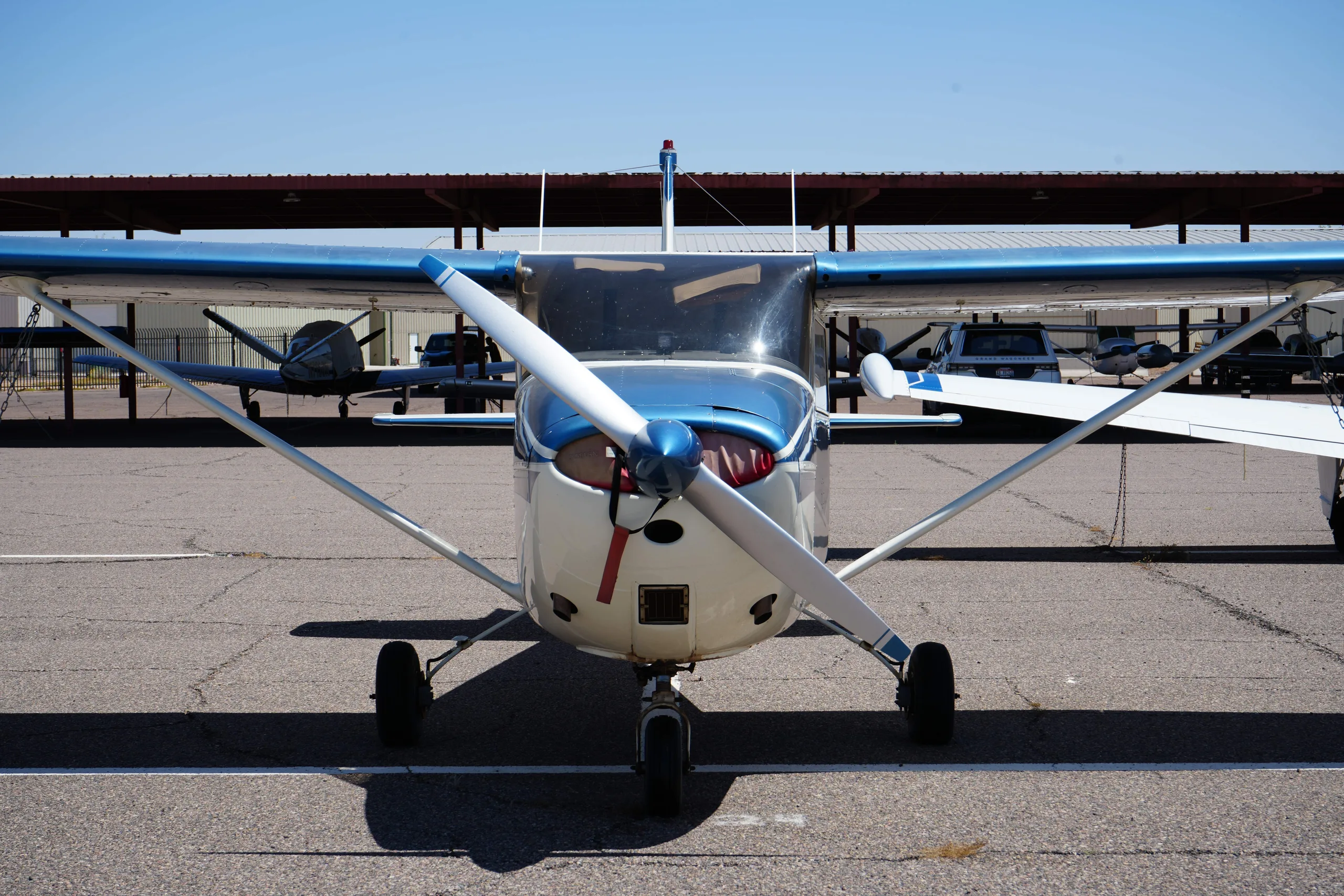
Free — save the 172C to your watchlist and track it in one place.
More CESSNA 172Cmanuals & documents
See all 29 →- Approved Model List For ETX900-TSO Battery InstallationType Certificate
- Service Bulletin SB-12Service Bulletins
- Special Inspection Policy ManualTraining Manual
- CRIMINAL OFFENDER RECORD INFORMATION (C.O.R.I.)Other Documents
- FAA Approved Airplane Flight Manual Supplement for Aerocet Model 2200 Seaplane Float Installation on Cessna Model 172 to 172P and F172D to F172P with Tricycle GearFlight Manual
- Aircraft Weight and Balance ControlPilot's Operating Handbook
- APPROVED MODEL LIST (AML) SA02594SE FOR INSTALLATION OF THE SKYVIEW HDX INSTRUMENTATION AND AUTOPILOT SYSTEMFlight Manual
- SUPPLEMENTAL TYPE CERTIFICATE - 10059692 REV. 1Supplemental Type Certificate
- HAWAII ARMY NATIONAL GUARD (HIARNG) BUILDING 621 RENOVATION AND LATRINE IMPROVEMENTSSpecifications
- SUPPLEMENTAL TYPE CERTIFICATE 10051939Supplemental Type Certificate
- Single Engine Service Bulletin SEB07-5 Revision 6, Pilot and Copilot Secondary Seat Stop InstallationService Bulletins
- 172 Preflight ChecklistChecklist
If you fly the CESSNA 172C, you may also be researching these.


In this document
Understanding Best Glide Speed
Best glide speed is crucial for maximizing distance during a glide. It is typically found between Vx and Vy speeds and increases with aircraft weight. Pilots are advised to determine their aircraft's best glide speed at gross weight.
Minimum Sink Speed
Minimum sink speed is the speed that allows the aircraft to stay airborne for the longest time. This speed is usually lower than the best glide speed and is not commonly found in Pilot Operating Handbooks.
Glide Distance Estimation
For Cessna 152s and 172s, a general rule of thumb is that pilots can glide approximately 1.5 nautical miles for every 1,000 feet of altitude lost.
Forced Landing Techniques
Practicing power-off approaches and landings at typical mission weights is recommended to maintain skills. Pilots should aim for a spot on the landing area and adjust their approach as necessary.
Key Position for Gliding Approaches
Pilots should reach a key position on base leg to ensure a successful landing. Until this position is reached, the aircraft should be configured for best glide.
Safety notes
- Understanding glide speeds can prevent accidents during forced landings.
- Practicing power-off approaches is essential for maintaining proficiency.
Full document text
FAA Aviation Safety Best Glide Speed and Distance www.FAASafety.gov Produced by FAA Safety Briefing | Download at 1.usa.gov/SPANS General Aviation Joint Steering Committee Safety Enhancement Topic The General Aviation Joint Steering Committee (GAJSC) has determined that a significant number of general aviation fatalities could be avoided if pilots were better informed and trained in determining and flying their aircraft at the best glide speed while maneuvering to complete a forced landing. What is Best Glide Speed? Is it the speed that will get you the greatest distance? Or is it the speed that gets you the longest time in the air? Or are these two the same — the longer you fly, the further you go? Well, as so often is the case, best glide speed depends on what you’re trying to do. Going the Distance If it’s distance you want, than you’ll need to use the speed and configuration that will get you the most distance forward for each increment of altitude lost. This is often referred to as best glide speed and, on most airplanes, it will be roughly halfway between Vx (best angle of climb speed) and Vy (best rate of climb speed). Keep in mind that this speed will increase with weight so most manufacturers will establish the best glide speed at gross weight for the aircraft. That means your best glide speed will be a little lower for lower aircraft weights. Need More Time? If you’re more interested in staying in the air as long as possible to either fix the problem or to communicate your intentions and prepare for a forced landing, then minimum sink speed is what you’ll need. This speed is rarely found in Pilot Operating Handbooks, but it will be a little slower than maximum glide range speed. AFS-920 18-05 Not all manufacturers publish a best glide speed. Here’s a few examples of some who do. Continued on Next Page www.FAASafety.gov Produced by FAA Safety Briefing | Download at 1.usa.gov/SPANS What About My Airplane? If you’re wondering about the airplane you fly, you can do some experiments on a dual flight with your flight instructor. Start at Vy or the manufacturer’s recommended best glide speed with power off — you did remember the carb heat, didn’t you? — and note speed vs. sink rate as you adjust pitch to reduce airspeed. For the most useful results, you should do this as close to typical mission weight as possible. To identify minimum sink speed, look for the highest speed forward that will give you the lowest rate of descent. Knowing these speeds will give you a couple of important numbers to have in the back of your mind should a situation ever warrant their use. How Far Can I Glide? How many miles you can glide per 1,000 feet of altitude is another very useful thing to know. A rule of thumb for Cessna 152s and 172s is 1.5 nautical miles per 1,000 feet of altitude above ground level. Consider experimenting to see how far your aircraft can glide. Forced Landing Tips A good way to prepare for a forced landing is to practice power off approaches and landings at typical mission weights. This will keep your skills from getting rusty. Some pilots will choose a spot between the 1st and 2nd third of the available landing area for an initial aim point. As they see they can make that initial spot, they’ll add flaps and perhaps slip the airplane to move the aiming spot to the 1st third of the landing area. This is done to reduce the chance of landing short or a final approach stall while trying to stretch the glide to the runway. Position is Key For any type of gliding approach, you’ll want to reach a key position on base from which you’ll know you can make a successful landing. Until the key position is reached, keep the airplane configured for best glide. After you pass the key position, add flaps and gear to configure the airplane for landing and fly the final approach at 1.3 times the stalling speed in landing configuration (1.3 Vso). The FAA’s Airplane Flying Handbook contains several helpful diagrams for different power-off landing scenarios and corresponding key points. Resources FAA Airplane Flying Handbook — Approaches and Landings (Chapter 8): http://1.usa.gov/2lYzSoN FAA Safety Team (FAASTeam) WINGS Pilot Proficiency Program: www.FAASafety.gov/wings
What's in the CESSNA 172C TCDS
A Type Certificate Data Sheet (TCDS) is the FAA's record of what an aircraft type was approved as. It is the source of truth for weights, seating, fuel and the rules the design was certified against. Expand any line to see what it means.
43 CESSNA 172C parts for sale
See all →


Parts listed for sale by vetted eBay sellers — confirmed on eBay at checkout.