Plane Sense General Aviation Information
CESSNA 172S SKYHAWK SP · Airworthiness Directives
Overview
This document, titled 'Plane Sense General Aviation Information', serves as a comprehensive guide for aircraft owners and operators, particularly focusing on the responsibilities and regulations surrounding aircraft ownership, operation, and maintenance. It is published by the Federal Aviation Administration (FAA) and aims to assist both current and prospective aircraft owners in understanding the essential requirements for managing a private aircraft. The handbook covers a range of topics, including documentation, airworthiness, maintenance, and safety regulations, while also providing resources for further assistance. It emphasizes the importance of compliance with the Code of Federal Regulations (CFR) and offers guidance on navigating the complexities of aircraft ownership.
- Aircraft owners must carry documentation including Airworthiness Certificate, Registration Certificate, and Operating Limitations.
- Compliance with 14 CFR Part 43 and Part 91 is mandatory for aircraft maintenance and operation.
- The Airworthiness Certificate is essential for legal operation and must be obtained through the proper FAA channels.
- Regular maintenance inspections, including annual and 100-hour checks, are required to ensure aircraft safety.
- Accidents and incidents must be reported to the NTSB within specified timeframes.
Document
Source
Originally published by www.faa.gov. Sprinkle hosts a reference copy with an added summary, specifications and searchable full text.
Document details
- Type
- Airworthiness Directives
- Year
- 2008
- Pages
- 100
- File size
- 15 MB
- Publisher
- www.faa.gov
Common. One of the most common aircraft types we track.
Most owners only have the POH. Here's the essential set for the CESSNA 172S SKYHAWK SP.
- Pilot's Operating Handbook / AFM
- Checklist
- Maintenance Manual
- Parts Catalog (IPC)
- Systems & Wiring
- Service Bulletins
- Type Certificate (TCDS)
CESSNA 172S SKYHAWK SP for sale now
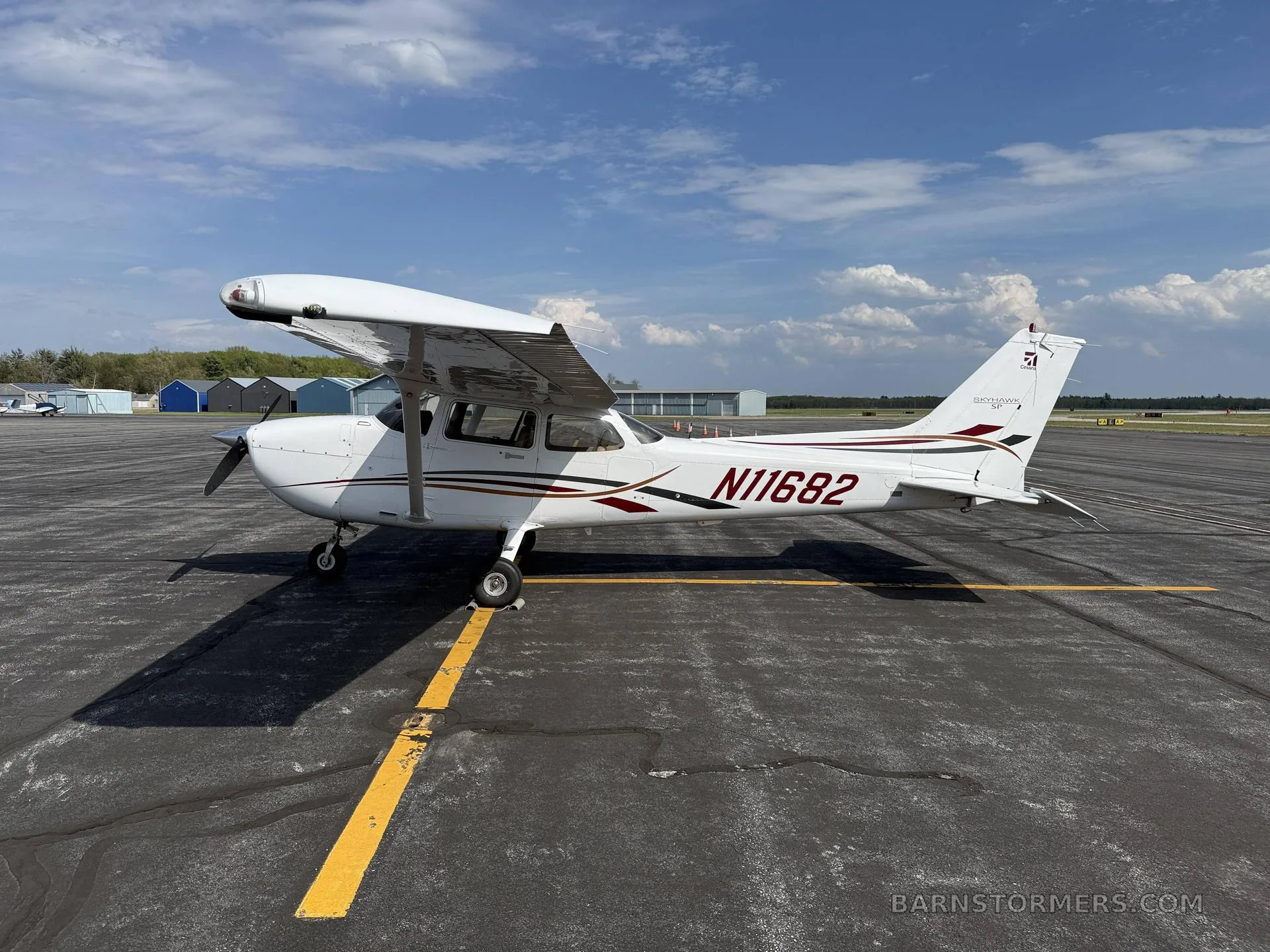
Free — save the 172S Skyhawk SP to your watchlist and track it in one place.
More CESSNA 172S SKYHAWK SPmanuals & documents
See all 20 →- SP 3500/4000 Series SpecificationsSpecifications
- Supports Program Policies & Procedures Manual (Version 10.0.1)Training Manual
- Type CertificationType Certificate
- Cessna C-172S (Nav III) Normal ChecklistChecklist
- JOINT FLEET MAINTENANCE MANUAL (JFMM)Maintenance Manual
- Weight & Balance for CESSNA 172S SKYHAWK SPWeight And Balance
- EMERGENCY CHECK LISTEmergency Procedures
- Cessna 172S/SP/G1000 ChecklistChecklist
- Aircraft TAC TAC Register Rev 7 2018Type Certificate
- Cessna 172-SP Private & Commercial CoursesPilot's Operating Handbook
- CESSNA 172S including G1000 Avionics NORMAL & EMERGENCY PROCEDURES CHECKLISTEmergency Procedures
- CESSNA 172SP Part ISystems Description
If you fly the CESSNA 172S SKYHAWK SP, you may also be researching these.


In this document
Aircraft Owner Responsibilities
This section outlines the obligations of aircraft owners, emphasizing the need to be familiar with the regulations that govern aircraft ownership. It introduces the ARROW acronym, which stands for Airworthiness Certificate, Registration Certificate, Radio Station License, Operating Limitations, and Weight and Balance Documents, all of which must be carried on the aircraft.
Airworthiness Certificate
The Airworthiness Certificate is crucial for legal operation. The document explains the classifications of airworthiness certificates and the process for obtaining one, including the necessary forms and regulations.
Aircraft Registration
This section details the responsibilities of aircraft owners regarding registration, including the need to notify the FAA of any changes in ownership or address. It also discusses the importance of maintaining accurate registration records.
Maintenance Responsibilities
Aircraft owners must ensure that their aircraft is maintained according to FAA regulations. This section covers the types of inspections required, including annual and 100-hour inspections, and the importance of keeping maintenance records.
Reporting Aircraft Accidents/Incidents
Owners are required to report accidents and incidents to the NTSB as per 49 CFR part 830. This section defines what constitutes an accident and an incident and outlines the reporting process.
Airworthiness Directives (ADs)
This section explains the types of ADs issued by the FAA, the compliance requirements, and how to obtain information about current ADs affecting aircraft.
Safety notes
- Ensure all required documentation is on board before flight.
- Failure to comply with ADs can result in legal penalties and safety risks.
Full document text
U.S. Department of Transportation Federal Aviation Administration Plane SenSe General aviation Information FAA-H-8083-19A i Plane SenSe General aviation Information 2008 U.S. Department of Transportation FederAl AviAtion AdministrAtion Flight Standards Service Plane Sense ii Plane Sense introduces aircraft owners and operators, or prospective aircraft owners and operators, to basic information about the requirements involved in acquiring, owning, operating, and maintaining a private aircraft. This handbook can be a valuable reference tool for anyone who would like to review the “nuts and bolts” of aircraft ownership. Aircraft owners and operators, or anyone considering aircraft ownership, should be familiar with Title 14 of the Code of Federal Regulations (14 CFR), which details regulations for aircraft owners, operators, pilots, aircraft mechanics, and maintenance providers. Since the requirements can be updated and the regulations can change, the Federal Aviation Administration (FAA) recommends that you contact your nearest FAA Flight Standards District Office (FSDO), where the personnel can assist you with the various requirements for aircraft ownership, operation, and maintenance. The FAA has also added information for aviation enthusiasts who own (or are interested in owning) light- sport aircraft, a new and evolving sector of the general aviation marketplace. This handbook highlights regulations and regulatory guidance material, as well as providing advice regarding where to locate answers to your questions. While Plane Sense cannot cover every issue faced by aircraft owners and operators, this handbook is intended to be a useful guide and will help you locate the resources to assist you. This publication supersedes FAA-8083-19, which was reprinted with editorial updates in 2003. This handbook is available free of charge for download, in PDF format, from the FAA Regulatory Support Division (AFS-600) on the FAA website at www.faa.gov. Plane Sense may be also be purchased from: Superintendent of Documents United States Government Printing Office Washington, DC 20402-9325 http://bookstore.gpo.gov This handbook is published by and comments should be sent to: Federal Aviation Administration Airman Testing Standards Branch (AFS-630) P.O. Box 25082 Oklahoma City, OK 73125 afs630comments@faa.gov iii Preface Plane Sense iv Plane Sense was produced by the Federal Aviation Administration (FAA) with the assistance of The Wicks Group, PLLC. The FAA wishes to acknowledge the providers of the following images used in this handbook: Skycatcher used on the cover and in chapter 6, courtesy of Cessna Aircraft Corporation Cirrus SR20-1 used on the cover and in chapter 1, courtesy of Cirrus Design Eclipse 500 used on the cover, courtesy of Eclipse Aviation Corporation The FAA would also like to extend its appreciation to several aviation industry organizations that provided assistance and input in the preparation of this handbook, including: General Aviation Manufacturers Association (GAMA) Aircraft Owners and Pilots Association (AOPA) Experimental Aircraft Association (EAA) v Acknowledgments Plane Sense vi Plane Sense is a handbook for aviation enthusiasts, especially aircraft owners and operators or those who are interested in becoming aircraft owners, who are looking for a quick reference guide on a number of general aviation topics. This handbook is published by the Federal Aviation Administration (FAA). The FAA is the executive agency responsible for aviation oversight in the United States. The FAA’s mission is to provide the safest, most efficient aerospace system in the world. The FAA is responsible for the safety of civil aviation. The Federal Aviation Act of 1958 created the agency under the name Federal Aviation Agency. The FAA adopted its present name in 1967 when it became a part of the Department of Transportation (DOT). The FAA’s major roles include: • Regulating civil aviation to promote safety • Encouraging and developing civil aeronautics, including new aviation technology • Developing and operating a system of air traffic control and navigation for both civil and military aircraft • Researching and developing the National Airspace System (NAS) and civil aeronautics • Developing and carrying out programs to control aircraft noise and other environmental effects of civil aviation • Regulating U.S. commercial space transportation FAA Headquarters is located in Washington, D.C. However, the FAA is organized into eight geographical regions and the Mike Monroney Aeronautical Center located in Oklahoma City, Oklahoma. FAA regions are organized as follows: • Alaskan (Alaska) • Central (Iowa, Kansas, Kentucky, Missouri, Nebraska, Tennessee) • Eastern (Connecticut, Delaware, District of Columbia, Maine, Maryland, Massachusetts, New Hampshire, New Jersey, New York, North Carolina, Pennsylvania, Rhode Island, Vermont, Virginia, West Virginia) • Great Lakes (Illinois, Indiana, Michigan, Minnesota, North Dakota, Ohio, South Dakota, Wisconsin) • Northwest Mountain (Colorado, Idaho, Montana, Oregon, Utah, Washington, Wyoming) • Southern Region (Alabama, Florida, Georgia, Puerto Rico, South Carolina, Virgin Islands) • Southwest Region (Arkansas, Louisiana, Mississippi, New Mexico, Oklahoma, Texas) • Western-Pacific Region (Arizona, California, Hawaii, Nevada) Within each region, you will find several Flight Standards District Offices (FSDOs). Your local FSDO is your best resource for questions about aircraft ownership, operation, maintenance, regulatory compliance, and other issues. FAA inspectors are generally assigned to a FSDO. Aviation safety inspectors (ASIs) can assist you with issues related to the operation of your aircraft, airman certification, maintenance, and other general questions. You can find your local FSDO on the FAA website at www.faa.gov by selecting “About FAA” from the top menu bar and following the links to locate your local FSDO’s contact information.
Show full textShow less
Aircraft certification-related activities are handled by the FAA Aircraft Certification Office (ACO) that serves your geographic area. vii introduction Plane Sense viii You can contact your ACO for guidance on: • Design approval and certificate management • U.S. production approvals • Engineering and analysis questions • Investigating and reporting aircraft accidents, incidents, and service difficulties • Designated Engineering Representative (DER) oversight You can find the nearest ACO on the FAA website at www.faa.gov by selecting “About FAA” from the top menu bar and following the links to locate the nearest ACO’s contact information. This handbook has been revised to include additional topics and updated website addresses to enable you to find relevant information more easily. You will also notice that some information is repeated in multiple chapters of Plane Sense, and this is designed to allow each chapter to stand alone as a reference tool to aid you in locating the information easily. Please contact your local FSDO if you have any questions about the material in Plane Sense or how the information might specifically apply to your aircraft. This handbook is intended to provide general guidance for aircraft owners and operators; however, you should always ensure that the guidance provided applies to your specific aircraft and/or your specific situation. The FAA website is continually updated. If your question is not answered in this handbook, you can access a great deal of helpful information on the FAA’s website at www.faa.gov. This new edition of Plane Sense is color- coded to assist you in quickly finding useful information. The chapters containing information that may be useful to all general aviation readers are coded in blue: Chapter 1: Aircraft Owner Responsibilities Chapter 11: Obtaining FAA Publications and Records Appendix A: FAA Contact Information Appendix B: Regulatory Guidance Index The chapters containing information about aircraft acquisition, registration, and ownership are coded in green: Chapter 2: Buying an Aircraft Chapter 3: Airworthiness Certificate Chapter 4: Aircraft Registration Chapter 5: Special Flight Permits Chapter 6: Light Sport Aircraft The chapters containing information on aircraft maintenance are coded in red: Chapter 7: Aircraft Maintenance Chapter 8: Maintenance Records Chapter 9: Airworthiness Directives Chapter 10: Service Difficulty Program You will also note the addition of several new checklists to assist you in applying the information found in Plane Sense. These checklists and any relevant FAA or other forms discussed in the chapter are located at the end of that particular chapter for ease of reference. For your convenience, FAA Contact Information is at the end of this handbook. Also, the Regulatory Guidance Index at the end of this handbook locates within each chapter the relevant regulatory guidance material, including pertinent sections of the Code of Federal Regulations (CFR), FAA Orders, and Avisory Circulars (ACs). The FAA wishes you safe landings as you embark on your own aviation journey. ix introduction Plane Sense x table of Contents Preface...................................................................iii Acknowledgments .............................................v introduction ....................................................... vii Chapter 1: Aircraft owner responsibilities ............ 1-1 Documentation .......................................................1-1 Aircraft Registration ............................................... 1-1 14 CFR .....................................................................1-2 Logbooks .................................................................1-2 Aircraft Insurance................................................... 1-2 Reporting Aircraft Accidents/Incidents ................ 1-2 Accident ..........................................................1-2 Incident...........................................................1-2 Contacting the NTSB ..................................... 1-2 Filing NTSB Form 6120.1 .............................. 1-3 Aviation Safety Reporting System.......................... 1-3 Purpose ...........................................................1-3 Confidentiality................................................ 1-3 Filing an Incident Report .............................. 1-3 Safety ......................................................................1-4 Safety Hotline................................................. 1-4 Safety Information ........................................ 1-4 Reporting Stolen Aircraft/Equipment ................... 1-4 Law Enforcement........................................... 1-4 Insurance Company ...................................... 1-4 Aviation Crime Prevention Institute ............. 1-4 Aircraft Registration Branch ........................ 1-4 Chapter 2: Buying an Aircraft ........................................ 2-1 Selecting the Aircraft .............................................. 2-1 Where To Look ............................................... 2-1 Factors Affecting Resale Value...................... 2-2 Overhauls .......................................................2-2 Aircraft Records ..................................................... 2-2 Aircraft Title ...........................................................2-2 Filing Ownership and Lien Documents ........ 2-3 When a Lien Is Recorded ............................... 2-3 Releasing a Recorded Lien ............................ 2-3 Aircraft Documents ................................................ 2-3 Bill of Sale or Conditional Sales Contract ................................................ 2-3 Airworthiness Certificate............................... 2-3 Maintenance Records .................................... 2-3 Manuals ..................................................................2-4 Airworthiness .........................................................2-4 Maintenance ...........................................................2-4 Pre-Purchase Inspection ........................................ 2-4 Light-Sport Aircraft ................................................ 2-4 Amateur-Built Aircraft ........................................... 2-4 Military Surplus Aircraft ........................................ 2-5 Chapter 3: Airworthiness Certificate ......................... 3-1 Classifications of Airworthiness Certificates.......... 3-1 Standard Airworthiness Certificate ..............3-1 Special Airworthiness Certificate .................. 3-2 Issuance of an Airworthiness Certificate ............... 3-3 Applying for an Airworthiness Certificate ............. 3-3 FAA Form 8100-2, Standard Airworthiness Certificate .............. 3-3 FAA Form 8130-7, Special Airworthiness Certificate .................. 3-3 Regulations and Policies ........................................ 3-3 Title 14 of the Code of Federal Regulations ....................................... 3-3 FAA Orders (as revised) ................................ 3-3 FAA Advisory Circulars (ACs) (as revised)... 3-3 Chapter 4: Aircraft registration ................................... 4-1 Aircraft Registration Branch .................................. 4-1 Eligible Registrants ................................................ 4-2 Registering Your Aircraft ....................................... 4-2 Registration Number .............................................. 4-2 How To Form an N-Number ......................... 4-2 Other Requirements ...................................... 4-2 Special Registration Number ................................. 4-2 Requesting a Special Registration Number ..................................... 4-3 Placing the Special Registration Number on Your Aircraft .............................. 4-3 Aircraft Previously Registered in the United States ................................................4-3 Chain of Ownership ....................................... 4-3 Replacement Certificate of Aircraft Registration .....................................4-3 Aircraft Previously Registered in a Foreign Country ...............................................4-3 AC Form 8050-1, Aircraft Registration Application ...........................4-4 AC Form 8050-3, Certificate of Aircraft Registration .........................4-4 Amateur-Built Aircraft Registration and Inspection ...................................4-4 xi Plane Sense xii Light-Sport Aircraft Registration ...........................4-5 State Registration Requirements ........................... 4-5 Additional Information ..........................................4-5 Chapter 5: special Flight Permits .................................5-1 Circumstances Warranting a Special Flight Permit ........................................... 5-1 Foreign-Registered Civil Aircraft ...........................5-2 Obtaining a Special Flight Authorization...............5-2 Application for Airworthiness Certificate...............5-2 Chapter 6: light-sport Aircraft......................................6-1 Definition ................................................................6-1 LSA Certification .................................................... 6-1 LSA Registration .....................................................6-1 Available Resources ................................................6-2 Light Sport Aviation Branch, AFS-610 .........6-2 Experimental Aircraft Association ...............6-2 Regulatory Guidance .............................................. 6-2 Chapter 7: Aircraft maintenance..................................7-1 Maintenance Responsibilities ................................7-1 14 CFR Part 91, Subpart E ......................................7-1 Manufacturer Maintenance Manuals.....................7-2 Preventive Maintenance .........................................7-2 Inspections ..............................................................7-2 Annual Inspection ..........................................7-2 100-Hour Inspection ......................................7-2 Condition Inspection ......................................7-2 Other Inspection Programs ................................... 7-2 Progressive Inspections .................................7-3 Altimeter System Inspection .........................7-3 Transponder Inspection .................................7-3 Preflight Inspection ........................................7-3 Repairs and Alterations .......................................... 7-3 Minimum Equipment List/ Configuration Deviation List ..................................7-3 FAA Resources........................................................7-3 Experimental Aircraft .............................................7-3 Chapter 8: maintenance records ................................. 8-1 Responsibilities of the Aircraft Owner .................. 8-1 Logbooks .................................................................8-2 Airworthiness Directives ........................................ 8-2 Safety Directives ..................................................... 8-2 Service Bulletins ..................................................... 8-2 FAA Form 337, Major Repair and Alteration .................................. 8-2 Entries into Aircraft Maintenance Records ........... 8-2 14 CFR Part 43, Section 43.9, Content, form, and disposition of maintenance, preventive maintenance, rebuilding, and alteration records (except inspections performed in accordance with part 91, part 125, §135.411(a)(1), and §135.419 of this chapter ................................. 8-3 14 CFR Part 43, Section 43.11, Content, form, and disposition of records for inspections conducted under parts 91 and 125 and §§135.411(a)(1) and 135.419 of this chapter................................................ 8-3 14 CFR Part 91, Section 91.409, Inspections ..................................................... 8-3 14 CFR Part 91, Section 91.411, Altimeter system and altitude reporting equipment tests and inspections .. 8-3 14 CFR Part 91, Section 91.413, ATC transponder tests and inspections ........ 8-3 14 CFR Part 91, Section 91.207, Emergency locator transmitters ................... 8-3 Amateur-Built Aircraft........................................... 8-4 Available Resources ................................................ 8-4 Chapter 9: Airworthiness directives .......................... 9-1 Types of ADs Issued ............................................... 9-1 Standard AD Process .............................................. 9-1 Emergency AD ........................................................9-1 Superseded AD .......................................................9-2 Compliance with ADs ............................................. 9-2 Amateur-Built Aircraft ........................................... 9-2 Summary of ADs ..................................................... 9-2 Obtaining ADs ........................................................9-2 Chapter 10: service difficulty Program .................... 10-1 Background .......................................................... 10-1 FAA Form 8010-4, Malfunction or Defect Report ............................. 10-1 Maintenance Alerts ............................................. 10-2 Background ................................................. 10-2 Accessing Maintenance Alerts.................... 10-2 Contact Information ................................... 10-2 xiii Chapter 11: obtaining FAA Publications and records .................................................. 11-1 Advisory Circulars ............................................... 11-1 Airworthiness Directives .................................... 11-1 Temporary Flight Restrictions ............................ 11-2 Notice to Airmen ................................................. 11-2 14 CFR.................................................................. 11-2 Handbooks and Manuals .................................... 11-2 Aircraft Records .................................................. 11-2 Request Aircraft Records............................ 11-2 Format ......................................................... 11-2 Airman Records ................................................... 11-3 Appendix A: FAA Contact information .......................... A-1 Appendix B: regulatory Guidance index ....................... B-1 Table of Contents Plane Sense xiv 1Aircraft owner responsibilities Aircraft ownership is a serious undertaking, and you should be familiar with the obligations and responsibilities of aircraft ownership before you make the decision to purchase an aircraft. Aircraft owners have a variety of responsibilities that have their foundation in the Code of Federal Regulations (CFR). documentation Do you know your ARROW? Before you fly, you need to ensure that you have all of the required documentation on your aircraft. You are responsible for carrying the following documentation on your aircraft at all times: A—Airworthiness Certificate R—Registration Certificate R— Radio Station License (Federal Communications Communication (FCC) Radio Station License, if required by the type of operation) O— Operating Limitations (which may be in the form of a Federal Aviation Administration (FAA)-approved Airplane Flight Manual (AFM) and/or Pilot’s Operating Handbook (POH)) W—Weight and Balance Documents Some of these documents are addressed in this chapter, and others are covered in later chapters. Figure 1-1 at the end if this chapter is an ARROW checklist you can use to ensure you have all of the required documents. You can expect an FAA aviation safety inspector (ASI) to ask for these documents any time he or she is inspecting your aircraft and/or assisting you with a question regarding your aircraft. m CAUTION: A radio station license is required for any international operations. You must complete an FCC Form 605, Quick-Form Application for Authorization in the Ship, Aircraft, Amateur, Restricted and Commercial Operator, and General Mobile Radio Services, available at www.fcc.gov to obtain an FCC radio station license. Aircraft registration The FAA Civil Aviation Registry Aircraft Registration Branch (AFS-750) maintains registration records on individual aircraft and serves as a repository for airworthiness documents received from FAA field offices. As an aircraft owner, you are responsible for immediately notifying AFS-750 of any change of permanent mailing address, the sale or export of your aircraft, or the loss of your ability to register an aircraft in accordance with Title 14 of the Code of Federal Regulations (14 CFR) part 47, section 47.41. 1-1 1-2 Plane Sense Plane Sense Figure 1-2 at the end of this chapter is a sample FAA Change of Address Notification you can use to inform AFS-750. Aircraft registration is addressed in more detail in chapter 4. 14 CFr 14 CFR includes rules prescribed by the FAA gover- ning all aviation activities in the United States. A wide variety of activities are regulated, such as airplane design, typical airline flights, pilot training activities, hot-air ballooning, and even model rocket launches. The rules are designed to promote safe aviation while protecting pilots, passengers, and the general public from unnecessary risk. As an aircraft owner, you are responsible for compli- ance and familiarity with the applicable 14 CFR part(s) concerning the operation and maintenance of your aircraft. While the regulations cited below are not exhaustive, they are a starting point as you consider aircraft ownership. It is essential that you remember that you are responsible for complying with all 14 CFR parts applicable to your aircraft and aircraft operations. • As an aircraft owner, you should be familiar with the provisions of 14 CFR Part 43, Maintenance, Preventive Maintenance, Rebuilding, and Altera- tion, and 14 CFR Part 91, General Operating and Flight Rules. • If you are also a pilot, you should be familiar with the provisions of 14 CFR Part 61, Certification: Pilots, Flight Instructors, and Ground Instructors, and 14 CFR Part 67, Medical Standards and Certification. Questions regarding 14 CFR can be addressed to your local Flight Standards District Office (FSDO). Information about obtaining copies of 14 CFR parts and FAA publications can be found in chapter 11. logbooks Each aircraft has a unique set of logbooks that document historical data dating back to the manu- facturing date of the aircraft. As an aircraft owner, you have a regulatory obligation to ensure that your logbooks are complete and kept up to date. Aircraft logbooks enable the aircraft owner to keep records of the entire aircraft in chronological order including: inspections, tests, repairs, alterations, Airworthiness Directive (AD) compliance, service bulletins, and equipment additions, removals, or exchanges. Most logbooks also include sections for major alterations and altimeter/static system checks. Anyone performing maintenance on your aircraft will need complete aircraft logbooks to review the aircraft’s compliance history before performing main- tenance on your aircraft. Information about aircraft maintenance and aircraft maintenance records can be found in chapters 7 and 8, respectively. Aircraft insurance Aircraft insurance is an important consideration for any aircraft owner. The type(s) and amount of insurance you should carry on your aircraft are influenced by several factors, and you should discuss these decisions with an insurance agent familiar with providing aviation insurance policies. Depending on the usage of your aircraft and who might be flying the aircraft, you may need Owners, Renters and/or Certified Flight Instructor (CFI) insurance policies for your aircraft. Responsible aircraft owners always carry sufficient insurance on their aircraft. m CAUTION: You should ensure that you are in compliance with any state insurance requirements relating to aircraft ownership. reporting Aircraft Accidents/incidents Aircraft owners are responsible for complying with Title 49 of the Code of Federal Regulations (49 CFR) part 830 regarding the reporting of air- craft accidents and incidents. You are required to notify the National Transportation Safety Board (NTSB) immediately of aviation accidents and certain incidents. Accident An accident is defined in 49 CFR part 830 as “an occurrence associated with the operation of an aircraft that takes place between the time any person boards the aircraft with the intention of flight and all such persons have disembarked, and in which any person suffers death or serious injury, or in which the aircraft receives substantial damage.” Incident An incident is defined in 49 CFR part 830 as “an occurrence other than an accident that affects or could affect the safety of operations.” Contacting the NTSB Contact the nearest NTSB regional office to file a report. Reports of accidents or incidents should be 1 1-3 Chapter 1: Aircraft O w ner R esponsibilities made to the NTSB regional office associated with the state in which the accident or incident occurred. NTSB regions are organized as follows: • Eastern (Alabama, Connecticut, Delaware, Florida, Georgia, Kentucky, Maine, Maryland, Massachusetts, Mississippi, New Hampshire, New Jersey, New York, North Carolina, Pennsylvania, Puerto Rico, Rhode Island, South Carolina, Tennessee, Vermont, Virgin Islands, Virginia, West Virginia); • Central (Arkansas, Colorado, Illinois, Indiana, Iowa, Kansas, Louisiana, Michigan, Minnesota, Missouri, Nebraska, New Mexico, North Dakota, Ohio, Oklahoma, South Dakota, Texas, Wisconsin); • Western (American Samoa, Arizona, California, Guam, Hawaii, Idaho, Montana, Nevada, Oregon, Utah, Washington, Wyoming); and • Alaska (Alaska). Contact information for the NTSB regional offices is located at the end of this chapter in Figure 1-3 and on the NTSB website at www.ntsb.gov. Your local FSDO can also direct you to the correct NTSB regional office in the event of an aircraft accident or incident. For the purpose of notifying the NTSB, a phone call is sufficient initially, but a written followup is required. You will probably be directed to complete NTSB Form 6120.1, Pilot/Operator Aircraft Accident/Incident Report, which is available on the NTSB website at www.ntsb.gov, from the nearest NTSB regional office, or from your local FSDO. Filing NTSB Form 6120.1 In accordance with 49 CFR part 830, section 830.5, you must file a report with the NTSB regional office nearest the accident or incident within 10 days after an accident for which notification is required. Complete Form 6120.1, sign it, and send it by mail or fax to the applicable NTSB regional office. Figure 1-4 at the end of this chapter is a sample NTSB Form 6120.1. Aviation safety reporting system The Aviation Safety Reporting System (ASRS) is an important facet of the continuing effort by government, industry, and individuals to maintain and improve aviation safety. The ASRS, which is administered by the National Aeronautics and Space Administration (NASA), collects voluntarily submit- ted aviation safety incident/situation reports from pilots, controllers, and others. The ASRS acts on the information these reports contain. It identifies system deficiencies and issues alerting messages to persons in a position to correct them. The database is a public repository which serves the needs of FAA and NASA and those of other organizations worldwide engaged in research and the promotion of safe flight. Purpose The ASRS collects, analyzes, and responds to volun- tarily submitted aviation safety incident reports in order to lessen the likelihood of aviation accidents. ASRS data is used to: • Identify deficiencies and discrepancies in the National Airspace (NAS) so that these can be remedied by appropriate authorities. • Support policy formulation and planning for, and improvements to, the NAS. • Strengthen the foundation of aviation human factors safety research. This is particularly im- portant since it is generally conceded that over two-thirds of all aviation accidents and incidents are caused by human performance errors. Confidentiality Pilots, air traffic controllers, flight attendants, mechanics, ground personnel, and others involved in aviation operations submit reports to the ASRS when they are involved in, or observe, an incident or situation in which aviation safety was compromised. All submissions are voluntary. Reports sent to the ASRS are held in strict confidence. ASRS de-identifies reports before entering them into the incident database. All personal and organiza- tional names are removed. Dates, times, and related information that can be used to infer an identity are either generalized or eliminated. Filing an Incident Report An ASRS Incident Report is often referred to as a “NASA Strip.” When submitting an ASRS Incident Report, or NASA Strip, the submitter completes the form and sends it to the address indicated, and NASA returns the identification strip to the submitter as confirmation of receipt of the form. You can obtain more information, a copy of the incident report form, or file the form electronically on the NASA website at http://asrs.arc.nasa.gov. Figure 1-5 at the end of this chapter is a sample ASRS Incident Report. 1 1-4 Plane Sense Plane Sense safety The FAA has a number of aviation safety resources available on its website at www.faa.gov. You can access safety information by selecting “Safety” from the main menu bar. Safety Hotline You can call the FAA 24-Hour Safety Hotline at (800) 255-1111 or email the FAA Safety Hotline at 9-AWA-ASY-SAFETYHOTLINE@faa.gov to report: • Maintenance improprieties • Aircraft incidents • Suspected unapproved parts • Violations of 14 CFR You can provide your contact information or file an anonymous report with the FAA Safety Hotline. Safety Information You can also find additional information and aviation data and statistics on the FAA website at www.faa.gov including: • Temporary Flight Restrictions (TFRs) • Aircraft Safety Alerts • Safety Program Airmen Notification System • Information for operators • Safety alerts for operators • CertAlerts for certificated airports • Traffic Collision Avoidance System (TCAS) Safety Bulletin • Aviation Safety Information Analysis and Sharing (ASIAS) • Accident and incident data • Aviation accident reports and statistics • Runway incursion data and statistics • Weather reporting stolen Aircraft/equipment As an aircraft owner, you should be prepared to handle the theft of your aircraft or aircraft equipment. In order to manage the reporting process effectively, you should keep separate records (in a location away from the aircraft) of serial numbers for powerplants, avionics, and other installed items. Report these serial numbers at the same time the aircraft is stolen. Law Enforcement You should immediately report a stolen aircraft to the local law enforcement agency having jurisdiction at the site of the theft. Ask the agency to report the theft to the Federal Bureau of Investigation (FBI) National Crime Information Center, as this will initiate notifications to the appropriate government offices. Insurance Company After filing the appropriate reports with your local law enforcement agency, notify your insurance company or agent of the stolen aircraft, as appropriate. Aviation Crime Prevention Institute You should also notify the Aviation Crime Prevention Institute (ACPI) of the stolen aircraft. After you give ACPI all available information, ACPI will send notices of the theft to industry contacts, embassies, and other agencies, if applicable. You can contact the ACPI at: Aviation Crime Prevention Institute 226 N. Nova Road Ormond Beach, FL 32174 USA (800) 969-5473 toll-free (386) 341-7270 outside U.S. (386) 615-3378 fax http://www.acpi.org Aircraft Registration Branch If enough time has passed that the return of the aircraft is no longer expected, the owner should write to AFS-750 requesting that the registration for this aircraft be canceled. The request should fully describe the aircraft, indicate the reason for cancellation, be signed in ink by the owner, and show a title for the signer, if appropriate. 1 1-5 Chapter 1: Aircraft O w ner R esponsibilities ArroW Checklist Figure 1-1. ARROW Checklist. You can use this checklist to ensure that you are carrying the appropriate documentation onboard your aircraft at all times. stAtUs item desCriPtion A—Airworthiness certificate FAA Form 8100-2, Standard Airworthiness Certificate, or FAA Form 8130-7, Special Airworthiness Certificate (as applicable) R—Registration certificate FAA Form 8050-3, Certificate of Registration R—Radio station license FCC Form 605, Quick-Form Application for Authorization in the Ship, Aircraft, Restricted and Commercial Operator, and General Mobile Radio Services, available on FCC website at www.fcc.gov (if required by the type of operation) O—Operating limitations FAA-approved Airplane Flight Manual (AFM) and/or Pilot’s Operating Handbook (POH), and/or limitations attached to FAA Form 8130-7 W—Weight and balance Documentation provided by aircraft manufacturer, maintenance and modification records 1 1-6 Plane Sense Plane Sense Figure 1-2. FAA Change of Address Notification (Aircraft Owner). You can obtain instructions for completing an FAA Change of Address Notification on the FAA website at www.faa.gov or from your local FSDO. 199AZ Cessna 172 9999 OK 73125 Joe Pilot 123 Beechcraft Way Oklahoma City Joe PilotSAMPLE CHANGE OF ADDRESS NOTIFICATION (AIRCRAFT OWNER) PRINT OR TYPE Name of Registered Owner Aircraft Registration Number N Manufacturer Model Serial Number Mailing Address (if PO Box, include physical address) City State Zip Code SIGNATURE (DO NOT Print or Type) Title SIGNATURE REQUIREMENTS: (Show appropriate title for signer) • Individual: Owner must sign. • Partnership: A general partner must sign. • Corporation: A corporate officer or managing official must sign. • Co-owner: Each Co-owner must sign. • Government: Any authorized person may sign AFS-750-ADCHG-1 (07/04) (first fold) 1 1-7 Chapter 1: Aircraft O w ner R esponsibilities Figure 1-3. NTSB Regional Offices. The updated list of NTSB Regional Offices, including office hours, is available on the NTSB website at www.ntsb.gov. ntsB regional offices eastern region Ashburn regional office 45065 Riverside Parkway Ashburn, Virginia 20147 Phone: (571) 223-3930 Fax: (571) 223-3926 Parsippany regional office 2001 Route 46 Suite 310 Parsippany, New Jersey 07054 Phone: (973) 334-6420 Fax: (973) 334-6759 Atlanta regional office Atlanta Federal Center 60 Forsyth Street, SW Suite 3M25 Atlanta, Georgia 30303 Phone: (404) 562-1666 Fax: (404) 562-1674 miami regional office 8405 N.W. 53rd Street Suite B-103 Miami, Florida 33166 Phone: (305) 597-4610 Fax: (305) 597-4614 Alabama, Connecticut, Delaware, Florida, Georgia, Kentucky, Maine, Maryland, Massachusetts, Mississippi, New Hampshire, New Jersey, New York, North Carolina, Pennsylvania, Puerto Rico, Rhode Island, South Carolina, Tennessee, Vermont, Virgin Islands, Virginia, West Virginia Central region Chicago regional office 31 West 775 North Avenue West Chicago, Illinois 60185 Phone: (630) 377-8177 Fax: (630) 377-8172 denver regional office 4760 Oakland Street Suite 500 Denver, Colorado 80239 Phone: (303) 373-3500 Fax: (303) 373-3507 Arlington regional office 624 Six Flags Drive Suite 150 Arlington, Texas 76011 Phone: (817) 652-7800 Fax: (817) 652-7803 Arkansas, Colorado, Illinois, Indiana, Iowa, Kansas, Louisiana, Michigan, Minnesota, Missouri, Nebraska, New Mexico, North Dakota, Ohio, Oklahoma, South Dakota, Texas, Wisconsin 1 1-8 Plane Sense Plane Sense Figure 1-3. NTSB Regional Offices (continued). Alaska region Anchorage regional office 222 West 7th Avenue Room 216, Box 11 Anchorage, Alaska 99513 Phone: (907) 271-5001 Fax: (907) 271-3007 Alaska ntsB regional offices Western region seattle regional office 19518 Pacific Highway South Suite 201 Seattle, Washington 98188 Phone: (206) 870-2200 Fax: (206) 870-2219 Gardena regional office 1515 W. 190th Street Suite 555 Gardena, California 90248 Phone: (310) 380-5660 Fax: (310) 380-5666 Hawaii regional office Telework Location American Samoa, Arizona, California, Guam, Hawaii, Idaho, Montana, Nevada, Oregon, Utah, Washington, Wyoming 1 1-9 Chapter 1: Aircraft O w ner R esponsibilities Figure 1-4. NTSB Form 6120.1, Pilot/Operator Aircraft Accident/Incident Report. You can obtain instructions for completing NTSB Form 6120.1 on the NTSB website at www.ntsb.gov or from your local FSDO. SAMPLE 1 1-10 Plane Sense Plane Sense Figure 1-4. NTSB Form 6120.1 (page 2 of 9). SAMPLE 1 1-11 Chapter 1: Aircraft O w ner R esponsibilities Figure 1-4. NTSB Form 6120.1 (page 3 of 9). SAMPLE 1 1-12 Plane Sense Plane Sense Figure 1-4. NTSB Form 6120.1 (page 4 of 9). SAMPLE 1 1-13 Chapter 1: Aircraft O w ner R esponsibilities Figure 1-4. NTSB Form 6120.1 (page 5 of 9). SAMPLE 1 1-14 Plane Sense Plane Sense Figure 1-4. NTSB Form 6120.1 (page 6 of 9). SAMPLE 1 1-15 Chapter 1: Aircraft O w ner R esponsibilities Figure 1-4. NTSB Form 6120.1 (page 7 of 9). SAMPLE 1 1-16 Plane Sense Plane Sense Figure 1-4. NTSB Form 6120.1 (page 8 of 9). SAMPLE 1 1-17 Chapter 1: Aircraft O w ner R esponsibilities Figure 1-4. NTSB Form 6120.1 (page 9 of 9). SAMPLE 1 1-18 Plane Sense Plane Sense Figure 1-5. ASRS Incident Report. You can obtain an ASRS Incident Report and/or file the form online at the NASA website at http://asrs.arc.nasa.gov/. SAMPLE 1 1-19 Chapter 1: Aircraft O w ner R esponsibilities Figure 1-5. ASRS Incident Report (page 2 of 2). SAMPLE 1 1-20 Plane Sense 1 2-1 Buying an Aircraft 2 T he purchase of an aircraft represents a major commitment that should be approached carefully and cautiously, especially when buying a used aircraft. For many aircraft owners, it represents the largest single lifetime investment next to buying a home. Quite often, the purchase price of an aircraft approximates or exceeds the price of a new home. Particularly when buying a used aircraft, it is wise to have the selected aircraft inspected by a qualified person or facility before you complete the transaction. The condition of the air- craft and the state of its maintenance records can be determined by persons familiar with the particular make and model. Pre-purchase inspections should be performed by a Federal Aviation Administration (FAA) certificated airframe and powperplant mechanic (A&P) or an approved repair station. The Buying an Aircraft Checklist (Figure 2-1 at the end of this chapter) is a suggested list of items to consider when purchasing an aircraft. selecting the Aircraft One of the most common mistakes in purchasing an aircraft is to make a decision too quickly. Take the time to analyze your requirements carefully and be realistic. Consider the typical flight loading, trip distance, and conditions of flight, then compare aircraft. If possible, rent the type of aircraft that interests you to determine how well it meets your requirements. Keep in mind that the biggest expense of owning an aircraft is not always the initial purchase price. Where to Look Once you have chosen the type of aircraft that will fit your needs, shop around and do some pricing. For retail and wholesale price information, check with an aviation trade association, bank, other financial institution, or Fixed Base Operator (FBO) for the latest aircraft bluebook values. There are several good publications available that advertise aircraft for sale. Your local FBO can be very helpful as you look for the right aircraft. m CAUTION: Try to keep your search for an aircraft close to home. If a problem pops up after the sale, you may not find the long-distance seller as willing to help you as someone closer to home. 2-2 Plane Sense Factors Affecting Resale Value Know the major factors that affect resale value. Generally speaking they are: • Engine hours—perhaps the most common in- fluence on resale value. The closer an engine is to its recommended time between overhaul (TBO), the lower the value. There are many factors that affect engine health, and a high-time engine is not necessarily bad. Regular use helps keep seals and other engine components lubricated and in good shape. • Installed equipment—such as avionics, air condi- tioning, deicing gear and interior equipment. The most valuable equipment is usually avionics, which can easily double the value of some older aircraft. The newer the technology, the higher the value of the aircraft. • Airworthiness directives (ADs)—issued by the FAA for safety reasons. Once issued, owners are required to comply with the AD within the time period allotted. It is important to look at the AD history of an aircraft and ensure the logbooks show compliance with all applicable ADs. ADs are discussed in greater detail in chapter 9. • Damage history—it may be difficult to locate a complete damage history for an aircraft. Any aircraft with a damage history should be closely scrutinized to ensure it has been properly repaired in accordance with the applicable Title 14 of the Code of Federal Regulations (14 CFR) parts and recommended practices. • Paint/Interior—as is the case with homes, paint can be used to give “tired” aircraft a quick face- lift. Check new paint jobs carefully for evidence of corrosion under the surface. Interior items should be checked for proper fit and condition. Overhauls Be careful of the terminology used to describe engine condition. Do not confuse a top overhaul with a major overhaul, or a major overhaul with a factory remanufactured “zero-time” engine. A top overhaul involves the repair of engine components outside of the crankcase. A major overhaul involves the com- plete disassembly, inspection, repair, and reassembly of an engine to specified limits. If an engine has had a top or major overhaul, the logbooks must still show the total time on the engine, if known, and its prior maintenance history. A “zero-time” engine is one that has been overhauled to factory new limits by the original manufacturer and is issued a new logbook without previous operating history. Aircraft records Aircraft records maintained by the FAA are on file at the Mike Monroney Aeronautical Center in Oklahoma City, Oklahoma. Copies of aircraft records are available for review in CD format or paper. For information on ordering and costs, contact the FAA Civil Aviation Registry Aircraft Registration Branch (AFS-750). Copies of aircraft records may also be requested online. Visit www.faa.gov and select the “Aircraft Registration” link. There may be other records on file at federal, state, or local agencies that are not recorded with the FAA. AFS-750 contact information is in the FAA Contact Information appendix on pages A1–A2 of this handbook. Make sure the following documents are available and in proper order for the aircraft: • Airworthiness Certificate • Engine and airframe logbooks • Aircraft equipment list • Weight and balance data, placards • FAA-approved Airplane Flight Manual (AFM) and/or Pilot’s Operating Handbook (POH) m CAUTION: Missing documents, pages, or entries from aircraft logbooks may cause significant problems for the purchaser and reduce the value of the aircraft. Aircraft title The Federal Aviation Act requires the FAA to main- tain a recording system for aircraft bills of sale, security agreements, mortgages, and other liens. This is done at AFS-750, which also processes applications for, and issues, aircraft registration certificates. The two systems are linked together because you must prove ownership in order to be entitled to register an aircraft. “Clear title” is a term commonly used by aircraft title search companies to indicate there are no liens (e.g., chattel mortgage, security agreement, tax lien, artisan lien) in the FAA aircraft records. Title searches for the aviation public are not performed by AFS-750; however, the aircraft records contain all of the ownership and security documents that have been filed with the FAA. AFS-750 records acceptable security instruments. In addition, some states authorize artisan liens (mechanic liens). These also need to be recorded. Be sure to check your state’s statutes regarding liens. 2 2-3 Chapter 2: Buying an Aircraft m CAUTION: Federal liens against an owner (drug, repossession, etc.) may not show up on your title search. State law determines lien and security interests. Although there is no federal requirement to file lien or security instruments with the FAA, the parties to these transactions can file their qualifying documents with AFS-750. You may search the aircraft records, or have this done by an attorney or aircraft title search company. m CAUTION: FAA registration cannot be used in any civil proceeding to establish proof of ownership. There is no substitute for examining the aircraft’s records to secure an ownership history and to determine if there are any outstanding liens or mortgages. This procedure should help avoid a delay in registering an aircraft. Filing Ownership and Lien Documents Filing ownership and lien documents constitutes formal notice to the world of the ownership and security interests recorded. A person who engages in a financial transaction involving a U.S. registered aircraft who does not have a title search performed is taking a risk. Under the law, that person will be charged with knowing what is on file with the FAA, even if he or she does not actually know. A simple title search will show the federally recorded owner- ship and lien status of any aircraft registered in the United States. When a Lien Is Recorded When a security agreement or lien document is recorded, the FAA sends an Aeronautical Center (AC) Form 8050-41, Conveyance Recordation Notice, to the secured party. This notice describes the affected aircraft (and other eligible collateral such as engines, propellers and air carrier spare parts locations). It also identifies the recorded document by its date, the parties, the FAA recording number, and date of recordation. This recordation notice is sent as a confirmation that the lien has been recorded and added to the aircraft record. Releasing a Recorded Lien The FAA Form 8050-41 may be used as a release if the secured party signs below the release statement and returns the form to the AFS-750. The FAA may also accept as a release a document that describes the affected collateral, specifically identifies the lien, and contains a statement releasing all lienholder rights and interest in the described collateral from the terms of the identified lien. The release document must be signed in ink by the secured party and show the signer’s title, as appropriate. A new AC Form 8050-41 may be requested by con- tacting AFS-750. You will need to describe the aircraft and the lien document sufficiently to identify the specific document needing release. AFS-750 contact information is in the FAA Contact Information appendix on pages A1–A2 of this handbook. Aircraft documents There are numerous documents that should be reviewed and transferred when you purchase an aircraft. Bill of Sale or Conditional Sales Contract The bill of sale or conditional sales contract is your proof of purchase of the aircraft and will be recorded with the FAA to protect your ownership interest. Airworthiness Certificate The aircraft should have either FAA Form 8100-2, Standard Airworthiness Certificate, or FAA Form 8130-7, Special Airworthiness Certificate. Maintenance Records The previous owner of the aircraft should provide the aircraft’s maintenance records containing the following information: • The total time in service of the airframe, each engine, and each propeller; • The current status of life-limited parts of each airframe, engine, propeller, rotor, and appliance; • The time since last overhaul of all items installed on the aircraft that are required to be overhauled on a specified time basis; • The identification of the current inspection status of the aircraft, including the time since the last inspection required by the inspection program under which the aircraft and its appliances are maintained; • The current status of applicable ADs, including for each the method of compliance, the AD number, revision date, and if the AD involves recurring action, the time and date when the next action is required; and • A copy of current major alterations to each airframe, engine, propeller, rotor, and appliance. 2 2-4 Plane Sense manuals Manufacturers produce owner’s manuals, main- tenance manuals, service letters and bulletins, and other technical data pertaining to their aircraft. These may be available from the previous owner, but are not required to be transferred to a purchaser. If the service manuals are not available from the pre- vious owner, you can usually obtain them from the aircraft manufacturer. Airworthiness Two conditions must be met for a standard category aircraft to be considered airworthy: • The aircraft conforms to its type design (type certificate). Conformity to type design is attained when the required and proper components are installed that are consistent with the drawings, specifications, and other data that are part of the type certificate. Conformity includes applicable Supplemental Type Certificate(s) (STC) and field-approval alterations. • The aircraft is in condition for safe operation, referring to the condition of the aircraft with relation to wear and deterioration. maintenance 14 CFR part 91, section 91.403, places primary responsibility upon the owner for maintaining the aircraft in an airworthy condition. This includes compliance with applicable ADs. The owner is responsible for ensuring that maintenance personnel make appropriate entries in the aircraft main- tenance records, indicating that the aircraft has been approved for return to service. In addition, the owner is responsible for having maintenance performed that may be required between scheduled inspections. Inoperative instruments or equipment that can be deferred under 14 CFR part 91, section 91.213(d)(2), will be placarded and maintenance recorded in accordance with 14 CFR part 43, section 43.9. Pre-Purchase inspection Before buying an aircraft, you should have a mechanic you trust give the aircraft a thorough inspection and provide you with a written report of its condition. While a pre-purchase inspection need not be an annual inspection, it should include at least a dif- ferential compression check on each cylinder of the engine and any other inspections necessary to determine the condition of the aircraft. In addition to a mechanical inspection, the aircraft logbooks and other records should be carefully reviewed for such things as FAA Form 337, Report of Major Repair or Alteration, AD compliance, the status of service bulletins and letters, and aircraft/component serial numbers. light-sport Aircraft Light-sport aircraft is a growing sector of the general aviation community, specific to the United States. Several resources are available if you have questions about acquiring a light-sport aircraft. You can contact the FAA Light Sport Aviation Branch (AFS-610), your local FAA Flight Standards District Office (FSDO), or the Experimental Aircraft Association (EAA) for assistance. Chapter 6 discusses light-sport aircraft in greater detail. AFS-610 contact informa- tion is in the FAA Contact Information appendix on pages A1–A2 of this handbook. Amateur-Built Aircraft There are several unique considerations when purchasing an amateur-built aircraft. The pros- pective buyer is advised to have someone familiar with the type of aircraft check the aircraft of interest for workmanship, general construction integrity, and compliance with the applicable 14 CFR parts. You can contact your local FAA Manufacturing Inspection District Office (MIDO) or FSDO to speak with an FAA aviation safety inspector (ASI) who can explain the requirements for experimental certification. 2 2-5 Chapter 2: Buying an Aircraft Things to consider when buying an amateur-built aircraft: • Examine the Special Airworthiness Certificate and its operating limitations. This certificate is used for all aircraft that fall under experimental status and states for what purpose it was issued. The operating limitations specify any operating restrictions that may apply to the aircraft. • Check the aircraft maintenance records of the airframe, engine, propeller, and accessories. Under 14 CFR part 91, sections 91.305 and 91.319(b), all initial flight operations of experi- mental aircraft may be limited to an assigned flight test area. This is called Phase I. The aircraft is flown in this designated area until it is shown to be controllable throughout its normal range of speeds and all maneuvers to be executed, and that it has not displayed any hazardous operating characteristics or design features. The required flight time may vary for each type of aircraft and is covered in the operating limitations. • After the flight time requirements are met, the owner/operator endorses the aircraft logbook with a statement certifying that the prescribed flight hours are completed and the aircraft complies with 14 CFR part 91, section 91.319(b). Phase I records are retained for the life of the aircraft. • In Phase II, the FAA may prescribe Operating Limitations for an unlimited duration, as appropriate. • Before taking delivery of the aircraft, make a final pre-purchase inspection. Ensure that the Special Airworthiness Certificate, Operating Limitations, Aircraft Data Plate, Weight and Balance data, Aircraft Maintenance Records, and any other required documents are with the aircraft. If the Special Airworthiness Certificate, Operating Limitations, and Aircraft Data Plate are surrendered to the FAA by the original builder, you may not be able to recertificate the aircraft because you are not the builder. • Amateur-built aircraft require a condition in- spection within the previous 12 calendar months. This inspection requirement and those who are eligible to work on the aircraft are addressed in the Operating Limitations of that particular aircraft. military surplus Aircraft Certain surplus military aircraft are not eligible for FAA certification in the STANDARD, RESTRICTED, or LIMITED classifications. The FAA, in cooperation with the Department of Defense (DOD), normally performs preliminary “screening” inspections on surplus military aircraft to determine the civil certi- fication potential of the aircraft. For aircraft eligible for potential certification, you must “show” the FAA that your aircraft conforms to the FAA-approved type design (type certificate), and that the aircraft is in a condition for safe operation (airworthy). This means you are required to provide the technical data necessary to support this showing. For example, certain military surplus aircraft may be eligible for certification in the RESTRICTED category and modified for special purpose operations. Military-derived RESTRICTED category aircraft may be manufactured in the United States or in a foreign country, but military surplus aircraft must be surplus of the U.S. Armed Forces. The FAA bases its certi- fication on the operation and maintenance of the air- craft including review of the service life of the aircraft and any modifications. When an aircraft has been modified by the military, you must either return the aircraft to the originally approved civil configuration, or obtain FAA design approval for the military modification. This is accomplished through the STC process. The STC process is also necessary for modifications to the aircraft for a special purpose operation (e.g., crop dusting). Once the FAA determines that the military surplus aircraft conforms to the FAA- approved type design, as noted in FAA Order 8130.2 (as revised), Airworthiness Certification of Aircraft and Related Products, and military records, you may apply for an airworthiness certificate. Since no civil aircraft may be flown unless certifica- ted, you should discuss this with an ASI at your local FSDO, who can advise you of eligible aircraft and certification procedures. An additional source for advice on amateur-built and surplus military aircraft is the EAA. 2 2-6 Plane Sense Figure 2-1. Buying an Aircraft Checklist. This checklist is intended to provide a suggested list of items to consider when purchasing an aircraft. It is not an all-inclusive list, and if you have any questions, you should consult with an experienced aviation professional prior to purchasing an aircraft. Buying an Aircraft Checklist stAtUs item desCriPtion Selecting the Aircraft Consider the location of the seller. Consider factors affecting resale value: • Engine hours • Installed equipment • ADs • Damage history • Paint/Interior Consider the condition of the engine (e.g., overhauls). Aircraft Title Ensure the aircraft has “clear title.” Aircraft Documents Ensure the appropriate documentation is reviewed and transferred with the aircraft: • Proof of purchase (bill of sale or conditional sales contract) • Airworthiness certificate • Maintenance records Manuals Ensure all aircraft manufacturer and other manuals are transferred with the aircraft. Maintenance Review the maintenance records to ensure they are complete and all inspections are current. 2 3 3-1 A n airworthiness certificate is issued by a representative of the Federal Aviation Administration (FAA) after the aircraft has been inspected, is found to meet the require- ments of Title 14 of the Code of Federal Regulations (14 CFR) and is in condition for safe operation. The certificate must be displayed in the aircraft so that it is legible to passengers or crew whenever the aircraft is operated. The airworthiness certificate is transferred with the aircraft, except when it is sold to a foreign purchaser. An airworthiness certificate is an FAA document that grants authorization to operate an aircraft in flight. The FAA provides information regarding the definition of the term “airworthy” in FAA Order 8130.2 (as revised), Airworthiness Certification of Aircraft and Related Products, chapter 1. Classifications of Airworthiness Certificates The FAA initially determines that your aircraft is in condition for safe operation and conforms to type design or American Society for Testing and Materials (ASTM) International standards, then issues an airworthiness certificate. There are two different classifications of airworthiness certificates: Standard Airworthiness and Special Airworthiness. Standard Airworthiness Certificate FAA Form 8100-2, Standard Airworthiness Certificate is the FAA’s official authorization allowing for the operation of type certificated aircraft in the following categories: • Normal • Utility • Acrobatic • Commuter • Transport • Manned free balloons • Special classes A standard airworthiness certificate remains valid as long as the aircraft meets its approved type design, is in a condition for safe operation and maintenance, preventive maintenance, and alterations are performed in accordance with 14 CFR parts 21, 43, and 91. Airworthiness Certificate 3-2 Plane Sense Special Airworthiness Certificate FAA Form 8130-7, Special Airworthiness Certificate, is an FAA authorization to operate an aircraft in U.S. airspace in one or more of categories in Figure 3-1. Figure 3-1. Special Airworthiness Certificate Categories. Category Purpose(s) 14 CFr Primary Aircraft flown for pleasure and personal use Part 21, section 21.24 Part 21, section 21.184 Restricted Aircraft with a “restricted” category type certificate, including: • Agricultural • Forest and wildlife conservation • Aerial surveying • Patrolling (pipelines, power lines) • Weather control • Aerial advertising • Other operations specified by the Administrator Part 21, section 21.25 Part 21, section 21.185 Multiple Multiple airworthiness certificates Part 21, section 21.187 Limited Aircraft with a “limited” category type certificate Part 21, section 21.189 Light-Sport Operate a light-sport aircraft, other than a gyroplane, kit-built, or transitioning ultralight-like vehicle Part 21, section 21.190 Experimental • Research and development • Showing compliance with regulations • Crew training • Exhibition • Air racing • Market surveys • Operating amateur-built aircraft • Operating kit-built aircraft • Operating light-sport aircraft • Unmanned Aircraft Systems (UAS) Part 21, section 21.191 Part 21, section 21.193 Part 21, section 21.195 Special Flight Permit Special-purpose flight of an aircraft that is capable of safe flight Part 21, section 21.197 Provisional Aircraft with a “provisional” category type certificate for special operations and operating limitations Part 21, subpart C Part 21, subpart I Part 91, section 91.317 3 3-3 Chapter 3: Airworthiness C erti cate issuance of an Airworthiness Certificate Only an FAA aviation safety inspector (ASI) or authorized representative of the Administrator (i.e., Designees), as defined in 14 CFR Part 183, Representatives of the Administrator, is authorized to issue an airworthiness certificate. Your local FAA Flight Standards District Office (FSDO) processes requests for replacement airworthiness certificates. You should contact your local FSDO immediately upon discovering that you need a replacement airworthiness certificate for your aircraft. Applying for an Airworthiness Certificate A registered owner may apply for an airworthiness certificate by submitting FAA Form 8130-6, Applica- tion for U.S. Airworthiness Certificate, to your local FAA Manufacturing Inspection District Office (MIDO). You can find your local MIDO contact information on the FAA website at www.faa.gov. Figure 3-2 at the end of this chapter is a sample FAA Form 8130-6. You can find instructions for completing FAA Form 8130-6 on the FAA website at www.faa.gov or in FAA Order 8130.2 (as revised) . The FAA will issue the applicable certificate if the aircraft is eligible and in a condition for safe operation. FAA Form 8100-2, Standard Airworthiness Certificate FAA Form 8100-2, Standard Airworthiness Certificate, is issued for aircraft type certificated in the normal, utility, acrobatic, commuter, and transport categories, or for manned free balloons. The airworthiness certificate remains in effect as long as the aircraft receives the required main- tenance and is properly registered in the United States. Flight safety relies, in part, on the condition of the aircraft, which may be determined on inspection by mechanics, approved repair stations, or manufacturers that meet specific requirements of 14 CFR part 43. Figure 3-3 at the end of this chapter is a sample FAA Form 8100-2. FAA Form 8130-7, Special Airworthiness Certificate FAA Form 8130-7, Special Airworthiness Certificate, is issued for all aircraft certificated in other than the Standard classifications, such as Experimental, Restricted, Limited, Provisional, and Light-Sport. If you are interested in purchasing an aircraft classed as other than Standard, you should contact the local MIDO or FSDO for an explanation of airworthiness requirements and the limitations of such a certificate. The Experimental Aircraft Association (EAA) is an additional source of information on special airworthi- ness certificates. Figure 3-4 at the end of this chapter is a sample FAA Form 8130-7. m CAUTION: The FAA can revoke an existing air- worthiness certificate in any category (14 CFR part 21, section 21.181), if the aircraft no longer meets its approved design and/or is not in an airworthy condition. regulations and Policies There are a number of regulations and policy docu- ments that provide additional guidance on the subject of airworthiness. Title 14 of the Code of Federal Regulations • 14 CFR Part 21, Certification Procedures for Products and Parts • 14 CFR Part 21, Subpart H, Airworthiness Certificates • 14 CFR Part 45, Identification and Registration Marking • 14 CFR Part 91, Section 91.313, Restricted category civil aircraft: Operating limitations • 14 CFR Part 91, Subpart D, Special Flight Operations • 14 CFR Part 91, Section 91.715, Special flight authorizations for foreign civil aircraft • 14 CFR Part 375, Navigation of Foreign Civil Aircraft Within the United States FAA Orders (as revised) • FAA Order 8130.2, Airworthiness Certification of Aircraft and Related Products • FAA Order 8900.1, Flight Standards Information Management System (FSIMS) FAA Advisory Circulars (ACs) (as revised) • AC 20-27, Certification and Operation of Amateur-Built Aircraft • AC 20-139, Commercial Assistance During Construction of Amateur-Built Aircraft • AC 21-4, Special Flight Permits for Operation of Overweight Aircraft • AC 21-12, Application for U.S. Airworthiness Certificate, FAA Form 8130-6 • AC 45-2, Identification and Registration Marking • AC 90-89, Amateur-Built Aircraft and Ultra-light Flight Testing Handbook 3 3-4 Plane Sense Figure 3-2. FAA Form 8130-6, Application for U.S. Airworthiness Certificate. You can obtain instructions for completing FAA Form 8130-6 on the FAA website at www.faa.gov or from your local FSDO. SAMPLE 3 3-5 Chapter 3: Airworthiness C erti cate Figure 3-2. FAA Form 8130-6 (page 2 of 2). SAMPLE 3 3-6 Plane Sense Figure 3-3. FAA Form 8100-2, Standard Airworthiness Certificate. The FAA issues FAA Form 8100-2, Standard Airworthiness Certificate, for aircraft type certificated in the normal, utility, acrobatic, commuter, and transport categories, or for manned free balloons. SAMPLE N2631A PIPER PA-22-135 22-903 NORMAL NONE 08-10-95 MARION W. WILLIAMS SW-FSDO-OKC Marion W. Williams 3 3-7 Chapter 3: Airworthiness C erti cate Figure 3-4. Form 8130-7, Special Airworthiness Certificate. The FAA issues FAA Form 8130-7, Special Airworthiness Certificate, for all aircraft certificated in other than the Standard classifications, such as Experimental, Restricted, Limited, Provisional, and Light-Sport. SAMPLE EXPERIMENTAL OPERATING AMATEUR-BUILT AIRCRAFT N/A N/A N/A N/A 48SB STUART R. SKYE 04-01-95 04-01-95 9411 PITTS SIS UNLIMITED OKC-MIDO-41 Darrel A. FreemanSAMPLE 3 3-8 Plane Sense 3 4Aircraft registration 4-1 If you purchase an aircraft and intend to operate in the National Air Space, you must register the aircraft with the Aircraft Registration Branch (AFS-750). Aircraft may be registered under a Certificate of Aircraft Registration or Dealer’s Aircraft Registration Certificate issued by AFS-750. m CAUTION: The application must be submitted in the name of the owner(s), not in the name of the bank or other mortgage holder. Aircraft registration Branch You may confirm any required fees with AFS-750 prior to submitting any aircraft documents for processing. AFS-750 contact information is in the Federal Aviation Administration (FAA) Contact Information appendix on pages A1–A2 of this handbook. Visit the “Aircraft Registration” link on the FAA website at www.faa.gov for information regarding aircraft registration, recording liens, fees, importing and exporting aircraft, requesting special N-numbers, obtaining copies of aircraft records, downloading forms, an interactive aircraft registration database, etc. You may also order aircraft records by mail, fax, or telephone. In compliance with statutory requirements, documents are processed in date-received order. You may check to see if your documents have been received by using the FAA website “Aircraft Registration” link, and selecting the “Download the Aircraft Registration Database” link to search the document index. The FAA updates the “Aircraft Registration Inquiry” site at midnight on each federal workday. You can find new information immediately following this update. Please allow up to 20 days for processing N-number reservations and renewals and up to 30 days for all other non-priority actions. m CAUTION: The act of registration is not evidence of ownership of an aircraft in any proceeding in which ownership by a particular person is in issue. The FAA does not issue any certificate of ownership or endorse any information with respect to ownership on a Certificate of Aircraft Registration. The FAA issues a Certificate of Aircraft Registration to the person who appears to be the owner on the basis of the evidence of ownership submitted with the Aircraft Registration Application, or recorded at the FAA Aircraft Registry. Failure to properly register your aircraft may invalidate insurance, as well as have other serious consequences. You may need to follow up with AFS-750 to ensure that your aircraft registration was accomplished successfully. 4-2 Plane Sense 4 Plane Sense m CAUTION: An aircraft may not be registered in a foreign country during the period it is registered in the United States. eligible registrants An aircraft is eligible for registration in the United States if it is owned by: • A U.S. citizen (as defined in Title 14 of the Code of Federal Regulations (14 CFR), part 47, section 47.2, a U.S. citizen can be an individual, or part- nership where each individual is a U.S. citizen, or a corporation organized under the laws of the United States of which the president and at least two-thirds of the board of directors are U.S. citizens and 75 percent of the voting interest is owned or controlled by U.S. citizens) • A resident alien • A corporation other than one classified as a U.S. citizen, lawfully organized under the laws of the United States or of any state thereof, if the aircraft is based and used primarily in the United States • A government entity (federal, state or local) registering Your Aircraft To register an aircraft, you must send the following documentation and fee to AFS-750: • Aeronautical Center (AC) Form 8050-1, Aircraft Registration Application, • Evidence of ownership (such as a bill of sale), and • The registration fee made payable to the FAA. You must use an original AC Form 8050-1 when applying for a Certificate of Aircraft Registration. AC 8050-1 may be obtained from AFS-750 or your local FAA Flight Standards District Office (FSDO). If you use a P.O. Box as a mailing address, you must also provide your street or physical location on the application. m CAUTION: The FAA does not accept photocopies or alternate formats of AC 8050-1. Your application for aircraft registration must include the typed or printed name of each applicant with his or her signature in the signature block. m CAUTION: An aircraft may be registered only by and in the legal name of its owner. m CAUTION: The FAA will return any applications that do not include the printed or typed name of the signer. Figure 4-1 at the end of this chapter is an aircraft registration checklist you can use to assist you in the registration process. registration number The United States received the “N” as its nationality designator under the International Air Navigation Convention, held in 1919. How To Form an N-Number N-numbers consist of a series of alphanumeric characters. U.S. registration numbers may not ex- ceed five characters in addition to the standard U.S. registration prefix letter “N.” These characters may be: • One to five numbers (N12345), • One to four numbers followed by one letter (N1234Z), or • One to three numbers followed by two letters (N123AZ). To avoid confusion with the numbers one and zero, the letters I and O are not used. Also, please note that a hyphen (-) is no longer used in U.S. registration numbers. Other Requirements An N-number may not begin with zero. You must precede the first zero in an N-number with any number 1 through 9. For example, N01Z is not valid. Registration numbers N1 through N99 are strictly reserved for FAA internal use. special registration number A special registration number is an N-number of your choice which may be reserved, if available. Special registration numbers may be: • Used to change the N-number currently on your aircraft. • Assigned to a new home-built, import, or newly manufactured aircraft in preparation for registering that aircraft. • Reserved for 1 year. Upon reservation, the FAA will mail a confirmation notice to the requester. A renewal notice will also be sent prior to the expiration date. An online reservation request program is available on the FAA website at www.faa.gov. • Renewed annually. The renewal fee is $10 each year. An online renewal program is available on the FAA website at www.faa.gov. Chapter 4: Aircraft R egistration 4-3 Chapter 4: Aircraft R egistration 4 Requesting a Special Registration Number You may reserve a special N-number from the List of Available N-numbers for immediate use on a specific aircraft or for future use. This number may not exceed five characters in addition to the prefix letter “N.” All five characters may be numbers (N11111) or four numbers and one suffix letter (N1000A), or one to three numbers and/or two suffix letters may be used (N100AA). In your written request, list up to five numbers in order of preference in the event your first choice is not available, and include the fee. The fee for a Special Registration Number is $10.00. Forward your request to AFS-750. If your request is approved, you will be notified that the number has been reserved for 1 year, and that the reservation may be extended on an annual basis for a $10 renewal fee. Placing the Special Registration Number on Your Aircraft When you are ready to place the number on your aircraft, you should request permission by forward- ing a complete description of the aircraft to AFS-750. Permission to place the special number on your aircraft is given on AC Form 8050-64, Assignment of Special Registration Numbers. When the number is placed on your aircraft, sign and return the original AC Form 8050-64 to AFS-750 within 5 days. Figure 4-2 at the end of this chapter is a sample AC Form 8050-64. A duplicate AC Form 8050-64, together with your airworthiness certificate, should be presented to an aviation safety inspector (ASI) from your local FSDO within 10 days from placing the new registration number on your aircraft. The ASI will issue a revised airworthiness certificate showing the new registration number. The old registration certificate and the duplicate AC Form 8050-64 should be carried in the aircraft until the new Certificate of Registration is received, in accordance with 14 CFR part 91, section 91.203(a)(1). Aircraft Previously registered in the United states If the aircraft you are purchasing was previously registered in the United States, you should immedi- ately submit evidence of ownership, an AC Form 8050-1, Aircraft Registration Application, and the registration fee to AFS-750 upon closing. Fees required for aircraft registration may be paid by check or money order made payable to the Treasury of the United States. AFS-750 contact information is in the FAA Contact Information appendix on pages A1–A2 of this handbook. AC Form 8050-2, Aircraft Bill of Sale, meets the FAA’s requirements for evidence of ownership. An AC Form 8050-2 does not need to be notarized. AC Forms 8050-1 and 8050-2 can be obtained from the nearest FSDO, and include information and instruction sheets. Figure 4-3 at the end of this chapter is a sample AC Form 8050-2. m CAUTION: If a conditional sales contract is the evidence of ownership, an additional fee is required for recording. Chain of Ownership If there is a break in the chain of ownership of the aircraft (i.e., if it is not being purchased from the last registered owner), you are required to submit conveyances to complete the chain of ownership through all intervening owners, including yourself, to AFS-750. Replacement Certificate of Aircraft Registration AC Form 8050-1 may also be used to report a change of address by the aircraft owner. The FAA issues a revised certificate at no charge. If the certificate is lost, destroyed, or mutilated, a replacement certificate may be obtained at the written request of the certi- ficate holder. Send the request and fee to AFS-750. The request should describe the aircraft by make, model, serial number, and registration number. If operation of the aircraft is necessary before receipt of the duplicate certificate, AFS-750 may, if requested, send temporary authority by fax. You should include your full address, fax number, and contact telephone number in your request AFS-750 contact information is in the FAA Contact Informa- tion appendix on pages A1–A2 of this handbook. Aircraft Previously registered in a Foreign Country If you are considering the purchase of an aircraft that is currently registered in a foreign country, you should be aware that multiple issues are involved with the registration process. You should contact AFS-750 for registration assistance. 4-4 Plane Sense 4 Plane Sense AC Form 8050-1, Aircraft registration Application AC Form 8050-1, Aircraft Registration Application, includes an information and instruction sheet. Submit the white and green copies to AFS-750 and keep the pink copy in the aircraft as temporary authority to operate the aircraft without registration. This temporary authority is valid until the date the applicant receives the AC Form 8050-3, Certificate of Aircraft Registration, or until the date the FAA denies the application, but in no case for more than 90 days after the date of the application. Pink copy operation is valid only inside the United States. Figure 4-4 at the end of this chapter is a sample AC Form 8050-1. If by 90 days the FAA has neither issued the Certificate of Aircraft Registration nor denied the application, the FAA Aircraft Registry may issue a letter of extension that serves as authority to continue to operate the aircraft without registration. m CAUTION: If you plan to operate the aircraft outside the United States within 90 days of submitting your registration documents, you should contact AFS-750 to request a temporary certificate by fax, also known as a “fly wire”. AC Form 8050-3, Certificate of Aircraft registration AC Form 8050-3 is issued to the person whose name is on the application. The pink copy is valid for 90 days and is legal only in the United States. An AC Form 8050-3 should be in the aircraft before an Airworthiness Certificate can be issued. Some of the conditions under which AC Form 8050-3 becomes invalid, as described in 14 CFR part 47, section 47.41 include: • The aircraft becomes registered under the laws of a foreign country. • The registration of the aircraft is cancelled at the written request of the holder of the certificate. • The aircraft is totally destroyed or scrapped. • The holder of the certificate loses his or her U.S. citizenship or status as a resident alien without becoming a U.S. citizen. • The ownership of the aircraft is transferred. • Thirty days have elapsed since the death of the holder of the certificate. When an aircraft is sold, destroyed, or scrapped, the owner must notify the FAA by filling in the back of AC Form 8050-3 and mailing it to AFS-750. The U.S. registration and nationality marking should be removed from an aircraft before it is delivered to a purchaser who is not eligible to register it in the United States. The endorsed AC Form 8050-3 should be forwarded to AFS-750. AFS-750 contact information is in the FAA Contact Information appendix on pages A1–A2 of this handbook. An AC Form 8050-6, Dealer’s Aircraft Registration Certificate, is an alternative form of registration. It is valid only for flights within the United States by the manufacturer or dealer for flight testing or demonstration for sale. It should be removed by the dealer when the aircraft is sold. To apply for a Dealer’s Aircraft Registration Certificate, the applicant must complete AC Form 8050-5, Dealer’s Aircraft Registration Certificate Application. m CAUTION: AC Form 8050-3 serves as conclusive evidence of nationality but it is not a title and is not evidence of ownership in any proceeding in which ownership is at issue. Amateur-Built Aircraft registration and inspection The FAA recommends that you apply for registration of your amateur-built aircraft 60–120 days before you finish building your aircraft, and before you sub- mit FAA Form 8130-6 to the FAA. The FAA will not inspect your amateur-built aircraft before it has been registered or during construction of the aircraft. The FAA or a Designated Airworthiness Representative (DAR) in your geographical area inspects your amateur-built aircraft for general airworthiness only after you have made an application for an airworthiness certificate. The FAA does not charge a fee to the public for inspecting amateur-built aircraft. However, FAA workload may delay inspection of your aircraft. For this reason, the FAA staff is augmented by the use of DARs who may charge a fee for their services (14 CFR Part 183, Section 183.33(b), Designated Airworthiness Representative). You may locate a DAR in your geographical area by reviewing the online DAR Directory. Manufacturing DARs are listed by state in the first half of the directory, and Maintenance DARs are listed by state in the second half. A DAR who has authority to inspect and certify amateur-built aircraft has the Chapter 4: Aircraft R egistration 4-5 Chapter 4: Aircraft R egistration 4 DAR Function Code “46” under his or her name. (Also see FAA Order 8100.8 (as revised), Designee Management Handbook, for designee program details.) light-sport Aircraft registration If you purchased a newly manufactured light-sport aircraft that is to be certificated as: • An experimental light-sport aircraft under 14 CFR, part 21, section 21.191(i)(2); or • A special light-sport aircraft under 14 CFR part 21, section 21.190; Then you must provide the following documentation to AFS-750: • AC Form 8050-88 (as revised), Light-Sport Aircraft Manufacturer’s Affidavit, completed by the light-sport aircraft manufacturer, unless previously submitted to AFS-750 by the manufacturer; • Evidence of ownership from the manufacturer for the aircraft; • AC Form 8050-1, Aircraft Registration Application; and • Registration fee. The FAA Light Sport Aviation Branch (AFS-610) or your local FSDO can assist you with questions about the registration of light-sport aircraft. AFS-610 contact information is in the FAA Contact Information appendix on pages A1–A2 of this handbook. state registration requirements Aircraft owners should remember that state registra- tion of aircraft is required in many states. You should check with your state government to ensure that you have met any applicable state registration requirements for your aircraft. Additional information 14 CFR part 47 specifies the requirements for registering an aircraft. For information concerning 14 CFR part 47 or any topics not discussed in this chapter, please contact AFS-750. AFS-750 contact information is in the FAA Contact Information appendix on pages A1–A2 of this handbook. 4-6 Plane Sense 4 Plane Sense Figure 4-1. Aircraft Registration Checklist. You can use this checklist to assist you with the aircraft registration process. Aircraft registration Checklist stAtUs item desCriPtion Certificate of airworthiness Confirm the aircraft has a valid certificate of airworthi- ness or special certificate of airworthiness, if applicable. Eligible registrant In accordance with 14 CFR part 47: U.S. citizen, resident alien, corporation or government entity Aircraft Registration Application Original AC Form 8050-1, Aircraft Registration Application Evidence of ownership AC Form 8050-2, Bill of Sale or conditional sales contract Fee Check with AFS-750 to determine applicable fee (i.e., conditional sales contract as evidence of ownership triggers additional fee). Registration number Confirm registration number on aircraft. Special registration number (if applicable) Complete FAA Form 8050-64, Assignment of Special Registration Number, when you are ready to use the new registration number. Chain of ownership Ensure that chain of ownership is uninterrupted. If chain of ownership is interrupted, you must submit conveyances completing the chain of ownership to AFS-750. State registration requirements Check with your state aviation authority to confirm any state requirements. Light-sport aircraft (if applicable) You must send the following documents to AFS-750: AC Form 8050-88A, Light-Sport Aircraft Manu- facturer’s Affidavit; evidence of ownership from the manufacturer for the aircraft; AC Form 8050-1, Aircraft Registration Application; and the registration fee. Chapter 4: Aircraft R egistration 4-7 Chapter 4: Aircraft R egistration 4 Figure 4-2. AC Form 8050-64, Assignment of Special Registration Numbers. The FAA issues AC Form 8050-64 to give you permission to place your reserved special registration number on your aircraft. You should place the special registration number on your aircraft, and then notify the FAA in accordance with the instructions provided. N401RZ N402TS CIRRUS DESIGN CORP SR22 2917 RANDALL Z. BLACKHAWK 150 CESSNA ROAD OKLAHOMA CITY, OK 73125 JUN 13, 2008 JUN 13, 2009 JAN 30, 2008 STANDARD ICAO AIRCRAFT ADDRESS CODE FOR N401RZ - 50999999 4-8 Plane Sense 4 Plane Sense Figure 4-3. AC Form 8050-2, Aircraft Bill of Sale. You can download the form and obtain instructions for completing FAA Form 8050-2 on the FAA website at www.faa.gov or from your local FSDO. 54320 5TH JANE FLYER OWNER 103AZ CESSNA 172 JUNE 2006 SAMPLE Jane Flyer FRED WINGTIP 44 ECLIPSE STREET OKLAHOMA CITY, OK 73125 Chapter 4: Aircraft R egistration 4-9 Chapter 4: Aircraft R egistration 4 Figure 4-4. AC Form 8050-1, Aircraft Registration Application. You must use an original AC Form 8050-1 which can be obtained from AFS-750 or your local FSDO. You can obtain instructions for completing AC Form 8050-1 on the FAA website at www.faa.gov or from your local FSDO. (Be sure to print your name below your signature or your application will be rejected.) 142AZ Beechcraft A200 BO-12 Glenn Navigator GLENN NAVIGATOR 04-28-06 X GLENN NAVIGATOR 405 555-8118 14 SKYCATCHER BLVD. SAMPLE 73125 OK OKLAHOMA CITY OWNER 4-10 Plane Sense 4 Figure 4-5. AC Form 8050-3, Certificate of Aircraft Registration. The FAA issues AC Form 8050-3 to evidence registration of your aircraft. N505DH 8806 PITTS SIS LINBERGH, DANIEL E. 800 GATEWAY ROAD OKLAHOMA CITY, OK 73125 JUNE 3,1995 5199999 David Hinson SAMPLE Chapter 4: Aircraft R egistration 5-1 special Flight Permits 5 Aspecial flight permit can be issued to any U.S. registered aircraft that may not currently meet applicable airworthiness requirements but is capable of safe flight. Before the permit is issued, a Federal Aviation Administration (FAA) aviation safety inspector (ASI) may inspect the aircraft or require it to be inspected by an FAA-certificated airframe and powerplant (A&P) mechanic or repair station to determine its safety for the intended flight. The inspection is then recorded in the aircraft records. This type of special flight permit is often referred to as a “ferry permit” because it allows the aircraft to be ferried to a location for maintenance. In the case of general aviation flights (e.g., flights conducted by operators other than Title 14 of the Code of Federal Regulations (14 CFR) part 121 or part 135 certificate holders), special flight permits are issued by the FAA Flight Standards District Office (FSDO)/International Field Office (IFO) having jurisdiction over the geographical area in which the flight is to originate. Circumstances Warranting a special Flight Permit A special flight permit is issued to allow the aircraft to be flown to a base where repairs, alterations, or maintenance can be performed; for delivering or exporting the aircraft; or for evacuating an aircraft from an area of impending danger. It may also be issued to allow the operation of an overweight aircraft for flight beyond its normal range over water or land areas where adequate landing facilities are not available. The following list, which is not all-inclusive, sets forth the most common requests for special flight permits: • Flying the aircraft to a base where repairs, alterations, or maintenance are to be performed, or to a point of salvage • Flying an aircraft whose annual inspection has expired to a base where an annual inspection can be accomplished • Flying an amateur-built aircraft whose condition inspection has expired to a base where the condition inspection can be accomplished • Delivering or exporting the aircraft • Production flight testing of new production aircraft • Evacuating aircraft from areas of impending danger • Conducting customer demonstration flights in new production aircraft that have satisfactorily completed production flight tests • Operating an aircraft at a weight in excess of its maximum certificated takeoff weight 5-2 5 m CAUTION: If an Airworthiness Directive (AD) requires compliance before further flight and does not have a provision for issuance of a special flight permit, the operation of the aircraft to which it applies would not be appropriate, and a special flight permit will not be issued. Foreign-registered Civil Aircraft A special flight authorization allows a foreign- registered civil aircraft that does not have the equiva- lent of a U.S. standard airworthiness certificate to be operated within the United States. A civil aircraft registered in a country that is a mem- ber of the International Civil Aviation Organzation (ICAO) only needs a special flight authorization issu- ed by the FAA. A civil aircraft registered in a country that is not a member of ICAO must have both an authorization from the United States Department of Transportation (DOT) and a special flight authorization issued by the FAA. obtaining a special Flight Authorization To obtain a special flight authorization, you must apply by letter or facsimile. The application and issuance procedures are provided in FAA Order 8130.2 (as revised), Airworthiness Certification of Aircraft and Related Products, Chapter 7, Special Flight Authorizations for Non-U.S.-Registered Civil Aircraft. You can obtain assistance and the necessary forms for issuance of a special flight authorization from the local FSDO or IFO. Application for Airworthiness Certificate A special flight permit is an FAA Form 8130-7, Special Airworthiness Certificate, issued pursuant to 14 CFR part 21, section 21.197, for an aircraft that may not currently meet applicable airworthi- ness requirements but is safe for a specific flight. m CAUTION: A special flight permit is not an authorization to deviate from the requirements of 14 CFR part 91. An applicant for a special flight permit must submit FAA Form 8130-6, Application for U.S. Airworthiness Certificate, including a statement indicating: • Purpose of the flight; • Proposed itinerary; • Essential crew required to operate the aircraft; • The ways, if any, in which the aircraft does not comply with the applicable airworthiness requirements; and • Any other information requested by the Administrator, considered necessary for the purpose of prescribing operating limitations. You should fax the completed form to the FSDO closest to the location where the flight will originate. You can locate contact information for the FSDO on the FAA website at www.faa.gov. Figure 5-1 at the end of this chapter is a sample FAA Form 8130-6. Some FSDOs may ask you to include additional information necessary for the purpose of prescribing operating limitations when you submit FAA Form 8130-6. Examples of additional information might include: • A current copy of the Airworthiness Certificate. • A current copy of the Certificate of Aircraft Registration. • A current copy of the front page of the aircraft and engine(s) logbooks, with all entries com- pleted, (i.e., aircraft, engine(s), propeller(s), manufacturer, model, serial number). • A current copy of the Aircraft/Engine/Propeller/ Appliance AD compliance status. • A copy of the last Aircraft Log Book entry, stating that the aircraft has been inspected and is in a safe condition to fly/ferry, that the aircraft is in compliance with all applicable ADs, and/or a listing of the ADs with which the aircraft is not in compliance. The entry must be signed by an A&P mechanic or 14 CFR part 145 repair station. The Administrator may also want to inspect the aircraft in question before approving or issuing a ferry flight permit. You may be required to make appropriate inspections or tests necessary for safety. (This means an A&P mechanic or 14 CFR part 145 repair station will need to inspect the aircraft prior to flight.) You may request that the local FSDO transmit the ferry permit via facsimile if the request is time- sensitive. Figure 5-2 at the end of this chapter is a sample FAA Form 8130-7. The aircraft operator must display, in the aircraft, the current airworthiness certificate and the special flight (ferry) permit along with its operating limitations. For additional information, please refer to 14 CFR part 21, section 21.197, or your local FSDO. Plane Sense Plane Sense 5-3 Chapter 5: Special Flight Permits 5 Figure 5-1. FAA Form 8130-6, Application for U.S. Airworthiness Certificate. You can obtain instructions for completing FAA Form 8130-6 on the FAA website at www.faa.gov or from your local FSDO. 2-26-2003 SW 15 SAMPLE X X X X Joe Pilot X 5-4 5 Figure 5-1. Form 8130-6 (page 2 of 2). Jane A. Aviator JANE A. AVIATOR 1012 CIRRUS AVE., SHAWNEE, OKLAHOMA 74852 CESSNA C-182L 182-500000 N122A 2-26-2008 10 DAYS SHAWNEE, OKLAHOMA DIRECT DOWNTOWN AIRPARK, OKLAHOMA CITY, OKLAHOMA 2-26-2008 JANE A. AVIATOR ANNUAL INSPECTION AIRCRAFT INSPECTION AND LOGBOOK ENTRY SAMPLE Plane Sense Plane Sense 5-5 Chapter 5: Special Flight Permits 5 SAMPLE Figure 5-2. FAA Form 8130-7, Special Airworthiness Certificate. The FAA issues FAA Form 8130-7, Special Airworthiness Certificate, as a special flight permit. SPECIAL FLIGHT PERMIT MAINTENANCE N/A N/A SHAWNEE, OKLAHOMA DOWNTOWN AIRPARK, OKLAHOMA CITY, OK 25565 CESSNA 03-01-96 03-01-96 182-582672 C-182L 04-01-99 OKC-MIDO-41 Darrel A. Freeman N- 5-6 5 Plane Sense Light-sport aircraft (LSA) is a growing sector of the general aviation community, specific to the United States. The Federal Aviation Administration (FAA) promulgated sport pilot (SP)/LSA regulations in 2004. This significant change in Title 14 of the Code of Federal Regulations (14 CFR) allowed easier and lower-cost access to general aviation. definition LSA as defined in 14 CFR part 1, section 1.1, “means an aircraft, other than a helicopter or powered-lift that, since its original certification, has continued to meet the following: (1) A maximum takeoff weight of not more than— (i) 1,320 pounds (600 kilograms) for aircraft not intended for operation on water; or (ii) 1,430 pounds (650 kilograms) for an aircraft intended for operation on water. (2) A maximum airspeed in level flight with maximum continuous power (VH ) of not more than 120 knots CAS under standard atmospheric conditions at sea level. (3) A maximum never-exceed speed (V NE) of not more than 120 knots CAS for a glider. (4) A maximum stalling speed or minimum steady flight speed without the use of lift- enhancing devices (VS1 ) of not more than 45 knots CAS at the aircraft’s maximum certificated takeoff weight and most critical center of gravity. (5) A maximum seating capacity of no more than two persons, including the pilot. (6) A single, reciprocating engine, if powered. (7) A fixed or ground-adjustable propeller if a powered aircraft other than a powered glider. (8) A fixed or autofeathering propeller system if a powered glider. (9) A fixed-pitch, semi-rigid, teetering, two-blade rotor system, if a gyroplane. (10) A nonpressurized cabin, if equipped with a cabin. (11) Fixed landing gear, except for an aircraft intended for operation on water or a glider. (12) Fixed or retractable landing gear, or a hull, for an aircraft intended for operation on water. (13) Fixed or retractable landing gear for a glider.” lsA Certification Several different kinds of aircraft may be certificated as LSA. Airplanes (both powered and gliders), rotorcraft (gyroplanes only, not true for helicopters), powered parachutes, weight-shift control aircraft, and lighter-than-air craft (free balloons and airships) may all be certificated as LSA if they fall within weight and other guidelines established by the FAA. light-sport Aircraft 6 6-1 6-2 Plane Sense 6 lsA registration If you purchased a newly manufactured LSA that is to be certificated as an experimental LSA under 14 CFR part 21, section 21.191(i)(2), or a special LSA under 14 CFR part 21, section 21.190, then you must provide the following documentation to the FAA Civil Aviation Registry Aircraft Registration Branch (AFS-750): •
5,042 CESSNA 172S SKYHAWK SP parts for sale
See all →
Parts listed for sale by vetted eBay sellers — confirmed on eBay at checkout.