AC 21-34 v1.1 - Aircraft flight manuals - Civil Aviation Safety Authority
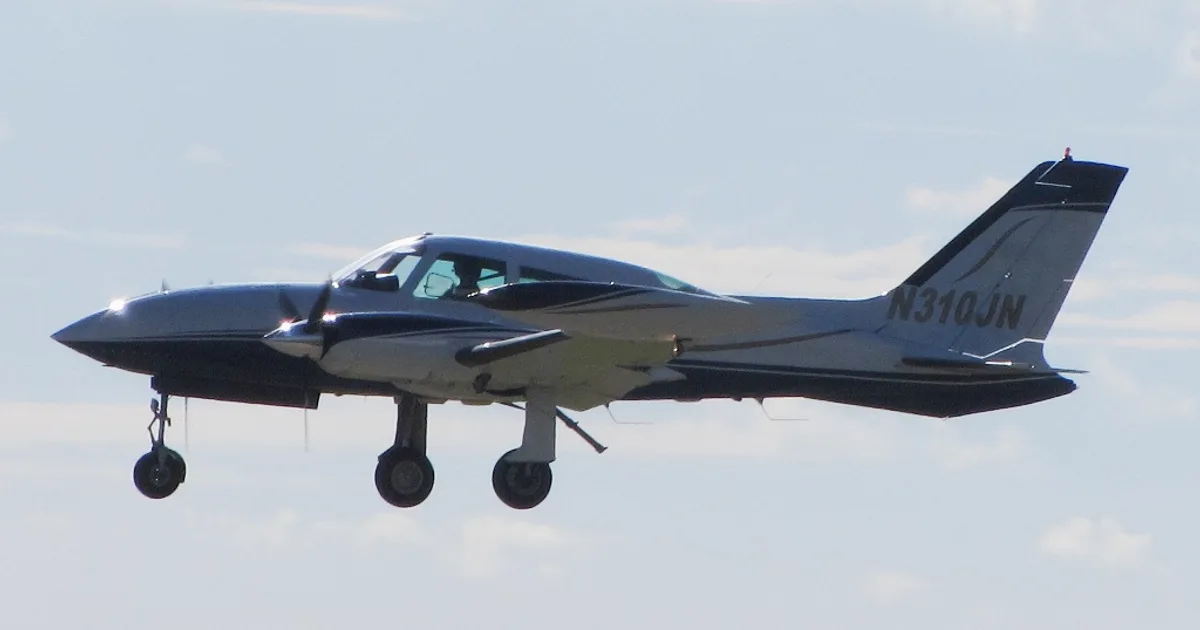
CESSNA 310F · Aircraft Flight Manual
Overview
This document is an Advisory Circular (AC 21-34 v1.1) that provides guidance on aircraft flight manuals (AFMs) in compliance with the Civil Aviation Safety Regulations 1998 (CASR). It is intended for a wide audience, including registered operators, pilots, and maintenance organizations. The manual outlines the requirements for AFMs, including their approval, maintenance, and the responsibilities of various stakeholders in ensuring compliance with airworthiness standards. It emphasizes the importance of having an AFM for safe aircraft operation and provides detailed regulations regarding the provision and approval of AFMs for different aircraft categories, including the Cessna A185F.
- The Cessna A185F requires an Aircraft Flight Manual (AFM) for safe operation.
- Pilots must comply with the AFM and any placards related to aircraft operation.
- AFMs must be approved by the relevant national aviation authority to ensure compliance with airworthiness standards.
- Aircraft manufactured before March 1, 1979, may not require an AFM depending on their classification.
- The Type Certificate Data Sheet (TCDS) is essential for identifying the correct AFM for a specific aircraft.
Document
Source
Originally published by www.casa.gov.au. Sprinkle hosts a reference copy with an added summary, specifications and searchable full text.
Document details
- Type
- Aircraft Flight Manual
- Year
- 2022
- Pages
- 25
- File size
- 846 KB
- Publisher
- www.casa.gov.au
Common. Rarer than 2% of the aircraft models we track.
Most owners only have the POH. Here's the essential set for the CESSNA 310F.
CESSNA 310F for sale now

Free — save the 310F to your watchlist and track it in one place.
More CESSNA 310Fmanuals & documents
See all 45 →- CLEVELAND WHEELS & BRAKESParts Catalog
- Know When to Feather Your PropellerPilot's Operating Handbook
- EL-92 / 1 October 2023 Page 1 of 21 ELIGIBILITY LIST RevisionParts Catalog
- FAA Approved Model List For ADS-B Out Airworthiness Approval Peregrine STC NO. SA00756DEType Certificate
- Aircraft Aeroplanes General – Small (Up to 5700 kg MCTOW)Service Bulletins
- 4910-13-P - Federal RegisterAirworthiness Directives
- TO 1-1-3 TECHNICAL MANUAL INSPECTION AND REPAIR OF AIRCRAFT INTEGRAL TANKS AND FUEL CELLSOther Documents
- OIL - TRANSMITTAL OF CONTINENTAL AEROSPACE TECHNOLOGIES CSB07-1A CONNECTING ROD PISTON PIN BUSHING INSPECTIONParts Catalog
- Goodrich® De-Icers Textron Aviation Replacement Part List Pneumatic de-ice boots Care products Prop-de-icers and hardware (RPL) Catalog 2021Parts Catalog
- FEDERAL AVIATION ADMINISTRATION (FAA) APPROVED MODEL LIST (AML) SA02511SE FOR CIES INC. CC284022 SERIES TSO C55a FUEL QUANTITY SENDERSSupplemental Type Certificate
- Canada (TCCA) Validation of the CGR-30C STCType Certificate
- The Twin Cessna Flyer • August 2018Training Manual
If you fly the CESSNA 310F, you may also be researching these.



In this document
Introduction
The introduction outlines the requirement for each aircraft to have a flight manual, placards, or other documents that state the approved limitations for airworthiness. It emphasizes compliance with ICAO Annex 8 and the CASR definitions of an aircraft flight manual.
General
This section describes the AFM as part of the type design required by the type certification basis. It explains how AFMs are identified and the importance of the Type Certificate Data Sheet (TCDS) in determining the applicable AFM for a specific aircraft.
Provision of AFMs
Aircraft must be provided with an AFM, placards, or a combination of both according to their certification basis. The section details exceptions for certain aircraft types that may not require an AFM, including those manufactured before specific dates or categorized as experimental.
Approval of AFMs
Regulation 21.006 outlines the process for the approval of an AFM, which must comply with applicable airworthiness standards. The holder of a type certificate or manufacturer can apply for AFM approval.
Pilot Compliance
Regulation 138 mandates that pilots must comply with the requirements and limitations set forth in the AFM. This includes adhering to instructions provided on placards or in other documents related to the aircraft's operation.
Safety notes
- Ensure the AFM is current and reflects any modifications or repairs made to the aircraft.
- Pilots must verify that the AFM is appropriate for the specific aircraft they are operating.
Full document text
Aircraft flight manuals Date October 2022 File ref D17/182454 ADVISORY CIRCULAR AC 21-34 v1.1 AIRCRAFT FLIGHT MANUALS Advisory Circulars are intended to provide advice and guidance to illustrate a means, but not necessarily the only means, of complying with the Regulations, or to explain certain regulatory requirements by providing informative, interpretative and explanatory material. Advisory Circulars should always be read in conjunction with the relevant regulations. Unless specified otherwise, all subregulations, regulations, divisions, subparts and parts referenced in this AC are references to the Civil Aviation Safety Regulations 1998 (CASR). AC 21-34 v1.1 October 2022 Page 1 Audience This advisory circular (AC) applies to: • registered operators of Australian aircraft • authorised persons who issue Certificates of Airworthiness (CofA) • authorised persons who approve flight manual information • approved design organisations (ADOs) • authorised persons for Subpart 21.M • holders of modification/repair design approvals for aircraft, aircraft engines, propellers and appliances • applicants for approval of modifications or repairs • aircraft owners • pilots • maintainers • continuing airworthiness management organisations (CAMO) • approved maintenance organisations. Purpose The purpose of this AC is to provide information on aircraft flight manuals (AFM), including approval of AFMs, changes to AFMs and AFM supplements. For further information For further information, contact CASA’s Airworthiness and Engineering Branch (telephone 131 757). AIRCRAFT FLIGHT MANUALS AC 21-34 v1.1 October 2022 Page 2 Status This version of the AC is approved by the Manager, Airworthiness and Engineering Branch. Note: Changes made in the current version are not annotated. The document should be read in full. Version Date Details v1.1 October 2022 Administrative review only. v1.0 May 2017 Initial issue of this AC. AIRCRAFT FLIGHT MANUALS AC 21-34 v1.1 October 2022 Page 3 Contents 1 Reference material 4 1.1 Acronyms 4 1.2 Definitions 5 1.3 References 6 2 Aircraft flight manuals 8 2.1 Introduction 8 2.2 General 8 2.3 Format of aircraft flight manuals 8 2.4 Provision of AFMs 10 2.5 Regulation 21.005 – Manufacturers etc to provide AFMs for certain aircraft 10 2.6 Regulation 21.006 – Approval of AFMs 10 2.7 Regulation 21.006A – Approval of changes to aircraft flight manuals 11 2.8 Regulation 54 of CAR – Registered operators to maintain AFMs 13 2.9 Regulation 138 of CAR – Pilot to comply with requirements etc of aircraft’s flight manual etc 14 2.10 Regulation 139 of CAR – Documents to be carried in Australian aircraft – Carriage of the AFM 14 2.11 AFMs for experimental aircraft 15 2.12 AFMs for light sport aircraft (LSA) 15 2.13 AFMs for recreational aircraft 15 2.14 Further information 15 AIRCRAFT FLIGHT MANUALS AC 21-34 v1.1 October 2022 Page 4 1 Reference material 1.1 Acronyms The acronyms and abbreviations used in this AC are listed in the table below. Acronym Description AC advisory circular ADO approved design organisation AFM aircraft flight manual ASETPA approved single engine turbine powered aeroplane ATA Air Transport Association (USA) CAAP civil aviation advisory publication CAO Civil Aviation Order CAR Civil Aviation Regulations 1988 CASA Civil Aviation Safety Authority CASR Civil Aviation Safety Regulations 1998 CofA Certificate of Airworthiness EASA European Aviation Safety Agency EDTO extended diversion time operations EFB electronic flight bag FAA Federal Aviation Administration (USA) FAR Federal Aviation Regulation (USA) GAMA General Aviation Manufacturer's Association (USA) IATA International Air Transport Association ICAO International Civil Aviation Organization LSA light sport aircraft MTOW maximum take-off weight NAA national aviation authority POH pilot's operating handbook RAAOs Recreational Aviation Administration Organisations STC supplemental type certificate TAC type acceptance certificate TC type certificate TCDS type certificate data sheet UK CAA Civil Aviation Authority of the United Kingdom AIRCRAFT FLIGHT MANUALS AC 21-34 v1.1 October 2022 Page 5 1.2 Definitions Terms that have specific meaning within this AC are defined in the table below. Term Definition Aircraft flight manual A manual that is part of the certification basis of the aircraft, containing the operating limitations within which the aircraft is considered airworthy, and any other information required for the safe operation of the aircraft, including all amendments and supplements for that manual. Airworthiness requirements The comprehensive and detailed requirements established, adopted or accepted under the regulations for the airworthiness of the aircraft or aeronautical product. The airworthiness requirements include the applicable airworthiness standards and additional airworthiness requirements such as airworthiness directives (AD), Part 90 requirements and airworthiness requirements associated with operational approvals such as extended diversion time operations (EDTO) and approved single engine turbine powered aeroplane (ASETPA). Airworthiness standards The design standards applicable to the aircraft or aeronautical product for approval or certification under Part 21. Airworthiness standards for type certificated aircraft, engines and propellers are set out in Parts 22 to 35. Airworthy An aircraft or aeronautical product is airworthy if it is in a state that conforms with its approved design and is in a condition for safe operation. Approved design organisation (ADO) A design organisation approved under Subpart 21.J to carry out design activities under Part 21. An ADO’s scope of approval may include approval and certification activities for modification/repair designs under Subpart 21.M and approval of changes to flight manuals. Certification basis Certification basis means: a. for an aircraft, aircraft engine or propeller for which there is a type
Show full textShow less
certificate or type acceptance certificate—the type certification basis for the aircraft, aircraft engine or propeller b. for an aeronautical product, other than an aircraft engine or propeller, that is approved in a manner mentioned in regulation 21.305 or 21.305A—the airworthiness standards that applied for certification of the product c. for an aircraft or aeronautical product not mentioned in (a) or (b) above—the airworthiness standards that applied for certification of the aircraft or aeronautical product (however described). Modification A change to the design of an aircraft or aeronautical product which is not a repair. Modification/repair design approval An approval granted under regulation 21.435 or 21.437. Repair The restoration of an aircraft or aeronautical product to an airworthy condition. This AC deals with repairs that involve a design change. Supplemental type certificate (STC) An approval issued or accepted, if issued by a foreign NAA, by CASA under Subpart 21.E of a major modification or repair of a type certificated aircraft, engine or propeller. Technical data For the design of an aircraft, aircraft engine, propeller or appliance, or for the design of a modification of, or repair to, an aircraft, aircraft engine, propeller or appliance, means: a. data that describes the design, including: AIRCRAFT FLIGHT MANUALS AC 21-34 v1.1 October 2022 Page 6 Term Definition i the drawings and specifications necessary to define the configuration and design features of the aircraft, aircraft engine, propeller or appliance, or of the modification or repair, and a list of those drawings and specifications; and ii information on dimensions, materials and processes necessary for making the aircraft, aircraft engine, propeller or appliance, or the modification or repair; and iii the airworthiness limitations section of the instructions for the continued airworthiness of the aircraft, aircraft engine, propeller or appliance; and iv the operating limitations and other information necessary for the safe operation of the aircraft, aircraft engine, propeller or appliance; and v any other data necessary to determine the airworthiness of the aircraft, aircraft engine, propeller or appliance; and b. engineering reports, including test plans and reports, used to show that the design complies with the applicable airworthiness standards for an instrument for the design. Type acceptance certificate (TAC) A document issued by CASA to accept the design of a type of aircraft approved via a foreign type certificate issued by a recognised country. Type certificate (TC) A document issued by CASA to define the design of a type of aircraft, aircraft engine or propeller and to certify that the design meets the applicable airworthiness requirements. TCs issued by foreign NAAs are either accepted in Australia by the issue of applicable TACs or validated and an Australian TC issued on the basis of the validation process. Type certificate data sheet (TCDS) A document that forms part of the type certificate providing the technical details and limitations of the aircraft, aircraft engine or propeller. Type certification basis The airworthiness standards and any special conditions or other conditions with which the aircraft, aircraft engine or propeller must comply for the issue of a type certificate. Type design The basic design of a type certificated aircraft, aircraft engine or propeller. 1.3 References Legislation Legislation is available on the Federal Register of Legislation website https://www.legislation.gov.au/ Document Title CASR Civil Aviation Safety Regulations 1998 CAR Civil Aviation Regulations 1988 AIRCRAFT FLIGHT MANUALS AC 21-34 v1.1 October 2022 Page 7 Advisory material CASA's advisory materials are available at https://www.casa.gov.au/publications-and-resources/guidance-materials Document Title AC 21-08 Approval of modification and repair designs under Subpart 21.M AC 21-42 Light sport aircraft manufacturers' requirements CAAP 233-1 Electronic Flight Bags CAAP 235A-1 Minimum Runway Width - for aeroplanes engaged in RPT and charter operations with a maximum take-off weight greater than 5700 kg Other documents EASA documents are available at http://easa.europa.eu/ EASA CS-22 EASA CS-VLA EASA CS-23 EASA CS-25 EASA CS-27 EASA CS-29 EASA CS-31GB EASA CS-31HB FAA documents are available at http://www.faa.gov/ FAA AC 23-15 FAA AC 25.1581-1 FAA AC 27-1 FAA AC 29-2 FAA Order 8300.16 ICAO documents are available at http://www.icao.int/ ICAO Annex 6 ICAO Annex 8 AIRCRAFT FLIGHT MANUALS AC 21-34 v1.1 October 2022 Page 8 2 Aircraft flight manuals 2.1 Introduction 2.1.1 The International Civil Aviation Organization (ICAO) Annex 8 requires that each aircraft be provided with a flight manual, placards or other document stating the approved limitations within which the aircraft is considered airworthy as defined by the appropriate airworthiness requirements, additional instructions and information necessary for the safe operation of the aircraft. 2.1.2 CASA regulations comply with the provisions of ICAO Annex 8 as described in paragraph 2.1.1. 2.1.3 The CASR Dictionary defines the meaning of an aircraft’s flight manual (AFM). Under this definition, a reference to a flight manual in the CASR and Civil Aviation Regulations 1988 (CAR) includes an AFM or any other document that contains the aircraft’s operating limitations and other information required for the safe operation of the aircraft, including all amendments and supplements for an AFM or the other document, as applicable.1 2.2 General 2.2.1 An AFM is part of the type design as required by the type certification basis that the aircraft was originally certificated to. In some cases the original certification requirements are changed by a Supplemental Type Certificate (STC), mandating the provision of an AFM even though the original type certification basis did not require the provision of an AFM. 2.2.2 All AFMs are identified by a part number like any other critical part of the aircraft. The primary source for identifying the AFM applicable to a particular aircraft is the Type Certificate Data Sheet (TCDS). If there is uncertainty as to which AFM is applicable to a particular aircraft, the type certificate (TC) holder or the manufacturer can provide that information based on the make, model and serial number of the aircraft. The relevant CASA Local Office may also help in identifying the applicable AFM. 2.3 Format of aircraft flight manuals 2.3.1 An AFM is a manual provided for an aircraft which states the approved limitations within which the aircraft is considered airworthy, as defined by the appropriate airworthiness requirements, including additional instructions and information necessary for the safe operation of the aircraft. 2.3.2 An AFM is usually clearly identified as an AFM. For some older aircraft, the AFM may be referred to as the Pilot’s Operating Handbook (POH), Owner’s Handbook or Owner’s Manual. 2.3.3 An AFM may consist of approved and unapproved parts. 1 See Clause 37 of Part 2 of the CASR Dictionary. AIRCRAFT FLIGHT MANUALS AC 21-34 v1.1 October 2022 Page 9 2.3.4 Approved parts of the AFM are approved by the applicable national aviation authority (NAA), based on the type certification requirements effective at the time of certification. The content of approved parts of the AFM must satisfy requirements of regulation 23.1581, 25.1581, 27.1581 or 29.1581, or similar, as applicable. 2.3.5 Unapproved parts of the AFM are provided by the manufacturer additionally, as deemed necessary for the safe operation of the aircraft, and cannot conflict with approved parts of the AFM. Each approved part of the AFM is clearly distinguished from any unapproved part of that AFM. 2.3.6 Some older AFMs comply with older airworthiness standards and may contain only unapproved information, provided by the manufacturer as deemed necessary for the safe operation of the aircraft. For example, AFMs titled Owner’s Handbook or Owner’s Manual. 2.3.7 Aeroplanes up to 5,700 kg (or 12,500 lb) maximum take-off weight (MTOW), whose type certification required the provision of an AFM and were manufactured in 1976 or later, usually have their AFM provided in the US General Aviation Manufacturer's Association (GAMA) Specification No. 1, 'Pilot's Operating Handbook' (POH) format. 2 AFMs prepared in accordance with these specifications are titled either ‘Pilot’s Operating Handbook’ or ‘Pilot’s Operating Handbook and FAA Approved Airplane Flight Manual’, and meet the regulatory requirements. Note: Aircraft of the same type and model with the same type certification basis may have their approved information necessary for the safe operation of the aircraft set out in different ways (AFM, placards, or a combination of AFM and placards) according to their aircraft serial number and year of manufacture. 2.3.8 AFM performance section – digitalised format 2.3.8.1 Modern transport category aeroplanes, type certificated under Part 25, are usually certified with their performance information provided by the manufacturer and approved by the NAA in digitalised format. The digitalised parts replace or supplement relevant parts of the AFM. Therefore, the approved AFM in these cases consists of the AFM and the digitised performance (program and databases, using the International Air Transport Association (IATA) SCAPs3). Relevant parts of the AFM are required to clearly state the program and database versions that must be used to calculate the certified performance for the particular aeroplane. 2 The GAMA Specification No. 1 was developed by representatives of member companies of the General Aviation Manufacturer's Association for use in preparing Pilot’s Operating Handbooks that meet government regulatory requirements and meet industry standards for scope of material, arrangement, nomenclature and definitions. The Specification provides guidance for a large group of aeroplanes, consequently not all of the material in the Specification is applicable to any one model. Manufacturers may omit material inappropriate to a specific aircraft type or model. 3 SCAP: Standardised Computerised Aircraft Performance; a standard created by IATA, Air Transport Association (ATA) and several manufacturers to achieve maximum possible standardisation of the performance program interface. There are six SCAP Specifications: Take-off, Landing, Climbout, Inflight, Noise and APM (Aircraft Performance Monitoring), applicable to civil, transport category airplanes. SCAPs generally use “first principle” methods to calculate real on-time performance data, however some SCAPs for older aircraft may interpolate between points of the tabulated (pre-computed) AFM data instead. Maintenance and update of the SCAP Specifications has been the responsibility of the IATA SCAP Task Force, meeting annually. AIRCRAFT FLIGHT MANUALS AC 21-34 v1.1 October 2022 Page 10 2.4 Provision of AFMs 2.4.1 Aircraft must be provided with a type of AFM, placards or a combination of AFM information and placards, as applicable, according to the relevant certification basis. Note: If placards have been used then they are a part of the type design and their removal, change, relocation, modification or repair must be approved under the applicable Part 21 regulations. 2.4.2 Aircraft certificated under older certification requirements or under some special categories may not be required to be provided with an AFM. 2.4.3 The following aircraft may not be required to have an AFM: a. aircraft up to a MTOW of 2,722 kg (6,000 lb) manufactured and flown prior to 1 March 1979 b. historic and ex-military aircraft c. amateur-built aircraft d. experimental aircraft e. hang gliders operated under Civil Aviation Order (CAO) 95.8 f. ultralight aircraft operated under CAO 95.10 and CAO 95.55 g. gyroplanes operated under CAO 95.12 and CAO 95.12.1 h. weight shift controlled aeroplanes and powered parachutes operated under CAO 95.32. 2.4.4 Gliders, powered sailplanes and manned free balloons (operated under CAO 101.54) are required to have an AFM if required by the applicable airworthiness standards. 2.4.5 Aircraft, other than those mentioned under paragraph 2.4.3 or Appendix A, are all required to have an AFM. 2.5 Regulation 21.005 – Manufacturers etc to provide AFMs for certain aircraft 2.5.1 Regulation 21.005 applies to aircraft whose certification basis does not require the provision of an AFM, and were not flown prior to 1 March 1979. For aircraft to which regulation 21.005 applies, the type certificate holder must provide an AFM to the owner of the aircraft, even when the type certification basis does not require the provision of such document. 2.6 Regulation 21.006 – Approval of AFMs 2.6.1 Regulation 21.006 provides for the approval of an AFM for the purposes of regulation 21.005. The regulation sets out who must be satisfied that the AFM complies with the applicable airworthiness standards. Note: Regulation 21.006 only has application in relation to regulation 21.005. AFMs required for type certification are approved by CASA or the relevant NAA as part of the type certification. 2.6.2 The holder of a type certificate for, or the manufacturer of, an aircraft may apply (in writing) for the approval of an AFM. 2.6.3 In order for the AFM to be approved, the applicant must satisfy CASA, the ADO or the authorised person (as applicable), that the manual would comply with the applicable AIRCRAFT FLIGHT MANUALS AC 21-34 v1.1 October 2022 Page 11 airworthiness standards. For type certificated aircraft, the applicable airworthiness standards are included in Parts 23, 25, 27 and 29 (and similar, as applicable). 2.7 Regulation 21.006A – Approval of changes to aircraft flight manuals 2.7.1 Regulation 21.006A sets out who must be satisfied that a change to an AFM or AFM supplement complies with the applicable airworthiness standards. 2.7.2 If a design change (e.g. modification/repair design or STC) or compliance with the regulations necessitates a change to the AFM for the applicable aircraft, then the AFM change must be approved under this regulation.4 This would include designs that change the crew/aircraft interface or the aircraft configuration (and are not already covered by the existing AFM). 2.7.3 The applicant for the design change, the applicant for complying with other specific regulations or the registered operator of the aircraft may apply for a change to the AFM. 2.7.4 In order for the change to be approved, the applicant must satisfy CASA, the ADO or the authorised person (as applicable), that the manual, as changed, would comply with the applicable airworthiness standards5 or with the intended regulation, as applicable. For type certificated aircraft this should include 23.1581, 25.1581, 27.1581 or 29.1581 (or similar, as applicable). 2.7.5 The showing of compliance for a change to an AFM associated with a modification/repair design should be covered in the technical data approved under regulation 21.009 for the modification/repair design. 2.7.6 The showing of compliance for a change to an AFM generated by requirements of a specific regulation, including applicable operational regulations, should be covered in the technical data prepared in accordance with the requirements supporting the applicable regulation. For example, an engineering/technical report prepared in support of operations under regulation 235A of CAR should be prepared in accordance with CAAP 235A-1, the supporting document to regulation 235A. 2.7.7 The AFM amendment or supplement should be in the same format and structure as the existing AFM, and should clearly specify the design change or other approval to which the amendment or supplement relates. It is not necessary to exactly replicate every aspect of the AFM format, but the amendment or supplement should be as similar as practicable in order to facilitate its use. 2.7.8 If the aircraft does not have an AFM and a design change or the compliance with a specific regulation affects the information that would normally be contained in an AFM, then an AFM supplement may be approved under this regulation. However, if the information that would normally be provided in an AFM is provided by placards in the aircraft, and a design change necessitates a physical change to the placards, then that change should be approved as part of the design change. Notes: 4 See also subregulation 21.420(2) and AC 21-08. 5 See regulations 21.403 and 21.405, and AC 21-08 for more information on applicable airworthiness standards. AIRCRAFT FLIGHT MANUALS AC 21-34 v1.1 October 2022 Page 12 1 An authorisation to approve a modification/repair design does not imply an authorisation to approve a change to an AFM. The authorisation to approve a change to an AFM under this regulation must be specifically granted by CASA, either under an ADO approval certificate or an instrument of appointment. 2 It is the responsibility of the holder of the modification/repair design approval to ensure that any subsequent required changes to the AFM (e.g. as a result of defects or changes to the design) are approved under this regulation and provided to the registered operator of the aircraft.6 2.7.9 Compatibility with the applicable type certificate or supplemental type certificate 2.7.9.1 An approved AFM supplement can only be used with an aircraft’s AFM if its certification basis is compatible with that AFM. AFM supplements usually have a statement at the front of the document clarifying the applicability of the information included in the supplement. Such statements may include listing AFM part numbers, aircraft serial numbers, variants of the applicable aircraft model, year of manufacture, etc. 2.7.9.2 In some cases, aircraft of the same type and model may have different type certification bases requiring different AFMs. For example, an aircraft that has received both Civil Aviation Authority of the United Kingdom (UK CAA) and US Federal Aviation Administration (FAA) certification will have separate AFMs approved by each NAA. In this case, an FAA approved AFM supplement cannot be used directly with the AFM approved by the UK CAA as the two TCs will differ in some details from each other. 2.7.9.3 In other cases, aircraft of the same type and model and the same type certification basis may have different AFMs according to serial number and year of manufacture. 2.7.9.4 Each aircraft is manufactured in accordance with an approved TC and TCDS. For foreign aircraft type certificated by the NAA of a recognised country, these are referenced in the CASA type acceptance certificate (TAC). When the aircraft is modified and a new AFM supplement or AFM amendment is required, the applicable certification basis for the finding of compliance and approval of that supplement or amendment must be decided in accordance with Part 21 requirements and the TC/TCDS/TAC applicable to the manufactured aircraft, as recorded on its data plate. 2.7.9.5 The registered operator of an aircraft is responsible for ensuring that only compatible AFM supplements are used with a particular AFM. 2.7.10 Airworthiness statements related to aircraft configuration, operational capability and other limitations 2.7.10.1 Some design changes require the AFM or AFM supplement to include an airworthiness statement regarding the configuration, operational capability and / or limitations of the aircraft for certain operations. In such cases, it is the responsibility of the applicant for the design change to include all required airworthiness statements in the AFM amendment or AFM supplement when applying for approval under regulation 21.006A. For specific information on airworthiness statements, the applicant should refer to the regulations and guidance material relevant to the design change. Note: For example, CAO 20.18 and 82.1 establishes the type of ADS-B transmitting equipment required for Australian registered aircraft and foreign registered aircraft, respectively, operating in Australian airspace. Building on this legislative basis, AC 21-45 contains the guidance material for the airworthiness approval of ADS-B aircraft equipment, including information on the airworthiness statement required to specify which accepted specification the equipment is compliant with. 6 See regulation 21.460. AIRCRAFT FLIGHT MANUALS AC 21-34 v1.1 October 2022 Page 13 2.7.10.2 Airworthiness statements in an AFM or AFM supplement are related to the configuration, operational capability and / or limitations of the aircraft and do not constitute as operational authorisations or approvals for the registered operator of the aircraft. 2.7.11 Minor design changes for which an aircraft flight manual supplement is not required 2.7.11.1 An AFM supplement for a design change is not required if ALL of the following conditions are met: a. Does not restrict, displace, or limit the use of required equipment. b. All new limitations can be addressed via placards. c. The aircraft performance is not negatively affected. d. Does not require a placard per TC or STC. e. VFR use only. f. Is non-required equipment. 2.8 Regulation 54 of CAR – Registered operators to maintain AFMs 2.8.1 Regulation 54 of CAR requires the registered operator of an aircraft to ensure that the AFM is at all times appropriate for the aircraft, having regard to: a. any direction issued by CASA relating to the AFM under Subpart 11.G; and b. any modifications to the aircraft that would require amendment of the AFM (refer to section 2.7 for further details on approval of changes to an AFM); and c. any instructions in relation to the AFM from the holder of the TC, STC or modification/repair design approval that applies to the aircraft. Note: A copy of the AFM amendment record sheet is no longer required to be sent to CASA. 2.8.2 In some cases, an aircraft may be issued with an AFM that contains AFM supplements available for the aircraft type, which have not been incorporated or are not applicable for the specific aircraft. In such cases, it is the responsibility of the registered operator to clarify which supplement is and which one is not applicable to the specific aircraft. This can be achieved through several methods; however, it must be clear from the AFM document what method has been utilised for controlling non-applicable supplements (i.e. the amendment sheet must be properly annotated). Note: For example, acceptable methods to control non-applicable supplements include the complete removal of the non-applicable supplements or the separation of the non-applicable supplements from the rest of the AFM content. 2.8.3 The registered operator of an aircraft may nominate a representative for maintaining the AFM for that aircraft; however, the responsibility for the update status of the AFM remains with the registered operator of the aircraft. AIRCRAFT FLIGHT MANUALS AC 21-34 v1.1 October 2022 Page 14 2.9 Regulation 138 of CAR – Pilot to comply with requirements etc of aircraft’s flight manual etc 2.9.1 Regulation 138 of CAR requires the pilot in command to comply with the requirements, instructions, procedures or limitations concerning the operation of the aircraft that are set out in the AFM. 2.9.2 If relevant information and instructions for the safe operation of the aircraft are issued on placards, or partly on placards and partly in another document, including an AFM, the pilot in command must comply with the requirements, instructions, procedures or limitations set out on the placards or in the other document, as applicable. 2.10 Regulation 139 of CAR – Documents to be carried in Australian aircraft – Carriage of the AFM 2.10.1 Regulation 139 of CAR sets out which documents must be carried on the aircraft when flying. 2.10.2 If an AFM has been issued for a particular aircraft, it must be carried on board the aircraft at all times, unless specified otherwise in the regulation (see paragraph 2.10.4 for further details). 2.10.3 If the performance information for the aircraft is provided by the manufacturer or TC/STC holder on electronic media (such as a CD or DVD) attached to the AFM book as an appendix, such electronic media may not be carried on board the aircraft providing that the performance data required for the safe operation of the aircraft is otherwise readily available on board. Any transition of data from one medium (electronic, hard copy, etc.) to another (electronic, hard copy, etc.) must be conducted in a controlled manner. The transition of data must not alter or have a potential to alter data that has been transitioned in any possible way. 2.10.4 If an aircraft is operated under an AOC, the AFM need not be carried in the aircraft, provided that an approved operations manual is carried that contains the information and instructions that are required, under the relevant airworthiness standards for the aircraft, to be included in the AFM. The operations manual must not contain anything that conflicts with the information and instructions in the AFM. 2.10.5 Carriage of the AFM in electronic form 2.10.5.1 Under the provisions of the Electronic Transactions Act 1999, any document required by the regulations that is in the form of paper is taken to meet the requirement if the document is available in electronic form. Accordingly, the AFM may be carried on board the aircraft in electronic form providing that its content remains readily available on board the aircraft and that it complies with all regulations concerning AFMs, including the maintenance of the AFM as per section 2.8. 2.10.5.2 If an aircraft is operated under an AOC and the electronic form of the AFM is carried on board the aircraft as part of a portable Electronic Flight Bag (EFB), the EFB must meet the requirements of a Class 1 or Class 2 EFB with functionality 1 or better. Note: Guidance on EFBs is available in CAAP 233-1(1) or later revisions. AIRCRAFT FLIGHT MANUALS AC 21-34 v1.1 October 2022 Page 15 2.11 AFMs for experimental aircraft 2.11.1 Experimental aircraft may not necessarily be required to have an AFM, but it is expected that sufficient information to operate the aircraft safely will be available to the pilot. This may be in some form of document (provided by the designer or owner) and/or placards. Design standards, such as Part 23, indicate the kind of information that should be presented in such a document. 2.11.2 As a minimum, the following information should be provided to the pilot: a. aircraft description b. airspeed limitations c. powerplant limitations d. weight and balance and loading information e. operations permitted f. normal and emergency procedures g. minimum field length for take-off and landing. 2.12 AFMs for light sport aircraft (LSA) 2.12.1 LSA must have aircraft operating instructions that comply with the applicable LSA standards. See AC 21-42 for more information on LSA standards. 2.13 AFMs for recreational aircraft 2.13.1 Recreational aircraft must have aircraft operating instructions that comply with the standards of the applicable registering self-administering organisation. 2.14 Further information 2.14.1 Further information on AFMs and the related airworthiness standards is available in the following documents: a. FAA AC 23-15: Small Airplane Certification Compliance Program b. FAA AC 25.1581-1: Airplane Flight Manual c. FAA AC 27-1: Certification of Normal Category Rotorcraft d. FAA AC 29-2: Certification of Transport Category Rotorcraft e. FAA AC 60-6B: Airplane Flight Manuals (AFM), Approved Manual Materials, Markings, and Placards Airplanes f. EASA CS-22 Book 2 AMC 22.1581: Flight manual g. EASA CS-VLA Book 2 AMC VLA 1581: Specimen Flight Manual For A Very Light Aeroplane h. EASA CS–23 Book 2 Section 3: Aeroplane flight manual and approved manual material i. EASA CS-25 Book 2 AMC 25.1581: Aeroplane flight manual j. EASA CS-31GB Book 2 AMC 31GB.81: Operating instructions k. EASA CS-31HB Book 2 AMC 31HB.81: General. AIRCRAFT FLIGHT MANUALS AC 21-34 v1.1 October 2022 Page 16 Aircraft NOT required to have an Aircraft Flight Manual (AFM) AIRCRAFT FLIGHT MANUALS AC 21-34 v1.1 October 2022 Page 17 A.1 Aircraft NOT required to have an AFM A.1.1 For each following model of aircraft, the relevant NAA does not require an AFM to be provided, nor has the TC holder issued a document (such as a POH) containing information required to be provided to the pilot under the applicable airworthiness standards. * "Make" means the Manufacturer, TC holder (on TCDS) or best known brand name. ** "Type" means the type as listed in the Australian Civil Aviation Register *** If there is no TCDS, "Model" is as designated by the relevant NAA. Make* Type** Model*** (as per TCDS) Relevant NAA TCDS Number Serial Number Applicability and/or Remarks American Champion (Bellanca, Champion, Aeronca) 7 7AC, S7AC, 7BCM, 7CCM, 7DC, S7DC, S7CCM, 7EC, S7EC, 7FC, 7GC, 7HC, 7GCA, 7JC, 7GCB, 7KC, 7GCBA, 7KCAB, 7ACA US FAA A-759 All American Champion (Bellanca, Champion, Aeronca) 7 7ECA US FAA A-759 1 through 1294-79 American Champion (Bellanca, Champion, Aeronca) 7 7GCAA US FAA A-759 1 through 377-79 American Champion (Bellanca, Champion, Aeronca) 7 7GCBC US FAA A-759 1 through 1107-79, 1109-79, providing no retrofit with 7-1545 wings. American Champion (Bellanca, Trytek, Aeronca) 11 11AC, S11AC, 11BC, S11BC US FAA A-761 All Auster III III, IIIF UK CAA None All [Note: Required placarded Limitations are on UK CAA CofA.] Auster IV IV UK CAA None All [Note as for Auster III] AIRCRAFT FLIGHT MANUALS AC 21-34 v1.1 October 2022 Page 18 Make* Type** Model*** (as per TCDS) Relevant NAA TCDS Number Serial Number Applicability and/or Remarks Auster V V UK CAA None All [Note as for Auster III] Auster J1 J1, J1B, J1N UK CAA None All [Note as for Auster III] Auster J2 J2 UK CAA None All [Note as for Auster III] Auster J4 J4 UK CAA None All [Note as for Auster III] Auster J5 J5, J5A, J5B UK CAA None All [Note as for Auster III] Auster J8 J8 UK CAA None All [Note as for Auster III] Ayres - (Rockwell) S2R S2R US FAA A4SW All serial numbers up to 1380R, 1416R thru 2525R (Note: All required placarded limitations are in TCDS A4SW) Boeing 75 A75L3, 75, A75, B75, E75, A75J1, A75L300, A75N1, B75N1, D75N1, IB75A, E75N1 US FAA A-743 All Beech 17 C17B, SC17B, C17L, SC17L US FAA ATC 602 67 and up manufactured prior to 9/30/39 Beech 17 D17A US FAA 713 D17A-305 and up Beech 17 D17R US FAA 638 D17R-136 and up Beech 17 D17S, SD17S US FAA A-649 136 and up Beech 17 F17D, SF17D US FAA 689 211 and up, except 219 Beech 17 G17S US FAA 779 424, B-1 and up Cessna 150 150, 150A, 150B, 150C, 150D, 150E, 150F, 150G, 150H, 150J, 150K, A150K, 150L, A150L US FAA 3A19 All Cessna 150 150M US FAA 3A19 15075782 through 15077005 (1975 model) Cessna 150 A150M US FAA 3A19 15064970, A1500524 through A1500609 (1975 model) AIRCRAFT FLIGHT MANUALS AC 21-34 v1.1 October 2022 Page 19 Make* Type** Model*** (as per TCDS) Relevant NAA TCDS Number Serial Number Applicability and/or Remarks Cessna 172 172, 172A, 172B, 172C, 172D, 172E, 172F, 172G, 172H,172I, 172K, 172L US FAA 3A12 All Cessna 172 172M US FAA 3A12 All serial numbers up to 17265684 (1973 through 1975 models) Cessna 172 P172D US FAA 3A17 All Cessna 175 175, 175A, 175B, 175C US FAA 3A17 All Cessna 177 177, 177A US FAA A13CE All Cessna 177 177B US FAA A13CE All serial numbers up to 17702313 (1970 through 1975 models) Cessna 177 177RG US FAA A20CE All serial numbers up to 177RG0787 (1971 through 1975 models) Cessna 180 180C, 180D, 180E, 180F, 180G, 180H US FAA 5A6 All (Note: Models 180, 180A, 180B, need FAA approved AFM) Cessna 180 180J US FAA 5A6 18052285 through 18052620 (1973 through 1975 models) Cessna 182 182, 182A, 182B, 182C, 182D, 182E, 182F, 182G, 182H, 182J, 182K, 182L, 182M, 182N US FAA 3A13 All Cessna 182 182P US FAA 3A13 18260826 through 18264295 (1972 through 1975 models) Cessna 185 185, 185A, 185B, 185C, 185D, 185E, A185E US FAA 3A24 All Cessna 185 A185F US FAA 3A24 18502091 through 18502838 (1973 through 1975 models) Cessna 188 188, A188, 188A, A188A, 188B US FAA A9CE All AIRCRAFT FLIGHT MANUALS AC 21-34 v1.1 October 2022 Page 20 Make* Type** Model*** (as per TCDS) Relevant NAA TCDS Number Serial Number Applicability and/or Remarks Cessna 188 A188B US FAA A9CE 188800833 through 18802348 & 18800967T through 18802348T (1972 through 1975 models) Cessna 205 210-5 (205), 210-5A (205A) US FAA 3A21 All Cessna 206 206, P206, P206A, P206B, P206C, P206D, P206E, U206, U206A, U206B, U206C, U206D, U206E, TP206A, TP206B, TP206C, TP206D, TP206E, TU206A, TU206B, TU206C, TU206D, TU206E US FAA A4CE All Cessna 206 U206F, TU206F US FAA A4CE U20601701 through U20603020 (1972 through 1975 models) Cessna 207 207, T207 US FAA A16CE 20700001 through 20700314 (1969 through 1975 models) Cessna 210 210, 210A, 210B, 210C, 210D, 210E, 210F, T210F, 210G, T210G, 210H, T210H, 210J, T210J, 210K, T210K US FAA 3A21 All Cessna 210 210L, T210L US FAA 3A21 21059503 through 21061039 (1972 through 1975 models) Cessna 305 305C, 305D, 305F US FAA 5A5 All Cessna 310 310, 310B, 310C, 310D, 310F, 310G, 310H, 310J, 310K, 310L, 310N, 310P, T310P, 310Q, T310Q US FAA 3A10 All Cessna 310 310R, T310R US FAA 3A10 310R0001 through 310R0330 (1975 models) Cessna 320 320, 320B, 320C, 320D, 320E, 320F US FAA 3A25 All AIRCRAFT FLIGHT MANUALS AC 21-34 v1.1 October 2022 Page 21 Make* Type** Model*** (as per TCDS) Relevant NAA TCDS Number Serial Number Applicability and/or Remarks Cessna 336 336 US FAA A2CE All Cessna 337 337, 337A, 337B, M337B, T337B, 337C, T337C, 337D, T337D, 337E, T337E, 337F, T337F US FAA A6CE All Cessna 337 337G US FAA A6CE 33701463 through 33701671 (1973 through 1975 models) Cessna 337 T337G US FAA A6CE 677, P3370001 through P3370225, except P3370196 (1973 through 1975 models) Cessna 340 340 US FAA 3A25 All DeHavilland DH60 All DH60 Models UK CAA None All [Note: Required placarded Limitations are on UK CAA Permit to Fly or UK CAA CofA.] DeHavilland DH82 DH82, DH82A UK CAA None All [Note: Required placarded Limitations are on UK CAA CofA.] DeHavilland DH83 DH83 UK CAA None All [Note as for DH82] DeHavilland DH84 DH84, DH84A UK CAA None All [Note as for DH82] DeHavilland DH85 DH85 UK CAA None All [Note as for DH82] DeHavilland DH87 DH87A, DH87B UK CAA None All [Note as for DH82] DeHavilland DH89 DH89A UK CAA None All [Note as for DH82] DeHavilland DH94 DH94 UK CAA None All DeHavilland DH94 DH94 CASA Aust None All AIRCRAFT FLIGHT MANUALS AC 21-34 v1.1 October 2022 Page 22 Make* Type** Model*** (as per TCDS) Relevant NAA TCDS Number Serial Number Applicability and/or Remarks DeHavilland Australia DHA-3 DHA-3 Mk 2 CASA Aust CTA 5-3 All. No AFM Required. Note: Relevant information for operators can be obtained from Section 2 of the DHA-3 Mk 2 Maintenance & Repair Manual dated February 1952 (Revision AL 1), the previously issued Civil Mk 2 manual supplied by CASA and current placarded limitations. Fairchild 24 24R9, 24R9S, 24R40. 24R40S, 24R-46, 24R- 46S, 24R-46A US FAA None All Fairchild 24 24W-9, 24W-9S, 24W- 40, 24W-40S, 24W-41, 24W-41S, 24W-41A, 24W-41AS, 24W-46, 24W-46S. US FAA None All SWIFT (Globe, TEMCO) GC-1A GC-1A US FAA A-766 All SWIFT (Globe, TEMCO) GC-1B GC-1B US FAA A-766 All Grumman American AA-1 AA-1, AA-1A, AA-1B US FAA A11EA All Grumman American (Traveler) AA-5 AA-5 US FAA A16EA All Grumman American (Cheetah) AA-5 AA-5A US FAA A16EA AA5A-0001 through AA5A-0282 (1976 models) Grumman American (Tiger) AA-5 AA-5B US FAA A16EA AA5B-0001 through AA5B-0399 (1975 through 1976 models) Grumman American G164 G164, G164A US FAA 1A16 All AIRCRAFT FLIGHT MANUALS AC 21-34 v1.1 October 2022 Page 23 Make* Type** Model*** (as per TCDS) Relevant NAA TCDS Number Serial Number Applicability and/or Remarks Grumman American G164 G-164B US FAA 1A16 All serial numbers up to S/N 548B. Grumman American G164 G-164C US FAA 1A16 All serial numbers up to S/N 42C. Luscome 8 8, 8A, 8B, 8C, 8D, 8E, 8F US FAA A-694 All Morane 880 880B DGAC (France) originally, overtaken by EASA. US FAA validated 7A14 (US FAA) All Piper J3 J3 US FAA ATC 660 All Piper J3 J3C-40, J3C-50, J3C- 50S, J3C-65, J3C-65S US FAA A-691 All Piper PA11 PA-11, PA-11S US FAA A-691 All Piper J3 J3F-50, J3F-50S, J3F- 60, J3F-60S, J3F-65, J3F-65S US FAA A-692 All Piper J3 J3L, J3L-S, J3L-65, J3L-65S US FAA A-698 All Piper PA25 PA25 US FAA 2A10 25-03 through 25-731 (Restricted Category only) Piper PA25 PA25-235 US FAA 2A10 25-2000 through 25-5521, 25-7305522 through 25-8156024 (Restricted Category only) Piper PA25 PA25-260 US FAA 2A10 25-4415 through 25-5521, 25-7305522 through 25-8156024 (Restricted Category only) Reims (current TC holder: Cessna) FRA 150 FRA 150L DGAC (France) originally, current - US FAA A13EU (US FAA) All AIRCRAFT FLIGHT MANUALS AC 21-34 v1.1 October 2022 Page 24 Make* Type** Model*** (as per TCDS) Relevant NAA TCDS Number Serial Number Applicability and/or Remarks Ryan STM ST-M2 US FAA None All Sud Aviation Gardan GY80 GY-80-150, GY-80- 160,GY-80-180 DGAC (France) originally, overtaken by EASA Fiche No. 79, A12IN (US FAA) All Sud Aviation Gardan GY80 GY-80-150D, GY-80- 160D DGAC (France) originally, overtaken by EASA Fiche No. 79 All Stinson (Consolidated Vultee) L-5 L-5, L-5B, L-5C, L-5D, L-5E, L-5E-1, L-5G US FAA A-764 All Stinson (Consolidated Vultee) SR-9 SR-9E US FAA ATC 625 All Stinson (Consolidated Vultee) SR-8 SR-8C US FAA ATC 608 All Taylor J-2 J-2 US FAA None All Taylorcraft BC12 BC 12-D US FAA A-696 All Taylorcraft DCO-65 DCO-65 US FAA A-746 All Waco EGC-8 ECG-8 SPECIAL US FAA 665 All Waco YKS-6 YKS-6 US FAA A-533 All
What's in the CESSNA 310F TCDS
A Type Certificate Data Sheet (TCDS) is the FAA's record of what an aircraft type was approved as. It is the source of truth for weights, seating, fuel and the rules the design was certified against. Expand any line to see what it means.
5,752 CESSNA 310F parts for sale
See all →


Parts listed for sale by vetted eBay sellers — confirmed on eBay at checkout.