Aircraft Aeroplanes General – Small (Up to 5700 kg MCTOW)
CESSNA 310F · Service Bulletins
Overview
This document is a service bulletin applicable to various small aircraft, including the Cessna 310F. It outlines airworthiness directives (ADs) that pertain to general equipment, components, and parts installed on aircraft with a Maximum Certified Take-off Weight (MCTOW) of up to 5700 kg. The bulletin includes inspection requirements, compliance dates, and specific actions required to maintain airworthiness. It serves as a critical reference for maintenance personnel and operators to ensure compliance with safety regulations and to prevent potential failures in aircraft systems.
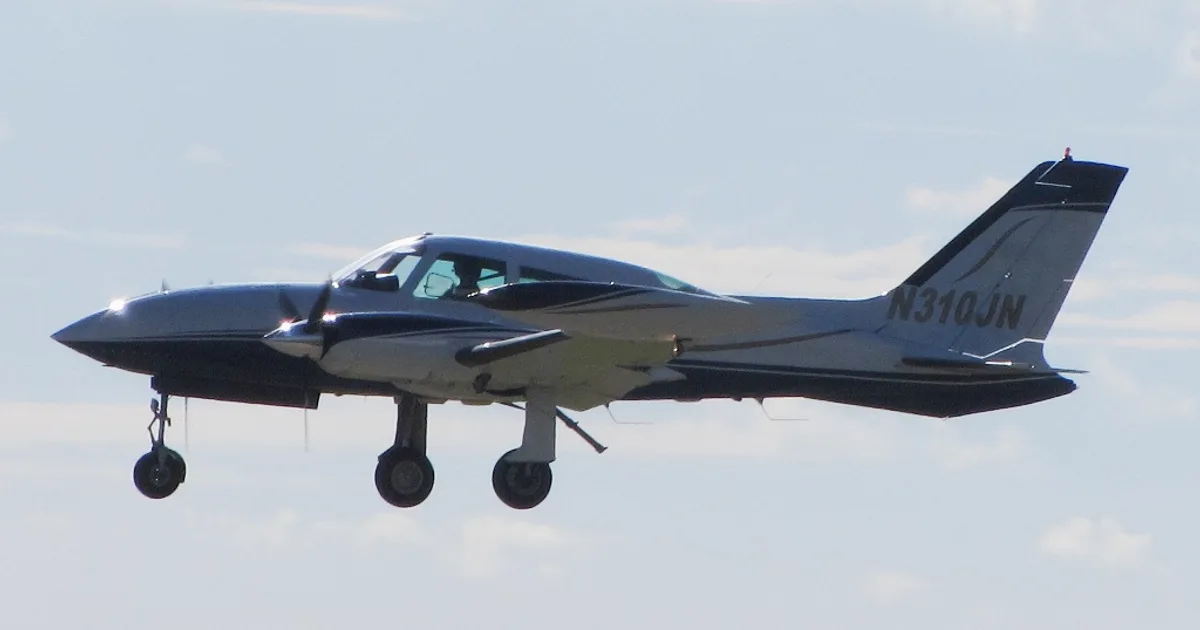
- Cessna 310F is included in the AD schedule for aircraft up to 5700 kg MCTOW.
- Retaining washers must be fitted to control rod eye ends to prevent detachment.
- Flight control cable assemblies must meet proof load requirements before installation.
- Lavatories must be inspected to prevent fire hazards from smoking materials.
- Oil coolers must be inspected to prevent engine oil loss.
- Emergency exits must be operable without exceptional effort and inspected regularly.
- Fuel regulator shutoff valves must be inspected for leaks to prevent in-flight fires.
Document
Source
Originally published by www.aviation.govt.nz. Sprinkle hosts a reference copy with an added summary, specifications and searchable full text.
Document details
- Type
- Service Bulletins
- Year
- 2023
- Pages
- 11
- File size
- 224 KB
- Publisher
- www.aviation.govt.nz
Common. Rarer than 2% of the aircraft models we track.
Most owners only have the POH. Here's the essential set for the CESSNA 310F.
CESSNA 310F for sale now

Free — save the 310F to your watchlist and track it in one place.
More CESSNA 310Fmanuals & documents
See all 45 →- CLEVELAND WHEELS & BRAKESParts Catalog
- Know When to Feather Your PropellerPilot's Operating Handbook
- EL-92 / 1 October 2023 Page 1 of 21 ELIGIBILITY LIST RevisionParts Catalog
- FAA Approved Model List For ADS-B Out Airworthiness Approval Peregrine STC NO. SA00756DEType Certificate
- AC 21-34 v1.1 - Aircraft flight manuals - Civil Aviation Safety AuthorityAircraft Flight Manual
- 4910-13-P - Federal RegisterAirworthiness Directives
- TO 1-1-3 TECHNICAL MANUAL INSPECTION AND REPAIR OF AIRCRAFT INTEGRAL TANKS AND FUEL CELLSOther Documents
- OIL - TRANSMITTAL OF CONTINENTAL AEROSPACE TECHNOLOGIES CSB07-1A CONNECTING ROD PISTON PIN BUSHING INSPECTIONParts Catalog
- Goodrich® De-Icers Textron Aviation Replacement Part List Pneumatic de-ice boots Care products Prop-de-icers and hardware (RPL) Catalog 2021Parts Catalog
- FEDERAL AVIATION ADMINISTRATION (FAA) APPROVED MODEL LIST (AML) SA02511SE FOR CIES INC. CC284022 SERIES TSO C55a FUEL QUANTITY SENDERSSupplemental Type Certificate
- Canada (TCCA) Validation of the CGR-30C STCType Certificate
- The Twin Cessna Flyer • August 2018Training Manual
If you fly the CESSNA 310F, you may also be researching these.



In this document
Engine Control Rod Eye Ends - Modification
This section outlines the requirement for all single-engine aircraft installations to have retaining washers fitted to control rod eye ends to prevent detachment in the event of bearing failure. Compliance is required by 30 September 1969.
Flight Control Cable End Assemblies - Proof Load
This section specifies the proof load requirements for flight control cable assemblies, ensuring they meet strength specifications. Compliance is required prior to the installation of a flight control cable.
Lavatories – Inspection
This section mandates inspections of lavatories in all aircraft to prevent fire hazards from smoking materials. Compliance is required at specified intervals.
Oil Cooler - Inspection
This section requires inspections of specific Stewart-Warner oil coolers to prevent engine oil loss due to cooler failures. Compliance is required by 31 December 1981.
Emergency Exits – Inspection
This section requires inspections of emergency exits to ensure they operate without exceptional effort. Compliance is required within the next 100 hours TIS and thereafter at intervals not exceeding 12 months.
Combustion Heater Fuel Regulator and Cutoff Valve - Inspection
This section details the inspection requirements for fuel regulator shutoff valves used with specific combustion heaters installed on the Cessna 310F. Compliance is required within the next 25 hours TIS.
Safety notes
- Ensure compliance with all airworthiness directives to maintain safety and airworthiness of the aircraft.
- Inspect emergency exits regularly to ensure they function properly in an emergency.
Full document text
Aircraft Aeroplanes General – Small (Up to 5700 kg MCTOW) Airworthiness Directive Schedule Aircraft Aeroplanes General – Small (Up to 5700 kg MCTOW) 29 June 2023 Notes: 1. This AD schedule is applicable to general equipment, components and parts installed on aeroplanes with a Maximum Certified Take-off Weight (MCTOW) up to 5700 kg. 2. For airworthiness directives applicable to general equipment, components and parts installed on amateur built aircraft, refer to the AD schedule applicable to amateur built aircraft. Note: The Amateur Built Aircraft AD Schedule now includes general ADs applicable to amateur built aircraft with a Special Category - Amateur Built Airworthiness Certificate. 3. The Aeroplanes and Helicopters General AD schedule dated 27 April 2017 has been split into three AD schedules. There is now an AD schedule for Aeroplanes General – Small (Up to 5700 kg MCTOW), an AD schedule for Aeroplanes General – Large (Greater than 5700 kg MCTOW) and an AD schedule for Helicopters General. For general equipment, components and parts installed on amateur built aircraft, refer to the AD schedule applicable to amateur built aircraft. 4. This AD schedule includes those National Airworthiness Authority (NAA) ADs applicable to small aeroplanes with a Maximum Certified Take-off Weight (MCTOW) up to 5700 kg. NAA ADs can be obtained directly from the applicable NAA website at: Links to state of design airworthiness directives | aviation.govt.nz 5. The date above indicates the amendment date of this schedule. 6. New or amended ADs are shown with an asterisk * Contents DCA/GEN/5A Engine Control Rod Eye Ends - Modification .................................................................... 2 DCA/GEN/6A Flight Control Cable End Assemblies - Proof Load ........................................................... 2 DCA/GEN/7B Lavatories – Inspection ..................................................................................................... 3 DCA/GEN/8 Energy Absorbing Rolls on Instrument Panels - Inspection .............................................. 3 DCA/GEN/11A Oil Cooler - Inspection....................................................................................................... 3 DCA/GEN/18 Cancelled – Purpose fulfilled............................................................................................. 4 DCA/GEN/19A Emergency Exits – Inspection ........................................................................................... 4 DCA/GEN/27A Passenger and Crew Compartment Interiors – Inspection ................................................ 5 DCA/GEN/28A Bob Fields Aerocessories Inflatable Door Seals - Deactivation ........................................ 6 DCA/GEN/32 Cancelled – FAA AD 2004-21-05 refers ............................................................................ 8 DCA/GEN/33A Combustion Heater Fuel Regulator and Cutoff Valve - Inspection .................................... 8 DCA/GEN/34A Non-Conforming Dinitrol Products .................................................................................... 9 The State of Design ADs listed below are available directly from the National Airworthiness Authority (NAA) websites. Links to NAA websites are available on the CAA website at: Links to state of design airworthiness directives | aviation.govt.nz If additional NZ ADs need to be issued when an unsafe condition is found to exist in an aircraft or aeronautical product in NZ, they will be added to the list below. ..... 10 FAA AD 2017-06-03 Stewart Warner South Wind Combustion Heaters - Inspection ....................................... 10 FAA AD 2004-21-05 Kelly Aerospace Power Systems B-series Combustion Heaters - Inspection ................. 10 DCA/GEN/36A Parts Manufactured by Croydon Aircraft Company ......................................................... 11 Aircraft Aeroplanes General – Small (Up to 5700 kg MCTOW) * FAA AD 2021-23-12 Cancelled – Refer to the note below.......................................................................... 11 DCA/GEN/5A Engine Control Rod Eye Ends - Modification Applicability: All single engine aircraft installations having components which are actuated by control rods with eye ends. Requirement: To prevent detachment in event of bearing failure, all rod end fittings in throttle, mixture and propeller control linkages shall be fitted with a retaining washer of such outside diameter that a rod eye end cannot pass over it. Compliance: By 30 September 1969. Effective Date: DCA/GEN/5 - 31 July 1969 DCA/GEN/5A - 1 August 1986 Note: For amateur built aircraft refer to DCA/ABUILT/12. DCA/GEN/6A Flight Control Cable End Assemblies - Proof Load Applicability: Flight control cable assemblies for all aircraft, except gliders. Note 1: DCA/GEN/6A revised to clarify some aspects of the AD applicability and introduce explanatory notes 2 and 3. Requirement: To ensure that flight control cable end assemblies (i.e. terminals, end fittings and splices) comply with applicable strength requirements, proof load cable assemblies fitted with approved components in accordance with the applicable specifications, or standards of: 1. U.S.A. - 60% of cable breaking strength specified in applicable specifications and/or standards. 2. U.K. - 50% of cable breaking strength specified in applicable specifications and/or standards. 3. Any other country - as specified, or approved by the country of origin, but not less than 50% of the cable breaking strength as specified in applicable specifications and/or standards. Note 2: This AD is not applicable to flight control cable assemblies received with a release note, a Form One, or an equivalent, and sourced from an aircraft manufacturer, or a cable assembly manufacturer, or an aircraft parts supplier. Note 3: Flight control cables on certain aircraft can only be spliced in situ. With cable installations like this, the testing of a representative flight control cable assembly per
Show full textShow less
the requirements of this AD meets the intent of the AD. Compliance: Prior to the installation of a flight control cable. Effective Date: DCA/GEN/6 - 30 November 1968 DCA/GEN/6A - 29 October 2020 Note 4: For amateur built aircraft refer to DCA/ABUILT/13. Aeroplanes General – Small (Up to 5700 kg MCTOW) DCA/GEN/7B Lavatories – Inspection Applicability: All aircraft with one or more lavatories. These lavatories may be installed on aircraft manufactured by, but not limited to aircraft manufacturers listed in table 1 of FAA AD 74-08-09R3. Note: DCA/GEN/7B revised to introduce the requirements in FAA AD 74-08-09R3 which extends the AD compliance for aircraft with certain missing ashtrays. Requirement: To prevent possible fires which could result from smoking materials dropped into paper or linen waste receptacles, accomplish the inspections and corrective actions specified in FAA AD 74-08-09R3. Compliance: At the compliance times specified in FAA AD 74-08-09R3. Effective Date: DCA/GEN/7 - 15 July 1974 DCA/GEN/7A - 30 August 1996 DCA/GEN/7B - 31 May 2012 DCA/GEN/8 Energy Absorbing Rolls on Instrument Panels - Inspection Applicability: All aircraft with a rounded sheet metal energy absorbing cushion roll above instrument panel. Requirement: Modifications, such as extra instruments or placards, which could impair the efficiency of energy absorbing cushion rolls are not permitted. Any roll so modified must be returned to its original state. Compliance: By 1 May 1974 Effective Date: 31 October 1973 DCA/GEN/11A Oil Cooler - Inspection Applicability: All aircraft with Stewart-Warner oil coolers of the following models and S/Ns which do not have a date ink-stamped on cooler name plate: Model S/N Range 8406J 12558 through 16212 8406L 1496 through 1763 8432K 514 through 541 8432L 631 through 964 8437C 422 through 472 8446C 372 through 629 8493B 1269 through 1603 10568C 1105 through 1141 10578B 2212 through 2316 10599A 7369 through 9013 10610A 1815 through 1956 10614A 732 through 947 10622A 333 through 394 10634D 105 through 907 10641B 101 through 162 Oil coolers may be installed on, but not limited to, Bellanca 7GCBC, Cessna models 152, A152, 172I, 172K, 172L, 172M, 172N, 177, 177B, 177RG, R182, A188B, 210N, T210N (Cessna S.E.S.I.L. SE80-96 refers), Piper model PA-38-112, Beech models C-23 and 76, and Mooney models M20C, M20E and M20F. Aeroplanes General – Small (Up to 5700 kg MCTOW) Requirement: There have been reports from overseas of oil cooler failures on different makes and models of aircraft caused by inadequate salt bath removal following assembly of coolers. To prevent loss of engine oil, accomplish the following: 1. If cooler has accumulated 10 hours or less TTIS, prior to further flight replace oil cooler with an airworthy cooler not within affected S/N range, or with a cooler within S/N range but which has a date ink-stamped next to name plate. 2. If cooler has accumulated more than 10 hours TIS since new, visually inspect cooler for leaks prior to further flight. If oil leakage evident, replace cooler with an airworthy cooler per 1. above. If oil leakage not detected, fabricate and install following placard on instrument panel in clear view of crew, using letters at least 1/8 inch high: "Visually inspect oil cooler for freedom from leaks prior to each flight". Placard may be removed when cooler has been replaced with an airworthy cooler not within affected S/N range or which has ink-stamp date. (FAA AD 80-25-07 R1 refers). Compliance: By 31 December 1981. Effective Date: DCA/GEN/11 - 22 December 1980 DCA/GEN/11A - 13 November 1981 DCA/GEN/18 Cancelled – Purpose fulfilled Note: The requirements in DCA/GEN/18 were based on FAA AD 88-22-07 which is applicable to certain Cessna 206, 207 and 210 series aircraft with Aeroquip 601 hose assemblies. The applicability of DCA/GEN/18 was expanded to include all Aeroquip 602 hose installations. For Cessna 206 and 207 series aircraft affected by FAA AD 88-22-07, refer to DCA/CESS206/136 and DCA/CESS207/20. Effective Date: 27 July 2017 DCA/GEN/19A Emergency Exits – Inspection Applicability: All aircraft with maximum certificated take-off weight not exceeding 5700 kg fitted with an emergency exit/s that are not used for normal entry or exit. Note: Revision A of this AD revised to clarify the applicability. For the purpose of this AD an emergency exit means any door, panel or hatch which is not used for normal aircraft entry or exit. Rip panel type exits are exluded. Requirement: With all interior trim, fittings and furnishings installed, operate the emergency exits per the placarded instructions. The exit must be capable of operation without exceptional effort. Breakable covers over operating mechanisms may be removed before conducting the test. Any defects found must be rectified before further flight. Compliance: 1. Within the next 100 hours TIS and thereafter at intervals not to exceed 12 months. 2. Before further flight, following maintenance to the exit, maintenance to the operating mechanism or surrounding structure (including paint-work or upholstery), and also following any role equipment change which could inhibit exit operation. Effective Date: DCA/GEN/19 - 11 August 1989 DCA/GEN/19A - 26 November 2009 Aeroplanes General – Small (Up to 5700 kg MCTOW) DCA/GEN/27A Passenger and Crew Compartment Interiors – Inspection Applicability: All powered aircraft with a MCTOW of 5700 Kg or less and standard or restricted category airworthiness certificates. For any aircraft that compliance with paragraphs 1, 2 or 3 of DCA/GEN/27 was certified per paragraph 5, no further action is required per this AD. Requirement: To ensure that passenger and crew compartment interior materials meet the applicable safety standard, determine the history and origin of all interior materials used in the passenger and crew compartments, including seat foam and outer covers, carpets, side, roof and other panels, and accomplish the following:- 1. If all compartment materials are the aircraft manufacturer's parts go to paragraph 5 below. Note 1: Where there is no supporting part numbers, tags or other markings to verify if materials are the aircraft's manufacturer's, it will be acceptable to certify compliance with this paragraph by establishing to the satisfaction of the certifying engineer the materials are the manufacturer's by familiarity with the aircraft type and reference to the aircraft's IPC, and/or comparison with other aircraft of the same type whose interior has been verified. There must be no evidence in the aircraft itself or the maintenance records that any unauthorised material repair or replacement has been carried out. 2. If compartment materials have been repaired or replaced in accordance with data listed as acceptable in Part 21 Appendix D (eg an approved modification, a PMA or an STC) with corresponding certified entries in the aircraft maintenance records including a copy of or reference to that acceptable data, go to paragraph 5 below. 3. If compartment materials have been repaired or replaced as maintenance in accordance with Part 43 by using materials of the correct flammability specifications (see attachment below) to return the aircraft to its original or properly modified condition, with corresponding certified entries in the aircraft maintenance records including a copy of or reference to the flammability test results, go to paragraph 5 below. 4. If compartment materials have been repaired or replaced and do not meet the requirements of paragraphs 1 to 3 above, or their history and origin is unable to be determined, go to paragraph 6 below. 5. Make a certified entry in the aircraft maintenance records certifying compliance with this AD including full details of how compliance was determined. This must include details of how it was established that the materials were installed by the aircraft manufacturer, in the case of paragraph 1 above, or copies of all other relevant data used to establish compliance with paragraphs 2 or 3 above. Compliance with paragraph 6 is not required. Any future cabin refurbishment must use interior materials, including seat foam and outer covers, carpets, side, roof and other panels, that they comply with paragraphs 1, 2 or 3 of this AD. 6. Accomplish the following:- Ensure a fire extinguisher is installed in the aircraft in compliance with CAR Part 91 Appendix A.13. 7. Replace as necessary all interior materials used in the passenger and crew compartments, including seat foam and outer covers, carpets, side, roof and other panels, so that they comply with paragraphs 1, 2 or 3 of this AD. Aeroplanes General – Small (Up to 5700 kg MCTOW) Compliance: Paragraphs 1 through 6, by 28 February 1999 or before initial issue of New Zealand airworthiness certificate. Paragraph 7 For air transport aircraft except open cockpit aircraft - comply with paragraphs 1, 2 or 3 of this AD, at next interior refurbishment or within 2 years, whichever is the sooner. Thereafter at each interior refurbishment. For aircraft not used for air transport operations and all open cockpit aircraft - comply with paragraphs 1, 2 or 3 of this AD at next interior refurbishment or within 5 years, whichever is the sooner. Thereafter at each interior refurbishment. Note 2: Interior refurbishment refers to the replacement of any materials used in the passenger and crew compartments, including seat foam and outer covers, carpets, side, roof and other panels. Effective Date: DCA/GEN/27 - 25 September 1998 DCA/GEN/27A - 27 August 1999 Attachment: Flammability Specification The correct flammability specification is that which formed part of the design standards the aircraft model was originally type certificated against. These design standards are normally listed on the aircraft's type certificate data sheet and the CAA Aircraft Certification Unit can advise in the event of difficulty in identifying the applicable design standards or flammability specification. For aircraft certificated in the USA after 1945 the specification is "flash resistant", or "flame resistant" if smoking was permitted in the aircraft at the time of original certification. (If an ashtray is provided in the aircraft it can be assumed that smoking was originally permitted.) For aircraft certificated in the USA after 1973 only "flame resistant" is applicable. There is a specific test to determine if a material is "flash resistant" or "flame resistant", and only materials meeting this strict FAR definition of "flash resistant" or "flame-resistant" are acceptable. Materials meeting specifications from other industries such as automotive or cinema seating, and carrying ratings such as "fire- retardant", "flameproof" or even "flame-resistant", are not acceptable unless tested against the FAR specification. Note 3: Where a different flammability specification was applicable, such as for non-US certificated aircraft, or for very old aircraft where the specification is difficult to determine, if "flame-resistant" is used this specification will automatically be acceptable for any aircraft covered by this AD. DCA/GEN/28A Bob Fields Aerocessories Inflatable Door Seals - Deactivation Applicability: Bob Fields Aerocessories inflatable door seals, installed per the following supplemental type certificates (STC): SA3735NM SA4136WE SA2226NM SA3736NM SA4177WE SA4212WE SA4213WE SA4283WE SA4284WE SA4285WE SA4286WE SA4287WE SA4180WE SA4184WE SA4239WE SA4240WE SA4282WE SA4178WE SA4472NM SA4234WE SA4179WE SA4235WE SA4236WE SA4237WE SA4238WE SA4385WP SA4288WE SA2511NM SA2510NM. SA4316WE. Requirement: To prevent smoke and a possible fire in the cockpit caused by overheating of the electric door seal inflation systems, accomplish the following: A. Deactivate the electric door seal inflation system by accomplishing the following: (1) Disconnect the battery. (2) Locate the air pump and identify the power wire to the air pump. Aeroplanes General – Small (Up to 5700 kg MCTOW) (3) Trace the power wire to its connection to the aircraft's original electrical power system. Disconnect the power wire at its attachment to the aircraft's electrical power system and stow wire end. (4) For non-pressurised aircraft or for aircraft that have an operating manual door seal inflation system, fabricate a placard that incorporates the following words utilising letters that are at least 0.10-inch in height, and install this placard on the instrument panel within clear view of the pilot: "ELECTRIC DOOR SEAL INFLATION SYSTEM INOPERATIVE" (5) For pressurised aircraft or for aircraft that do not have an operating manual door seal inflation system, fabricate a placard that incorporates the following words utilising letters that are at least 0.10-inch in height, and install this placard on the instrument panel within clear view of the pilot: "ELECTRIC DOOR SEAL INFLATION SYSTEM INOPERATIVE. THIS AIRCRAFT CAN ONLY BE OPERATED IN UNPRESSURIZED FLIGHT" (6) Reconnect the battery before returning to service. B. Insert a copy of this AD into the Limitations Section of the aircraft flight manual (AFM). Note 1: The only substantive difference between this AD and AD DCA/GEN/28 is the addition of the alternative method of compliance referenced in paragraph C of this AD. Note 2: This AD only applies to those aircraft equipped with the Bob Fields Aerocessories inflatable door seals. The owner/operator also has the option of removing all provisions of the Bob Fields Aerocessories inflatable door seals installation, and installing original equipment manufacturer door seals or an approved equivalent that is of a different design than the referenced Bob Fields Aerocessories inflatable door seals. C. One of the following actions may be accomplished as an alternative method of compliance to the requirements of paragraphs A and B of this AD. No further action is required by this AD as long as one of these configurations remains incorporated on the aircraft. (1) Modify the electric door seal inflation system in accordance with the procedures in Bob Fields Aerocessories SB BFA-001, November 3, 1998; or (2) Install a manual door seal inflation system instead of an electric system. Aircraft with existing manual systems as of the effective date of this AD are excluded from the requirements of paragraphs A and B of this AD. D. As of the effective date of this AD, no person may install, on any aircraft, a Bob Fields Aerocessories electric door seal inflation system unless the actions specified in Bob Fields Aerocessories SB BFA-001 are incorporated. (FAA AD 98-21-21R1 refers) Compliance: Prior to further flight. Effective Date: DCA/GEN/28 - 23 October 1998 DCA/GEN/28A - 30 March 2000 Aeroplanes General – Small (Up to 5700 kg MCTOW) DCA/GEN/32 Cancelled – FAA AD 2004-21-05 refers Note: FAA AD 2004-21-05 supersedes FAA AD 96-20-07. Effective: 28 September 2017 DCA/GEN/33A Combustion Heater Fuel Regulator and Cutoff Valve - Inspection Applicability: Aircraft equipped with a Kelly Aerospace part number (P/N) 14D11, A14D11, B14D11, C14D11, 23D04, A23D04, B23D04, C23D04 or P23D04 fuel regulator shutoff valve used with Kelly Aerospace B1500, B2030, B2500, B3040, B3500, B4050, or B4500 B-Series combustion heaters. These heaters could be installed on but not limited to; Cessna 208, T303, 310F, 310G, 310H, 310I, 310J, 310K, 310L, 310N, 310P, 310Q, 320C, 320D, 320E, 320F, 337, 340, 340A, 414, 414A, 421, 421A, 421B, and 421C. Piper PA-23 Series, PA-30, PA-31 Series, PA-34 Series, PA-39, and PA-44 Series. Beech/Raytheon Aircraft Corporation 95-B55 Series, 58, 58TC, 58P, 60, A60, and 76. Note: The B1500, B2030, B2500, B3040, B3500, B4050, or B4500 B-Series combustion heaters were previously manufactured by Janitrol, C&D Airmotive, FL Aerospace, and Midland-Ross Corporation. Requirement: To prevent failure of the fuel regulator shutoff valve, which could result in fuel leakage and possible in-flight fire, accomplish the following; 1. Visually inspect or pressure test the fuel regulator shutoff valve for any signs of fuel leaks. a) Locate the pressure regulator shutoff valve in the installation using the applicable maintenance manual for valve location, removal, and installation instructions. Follow the procedures in Kelly Aerospace Power Systems SB No. A- 107A, for the visual inspection or the pressure test. b) If no fuel leaks or no signs of fuel stains are found during inspection, make a logbook entry with date of inspection (month/year). c) If any signs of fuel leaks or any signs of fuel stains are found during any inspection required in paragraph 1 a) of this AD, replace the valve with a new valve of appropriate part number (P/N) that has a manufacturer’s date code of 02/02 or later. For Piper PA-31-350 aircraft, replace P/N A23D04-7.5 valve with P/N P23D04-7.5 Ensure there are no fuel leaks in the replacement valve by following the inspection and identification requirements in paragraphs 1a) and 1b) of this AD. As applicable to aircraft type, refer to Kelly Aerospace Power Systems Service Bulletin No. A-107A, Piper Vendor Service Publication VSP-150, dated January 31, 2003; and the applicable maintenance manual. 2. As an alternative method of compliance to this AD, you may disable the heater provided you immediately comply with the inspection, identification, and replacement requirements of this AD when you bring the heater back into service. Do the following actions when disabling: a) Cap the fuel supply line upstream of the fuel regulator and shutoff valve; b) Disconnect the electrical power and ensure that the connections are properly secured to reduce the possibility of electrical spark or structural damage; c) Inspect and test to ensure that the cabin heater system is disabled; d) Ensure that no other aircraft system is affected by this action; e) Ensure there are no fuel leaks; and f) Fabricate a placard with the words: ‘‘System Inoperative’’. Aeroplanes General – Small (Up to 5700 kg MCTOW) Install this placard at the heater control valve within the pilot’s clear view. If you choose this option, you must do it before the next required inspection specified in paragraph 1 of this AD. To bring the heater back into service, you must do the actions of paragraphs 1, 2, and 3 of this AD (inspection, identification, and replacement, as necessary). (FAA AD 2004-25-16R1 refers) Compliance: 1. Within the next 25 hours aircraft TIS, unless already accomplished within the last 75 hours aircraft TIS (e.g., compliance with DCA/GEN/30 which this AD supersedes). Repetitively inspect thereafter at intervals not to exceed 100 hours aircraft TIS or 12 months, whichever occurs first. This interval is established to coincide with the aircraft’s 100-hour and annual inspections. 2. Within 25 hours aircraft TIS Effective Date: DCA/GEN/33 - 27 January 2005 DCA/GEN/33A - 25 August 2005 DCA/GEN/34A Non-Conforming Dinitrol Products Applicability: All aircraft using Corrosion Protection Compounds (CPCs) Note 1: AD revised as further examples of non-conforming product have been reported and the Chemetall NZ contact has been updated. Requirement: Do not apply any CPCs that have been purchased from: “Angell Marketing Ltd, Angell Industries”, and/or “Dinitrol NZ Ltd” Investigations reveal NZ aircraft maintenance organizations have been supplied with numerous batches of CPC products that were either beyond their shelf lives or were re-labeled. Testing of the non-conforming product reveals it may have reduced corrosion protection properties. Do not use CPC products which may have been supplied in either aerosol, plastic, or bulk containers by the above-mentioned companies. The products include Dinitrol- Brand, including but not limited to AV8, AV15, AV30 or AV 100D. As well as the corrosion inhibiting compounds, CPC removal products of unknown origin labeled, AV980 and AV980B may also have been supplied. Product of suspect origin must be quarantined. Chemetall New Zealand Pty Limited are the exclusive New Zealand manufacturer / distributor of Ardrox Dinitrol AV products. If you have Dinitrol or other CPC products of doubtful origin or require genuine Ardrox Dinitrol replacement product, contact: Chemetall New Zealand PO Box 15783, New Lynn, Auckland Phone 09 820 3888 Fax 09 820 3979 Email nzsales@chemetall.com Note 2: Although testing has revealed a reduced corrosion inhibiting efficiency, remedial action is still being discussed with the manufacturer. It is likely that an AD requiring removal of non-conforming product and re-application will be issued if maintenance inspection intervals take credit for CPC application. Compliance: Effective on receipt. Effective Date: DCA/GEN/34 - 28 May 2005 DCA/GEN/34A - 30 August 2007 Aeroplanes General – Small (Up to 5700 kg MCTOW) The State of Design ADs listed below are available directly from the National Airworthiness Authority (NAA) websites. Links to NAA websites are available on the CAA website at: Links to state of design airworthiness directives | aviation.govt.nz If additional NZ ADs need to be issued when an unsafe condition is found to exist in an aircraft or aeronautical product in NZ, they will be added to the list below. FAA AD 2017-06-03 Stewart Warner South Wind Combustion Heaters - Inspection Applicability: Meggitt (Troy), Inc. (previously known as Stewart Warner South Wind Corporation and as Stewart Warner South Wind Division) combustion heater models 921, 930, 937, 940, 944, 945, 977, 978, 979, 8240, 8253, 8259 and 8472 (including all dash numbers and model number variants). Affected heaters are installed on, but not limited to, certain Beechcraft, Britten- Norman, Cessna, and Piper aircraft. Effective Date: 5 May 2017 FAA AD 2004-21-05 Kelly Aerospace Power Systems B-series Combustion Heaters - Inspection Applicability: Kelly Aerospace Power Systems B-Series combustion heaters, models B1500, B2030, B2500, B3040, B3500, B4050 and B4500 marked as meeting the standards of TSO C20. Affected combustion heaters are installed on, but not limited to the following aircraft: Beechcraft 58, 58P, 58TC, 60, A60, 76 and 95-B55 series aircraft. Cessna 208, 310F, 310G, 310H, 310I, 310J, 310K, 310L, 310N, 310P, 320C, 320D, 320E, 320F, 337 series, 340, 340A, 414, 414A, 421, 421A, 421B and 421C aircraft. Affected combustion heaters may also be fitted to Piper twin engine aircraft. Note: Kelly Aerospace Power Systems (formerly Janitrol) B-Series combustion heater models B2500, B3500 and B4500 are fitted with a new combustion air pressure switch P/N 94E42. Aircraft fitted with P/N 94E42 do not require an operational test of the combustion air pressure switch. The P/N is ink-stamped on the side of these combustion air pressure switches. Compliance: For initial aircraft registrations: Compliance required before the issue of a New Zealand Certificate of Airworthiness, and thereafter at intervals not to exceed the times specified in the FAA AD. For aircraft already on the New Zealand Civil Register: Within the next 100 heater hours TIS or 24 months, whichever occurs first, unless previously accomplished, and thereafter at intervals not to exceed the times specified in the FAA AD. Effective Date: 28 September 2017 Aeroplanes General – Small (Up to 5700 kg MCTOW) DCA/GEN/36A Parts Manufactured by Croydon Aircraft Company Applicability: All aircraft fitted with parts manufactured by Croydon Aircraft Company Limited. Note 1: DCA/GEN/36A revised to clarify the AD requirements and add Note 2. Requirement: To ensure aircraft parts have been certified to conform to the approved type design in accordance with the Civil Aviation Rules, accomplish the following: Review the aircraft records and determine the date of the conformity documentation (Form One, Authorised Release Certificate) supplied with the parts manufactured by Croydon Aircraft Company Limited. If the conformity documentation (Form One, Authorised Release Certificate) is dated 1 June 2008 or later, then remove the affected parts from service. Note 2: Affected parts can only be returned to service if inspected for conformity to acceptable technical data and an appropriate release to service made. Compliance: From the effective date of the AD. Effective Date: DCA/GEN/36 - 9 March 2018 DCA/GEN/36A – 9 March 2018 * FAA AD 2021-23-12 Cancelled – Refer to the note below Note: FAA AD 2021-23-12 is superseded by FAA AD 2023-10-02. FAA AD 2023-10-02 is listed in the AD Schedule applicable to Avionics Equipment (Previously Radio Communication and Navigation Equipment). Effective Date: 29 June 2023
What's in the CESSNA 310F TCDS
A Type Certificate Data Sheet (TCDS) is the FAA's record of what an aircraft type was approved as. It is the source of truth for weights, seating, fuel and the rules the design was certified against. Expand any line to see what it means.
5,752 CESSNA 310F parts for sale
See all →


Parts listed for sale by vetted eBay sellers — confirmed on eBay at checkout.