The Cessna 205/206/207
CESSNA U206F STATIONAIR · Other Documents
Overview
This document is the March 2016 issue of Cessna Flyer, the official publication of the Cessna Flyer Association. It primarily focuses on the Cessna 205, 206, and 207 models, providing insights, articles, and features relevant to owners and enthusiasts of these aircraft. The magazine includes technical articles, safety tips, event announcements, and community news, making it a valuable resource for pilots and aviation enthusiasts interested in the Cessna line of aircraft. The publication aims to foster a community among Cessna owners and provide them with the latest information and resources related to their aircraft.
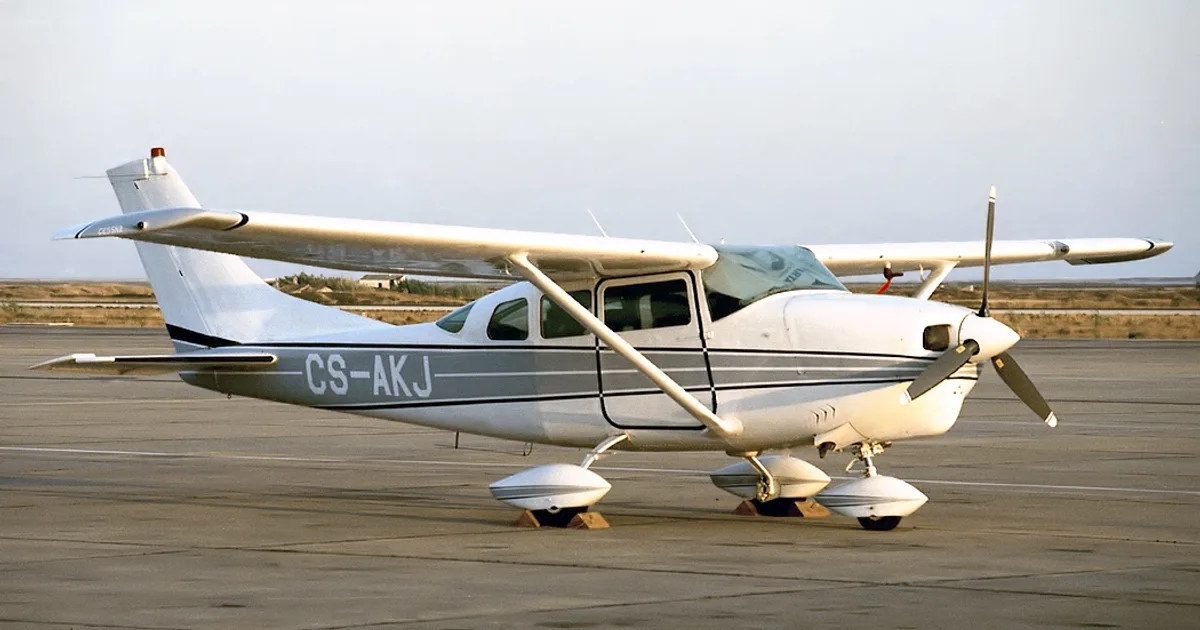
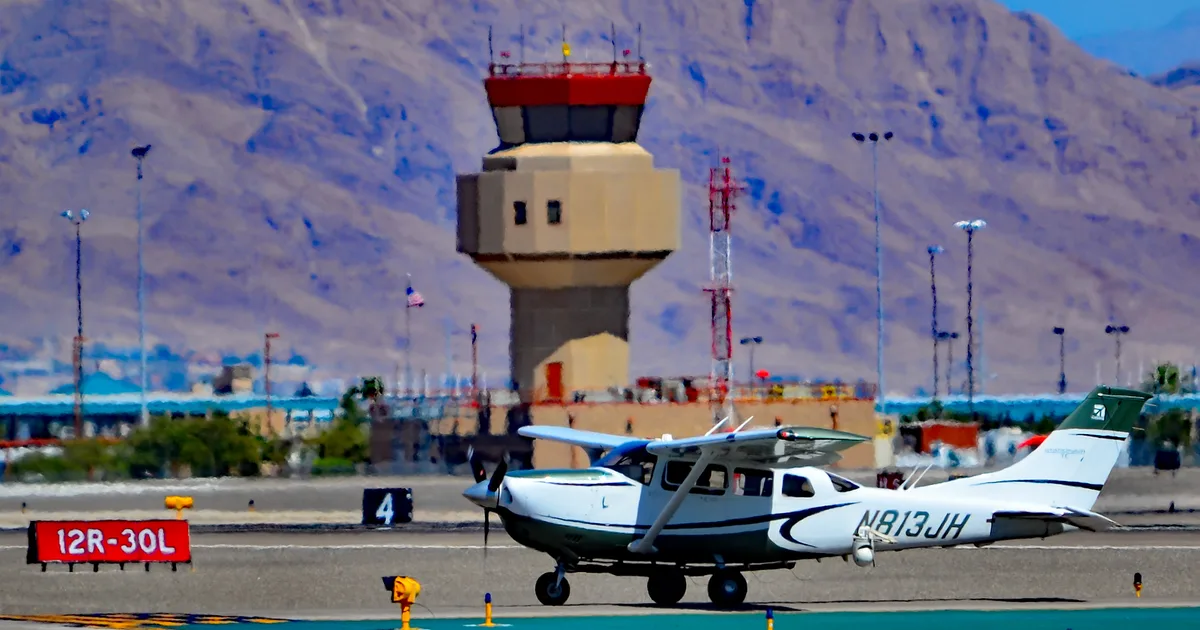
- The Cessna 206H is part of a robust family of aircraft known for their reliability and performance.
- Safety regulations emphasize the use of seat belts for all passengers during flight.
- Community events are organized regularly for Cessna owners to connect and share experiences.
- Takeoff briefings are crucial for ensuring safety and preparedness during flights.
- The magazine features articles that provide insights into flying destinations and aircraft maintenance.
Document
Source
Originally published by www.cessnaflyer.org. Sprinkle hosts a reference copy with an added summary, specifications and searchable full text.
Document details
- Type
- Other Documents
- Year
- 2016
- Pages
- 84
- File size
- 17 MB
- Publisher
- www.cessnaflyer.org
Common. Rarer than 3% of the aircraft models we track.
Most owners only have the POH. Here's the essential set for the CESSNA U206F STATIONAIR.
- Pilot's Operating Handbook / AFM
- Checklist
- Maintenance Manual
- Parts Catalog (IPC)
- Systems & Wiring
- Service Bulletins
- Type Certificate (TCDS)
CESSNA U206F STATIONAIR for sale now

Free — save the U206F Stationair to your watchlist and track it in one place.
More CESSNA U206F STATIONAIRmanuals & documents
See all 16 →- ATSB – AO-2024-049Other Documents
- Cessna 206 Aircraft Systems - FAA SafetyTraining Manual
- Cessna 206 Series | Type Acceptance Report - CAAOther Documents
- CESSNA’S TURBO STATIONAIRFlight Manual
- TURBO STATIONAIR HDPerformance Data
- Takeoffs, Approaches, and Landings for the Cessna 172, 182 and 206Weight And Balance
- AAIB Bulletin: 11/2005 G-BGED EW/C2004/06/02Other Documents
- Cessna U206F Stationair, G-STAT - GOV.UKService Bulletins
- Cessna U206F Stationair, G-BAGVMaintenance Manual
- Model 206 & T206 Series Service ManualChecklist
- Cessna Stationair Series, Skywagon 206 Series, and Super Skylane Series Service ManualMaintenance Manual
- IM-Cessna-Stationair-U206G-1981.pdf - Club AereoPilot's Operating Handbook
If you fly the CESSNA U206F STATIONAIR, you may also be researching these.




In this document
Rugged and Reliable: The Cessna 205, 206, and 207
This section discusses the durability and reliability of the Cessna 205, 206, and 207 models, highlighting their performance in various conditions and their suitability for different flying needs.
Mind Your Belt
An article emphasizing the importance of seat belt safety in aviation, discussing regulations and best practices for ensuring passenger safety during flights.
Destination Key West
A feature article detailing a trip to Key West, including tips for flying to the destination, local attractions, and experiences from fellow pilots.
Cessna Flyer Events
This section outlines upcoming events for Cessna Flyer Association members, including fly-ins, airshows, and gatherings, encouraging community participation.
Takeoff Briefings
An informative piece on the importance of conducting thorough takeoff briefings, including decision-making processes during critical phases of flight.
Safety notes
- Always ensure all passengers are wearing seat belts during takeoff and landing.
- Conduct thorough pre-flight briefings to prepare for emergency situations.
Full document text
42 page Destination Key West Seat Belt Safety VOL 13 ISSUE 03 MAR 2016 cessnaflyer.org Rugged & Reliable: The Cessna 205/206/207 PRSRT STD US POSTAGE PAID PERMIT NO 5377 DENVER, CO CHANGE SERVICE REQUESTED CESSNA FLYER ASSOCIATION PO BOX 5505 RIVERSIDE, CA 92517 B/E Aerospace Ice Shield™ De-icing Systems For more information, please contact: Jack Samuels | Phone (951) 549-7789 jacksamuels@aircraftspruce.com 7 7 7 8 2 3 Cessna Flyer is the official publication of the Cessna Flyer Association. Cessna Flyer is published monthly by Avia- tion Group Limited, PO Box 5505, Riverside, CA 92517. POSTMASTER: Send address changes to Cessna Flyer, PO Box 5505, Riverside, CA 92517. Subscriptions, advertis- ing orders, and correspondence should be addressed to PO Box 5505, Riverside, CA 92517. Annual dues: $44.00 in the US; Canada and Mexico add $15.00 per year; all others add $25.00 per year (US Dollars only). Eighty per- cent (80%) of annual dues is designated for your magazine subscriptions. The information presented in Cessna Flyer is from many sources for this there can be no warranty or responsibility by the publisher as to accuracy, originality or complete- ness. The magazine is sold with the understanding that the publisher is not engaged in rendering product en- dorsements or providing instruction as a substitute for appropriate training by qualified sources. Cessna Flyer and Aviation Group Limited will not assume responsibility for any actions arising from any information published in Cessna Flyer. We invite comments and welcome any report of inferior products obtained through our advertis- ing, so corrective action may be taken. PO Box 5505 Riverside, CA 92517 Tel: 800.397.3920 www.cessnaflyer.org The Official Magazine of The Cessna Flyer Association PRESIDENT Jennifer Dellenbusch jen@aviationgroupltd.com VICE PRESIDENT / DIRECTOR OF SALES Kent Dellenbusch kent@aviationgroupltd.com MANAGING EDITOR Heather Skumatz heather@aviationgroupltd.com CREATIVE DIRECTOR Marcus Y. Chan EDITOR AT LARGE Thomas Block CONTRIBUTING EDITORS Mike Berry • Steve Ells Kevin Garrison • Michael Leighton John Loughmiller • Dan Pimentel John Ruley • Scott Sherer • Dale Smith CONTRIBUTING PHOTOGRAPHERS Paul Bowen • Keith Wilson Vol. 13 Issue 03 MARCH 2016 CES SNA F LYE R (04) MARCH 2 016 DETAILS: Subscription and hardware sold separately. Fees and taxes apply. The subscription plan you choose will automatically renew and you will be charged according to your chosen payment method at then-current rates. To cancel you must call us at 1-866-635-2349. See our Customer Agreement for complete terms at www.siriusxm.com. Data displays vary by device; images are representative only. SiriusXM Services may include weather and other content and emergency alert information. Such information and data is not for “safety for life,” but is merely supplemental and advisory in nature, and therefore cannot be relied upon as safety critical in connection with any aircraft, sea craft, automobile, or any other usage. SiriusXM is not responsible for any errors or inaccuracies in the data services or their use. © 2015 Sirius XM Radio Inc. Sirius, XM and all related marks and logos are trademarks of Sirius XM Radio Inc. With SiriusXM® Aviation satellite weather, you don’t have to worry about the very real limitations of ground-based ADS-B. SiriusXM also has critical features they don’t offer. So why choose SiriusXM? Simply put, it’s worth it. SiriusXM Weather FEATURES ADS-B Continuous, Coast-to-Coast Service – No Coverage Gaps No Line-of-Sight Restrictions No Minimum Altitude Limitation Coast-To-Coast High Resolution Weather Radar Lightning: Cloud-To-Cloud & Cloud-To-Ground Graphical Cloud Cover Choose your service package at siriusxm.com/cessna then call 855.SXM.WTHR to subscribe. FLY WORRY-FREE Why choose free when you can SiriusXM Aviation Services are available on Garmin products. Pilots using Garmin products can access SiriusXM Aviation in-flight weather data to monitor storm fronts, track lightning strikes, TAFs, METARs, winds and more. Compatible models are the Garmin GXM™ 42 via aera 510/560/796 portable GPS units, the GDL® 69 for compatible Garmin certified avionics and the G3X Touch/GDU 465 for LSA/Experimental Aircraft installations. 52 34 58 42 28 Rugged And Reliable: The Cessna 205, 206 and 207 by Mike Berry Hybrid Panel: How to make it work by Jason Moorefield Mind Your Belt by Steve Ells Knots 2U: 700 PMAs and Counting by Scott Sherer Destination Key West by Sal Staiano THE VIEW FROM HERE Jennifer Dellenbusch LETTERS to the EDITOR CESSNA FLYER EVENTS FULL CIRCLE Thomas Block TAKEOFF BRIEFINGS Mike Jesch AFFIRMATIVE ATTITUDE Dan Pimentel QUESTIONS & ANSWERS Steve Ells NEWS ADVERTISER INDEX BACK WHEN: VINTAGE CESSNA ADVERTISING AND MARKETING 08 08 10 16 20 22 24 66 80 82 Cover: 2011 T206H Turbo Stationair Photo courtesy Textron Aviation MARCH 2016 Photo courtesy Textron Aviation A Year of Events LETTERS to the EDITOR Send your letters to editor@cessnaflyer.org “The Real Bahamas” by Michael Leighton January 2016 Hello Michael, Just read and enjoyed your article on the “real” Bahamas in Cessna Flyer. My name is Elizabeth Vance, and I work with The Bahamas Ministry of Tourism promoting GA to The Islands of The Bahamas. We have several resources for pilots. Bahamas.com/Flying pages are filled with information on our Bahamas Flying Ambassadors, Gateway FBOs, proce- dures, and pilot special packages/offers. Also on the web you will find Out Island information on the Bahama Out Islands Promotion Board site, Pilot Special Offers. In addition to the web, we produce a Pilot Guide (semi-annually) and VFR Chart (annually); both are currently being updated for release in February [2016]. The Pilot Guide will be updated for a second issue for fall/winter. From our website, or at a trade show, pilots may sign up to receive our monthly pilot e-newsletter. This year we will again be at the Sun ‘n Fun show in Lakeland, Fla.
Show full textShow less
Our booth is in Hangar D and we are planning an event for the night airshow. In April we are planning the first Bahamas Air Show on Grand Bahama. The airshow will feature acrobatic show off of Taino Beach as part of the Carnival festivities. (For details on this event, see the listing under Featured Events on page 10 of this issue. —Ed.) Look forward to meeting you, Elizabeth Vance, Aviation Specialist Bahamas Ministry of Tourism Plantation, Fla. Another season of airshows and fly-ins is upon us. We’ll kick our year off at Sun ‘n Fun in Lakeland, Fla., and other shows follow in quick succession: Aero Friedrichshafen in Germany April 20–23; The Great Alaska Aviation Gathering April 30–May 1; and AOPA’s regional event in North Carolina on May 21. A couple of new shows have popped up this year: ModAero in Conroe, Tex., March 16–19; Bahamas Air Show in Freeport, Bahamas, April 15–16; and Caribbean Aero Expo in Puerto Rico, also in April. We won’t be able to make it to those shows in person, so if any of you do, please share your experience with us. The show calendar continues through October, with the biggest show— AirVenture—plus more AOPA regional events, Flying Aviation Expo in Palm Springs, Calif. and Copperstate Fly-in (at a new location). Check our Events calendar on page 10 and in future issues of Cessna Flyer, and visit the Upcoming Events tab at CessnaFlyer.org for updated information. Our big focus, however, will be on our annual Gathering at Waupaca. This year’s event takes place July 23–24 and promises to be our biggest event yet. We’re lining up our speakers now and expect to have some fantastic seminars, fabulous door prizes—and great fun, as always. We sure hope to see you there. Blue skies, Jennifer Dellenbusch THE VIEW FROM HERE CES SNA F LYE R (08) MARCH 2 016 CES SNA F LYE R (10) MARCH 2 016 CFA SPONSORED EVENT Oct 13 – 15 — Palm Springs, CA. Flying Aviation Expo. A world-class weekend of seminars, workshops, outdoor displays, indoor exhibits, industry experts and even an aircraft parade. Learn about new products, receive technical advice and participate in demonstrations. For infor- mation, visit aviation-xpo.com. FEATURED EVENTS April 5 – 10 — Lakeland, FL. Lakeland Linder Regional (KLAL). 42nd Annual Sun ‘n Fun International Fly-in and Expo. Enjoy one of the world’s greatest aviation conventions with thousands of airplanes, hundreds of commercial exhibitors and educational forums, seminars and hands- on workshops. For more information, visit sun-n-fun.org. April 15-16 — Freeport, Grand Bahama. Grand Bahama International Airport (MYGF). First-ever Bahamas Air Show. Young Eagles flights for Bahamian stu- dents on Friday morning, then practice show viewing at Taino Beach. Flag drop at 6 pm to open the Grand Bahama Car- nival celebration. Carnival activities on Taino Beach Saturday morning; airshow Saturday afternoon from 2 to 4 pm. Hotel packages are available. GA arrivals can get more information from the Free- port airport (MYGF), 242-352-6020 and by visiting bahamas.com/private-flying. April 20 – 23 — Friedrichshafen, Ger- many. AERO Friedrichshafen 2016. The premier European trade show for the General Aviation industry, with con- ferences and lectures plus exhibitors, aviation art, new technology displays and more. Organized by Messe Friedrich- shafen GmbH. For more information, visit aero-expo.com/aero-en. CFA EVENTS Jul 23–24 — Waupaca, WI. Waupaca Municipal (KPCZ). The 12th Annual Gathering in Waupaca. CFA’s annual pre-OSH event with fun, food and friendship. Cocktail reception Saturday evening; seminars, lunch, more seminars and dinner on Sunday. Air-conditioned motor coach to EAA AirVenture Monday & Tuesday, July 25-26. Cost per person is $95 and covers lunch and a wonder- ful sit-down dinner, along with all of the seminars, the bus ride to and from Oshkosh, a cocktail reception, an Associ- ation T-shirt and entry into the door prize drawing. To book a room at the Comfort Suites Foxfire, call the hotel directly at (715) 942-0500 and mention Cessna Flyer. Register online at CessnaFlyer.org or call CFA at 800-397-3920. SEND EVENTS to editor@cessnaflyer.org Since 1967, Superior Air Parts has built its reputation on delivering products that make flying more affordable, attainable and reliable for aircraft owners around the world. Take our Millennium Cylinders for example: With a list of advanced features, complemented by their unmatched reliability and overall value, today Millennium is the #1 name in replacement cylinders. They’re in-stock and ready for delivery from your nearest Millennium Cylinder distributor! For a complete list, visit superiorairparts.com or call: 972.829.4635 FEATURE FOR FEATURE. DOLLAR FOR DOLLAR. NOTHING BEATS SUPERIOR’S MILLENNIUM CYLINDERS. MillenniumC y l i n d e r s ® MillenniumC y l i n d e r s ® ADVANCED ALUMINUM ALLOY HEADS VOLUMETRICALLY MATCHED PORTS INCREASED PORT WALL THICKNESS VERY HIGH QUALITY CASTING ® MILLENNIUM CYLINDERS IS A REGISTERED TRADEMARK OF SUPERIOR AIR PARTS, INC. THROUGH HARDENED AMS6382 STEEL BARRELS IMPROVED COOLING COMPUTER-GENERATED HEAD FIN CONFIGURATION ADVANCED CYLINDER BARREL CHOKE 1 2 3 4 5 6 7 8 1 2 3 4 5 6 8 7 Apr 30 – May 1 — Anchorage, AK. Ted Stevens Anchorage International Airport (PANC), FedEx Hangar. 19th Annual Great Alaska Aviation Gathering. An Alaskan aviation adventure under the midnight sun presented by the Alaska Airmen’s Association. Inside and outside static displays, a safety conference, exhibitors and much more. Free admission. For information, visit greatalaskaaviationgathering.org. June 4 — Bountiful, UT. Skypark Airport (KBTF). 6th annual Skypark Aviation Festival and Expo. The largest annual aviation event in Utah with numerous aircraft manufacturers, flight schools, aviation organizations, vendors, food and more. Last year’s attendance was over 5,000. Free admission. Visit skyparkutah. com/skypark-aviation-festival2.html for details and schedule. Contact Chris Volzer, FBO manager, at 801-259-1184. July 25 – 31 — Oshkosh, WI. Wittman Regional (KOSH). EAA AirVenture Oshkosh 2016. The World’s Greatest Aviation Celebration. Thousands of forums, workshops, special events, static displays and exhibitors; plus airshows, mass arrivals, attractions, shopping and much, much more. Visit your Cessna Flyer Association, Booth 3058 in Hangar C. For more, go to airventure.org. Oct 28 – 29 — Mesa, AZ. Falcon Field (KFFZ). 44th Annual Copperstate Fly-in. The Southwest’s premier aviation event will be held at Falcon Field in Mesa this year. Aircraft displays of all types, awards, aviation business information booths, educational workshops for pilots, and youth activities. A portion of event proceeds fund scholarships for youth aviation programs. For information, visit copperstate.org. OTHER EVENTS Mar 7-13 — Edinburg, TX. South Texas International Airport (KEBG). Fly Women Of Aviation Week. South Texas International and pilot Dianna Stanger are hosting a spectacular opportunity for girls and women of all ages to take an exciting free ride in a private aircraft dur- ing the Fly It Forward Challenge. Contact Jasmine Gordon, jasdeity@gmail.com. Visit womenofaviationweek.org. Mar 10-11 — Olathe, KS. G500/G600 and GTN Pilot Training. This two-day CES SNA F LYE R (12) MARCH 2 016 A NEW STANDARD IN COMFORT, LUXURY, AND UTILITY Explore the Aurora Interior at www.wipaire.com/Aurora Wipline Floats ∙ Skis ∙ Modifications Aircraft Sales ∙ Avionics ∙ Interiors Paint Refinishing ∙ Maintenance South St. Paul, MN - 651.451.1205 ∙ Leesburg, FL - 352.323.4809 ∙ www.wipaire.com See us at Sun ‘n Fun (Booth MD-003D) & enter to win $1,500 towards a seaplane rating! HartzellProp.com/TopProp Contact us at 800-942-7767 Cessna has created some of the hardest working, most robust, utility airplanes ever built. And Hartzell Propeller has been helping them achieve peak performance throughout their amazing history. 〉 2- and 3-blade Top Prop conversions for most Cessna aircraft, many utilizing blended airfoil scimitar blades 〉 Low noise 4-blade option for Cessna 441 Conquest 〉 Durable, high-performance 3- and 4-blade conversions for the 208 Caravan Experience the Hartzell Difference EVENTS continued on page 74... CES SNA F LYE R (14) MARCH 2 016 class at Garmin Headquarters provides a collaborative classroom environment to help pilots transition from analog flight instruments to Garmin glass panel flight displays. Cost to attend the course is $625 and includes a factory tour, breakfast, lunch and beverages. 8 am to 5 pm. Reg- ister online by visiting flyGarmin.com. Mar 10 — Everett, WA. Paine Field (KPAE). German World War II Rocket Fighters. Against the backdrop of the Me-163 aircraft on display at the Flying Heritage Collection, German aerospace history expert Dr. Dieter M. Zube will discuss the technical features of the aircraft and propulsion system as well as its military use. He will also address other rocket fighters of the era like the Bachem Natter and the legacy of these aircraft. Program held 7 to 8:30 pm. Cost is $20. Email info@flyingheritage.com or call 877-342-3404. Visit facebook.com/ events/793548677457464/. Mar 12 — Meridianville, AL. Huntsville Executive Airport (KMDQ). Women Of Aviation at MDQ. Join FlyQuest and Huntsville Executive Airport as they team up for a celebration of the contributions of women of all ages to the aviation com- munity. Food, speakers, activities and of course, airplanes! Complete list of speakers and finalized schedule will be released soon. Save the date—you don’t want to miss this event. Contact Mary Kate, marykate@flyquest.net or visit womenofaviationweek.org. Mar 12 — Concord, NH. “Flying the Feathered Edge: The Bob Hoover Project.” In this inspiring 86-minute film, renowned aviation figure Robert A. “Bob” Hoover tells his life story as an Air Force fighter pilot, experimental test pilot and airshow pilot. He is considered the best stick-and- rudder pilot who has ever lived. Cost is $40; proceeds benefit the Aviation Mu- seum of NH’s educational programs. Cash bar and appetizers 3 pm; documentary 4 pm. Door prizes including a signed book by Bob Hoover. Contact Jessica Pappathan, 603-669-4820 or email jpappathan@ nhahs.org. Visit aviationmuseumofnh.org. Mar 17-18 — Olathe, KS. GTN 650/750 Pilot Training. Tailored specifically to the GTN touchscreen series and held at Garmin Headquarters, this 1.5-day class highlights loading and activating depar- tures, arrivals and instrument approach Cessna.com | U.S. +1.844.44.TXTAV | INTERNATIONAL +1.316.517.8270 CESSNA SKYLANE ©2016 Textron Aviation Inc. Cessna, Cessna’s logo and Skylane are registered trademarks of Textron Innovations Inc., used by permission. Enjoy the latest avionics technology with the added peace of mind you get from proven performance and dependability. Get the best of both worlds with the new Cessna ® Skylane ® today. Y O U R C A P A B I L I T I E S The author’s friend Jack Clary (left) was a TWA pilot that retired from flying widebody 767s in 1997. His son, Mike Clary (right), is an active pilot for American Airlines. I had never in my career flown a Boeing 727. I had ridden on the jump seats of any number of them over the years, but that was the closest I had ever gotten to the flight controls. But I did have scads of flight time in bigger and smaller Boeing jetliners, ranging from straight-pipe Boeing 737s on through fanjet-pow- ered widebody 767s, so the basic layout seemed very familiar. Without hesitating, I slid into the captain’s seat and was again surprised at how effortless and “at home” the action felt. I put my right hand on the three engine throttles (yes, I know— thrust levers—but they’ll always be throttles to me) and I com- mented to Jack on how having three jet engines to command was a new experience. “You never did fly anything with more than two engines, right?” he asked. John Ruley LEFT COAST PILOT Thomas Block FULL CIRCLE Boeing 727 Simulator After 16 years outside an airline cockpit, Tom Block takes the controls. We’re going to take a short break from “A Controller Speaks,” which I’ll continue in our next session. Instead, let’s take the opportunity to see if it really is possible to teach an “old dog” some “old tricks.” I retired from airline flying 16 years ago, driving a Boeing 767 from Munich, Germany to Philadelphia for my last airline trip. Not too many years after that final airline landing, I discovered that getting a new medical certificate was going to be a problem for me, so I elected to stop all my personal flying, too. It’s been quite a long while since I’ve touched the controls of any airplane. As a few of you might have already figured out, the “old dog” in the analogy from above is me, and the “old tricks” refer to the art and craft of piloting—more specifically, to steering big iron through the sky. My good friend Jack Clary is back in the aviation game, and this provided me with an opening for my experiment. Jack was a TWA pilot nearly forever, starting out on piston engine Constellations in 1965 and retiring from widebody Boeing 767s in 1997. He was involved in General Aviation throughout and after his airline career, and also began doing ground school and simulator instruction in various jets a few years after his airline retirement. Jack has logged a remarkable 48,000-plus hours that began in the military decades ago and continue to this day. Jack began working for a jet training outfit based at Orlando Sanford International Airport (KSFB) in Florida a few months ago. Global One Training Group offers flight training for com- mercial airlines and professional pilots. Jack signed on to do Boeing 727 ground school and simulator training; it’s an air- plane he had flown for a brief period at TWA. With the approval of Global One’s Bill Davidson, Director of Operations, and Barry Watts, Director of Standards, I headed for the Sanford facility with Jack and his son Mike, an active pilot for American who had also spent some of his airline career on the Boeing 727—and who had been initially checked out on that airplane at TWA by none other than his father! So, off we went to Sanford to see what I did or did not remember from my own 31,000 hours in the air, albeit abso- lutely zero for the past several years. After a short tour of the facility itself, including Jack’s 727 ground school classroom, we headed for the simulator bay. The full-motion 727 simulator sat on its large hydraulic links and scissors, and instantly reminded me of the simulators I had flown for US Airways at either Pittsburgh or Charlotte. We climbed the tall staircase and entered the Boeing 727 cockpit. My first reaction was one of surprise—in that there was no surprise. Instead of feeling like I was looking at a scene from my distant past, I felt like I was standing in a place that I had been just yesterday, or maybe a week or two weeks ago. It seemed so familiar that the sensation was haunting. I was doing all of this without much thought; that is, just letting myself react to the airplane to see what might be left after all these years. CES SNA F LYE R (16) MARCH 2 016 continued on pg 18... avemco.com/CessnaFlyer *Not all coverages or products may be available in all jurisdictions. The description of coverage in these pages is for information purposes only. Actual coverages will vary based on local law requirements and the terms and conditions of the policy issued. The information described herein does not amend, or otherwise affect, the terms and conditions of any insurance policy issued by Avemco. In the event that a policy is inconsistent with the information described herein, the language of the policy will take precedence. Free hat offer not available in New Mexico. When you call Avemco Insurance Company, you know who answers the phone? An Avemco® Aviation Insurance Specialist at our home office in Frederick, Maryland. Somebody who knows a 180 from a 182. Somebody empowered to make decisions, solve problems and customize a policy based on what you fly and how you fly it. And, if you ever have a claim, Avemco can help you get back in the air fairly and quickly. Because we don’t simply insure Cessnas, we insure the people who love them. A subsidiary of HCC Insurance Holdings, Inc. ADS0126 (11/13) WE TREAT CESSNA OWNERS LIKE A NAME, NOT AN N NUMBER. Call (800) 822 9123 or visit avemco.com/CessnaFlyer Get a personalized quote and get a free hat. “Positive rate, up with the feet,” I called to Mike, who was in the copilot’s seat for today’s mission into yesteryear. (Jack was at the engineer’s panel, where he could reach the controls at the instructor’s console.) Again, without thought, the expression that I had always used to get the gear up had simply popped out of my mouth at the right time. We climbed out, leveled off, did a few turns, then took a radar vector for an ILS approach to JFK’s Runway 4R. My first couple of minutes had a little bit of wing wobbling in it, but soon the simulator “trick” of not using too much aileron came fully into play and I held the beast right where I wanted it. I rolled onto the localizer, waited for the glideslope, dropped the gear and more flap, then slid down the slot to the touch- down point. At 50 feet I pulled all three throttles to idle, a slight flare, and we touched and rolled relatively straight down the runway while I extended speed brakes and pulled the throt- tles into the reverse thrust range. Again, all of it without a thought or comment; it just happened. Which shouldn’t surprise me. I’m at the age where I can remember more clearly what I did in, say, 1964, than what I did perhaps a month or two ago. The biggest difference that I noticed in my skill set today compared to years past is that since my bifocals are much stronger these days than they had been at the end of my airline career, reading stuff in the darkened cockpit was now much more of a deliberate effort. I did one more takeoff, then a VOR approach to a circling visual landing—which worked out about the same: I could get I thought about it and then said, “No, I’ve flown threes and fours.” The three engines were mounted on a Ford Trimotor, and the four engines were the giant piston powerplants on a DC-7B that I spent 55 hours of flight time in. Surprise number two: Jack told me to set the parking brake so he could release the simulator’s motion freeze, and without a con- scious thought my hand went immediately to the parking brake lever while my feet pressed down on the Boeing’s toe brakes. It was, I realized afterward, precisely the same motion that I had used as my final official act as an airline captain when I set the parking brake on the Boeing 767 at the end of my retire- ment flight 16 years earlier. We started the three jet engines and we taxied around on what was a simulated JFK Airport in New York—my first base in 1964 as an airline copilot for Mohawk Airlines (one of the original carriers of US Airways, which recently has morphed into American Airlines). Finding the end of the runway, I lined up, added power and rolled. I was doing all of this without much thought; that is, just let- ting myself react to the airplane to see what might be left after all these years. Simulators are, of course, a little different than real airplanes—with most folks agreeing that they are more dif- ficult to get a feel for. There are tricks to keeping a simulated aircraft tame, and—surprise number three—my hands and feet did just the right things to stay on the centerline. We accelerated, rotated and began to climb. I had 35 years earlier been a simulator instructor and a check pilot, so I believe it was those old ingrained habits that were steering today’s 727 experience. CES SNA F LYE R (18) MARCH 2 016 continued on pg 76... REPL ACE YOUR OLD TR ANSPONDER AND BE COMPLIANT FOR 2020 *Pending FAA certification. ADS - B O UT S I M P LI FI E D 1090 ES Transponder ADS-B Out Built-In WAAS GPS $3,490 STRATUS ESG Stratus ESG is a TSO certified* transponder that provides 2020 compliance in one box. It was designed as a form-factor replacement for popular legacy transponders, so installation is simple compared to remote boxes that need to be integrated with your old transponder. Comply with the 2020 mandate by replacing your old transponder, and get an upgrade that feels like an upgrade. ORDER NOW Visit appareo.com/cessna-flyer to locate the dealer nearest you. will not climb on one engine until the landing gear is retract- ed—if at all. Therefore, if an engine fails any time before the gear retracts, it’s usually best to just close the throttles, give the airplane back to the insurance company, and once again, find the softest thing you can and hit it as slowly as you can (but still under control). Once the gear is up, your options expand. Also important but frequently overlooked is the crew brief- ing, especially if you’re flying with a pilot-rated passenger. As the PIC, it is up to you to establish the working relationship you share, and voice your expectations of your cohorts. Who will talk on the radio? Who will manage the navigation sys- tems? Who will do what in the event of an emergency? Traffic watch is critically important and you need to invite all passengers—pilots or not—to be willing to point out any other aircraft they see near your flight. I bribe my daughter with a dollar for every airplane she spots before me. (Don’t tell my wife; she thinks I’m too generous. I tell her it’s cheaper than a midair collision.) Also, don’t forget to set expectations concerning the “sterile cockpit” period. This doesn’t necessarily mean no talking at all, but keep any conversation related to the airplane and its posi- tion and direction in space. If your right-seater notices that you don’t have your landing gear down, you might want to know that—make sure she knows it’s okay to let you know. There are no set rules, but you don’t want any surprises, so best to sort it out before you start the engine. As an instructor, I let my clients know that I expect them to make all the decisions relating to the flight; that I will not actu- ally shut the engine down; that if the engine quits, it’s for real and to treat it as such (unless we’re doing multi-engine engine- out maneuvers); that I want them to fly the airplane as they normally do, and deal with any questions they may have as if I were not there; that I won’t take control of the airplane unless John Ruley LEFT COAST PILOT Mike Jesch TAKEOFF BRIEFINGS Boeing 727 Simulator An airline captain discusses various ways that GA pilots can be prepared when the unexpected occurs. I’m a firm believer in making decisions early, especially when it comes to critical decisions that matter. Such are the decisions that one must make when things go wrong during or shortly after takeoff, and this is why takeoff briefings are so important. The idea is to give voice to the decisions that may have to be made under duress, consider what the options are ahead of time, and know when you’ll have to implement them. Takeoff briefings are a standard part of every airline flight, and you should make them a part of your repertoire, too. Here’s how. First is the continue/abort decision. There’s a rule of thumb that says that you should abort the takeoff if you haven’t reached 70 percent of your takeoff speed by the time you have 50 percent of the runway remaining. You should know what that speed is for your airplane, and the conditions (weight, tem- perature, etc.), and you should know how to know when you have 50 percent of the runway remaining. It’s easy on a concrete runway when you have distance remaining markers, or, as at Fullerton (KFUL), the “1/2” sign. This is less easy to determine at a grass or dirt strip in the mountains somewhere. Still, it’s an essential part of your pre- takeoff planning. Similarly, you know what your takeoff speed is (55 kias in my 182), so 70 percent of that is 39 knots—I’ll call it 40. If I’m not at 40 knots when I’ve used half the runway, I abort the takeoff. It’s that simple. The decision point and options are known and identified—and voiced—and the criteria are also spelled out. If you saw that video a while back of the Luscombe launch- ing at a high density altitude and eventually setting into the trees, you’ll recognize that this decision was never contemplat- ed, let alone voiced; and certainly the correct decision was not executed. I believe that pilot was caught by surprise at the lack of performance of his airplane. A little less obvious is the point after takeoff after which you might consider being able to turn around and return to your runway. Immediately after takeoff, the best course of action is finding the softest thing straight ahead and hitting it as slowly as possible (but still under control). As altitude is gained, more options become available—up to returning to the runway you just departed from. This is a risky maneuver that probably fails more often than it succeeds, and I’m pretty sure this is because we seldom practice it. Instead of having experience that might inform our decision, we wing it. In my airplane, I know that it takes me around 600 feet to accomplish the turnaround maneuver, so my number is 1,000 AFE. In a multi-engine airplane, your knowledge of its single engine performance comes in to play. Most light piston twins Surprises are meant for birthdays, not airplane flights. Consider before your next flight all the decisions you might have to make, and think about when you will need to make them. CES SNA F LYE R (20) MARCH 2 016 continued on page 77... AOPA Insurance Services offers both Aircraft Insurance and Renter’s Insurance so that you’ll be protected when you fly. With the buying power of AOPA behind us, we provide you with: Excellent coverage Competitive rates The expertise you deserve The dependability of AOPA, a name you can trust. Revenue from AOPA Products & Services goes right back to supporting, grow- ing and protecting general aviation. Go Online or Call Today! 1-888-255-AOPA[2672] or aopainsurance.org/fly We’re the ONLY ones with AOPA in our name...and phone number. THE KEY TO PROTECTING BOTH CESSNA OWNERS AND RENTERS This month I want to take a look at what you can do with your airplane today to build stronger bridges with the nonfly- ing public. Along with issuance of our pilot certificate comes an unwritten rule that we must do everything we can to make sure the public knows how cool our world is, and invite them to experience it firsthand. So, fellow pilots, get out there and do one or all of the things listed below. You’ll being doing something awesome to strengthen the connection between those who fly and those who do not, and at least it’ll give you a few more chances to talk about flying. We all know pilots never miss an opportunity to chat up anyone that will listen about this thing called avia- tion which we enjoy so much. 1. Reach out to veterans and offer to listen to their stories In every big city and little town in America, military veterans are holding on to dramatic tales of what they went through to defend our country—and you can make them feel welcome again in the aviation world by simply making friends and listening. Contact a local retirement home and ask if they have any veterans as residents, especially those with USAF or military fly- ing backgrounds. Your local VFW chapter is also a good place to connect with vets who would love to tell you about their golden years of flying. Arrange a lunch or other casual meeting with these folks, and just let them tell you their stories. If a bond develops, you may consider offering to take them flying. 2. Become a Boy or Girl Scout for a day In any Boy Scouts and Girl Scouts troop meeting, you will find plenty of young people (and maybe their parents) who would love to hear about your airplane, your flying life, and what it took to earn your pilot’s license. Don’t just crash a meeting; look up the troop leaders. When they jump on your offer to attend a meeting, be sure to show up with props. Your handheld GPS, charts, your iPad with ForeFlight—anything aviation-related—will be received with interest. Consider offering your airplane to help Eagle Scouts earn their Aviation Merit Badge by letting them visit the airport and participate in a preflight inspection. Maybe you’ll even be moved to take a scout flying. 3. Organize an ATC tower tour as a prize for the school science fair Most schools have an annual science fair, and it is pretty common for the winners to receive some sort of prize. Call your local FAA Air Traffic Control tower manager and arrange for a group tour of the ATC facilities, then offer this organized tour to the principal of the school as a science fair prize. If you have never taken an ATC tour before, it will open your eyes to the intricacies of airspace separation, and the bright kids winning the prize will really enjoy the applied science experience. 4. Connect with your local Big Brothers Big Sisters organization Big Brothers Big Sisters of America does exemplary work to provide kids with important after-school and weekend men- toring to help them avoid risky behavior and build character. Sometimes these kids just need someone to care about them for a few minutes, something many of them do not get at home. Offer to give a presentation about flying. Compile a list of aviation-related online resources, including games, flight simula- tors, and the like—just in case any Bigs in the chapter are look- ing for a new activity to explore with their Littles. If you form a bond with one special child, consider going all-in and becoming their Big Brother or Big Sister. The impact you may have on their future could change the trajec- tory of their life. 5. Donate a scenic flight to a silent auction All sorts of nonprofit groups hold silent auctions, and they are always looking for donated items to raise funds. Find a non-aviation charity organization and offer a scenic flight in your airplane. After you make up a nice little sign with picture of your air- plane and a description of the scenic flight, you’ll introduce lots of non-aviators to our world. Just one lucky donor will get to go up with you... so make a big deal about it, remind them to take lots of pictures and make sure they know to spread the love on their social channels. It’s a win-win for all involved. 8 Ways to Build Bridges Individual acts of General Aviation advocacy not only spread our message to the masses, but can also give you immense joy and personal satisfaction. David Hipschman HEADING BUG Dan Pimentel AFFIRMATIVE ATTITUDE CES SNA F LYE R (22) MARCH 2 016 Consider offering your airplane to help Eagle Scouts earn their Aviation Merit Badge; maybe you’ll even be moved to take a scout flying! continued on pg 77... 6. Make good use of an RC airplane Dust off your old RC plane—or go out and buy a reusable RC airplane at the local hobby shop—and connect with some of the folks in your community. Whether you formally invite a family or group, or you just take your aircraft to the park to fly it around and see who might stop by to check it out, this activ- ity is guaranteed fun. An RC aircraft can be an excellent conversation piece for all ages—and for some kids, it could be the coolest thing they’ve ever seen. Best-case scenario is that it stimulates an interest in aviation for someone in your community who is looking for their niche. Worst-case? You get to fly… without burning Avgas. 8. Donate your old aviation magazines or books You know about that stack of old aviation magazines you’ve read cover-to-cover but cannot seem to part with? Put them to good use at the local Boys & Girls Club, a great organization whose clubhouses are filled every day with kids that will cherish every page of those magazines and books. Most clubs have librar- ies or reading rooms, and will gladly welcome your donation. When making the offer, ask if you can make a short presen- tation about GA flying when you deliver the items. You might end up being at the front of a room filled with potential future pilots... all they may need is your slight nudge to begin a jour- ney down that path. 8. Become a social media beast After any or all of the above, jump on all your social media channels (Twitter, Facebook, Instagram, a neighborhood non- aviation forum, your personal blog, etc.) and describe what you did. Post pictures of everything, and always try to target your posts toward a non-pilot audience. When your family, friends, coworkers, associates and others see you giving back and connecting with the public about fly- ing, it creates positive energy about our aviation world—always a great thing. There are many things you can do with your enthusiasm for flying to reach out to the public. Generally speaking, we all need to be on the lookout for any interaction we can make that opens the door to a conversation about flying private airplanes. Do a quick inventory of your own personal skills—both avia- tion and professional—and you’ll be able to easily come up with some great ideas beyond those presented here. All it takes is a little motivation and some creativity, and you’ll find plenty of ways to show the public that what we do is safe, fun and very, very cool. Dan Pimentel has worked in journalism and graphic design since 1979, and is the president and creative director of Celeste/ Daniels Advertising and Design (celestedaniels.com). He’s an instrument-rated private pilot and has been writing the Aircraft Covers, Inc. 800/777-6405 408/738-3959 bruce@aircraftcovers.com www.AircraftCovers.com Steve Ells QUESTIONS & ANSWERS Published limits on single engine strut wear from fairings, and uneven fuel feeding in a 182 New split-type fairings are readily available and affordable from aircraft parts supply houses such as Aircraft Spruce & Specialty. Now let’s address wear due to abrasion between the door and the strut. Cessna did install door stops to prevent the door- to-strut wear, but the stop can break—and sometimes, opera- tors remove the stop to make it easier to load the airplane. Then the door is stopped from opening further by the strut. According to Cessna, grooves with a depth greater than 50 percent of the original strut wall thickness must be removed from service. Any damage less than a depth of 50 percent of the thick- ness must be blended and smoothed out. A dye penetrant check must be conducted to check for cracks in the groove area. If the wear is caused by a broken door stop, take a look at the Door Steward by Mountain View Aviation. Happy flying. Hi Steve, My question is about fuel flow in my 1966 Cessna 182. When I have the fuel selector on “both,” the fuel level in the right tank goes down a lot faster than the left in the left tank. I have tried to control the flow by moving the selector from “both” to “left” to control the draw from the left, but the fuel gauge on the right still goes down faster. I would think if the selector is on “both,” it should draw from both sides evenly. Have you heard of this? And if so, is there anything I can do to even out the flow when on “both?” —Uneven Ed Dear Ed, Though it appears as if the fuel is only drawing from one tank, there’s no need to worry; all the usable fuel in both tanks will flow to the engine. This is a very common occurrence in single-engine Cessnas. Here’s why. As fuel feeds by gravity from the in-wing fuel tanks, there must be a provision to vent the airspace above the fuel in the tanks to prevent the bladder tanks from collapsing. In your 1966 182 and other singles of that era, Cessna sought to accomplish this by installing a simple L-shaped tube that projected down out of the bottom of the left wing behind the upper end of the wing strut. The tube opening pointed forward to capture ram air that was then vented into the forward upper corner of the outboard end of the fuel bladder in the left wing of your airplane. Hi Steve, I own a nice 1960 Cessna 180 and I think I have a problem. We (my mechanic and I) found that the lower wing strut fair- ings have worn grooves in the struts. It seems weird that a plas- tic fairing can wear away a big hurky metal strut, but there are definitely grooves worn in the struts. These scratches don’t look very serious to me, but my mechanic is looking for any written information on strut damage. Do you have any data on how much damage is allowed? —Sammy Skywagon Dear Sammy, Thanks for writing. I have always wanted a 180, but the closest I ever got was a 1966 Cessna 182, which is also a fine airplane. Strut wear: although the struts appear to be plenty strong since they hold the wings in position, the condition you’ve described is common enough that the Cessna engineering department has published wear limits. In addition to wear being caused by fairings, there is also the potential for strut damage and wear when the lower edge of the cabin door is allowed to rest against the strut. The engineers at Cessna say this about all single engine air- craft strut wear resulting from fairings: 1) If the wear is less than 0.75 inch from a rivet center and is more than 0.010 inch in depth, the strut must be replaced; and 2) If the wear is more than 0.75 inch from a rivet center, the strut on your 180 must be replaced if the depth of the wear (i.e., groove) is greater than 0.025 inch deep. This 0.025 inch wear depth also applies to strut replacement on Cessna 182 and 188 models. A maximum wear depth of 0.030 inch is permitted on 150, 152 and 172 models; while heavier singles such as the 185, 206, 207 and 210 must have the struts replaced if the wear depth is 0.020 inch. If the wear is less than these limits, the groove can be repaired by very carefully removing adjacent metal by tapering and burnishing to form a smooth transition. A dye penetrant examination of the area must also be performed to check for cracks in the strut. In order to prevent this type of damage, Cessna applied a one-inch-wide strip of polyurethane protective tape (3M 8562 or 8672) around the strut/fairing area. If your strut fairings are getting ragged and you want to replace them, you have two options. Pull down the struts and slide new one-piece fairings on, or cut off your old ones and install new split-type fairings with the struts still in place. CES SNA F LYE R (24) MARCH 2 016 IC-A220 Engineered for the Serious Pilot Built upon history and innovation, Icom is proud to announce the new IC-A220 Air Band Panel Mount Radio. The A220 shares the same great features as the celebrated A210 with additional enhancements. Automatic squelch control with manual fine tuning capability. The bright white OLED display and back-lit keys are visible in any environment. Improved connectivity using the D-SUB 25-pin connector makes for easy installation. Engineered with the serious pilot in mind. www.icomamerica.com/avionics • Automatic Squelch Control • Bright White OLED Display and Backlit Keys • New D-Sub 25-pin Connector on Back Panel • Easy Channel Selection • Easy Installation IC-A220 TSO version Coming soon* Visit Icom at Sun ‘n Fun 2016 Booth’s: #D46 & D47 April 5th-10th, 2016 Follow us today. ©2016 Icom America Inc. The Icom logo is a registered logo of Icom Inc. 42092 *This device has not been approved by the Federal Communications Commission.This device may not be sold or leased, or be offered for sale or lease, until approval of the FCC has been obtained. in the tank. Think about it for a second: opening the fuel tank to the low pressure air flowing over the top of the wing would cause many more problems than it would solve. It’s critical that the vent tube behind the left strut be posi- tioned correctly for two reasons. “Hiding” the tube behind the vent protects the fuel tank vent system from being blocked dur- ing icing conditions, and it provides the correct amount of fuel system head pressure. Everything would have been wonderful if Cessna had also installed a similar vent on the right wing. Both tanks would have had a positive “head pressure” above the fuel, and provid- ed the tubes were positioned correctly, both tanks would have been vented—and in theory, the fuel would flow evenly. But Cessna didn’t put a vent tube into the right tank. It attempt- ed to vent the right tank by providing a tube (it’s called the “vent crossover tube”) from the inboard forward top corner of the left tank to the inboard forward top corner of the right tank. However, due to wing dihedral—which causes the outer ends of both tanks to be higher than the inboard ends—no vent air can flow from the left tank to the right tank since the tank vent outlets are submerged in fuel until enough fuel is drawn out of both tanks to allow the vent air (head pressure) to flow from the left tank to the right tank. Since the head pressure is only applied to the left tank, this can “push” fuel to flow from the left tank through the vent tube to the right tank. This results in a situation where the fuel level in the right tank doesn’t go down—even though “left” is selected on the fuel selector. Puzzling, to say the least. Cessna did apply a number of fixes to solve this problem including adding long plastic tubes; vent tube extensions to “move” the vent openings out toward the outboard end of the tanks; and making changes in the forward fuel feed line/vent line connections. Some flyers think that Airworthiness Directive 79-10-14 that called for the installation of vented fuel caps would solve the uneven-venting problem, but these caps were not designed to open unless there was danger of a tank collapse due to suction Each Cessna service manual provides vent tube positioning tolerances in hundredths of an inch. continued on page 78... CES SNA F LYE R (26) MARCH 2 016 As the LARGEST Single-Engine Cessna Used Parts Dealer IN THE WORLD, we’ll help you find everything you need ...with only ONE call! AIRFRAME Wings, Cowlings, Interiors, Control Surfaces, Landing Gear, Tail Surfaces, Engine and Flight Instruments AVIONICS King, Narco, ARC, Collins, Nav/Com, Transponder, AME, DME, Autopilot Trays and complete harness included! All units 100% satisfaction guaranteed Wentworth Aircraft Inc. • 6000 Douglas Drive N. • Crystal, MN 55429 CESSNA | PIPER | HOMEBUILTS WENTWORTH AIRCRAFT, INC. Huge Volume | Fresh Stock | 80,000 Sq. Ft. of Indoor Storage | 30-Day Satisfaction Guarantee RFQs Online, Fax or Phone Hard-to-find parts aren’t hard to find here! Phone 763-231-8484 Fax 763-231-8482 Email wentacpart@aol.com ENGINES LYCOMING O-235 to IO-540 CONTINENTAL O-200 to IO-520 Complete engines with accessories and complete logs! Also Cylinders, Mags, Accessories CES SNA F LYE R (28) MARCH 2 016 Sometimes the aircraft may be newly acquired, and the pilot is just starting down the road of aircraft ownership. In those cases, the owner and I will sit down together and look at the age of the equipment in order to decide if it’s worth keeping. Often this boils down to whether or not the equipment can be adequately maintained. We discuss current and future needs and/or requirements, too. We have a few mandates coming up like ADS-B, and sometimes owners want to travel outside the United States at which time they may need a 406 Mhz ELT. We will also talk about whether they will need an engine anytime soon, or maybe they need to save money for paint. Once we talk about future sources of expense, then we can start to build the panel accordingly. The next question is “Can any cur- rent equipment be easily interfaced with new products?” A panel that’s a mix of newer and older avionics can work—you just have to make sure that everything is compatible. Once we have carefully looked at all of these items, then we will start talking in detail about how everything needs to tie hether an aircraft is practically new or is aging, pilots who want to upgrade their instru- ment panel usually have an idea of what they want, but are not sure of the best way to arrive at a solution. In my avionics shop, I generally try to help them decide by first looking at three major factors: aircraft usage, currently installed equipment, and of course, their budget. Sometimes what the owners have installed in the airplane will work with brand-new equipment. Other times they must take out some or all of the func- tioning equipment simply because it will not interface. But that’s not always the case. Owners can have a perfectly functioning “hybrid” panel, it just takes some research, some patience, and some guidance. The process After running an avionics shop for more than 20 years, I usually have a pretty good idea of an aircraft’s usage just by look- ing at it and talking to the owner. Most owners fall into one of three categories: the semi-professionals, the traveler/family- movers and the weekend warriors. W Avionics expert Jason Moorefield untangles the wires to help owner-operators achieve a perfectly functioning avionics panel. Engine Preservation System Model Nos. AA1000EPS, AA1000EPS-INT (international version) Condensation build up inside your engine can and will cause oxidation, resulting in rusty corroded internal parts. Tempest’s engine preservation system (EPS) could save you hundreds of dollars in repairs by reducing engine condensation that results in corrosion. Kit Includes: EPS system, 1 lb of desiccant, oil filler adapters for both TCM and Lycoming. International version includes all this plus 220V convertor and all adapters for various plug-in styles. together. We’ll look in detail at the current panel configuration. Does the aircraft need to have a totally new instrument panel cut? Can everything fit where the owner wants to install it? What do we need to move in order to make everything fit? These are all questions that most any good avionics shop can usually answer without too much difficulty. Look at long-term value Recently an owner that I had known for many years called me up and said that he wanted to upgrade the KLN-89B GPS in his panel because it was starting to be unreadable. He wanted to take the existing unit out and slide in a KLN-94 GPS as a replacement. The issue with installing a KLN-94 is that it’s no longer maintainable, either. The display is difficult or next to impos- sible to obtain from the manufacturer. Honeywell recently stopped selling all gas-discharge displays including the pop- ular KX-155 display. Upgrades will have to be to a new LED display. We also discussed ADS-B requirements. The KLN-94 GPS is not a WAAS-capable unit, therefore it will not provide GPS position to an ADS-B transceiver. So there we were, starting a conversa- tion about the feasibility of upgrading to a used GPS at a cost of about $3,500 and ending with the install of a newer but still used Garmin GPS 400W WAAS that cost a little over $10,000. Though the upfront cost for a GPS 400W is much higher, it will add the most value to this owner’s aircraft in sev- eral ways. First, it will give him the func- tionality he needs now and in the future. Second, it’s the most maintainable unit that will work with his existing equip- ment. Third, it has ADS-B compatibility in line with the requirements which are now just four years away. When we finished the work, his hybrid panel had two different communications radios, one navigation radio, an audio panel and a transponder made by two different manufacturers with a GPS now made by yet another manufacturer—and it functions well and suits his mission. Make it suit your situation A couple of years ago, another owner who uses his aircraft mostly for a busi- ness called me and said he was looking at buying an older aircraft that was sig- nificantly cheaper than the newest model, Hybrid Panel: How to make it work By Jason Moorefield CES SNA F LYE R (30) MARCH 2 016 L ight as a L ight as a The McCauley Blackmac® Carbon propeller is now the official reference for “light.” The lightest certif ied propeller in its class and 50% lighter than aluminum. So, lighten up and improve the useful load of your airplane. Visit mccauley.textron.com or contact a sales rep: U.S. +1.800.621.PROP | INTERNATIONAL +1.316.831.4021 © 2015 Textron Aviation Inc. McCauley, its logo and Blackmac are © 2015 Textron Aviation Inc. McCauley, its logo and Blackmac are © 2015 Textron Aviation Inc. McCauley, its logo and Blackmac are registered trademarks of Textron Innovations Inc., used by permission. registered trademarks of Textron Innovations Inc., used by permission. registered trademarks of Textron Innovations Inc., used by permission. and he wanted to upgrade the panel of that older aircraft to be just like the panel of the newest model. It turned out that he could purchase the older aircraft and upgrade the panel with new avionics for less than the cost of the newer aircraft. The result would save him and his company money. We made plans to do a fresh new panel with all the newest avionics that Garmin had to offer. Since this would be an almost purely- Garmin panel, all the wiring and inter- faces were not in question. In this case, it made sense for the owner/operator to upgrade everything all at one time. He had the budget—and the aircraft itself suited his needs, it just needed updating. The only things we left in the panel were the existing MFD/radar and auto- pilot. Most newer digital radars and most all autopilots are compatible with new as well as older equipment. In the end, I guess you could say that even this “purebred” panel is still somewhat of a hybrid, too. With the all-Garmin upgrade, the owner now has a plane that suits his current fly- Join us and enjoy the benefits of membership CESSNAflyer.org The innovative exclusive features of Tempest's Spark Plugs and Oil Filters makes Tempest the Supplier of Choice for Continental Motors! Selected by the Gold Standard Discover true engine performance, Upgrade your engine to Tempest today! Aviation Spin-On Oil Filter EXCLUSIVE FEATURE: Magnetic Secondary Filtration Aviation Spark Plug EXCLUSIVE FEATURE: Fired In Resistor - Guaranteed to Never Exceed 5k Ohms ing and his aircraft is also ready for the future with ADS-B and WAAS capable GPS receivers in the instrument panel. This solution is not for everyone, obviously. In this case the aircraft was valuable enough to warrant all this new equipment, and the new panel adds value to the aircraft from an opera- tional standpoint as well as increasing its monetary value. Since this owner may be stepping up to a larger aircraft later, the upgrade also makes the aircraft more attractive to buyers when it is time to sell. The lesson here is that when you’re looking at doing upgrades to your airplane, consider not only your own current and future needs, but the needs of a potential buyer. What sells an aircraft? We all know that good paint, interior, and a low-time engine helps sell an air- craft, but we must also consider what’s in the panel. Ask yourself if the upgrade you’re planning makes your aircraft more attractive to a buyer, and also consider what’s appropriate for the aircraft you are flying. I always tell owners looking to sell their aircraft to expect to gain only about 50 percent of the value of the avi- onics upgrade when selling the aircraft— and even then, the upgrade needs to suit the aircraft. You probably don’t want to install all the newest glass panel and dual IFR GPS units in a Cessna 152 because you won’t get the value out of the upgrades when you go to sell. The typical buyer will not want to pay anything near what you will need to get for your upgraded machine. At the same time, you wouldn’t want to just add a basic Nav/Com to a twin Cessna just because the current unit died and can no longer be repaired. Think carefully about how your pro- posed upgrades will measure up with similar aircraft listed for sale. If your plane is over- or under-improved, it could be more difficult to market. Common questions Aircraft owner-operators come in to my shop every day with questions. Here are a few of the most common ones. Existing CDI and HSI? AIRMARK OVERHAUL, INC. “When Quality Counts” 6001 N.W. 29th Avenue Fort Lauderdale, FL 33309 Tel: 954-970-3200 Fax: 954-970-3400 Toll Free: 1-800-282-3202 www.airmarkoverhaul.com Email: airmarkoh@aol.com Approved Overhaul, Repair and Exchange Facility for: • ENGINES – Continental and Lycoming Engines • ACCESSORIES – Magnetos, Starters, Alternators, Turbos, Controllers, Wastegates, Relief Valves and Fuel Components • CYLINDERS – Continental and Lycoming Cylinders • HYDRAULICS – Britten Norman Islander Landing Gears • PARTS – Thousands of New and Serviceable Parts in Stock FAA Approved Repair Station JL4R288M • EASA 145.4115 500 Hour Magneto InspectIon & certIfIcatIon servIce wItH easa approval Starting at $390 CES SNA F LYE R (32) MARCH 2 016 Nav/Com units like the KX-155 currently installed in many aircraft do not use the same type of data as the newer types of Nav/Com GPS units for display on a CDI. If you upgrade from the KX-155 to something newer, chances are you will need a new CDI. Most autopilots look at the left/right infor- mation from the CDI/HSI itself, so as long as the new equipment will interface to the CDI, then you should be fine; the newly installed CDI will provide the correct infor- mation to the autopilot in the same manner. Most HSIs like this widely popular KI-525A are compatible with most newer GPS units. If you have an HSI, chances are it will work with most any type of upgrade you may be planning. PowerFlite® Starter Approved on many TCM models 20% less current draw • Long life brushes • New field wound electric motor design with no permanent magnets • Ball bearing design with low internal friction and heat • No internal clutches or planetary gears Some older aircraft have separate inter- coms and audio panels, but most newer audio panels have the intercom built in. I’m often asked if the audio panel should match the rest of the equipment in the panel, or if is it okay to install an audio panel made by a different manu- facturer. Audio panel interfaces are all pretty standard, so there’s no need to worry about this type of hybrid panel. When deciding on an audio panel, I recommend you look at the features that are important to you, and don’t worry about whether it match- es everything else—the features are what’s most important. And always make sure that the shop installing your new audio panel replaces all the intercom wiring and jacks. (Take a look at “Reading Five by Five: Be your own radio tech” in the October 2015 issue of Cessna Flyer for more informa- tion. —Ed.) It has to make sense The next time you see a new piece of equipment at Oshkosh or in your buddy’s new plane and you want to go right out and install it in your panel, please first consider some of the things I’ve presented here. When calling an avionics shop about an upgrade, it helps to send the techni- cians a picture of the existing panel along with an equipment list. And just because your budget may allow you to tear out everything and install equipment from one single manu- facturer doesn’t mean that you should. Talk things over with a trusted avionics professional. The perfectly functioning hybrid panel is almost always obtainable, but you do have to make sure that everything makes sense. The equipment has to work func- tionally, but it also needs to be the right fit for the aircraft based on its use, age and overall value. Jason K. Moorefield has operated the avi- onics shop currently owned by Freedom Aviation at Lynchburg Regional Airport (KLYH) in Virginia for more than 20 years. He is an electrical engineer, A&P- IA, and a private pilot that has spent his entire career working on privately owned aircraft and avionics. Send questions or comments to editor@cessnaflyer.org. In considering GPS or Nav/Com upgrades, most owners will ask me if they can use their existing course devia- tion indicator (CDI). When considering a new GPS, the answer to this question is almost always no. The older CDIs used on most Nav/ Coms contain the electronics that convert the received signal in from the VOR into the left/right information that you see. So unless you have a horizontal situation indicator (HSI) installed in the aircraft, you will need a new CDI along with a GPS installa- tion. Most HSIs are com- patible with most newer GPS units. In the case of a new Nav/Com unit, the answer is maybe. Most of the newer and older Nav/Com units use the same VOR composite signal into the CDI, so chances are you won’t need to upgrade the CDI. When it comes to interfacing a new Nav/Com to an existing HSI, be careful. It takes a Nav/Com with the built-in VOR converter and dedicated left/right outputs in order to display correctly on the HSI. Existing autopilot? Another typical question that I get is whether an existing autopilot can inter- face with newly-installed equipment. Most autopilots look at the left/right information from the CDI/HSI itself, so as long as the new equipment will inter- face to the CDI, then you should be fine; the newly-installed CDI will provide the correct information to the autopilot in the same manner. Most of the time it is harder to inter- face a CDI to a different Nav/Com in a hybrid-type situation than it is to just simply hook up two wires to the new autopilot from the CDI. The best way to maximize an autopi- lot interface is to install a GPS Steering (GPSS) interface along with the instal- lation of the IFR GPS. These are avail- able from a couple different sources depending on your autopilot manu- facturer. GPSS is available for most all makes of autopilot. Audio panel? The audio panel is probably the most overlooked item on the upgrade list, but it’s one of the most important because if you can’t communicate inside or outside the aircraft, you may as well be flying blind. It is also one of the least expensive upgrades. The perfectly functioning hybrid panel is almost always obtainable, but you do have to make sure that everything makes sense. CES SNA F LYE R (34) MARCH 2 016 Behind the walls of an innocuous-look- ing threesome of manufacturing build- ings hiding in plain sight is the Knots 2U manufacturing center at Burlington Municipal Airport (KBUU) in southeast- ern Wisconsin. Who would have guessed that one of the leaders in aftermarket parts for Cessna aircraft (and others) resides right here? Several times a week I drive past these buildings, and it took me a couple of years before I found out what was in them. For the record, I’m an owner of many of Knots 2U’s products; it’s just that I had no idea that this company was right here under my nose. For more than 30 years, Knots 2U has been making quality fiberglass replacement parts. The manufacturing center Recently I took a tour of the facil- ity and found out how these parts are made. When I arrived, I immediately noticed that most of the space is allo- cated for manufacturing and inventory, not office space. Knots 2U’s CEO, John Bailey, is a hands-on guy. You won’t see a fancy office with assistants running around fetching coffee here. Past Bailey’s office, a couple of other offices, the conference room and the company washroom, the heart of the company is its manufacturing facility. The facility is OSHA audited and approved, and safe for Bailey’s employ- ees—of which I’ve met many. One of the first things I saw when I entered the shop area during my tour was the order board. Knots 2U has a vast inventory of completed products ready to go, and the facility generally is either manufacturing Knots 2U: 700 PMAs and Counting By Scott Sherer Inside a trio of inconspicuous buildings in Burlington, Wis., quality aftermarket fiberglass products are being produced at Knots 2U, Ltd. something custom- or special-ordered, or back-filling inventory. This type of work- flow, says Bailey, is how Knots 2U can ship most orders on the same day. It’s simple logic that works. Manufacturing fiberglass parts requires great attention to detail to get a perfect product, and Knots 2U has a highly trained and skilled staff. Scheduling a walk-through during lunch allowed us to poke around without distracting anyone and possibly causing a quality error. The workflow When an order comes in, the order department writes it up, arranges billing or payment and checks the status of the part in inventory. If the item is in their extensive inventory of completed prod- ucts, it is shipped out right away. If the order department ships the last of any part, a back-fill manufac- turing order is posted on the order One of the first things the author saw when he entered the shop area at Knots 2U was this order board. This glimpse of the manufacturing facility was taken during lunch hour to minimize the potential for manufacturing errors. The drawing rack contains the manufactur- ing drawing and instructions. Several times a week the author drives past these inconspicuous buildings at KBUU in Burlington, Wis. CES SNA F LYE R (36) MARCH 2 016 CONCORDE BATTERY CORPORATION 626.813.1234 | ISO 9001 + AS9100 C O N C O R D E B A T T E R Y . C O M CONFIDENCEThe luxury of knowing you’ll start on time, every time! Focus your attention where it counts. Avoid concerns about delays with reliable Platinum Series® performance. You can depend on the leading sealed lead acid aircraft battery. Experience the difference of flying with confidence. Image courtesy of Textron Aviation RG24-16 | 24 Volt | 13.6 Ah RG-35AXC | 12 Volt | 33 Ah RG-25XC | 12 Volt | 24 Ah The fabric is carefully cut from a roll to fit a given part. A Knots 2U employee lays the cloth into the mold. Knots 2U fiberglass guru Felix Delgado applies a layer of resin to the fabric. #1 for Aircraft Parts Support Since 1984 Same-Day Worldwide Shipping We Price Match! Parts avionics EnginEs ProPs Over 5 MilliOn in-StOck PartS! Over 5 MilliOn in-StOck PartS! Search our Parts for Free 24/7 DoDSon.coM cAll uS toDAy At 785-878-8000 board. This ensures a replacement part is manufactured immediately. If the part is not in the inventory at all, a manufacturing order is also posted to the board. Orders are picked up off the order board by manufacturing staff who then go to the drawing rack to retrieve the manufacturing drawing and instruc- tions for the part. After retrieving the drawing, which contains the mold number, the staff then selects the correct mold for the part. There are dozens of these shelves with hundreds of molds. Next, the fabric is cut from a roll to fit a given part. The cloth is then laid into the mold and covered in resin. Applying several layers of resin to the fabric is not as easy as it looks. It must be applied in such a way that the part is very strong but also very light. If this is done incorrectly, the result will be either a weak part or one that’s too heavy. In fact, the part could be both weak and heavy at different points. Many fiberglass parts are avail- able for Cessna singles and twins. Wingtips, landing gear doors, stingers, nosecones, rudder caps, lighting and other parts and accessories are avail- able from Knots 2U. Company history Knots 2U was launched in 1981 by Jim Bradshaw. If you’ve ever founded a company you know it is a herculean task; in fact, only one of every seven companies survives past the first year. Knots 2U’s history includes long days full of designing parts, building molds, working out the manufacturing process, inventing marketing, hiring quality staff, and much more. Ultimately, Bailey has persevered through challenging aviation times. A trusted name… Bailey has in his portfolio over 700 PMAs, making Knots 2U a trusted name in aviation manufacturing—so trusted, Knots 2U’s product catalog now exceeds 750 manufactured parts and the total repertoire exceeds 2,000 parts. 800-536-2011 forestagency.com Bonnie Casper, Account Manager Aviation Division bcasper@ forestagency.com A friendly place to do business. CES SNA F LYE R (38) MARCH 2 016 in fact, that the aircraft that he manu- factures parts for include Cessna, Beech, Cirrus, Piper and Commander. In addition, the company has over 70 STC’d aircraft modifications with over 40,000 kits installed worldwide. In the past few years, Knots 2U purchased Met-Co-Aire and Globe Fiberglass. More recently, the company acquired RMD and now supplies stand- ard GE-4509 incandescent bulbs, LEDs and HIDs as the customer requires; you can even purchase an electronic device that alternatively flashes each wingtip lamp. Knots 2U’s product catalog now exceeds 750 manufactured parts with a total repertoire of more than 2,000 parts. In the summer of 2015, Knots 2U completed construction on a new ware- house to hold all of these parts and molds. ... and a CFA supporter, too In the middle its success and growth, Knots 2U extended its generosity to our association as well. During the 2015 Gathering at Waupaca held just before EAA AirVenture, Knots 2U contributed a $400 gift certificate. It was awarded to a member during the raffle. Much appreci- ated, Mr. Bailey! If you’re looking for quality aftermar- ket parts for your Cessna, you’ll find Knots 2U Ltd. hiding in plain sight. I applaud all of the fine folks at Knots 2U’s manufacturing facility for their attention to detail and congratulate them on their success. Scott Sherer is a multi-engine and instru- ment rated private pilot. He flies a light twin based at Burlington Municipal (KBUU) in Burlington, Wis., and has logged over 2,600 hours. Send questions or comments to editor@cessnaflyer.org. Resources Knots 2U, Ltd. knots2u.com John Bailey holds a finished product expertly manufactured by the Knots 2U staff. Get Ready To Stack Up Your Savings. WAAS? Check. ADS-B Out? Check. Bluetooth audio? Check. Ease of use? Check. BendixKing’s stack provides all the new features that you need at a price that you can afford. So go ahead, give your aircraft the panel it deserves without breaking the bank. Eligible stack confi gurations can earn up to $2,500 off list price. And remember that your existing BendixKing avionics may also be eligible for our TradeUp program for even further savings. To learn more call 1.855.250.7027, contact your local BendixKing dealer or visit bendixking.com TYLER AND JEFF ASSEMBLE LYCOMING ENGINES IF TYLER AND JEFF’S TEAM DIDN’T ASSEMBLE YOUR ENGINE THEN IT’S NOT A GENUINE LYCOMING FACTORY ENGINE Imitation may be the sincerest form of flattery, but at the end of the day, there’s only one true “factory new.” If your engine and parts are not from our factory in Williamsport, Pennsylvania, then they aren’t genuine Lycoming. We innovated and engineered your engine, building it to our exact specifications. Trust your engine to the team who knows it best. © 2016 Avco Corporation. All Rights Reserved. LYCOMING.COM CES SNA F LYE R (42) MARCH 2 016 RUGGED AND RELIABLE: Photo courtesy Textron Aviation The Cessna 205, 206 and 207 A&P/IA Mike Berry details the history, performance and common maintenance concerns of the versatile 205, 206 and 207 aircraft. By Mike Berry continued on page 47... CES SNA F LYE R (44) MARCH 2 016 the early 1960s, Cessna Aircraft recognized the need for a heavy hauler/station wagon of the air. There were a few older design single engine aircraft that could carry four or five passengers, but these were not up to the tasks that a modern design heavy hauler was suited for. The post-World War II Cessna aircraft were of modern all-metal construction, many with tricycle landing gear, and were equipped with horizontally-opposed, reliable air-cooled engines. Gone were the costly operating and maintenance expenses of radial engines, tube and fabric construc- tion and the conventional landing gear. History The Cessna 210 was first approved by the FAA under Type Certificate Data Sheet (TCDS) 3A21 on April 20, 1959 as a four-place landplane with retractable landing gear. The Cessna 205 was an off- shoot of the Cessna 210, although it was named “Super Skylane” by Cessna and shared the same TCDS. Pilots familiar with the early Cessna Skylanes say the 205 flies nearly the same. The 205 was equipped with fixed gear and a six-place seating configura- tion with the same 260 hp IO-470-S powerplant and propeller that the earli- est 210 models used. The official FAA designation of the Cessna 205 is actually listed as a 210-5 or 210-5A, and TCDS approval was obtained on June 14, 1962 and July 18, 1963. All of the aircraft listed under TCDS 3A21 were designed and approved under the Civil Air Regulations Part 3. The TCDS holder is now officially Textron Aviation Inc. (it was transferred from Cessna Aircraft Co. on July 29, 2015). The 205 was only produced for two years in 1963 and 1964 with approxi- mately 577 manufactured before closing down production. The Cessna 206 Super Skywagon (later renamed the Stationair) was awarded approval by the FAA under TCDS A4CE on July 19, 1963. The 206 was also origi- nally certified under Civil Air Regulations Part 3; however, the certification basis changed to FAR 23.1545 effective Dec. 1, 1978 for serial number 4650 and up. The 206 series of aircraft have a dif- ferent wing and powerplant than the 205 models (the 206s with Continental IO-520 series engines) and several chang- es have been made since the original 206 was produced in 1963. Production of the 206 was halted in 1986 and was restarted in 1998 with the H model Stationair built to FAR 23 standards. There have been approximate- ly 7,000 units of the Cessna 206 model produced. Late model (1998 and newer) and current 206 models are equipped with a 300 hp or turbo 310 hp pow- erplant. The Turbo Stationair available brand-new from Cessna uses a TIO-540- AJ1A engine. The Cessna 207 Skywagon/Turbo Skywagon (a.k.a. Stationair 7) was approved by the FAA as a FAR 23 certi- fied aircraft on Dec. 31, 1968 under TCDS A16CE. The seven-place 207 and 207A were powered by the 300 hp Continental IO-520-F powerplant or optional 300 hp turbocharged TSIO-520-G. An eighth seat was approved in 1980 and the plane was called Stationair 8. Approximately 788 models of the 207 were produced before production halted in 1984. Specifications Aging aircraft rarely live up to the speci- fications that were published when the aircraft were new and flown by test pilots under the most favorable conditions. The 206H has seen several changes from the earlier 206 models (i.e., those produced prior to 1986). For example, the 206H model is significantly higher in empty weight because it complies with stringent requirements of FAR 23 certification to include additional safety features and crashworthiness. Cessna 207 models—also certified under FAR 23— have a similar empty weight to the 206H due to the stretched design, an extra seat and additional structure. Many 206 aircraft have had multiple modifications applied over the years to improve upon the aircraft’s already-great overall performance. The performance specifications supplied (see table on page 48) should be used a means to generally compare one aircraft against another. Expect real-world figures to be different. Flying the aircraft Overall, the flying characteristics of this family of aircraft are not much dif- ferent than the 182, with similar con- trol pressures. These aircraft have a wide center of gravity envelope that must be respected. As with all aircraft they will fly and react differently when empty than when they are loaded to maximum weight. When checking out in an aircraft such as these heavy haulers, fly with an experi- enced pilot at high weights and on short IN Garmin G1000 avionics were options for 2005 and 2006 Cessna 206 aircraft and became standard equipment beginning in 2007. The Cessna 205 was an offshoot of the Cessna 210, although it was named “Super Skylane” by Cessna and shared the same TCDS. Pilots familiar with the early Cessna Skylanes say the 205 flies nearly the same. The early Cessna 206 retains the bump on the lower cowl- ing, a design feature from the Cessna 210. Late model Cessna 206Hs have a redesigned nose cowling. It’s missing the bump that earlier models had. Photo courtesy Textron Aviation Photo courtesy Textron Aviation There have been approximately 7,000 units of the Cessna 206 model produced. The listing of STCs for the 206 are numerous and cover just about anything a 206 owner would or could ever want. A long-range fuel cell from Hartwig Aircraft (above) and Monarch Premium caps (inset). These fuel caps will prevent moisture from entering the fuel tanks. Do a thorough check for corrosion on the Cessna 206 elevator. The skin of the trim tab can become thin due to corrosion from the inside out. An early Cessna 206 fuel selector with a placard regarding dry tank and use of auxiliary fuel pump. The PIC is always responsible for briefing passengers on the use of emergency exits, such as the rear door on this 206H. An exterior view of the 206H rear door. This aircraft is significantly higher in empty weight because it complies with stringent requirements of FAR 23. CES SNA F LYE R (46) MARCH 2 016 Photo courtesy Hartwig Aircraft Vitatoe Aviation offers an engine conver- sion that utilizes the existing IO-520-A/F or IO-550-F lower end with new cross- flow cylinders and a tuned intake system. Cessna 205/206/207 Through the Years As these aircraft evolved, so did their features. Here are some of the noteworthy changes in and differences between various models of Cessna 205, 206 and 207 aircraft. 205 – Two forward entry doors and small door on left rear. 206 (1964) – IO-520-A engine; standard configurations were pilot entry door and baggage door. U206 (1965) – First year for a cargo door; 14 volt generator replaced with alternator. P206 (1965) – Six seats were standard equipment and front passenger door was introduced. The two front doors were standard only on the P206 (“people”) aircraft. U206 (1966) – IO-520-F engine; max weight increased to 3,600 pounds; U designation reflects the utility (cargo) door. TU206 – The turbocharged version of the Cessna 206 with a TSIO-520-C engine. U206 (1972) – Flap preselect switch was introduced. U206F (1973) – 12 volt electrical system was changed to 24 volt system. U206G (1979) – Bladder fuel tanks were changed to a wet wing configuration. 207 (1969) – Increased gross weight to 3,800 pounds; 300 hp IO-520-F engine or 310 hp TSIO-520-M. Offered as a seven- or eight-place aircraft. 206H (1998 model and onward) – Additional safety features and crashworthiness under FAR 23 certification; annunciator panel introduced. 206H – Garmin G1000 avionics optional on 2005 and 2006 models; became standard equipment beginning in 2007. Innovative & Engaging Designs TAKE A SEAT AviationsCreations.com 480-998-1752 Creating aircraft interiors second to none continued from page 44... CES SNA F LYE R (47) MARCH 2 016 fields so that he/she can provide useful instruction before you do it on your own. In order to achieve planned fuel burn, you must lean the engine (especially dur- ing cruise) or you may find yourself short on fuel before completing your trip. Fly by the numbers and do not let the airspeed “sag” on final approach and end up with a high sink rate just prior to touchdown or a hard landing will result. While the 205, 206 and 207 aircraft have a heavy structure and a nosegear that is mounted differently than that of a 182 it is still possible to land nosewheel- first and damage the nose structure of the aircraft. When landing with forward CG it is helpful to carry a little power during the flare to avoid landing on the nosewheel first. Carrying a little ballast (well secured) in the aft of the aircraft can assist in hold- ing the nosewheel off the ground until the mains are firmly on the ground. When carrying passengers, you as pilot in command are responsible for briefing your passengers on the use of emergency exits to include the rear door operation on the 206 aircraft. A placard on the door with instructions on emergency operation of the door is a required certi- fication item. Regarding the rear cargo door on late model aircraft, there is a switch on the rear door that will not permit the opera- tion of the flaps if the doors are not fully closed and locked. Be certain that the rear doors close and lock properly on each and every preflight as if they open in flight expensive damage to the aircraft will occur. Maintenance and inspection Several maintenance items are worthy of mention regarding the 205, 206, and 207 aircraft. Elevators and trim tabs Foam-filled elevators and trim tabs were standard on the 206 and 207 mod- els (as well as the 210 series) aircraft prior to 1985. Cessna SEB85-7 refers to a mandatory inspection for these aircraft produced prior to 1985. The instructions in the bulletin state, “When inspecting the elevators pay par- ticular attention to the elevator trailing edge and elevator trim tab. Evidence of internal skin to foam separation, soft spots, paint blisters, unsealed edged of exposed foam, foam deterioration or cor- rosion are cause for replacement of the assembly.” (For additional information, CES SNA F LYE R (48) MARCH 2 016 the water to be drained out on preflight. AD 84-10-01 R1 addresses the fuel tank bladder issue while AD 86-19-11 addresses fuel drain procedures and is an amendment to the Pilot Operating Procedures – Preflight fuel system check. Cessna went to a wet wing in place of rubber bladders in 1979, thus eliminating the problem with wrinkles in the rubber fuel tank bladders. Replacement of the original fuel caps with the Monarch fuel caps will prevent moisture from entering the fuel tanks. There have been reports of fuel deliv- ery issues and the possibility of fuel vapor restricting or interrupting fuel flow to the engine. For this reason it is especially important on these aircraft not to run a fuel tank dry as this will only aggravate the situation. A required placard on some airplanes seems to address this problem: MAJOR FUEL FLOW FLUCTUATIONS/ POWER SURGES 1. AUX FUEL PUMP ON ADJUST MIXTURE 2. SELECT OPPOSITE TANK 3. WHEN FUEL FLOW STEADY, RESUME NORMAL OPERATIONS SEE PROCEDURE CARD D1189-13 FOR EXPANDED INSTRUCTIONS refer to the SAIB issued Sept. 6, 2007. CE-05-27R1 can be found in Resources at the end of this article. —Ed.) When the skin of the trim tab becomes thin due to corrosion from the inside out, the actuator can pull the fasten- ers through the skin and disconnect, allowing the tab to flutter which could lead to loss of elevator control. At least one aircraft had this very problem, and one section of the elevator and trim tab departed the aircraft in-flight. That aircraft was able to make an emergency landing, but another aircraft was lost with what is thought to be the same condition. Unfortunately, that out- come was fatal to the sole occupant and none of the elevator or trim tab parts were found, so their role in the accident was never confirmed. Horizontal stabilizer and tail structure Check the nose ribs on the horizontal stabilizer for security. Feel the leading edge of the stabilizer and while gently squeezing the leading edge, listen for popping sounds or distortion of the skin that would indicate that the nose ribs are not firmly attached to the structure. The tail structure on early aircraft can be improved with the addition of service kits SK210-125 and -126 brackets and bulkhead, and heavier stabilizer nose ribs. Improvements to the tail section of the early aircraft should be considered necessary as it is a safety issue. Wear, corrosion and damage Look for corrosion on the spar cap, espe- cially where the wing attaches to the fuselage. Flap track wear is common on all Cessnas and McFarlane Aircraft offers replacement tracks that are of improved design. Check the lower fuselage and floor- boards in the area of the landing gear attachment point looking for wrinkles in the skin or other damage indicating a hard landing or frequent operation on rough ground at heavy weights and high speeds. Remove the forward lower fairing under the engine and look up into the tunnel checking for cracks in structure, broken bolts, and other damage from a hard landing on the nosegear. Seat tracks are another common wear item on most Cessnas. AD 2011-10-09 covers inspection criteria and a note spe- cifically addresses cracked seat rails. It states, “Use of seat rail cargo tiedowns is not permissible on seat rails with cracks.” Fuel system Another issue common to Cessnas that use rubber fuel bladders is that these sometimes leak and can trap water behind wrinkles in the bladder that won’t allow PERFORMANCE SPECIFICATIONS Cessna 205 Cessna U206 Cessna 206H Cessna 207 and 207A Engine IO-470 (non-turbo); IO-520 (non-turbo); IO-540 (non-turbo); IO-520 (non-turbo); 260 hp 285 hp 300 hp 300 hp Length 27feet, 3 inches 28 feet, 3 inches 28 feet, 3 inches 31 feet, 9 inches Wingspan 36 feet, 6 inches 35 feet, 10 inches 36 feet 35 feet, 10 inches Height 9 feet, 7 inches 9 feet, 4 inches 9 feet, 4 inches 9 feet, 7 inches Max weight 3,300 pounds 3,300 pounds 3,600 pounds 3,800 pounds Empty weight 1,750 pounds 1,760 pounds 2,179 pounds 2,177 pounds Useful load 1,550 pounds 1,540 pounds 1,421pounds 1,623 pounds Fuel capacity 65 gallons 65 gallons 88 gallons 61 gallons Cruise speed 138 knots 144 knots 142 knots 143 knots Stall 50 knots 52 knots 54 knots 59 knots Rate of climb 965 fpm 920 fpm 988 fpm 810 fpm Service ceiling 16,100 feet 16,700 feet 15,700 feet 13,300 feet Takeoff over 50-foot obstacle 1,465 feet 1265 feet 1,860 feet 1,970 feet Landing over 50-foot obstacle 1,510 feet 1340 feet 1,395 feet 1,500 feet SKYBOLT IS A PROUD AMERICAN MANUFACTURER 100% MADE IN THE USA • DFARS COMPLIANT SIMPLY STATED, SKYBOLT® BUILDS ThE STRONgEST, LIghTEST, MOST ADvANCED ¼-TURN FASTENERS IN ThE wORLD. • CESSNA COWLING STAINLESS FASTENER CONvERSION KITS (STC/FAA TSO C148) Convert Southco/2700 Camloc to CLoc ® Heavy Duty 4000 Series stainless fasteners • STAINLESS COwLINg FASTENER DIRECT REPLACEMENT KITS Replace OEM fasteners with Skybolt stainless fasteners • TRIM SCREw KITS and FUEL TANK KITS Cessna, Piper and many others Skybolt ® CLoc ® Diamondhead ® CALL US 1-800-223-1963 ONLINE AT SKYBOLT.COM vISIT US AT KLEE WHEN ONLY THE BEST WILL DO! 9838 N. 1100 E., Kendallville, IN 46755 260.347.0807 fax 260.347.4820 info@airframecomponents.com www.AirframeComponents.com An additional placard on the U206 aircraft states: “When switching from dry tank turn aux. fuel pump ‘On’ momentarily.” Powerplant Regarding powerplant maintenance, the IO-470 engine in the Cessna 205 has been and continues to be very reliable and trouble-free, provided recommended maintenance is performed. The IO-520 engine has had its share of problems over the years with crankcase cracks, crank- shaft and cylinder problems that for the most part have all been corrected now. An important maintenance issue with Continental Motors fuel-injected engines is to properly maintain and adjust the fuel control unit at 100-hour or annual intervals. Always check for and correct fuel, oil and exhaust leaks, as deferring mainte- nance on these items can get costly and are a safety-of-flight issue. Modifications There are a multitude of modifications that can and have been made for the Cessna 205, 206 and 207 aircraft. Cessna also has offered many options available either when the aircraft was purchased or as aftermarket service kits for most aircraft. A cargo pod was optional on most all of the aircraft. Aircraft have been equipped with floats, skis, amphibious floats, tow hooks… and there are pages of avionic and electronic equipment. The listing of STCs for the 206 are numerous and cover just about anything a 206 owner would or could ever want. Popular modifications include wing exten- sions, vortex generators, adding a front passenger door on the right side of the air- craft, and additional fuel tanks (tiptanks). Also popular are engine modifications; replacement engines (such as an IO-550 engine) and three-blade propellers. (For specifics on engine STCs available for the 206, take a look at “Classic Airframe, Cutting-Edge Powerplant: Upgrade and Overhaul Options for your 206” by Steve Ells from the June 2013 issue of this magazine. It’s available in the archive at CessnaFlyer.org. —Ed.) The do-it-all aircraft The Cessna 205, 206 and 207 family certainly do offer a lot of utility for the money. While not sporty or glamorous, you will find these aircraft in places no other aircraft in its class and price will be found. A quick check of prices reveals a 205 model asking price of $79,000 and an older 206 listed for $139,000. Nearly 1-800-647-6148 • www.ffcfuelcells.com All FFC fuel bladders are manufactured with REGISTERED TSO-C80 constructions... KNOW what you are installing. Quality products at competitive prices. TSO-C80 FUEL CELLS CES SNA F LYE R (50) MARCH 2 016 new, low-time 206H models can com- mand a price of $575,000 which is close to the selling price of a new one. The 207 models, while rare, can be found in the $169,000 to $250,000 range. The 200-series Cessnas have demon- strated their worth throughout the world, and have proven themselves to be a solid choice for anyone desiring a reliable, do-it-all aircraft. Michael Berry, a former aircraft repair shop owner, is a multi-engine rated ATP (757/727). In addition, he’s a turbo jet flight engineer, an A&P/IA mechanic, airplane owner and 121 air carrier captain. Berry has 15,000- plus pilot hours. Send questions or comments to editor@cessnaflyer.org. Resources Replacement flap tracks McFarlane Aviation mcfarlaneaviation Wing and control surface rebuilding Airframe Components, Inc. airframecomponents.com Maintenance documents SAIB CE-05-27R1 CessnaFlyer.org/SAIBCE0527R1 AD 2011-10-09, Seat Rails and Roller Housing Inspections CessnaFlyer.org/AD20111009 AD 84-10-01 R1, Bladder Fuel Cells CessnaFlyer.org/AD841001R1 AD 86-19-11, Contaminated Fuel CessnaFlyer.org/AD861911 The following is a partial list of STC holders with products for the 206/207. Visit CessnaFlyer.org/cessna-yellow- pages.html and search “206” or “207” for details. Acorn Welding, Ltd. Aerocet, Inc. Air Plains Services Corp./McCauley Prop Atlantic Aero Inc. Aviation Fabricators (AvFab) Avidyne Corp. BAS Inc. B/E Aerospace Bendix King Century Flight Systems Davis Aviation Electronics International Flight Resource, LLC Flint Aero, Inc. Floats & Fuel Cells Garmin Great Lakes Aero Products Hartwig Aircraft Fuel Cell Repair Hartzell Engine Technologies Hartzell Propeller, Inc. Insight Instrument Corp. J.P. Instruments Inc. Knots 2U, Ltd. Micro AeroDynamics, Inc. P Ponk Aviation Parker Hannifin RAM Aircraft LP RMD Aircraft Lighting Inc. Rosen Sunvisor Systems Sandia Aerospace Selkirk Aviation Soloy Aviation Solutions S-Tec (Genesys Aerosystems) Stene Aviation Teledyne Battery Products Texas Skyways, Inc. Vantage Plane Plastics Visual Instruments Vitatoe Aviation, LLC Whelen Engineering Co. Wilco, Inc./Concorde Battery Wipaire, Inc. Other Continental Engine Installation STCs for Cessnas IO-520-D (300 HP) 182H through P IO-550-D A185E and A185F McCauley Propellers for Cessnas 401 80” to 88” 3-blade 180 and 182 (with O-470-50 engines) 185 models (with IO-520-D and IO-550-D engines) 401 80” to 84” 3-blade 207, 207A, T207 and T207A 402 80” to 88” 3-blade 206, U206, U/TU206A-G, and P/TP206A-E mt-propellers for Cessnas 2- and 3-blade propellers available for all our conversions. Hartzell Blended Airfoil 82” or 84” 3-blade 180 and 182 (with stock or O-470-50 engines) FAA/PMA Approved Parts Cessna Model Landing Gear Attachment (Beef-Up) Kit 170, 180, 185, 305 Outboard Gear Box Brackets 170, 180, 185 Inboard Attach Angles 170, 180, 185 Corrosion Resistant Elevator and Rudder Bearings 180, 182, 185, 206 AVIATION P. PONK AVIATION 1212 Moore Road #2 Camano Island WA 98282-8820 Voice: 360-629-4812 • Fax: 360-629-4811 Web Site: www.pponk.com Email: info@pponk.com Specializing in Continental and Cessna Maintenance, Overhauls and Modifications Since 1970. 0-520 Super Eagle Engines AVIATION AVIATION 0-520 Super Eagle Engines 0-520 Super Eagle Engines P. PONK The P. Ponk SUPER EAGLE engine con- version puts additional 35 to 45 horse- power under your cowl for about the same price as a factory rebuilt engine. Your aircraft will takeoff shorter, climb faster, cruise faster and be less expen- sive to operate on a per mile basis. 265 HP & 275 HP carbureted for Cessna 180s and Cessna 182 thru R SHORTER TAKEOFF • INCREASED TBO • INCREASED RATE OF CLIMB LOWER PER MILE OPERATING COST • FASTER CRUISE SPEEDS CES SNA F LYE R (52) MARCH 2 016 systems), it was found that the period of time from normal flight forces to peak g forces during the crash test scenarios to be less than five-hundredths (0.05) of a second. The peak g forces were found to be from 19 to 26 gs. No human has muscle power enough to prevent his or her head and torso from being thrown violently forward in the event of even a minor crash deceleration. Shoulder harnesses prevent head injuries and the torso blunt-force trauma that almost always occurs due to the control yoke/steel control shaft being driven aft during a frontal impact accident. A good set of seatbelts and shoulder harnesses can be very effective. A secure lap belt helps the pilot keep control of the airplane when flying in “bad air” turbulence; and the combination of a seatbelt and a shoulder harness vastly increases an occupant’s chances of surviv- ing a crash or other rapid deceleration. CAR standards All GA airplanes manufactured prior to the mid-1970s were built under CAR An examination of accidents in fixed- wing aircraft that occurred from 2001 to 2010 revealed that out of 9,036 accidents in which both seatbelts and harnesses were used, just 14 percent were fatal and nine percent caused serious injuries. The combined percentage of accidents that were fatal or serious was 31 percent for aircraft in which a belt was used but not a harness. That figure dropped to 19 per- cent when a harness was used. —Excerpt from “Ownership: Buckle Up” by Jill W. Tallman AOPA Pilot, Nov. 1, 2012 I don’t have a seatbelt warning bell in my airplane, but I wouldn’t think of flying without buckling up. Seatbelts are lifesavers; that’s cited over and over in accident reports. Let’s look what happens to a typical GA pilot and front seat pas- senger during a rapid deceleration. During the two tests conducted to sub- stantiate FAR 23.561 and 23.562 (two rules that apply to seats and restraint 3, “Airplane Airworthiness—Normal, Utility, Acrobatic and Restricted Purpose Categories.” These older certification standards specified strength requirements were for 3.5 gs upward load, 9 gs forward load and 1.5 gs side load. It’s telling that CAR 3 stated, “if each occupant makes proper use of belts or harness for which provisions are made in the design, [he or she] will not suffer seri- ous injury during minor crash conditions as a result of contact of any vulnerable part of his body with any penetrating or relatively solid object, although it is accepted that parts of the airplane may be damaged.” Identification, inspection, age limits FAA approved aircraft seatbelts are built to conform to Technical Standard Order (TSO) C-22g. This TSO sets forth the minimum standards seatbelts must meet in order to be identified by the applicable TSO marking. The most com- mon marking method is a sewn-on label. Mind Your Belt By Steve Ells Contributing editor and A&P Steve Ells reports on seatbelts, shoulder har- nesses and airbags plus upgrade kits, inspection criteria, regulations and more. Photo courtesy AmSafe In order for a belt or harness to be considered airworthy, the identification method must be intact and legible. If the tag is legible, it doesn’t cost much to re-web and recertify the belt assembly. If the tag is no longer legible, compa- nies can’t legally re-web the belt. It must be replaced. Belts and harnesses should be inspect- ed regularly. Evidence of excess dirt, exposure to contaminants (such as salt water or food residue) and rust should be noted. Utilization of the proper hardware, compliance with STC’d installation data and proper operation of the inertia reel (if installed) and belt buckle are other common inspection items. Aircraft Belts of Creedmore, N.C. sug- gests that a belt has a normal life span of five to seven years depending on the usage. I doubt that many GA seatbelts are re-webbed that often. There’s no regulatory requirement in the United States to change or re- web belts due to age, but the European Aviation Safety Agency (EASA) has a mandate to service these belts every 10 years. Airworthiness issues Dennis Wolters and his wife Cynthia are longtime friends of mine and the owners of Air Mod in Batavia, Ohio. Air Mod is widely known for quality modifi- cation and interior upgrades. When I asked Wolter about seatbelts, he told me this: “I think at least one out of every four airplanes we get in for work has unairworthy seatbelts or shoul- der harnesses.” Wolter also mentioned that every seatbelt assembly has to have a legible identification system; some manufac- turers used me
849 CESSNA U206F STATIONAIR parts for sale
See all →

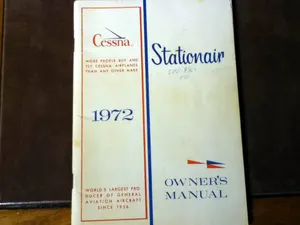

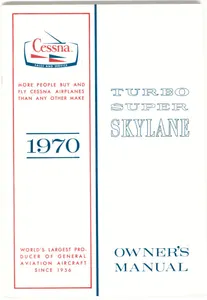
Parts listed for sale by vetted eBay sellers — confirmed on eBay at checkout.