LEARJET 60 Model Guide
LEARJET 60 · Model Guide
Overview
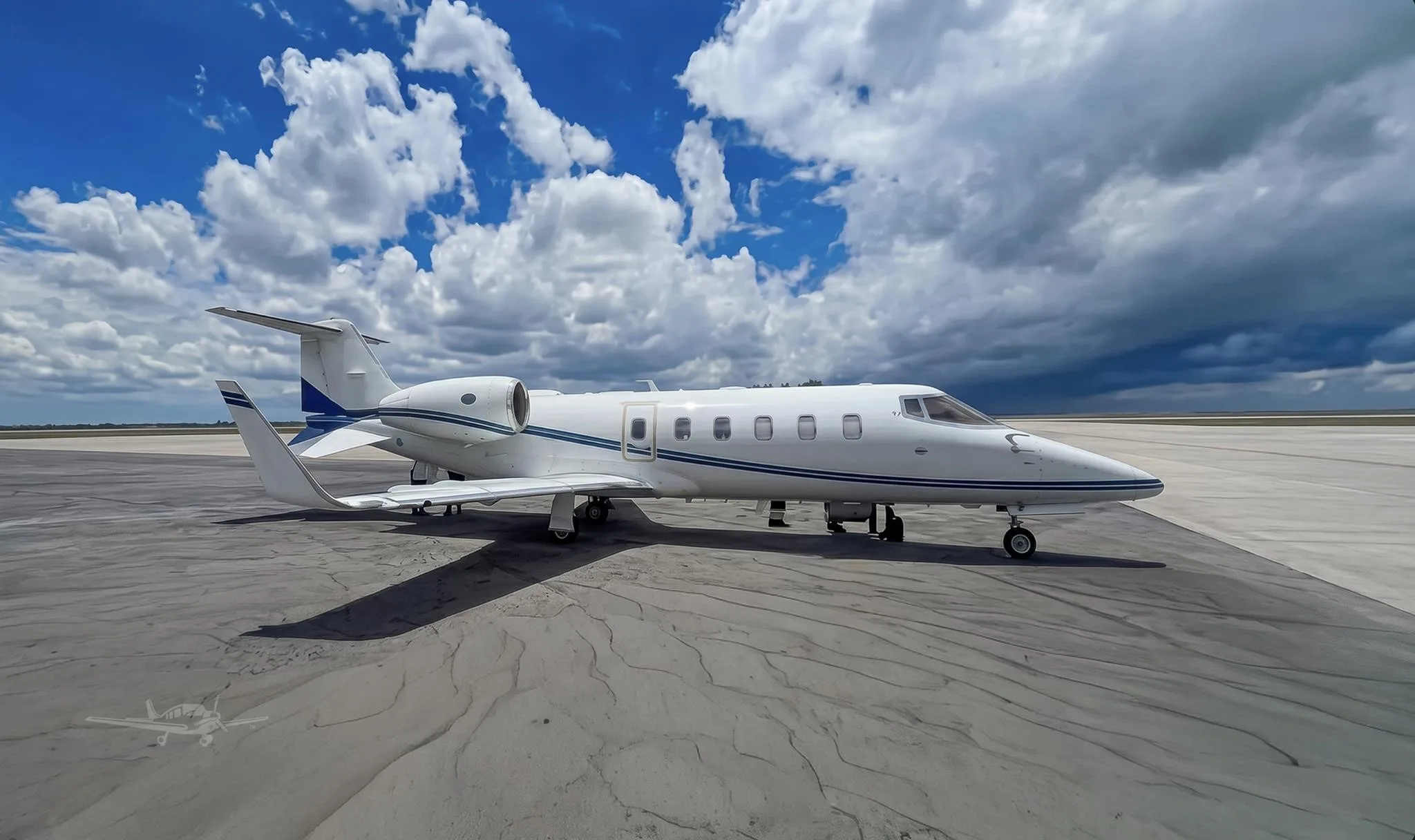
The LEARJET 60 is an all-metal, pressurized, low-wing monoplane powered by two pod-mounted PW305A turbofan engines from Pratt and Whitney Canada. It has winglets, retractable tricycle gear with anti-skid brakes and nose-wheel steering, and manual cable-operated flight controls. Registry data for the wider Learjet 60 family shows up to 11 passengers, 2400 nm range, 420 kt cruise and 51000 ft ceiling.
- Two PW305A turbofans, independent fuel systems, with fuel in wing and fuselage tanks.
- Family-level registry maxima: up to 2400 nm range, 420 kt cruise, 51000 ft ceiling, 11 passengers.
- Hydraulics run the brakes, landing gear, flaps and spoilers; flight controls are manual, not powered.
- Check the aircraft's configuration list and temporary flight manual changes; some apply only to specific serial numbers.
Summary written by AI from the source document. Check the original before relying on it. See which parts of Sprinkle are written by AI.
Reference only, not for flight. Use the current approved manual for your aircraft. See terms, section 5.
Document
Source
Copy found at sprinkle.com. Sprinkle hosts a reference copy with an added summary, specifications and searchable full text.
Document details
- Type ·
- Model Guide
- Year ·
- 2026
- File size ·
- 45 KB
- Copy found at ·
- sprinkle.com
What engines power the LEARJET 60?
The LEARJET 60 uses two pod-mounted PW305A turbofan engines built by Pratt and Whitney Canada. Each engine has an independent fuel system.
How far and how fast can the LEARJET 60 family go?
Registry data for the LEARJET 60 family, including the 60XR, shows up to 2400 nm range, 420 kt cruise and a 51000 ft service ceiling. These are family maxima, not figures for every aircraft.
How many people does the LEARJET 60 carry?
Family registry data for the LEARJET 60 lists up to 11 passengers. The Pilot's Manual notes that customer options vary widely, so check the specific aircraft's interior.
What should a buyer verify on a LEARJET 60?
For a LEARJET 60, check the Flight Manual revision, the aircraft configuration list and any active temporary flight manual changes for the serial number. Some apply only to certain early aircraft.
What is the LEARJET 60 Model Guide?
The LEARJET 60 Model Guide is a model guide for the LEARJET 60, dated 2026.
What year was the LEARJET 60 Model Guide published?
The LEARJET 60 Model Guide — the LEARJET 60 model guide on file — is dated 2026.
Common. More common than 91% of the aircraft models we track.
Most owners only have the POH. Here's the essential set for the LEARJET 60.
- Pilot's Operating Handbook / AFM
- Checklist
- Maintenance Manual
- Parts Catalog (IPC)
- Systems & Wiring
- Service Bulletins on file
- Type Certificate (TCDS)
LEARJET 60 for sale now


Free — save the 60 to your watchlist and track it in one place.
More LEARJET 60manuals & documents
If you fly the LEARJET 60, you may also be researching these.



In this document
Airframe and systems
The wings are swept-back, high-aspect-ratio and fully cantilevered, with winglets. Two inverted V ventral (delta) fins on the tailcone give favorable stall recovery and added stability. Engine-driven hydraulic pumps power braking, gear, flaps and spoilers. Trim is electric: tabs for lateral and directional, and an adjustable horizontal stabilizer for pitch.
Doors, baggage and servicing
The cabin door has an upper canopy half and a lower half with integral steps. An emergency exit/baggage door on the aft right side gives access to the aft cabin baggage area. A tailcone baggage compartment is reached from the left side and held at a slight 0.25 psi pressure differential. Single-point pressure refueling is on the right side of the fuselage.
Documents and configuration to review
The Pilot's Manual (PM-123) is supplemental; the FAA Approved Flight Manual (FM-123) takes precedence. The reviewed Flight Manual is at Change 37, dated 11/30/2009. It asks owners to keep an aircraft configuration list covering items such as pressurization, thrust reversers, batteries and FMS software. Some temporary changes apply only to certain serial numbers.
Summary written by AI from the source document. Check the original before relying on it. See which parts of Sprinkle are written by AI.
Safety notes
- The red streamered locking pin on the emergency exit/baggage door must be removed before every flight.
- Stand clear when opening the emergency exit/baggage door from outside if the cabin may still be pressurized.
- ENTRY DOOR and AFT CAB DOOR warning lights flag unsecured doors; confirm they are out before flight.
Summary written by AI from the source document. Check the original before relying on it. See which parts of Sprinkle are written by AI.
Full document text
LEARJET 60 Model Guide The LEARJET 60 is an all-metal, pressurized, low-wing monoplane powered by two pod-mounted PW305A turbofan engines from Pratt and Whitney Canada. It has winglets, retractable tricycle gear with anti-skid brakes and nose-wheel steering, and manual cable-operated flight controls. Registry data for the wider Learjet 60 family shows up to 11 passengers, 2400 nm range, 420 kt cruise and 51000 ft ceiling. • Two PW305A turbofans, independent fuel systems, with fuel in wing and fuselage tanks. • Family-level registry maxima: up to 2400 nm range, 420 kt cruise, 51000 ft ceiling, 11 passengers. • Hydraulics run the brakes, landing gear, flaps and spoilers; flight controls are manual, not powered. • Check the aircraft's configuration list and temporary flight manual changes; some apply only to specific serial numbers. Airframe and systems The wings are swept-back, high-aspect-ratio and fully cantilevered, with winglets. Two inverted V ventral (delta) fins on the tailcone give favorable stall recovery and added stability. Engine-driven hydraulic pumps power braking, gear, flaps and spoilers. Trim is electric: tabs for lateral and directional, and an adjustable horizontal stabilizer for pitch. Doors, baggage and servicing The cabin door has an upper canopy half and a lower half with integral steps. An emergency exit/baggage door on the aft right side gives access to the aft cabin baggage area. A tailcone baggage compartment is reached from the left side and held at a slight 0.25 psi pressure differential. Single-point pressure refueling is on the right side of the fuselage. Documents and configuration to review The Pilot's Manual (PM-123) is supplemental; the FAA Approved Flight Manual (FM-123) takes precedence. The reviewed Flight Manual is at Change 37, dated 11/30/2009. It asks owners to keep an aircraft configuration list covering items such as pressurization, thrust reversers, batteries and FMS software. Some temporary changes apply only to certain serial numbers. Safety notes: • The red streamered locking pin on the emergency exit/baggage door must be removed before every flight. • Stand clear when opening the emergency exit/baggage door from outside if the cabin may still be pressurized. • ENTRY DOOR and AFT CAB DOOR warning lights flag unsecured doors; confirm they are out before flight.