Pilot's Legal Guide
Mooney M20L PFM · Avionics Manual
Overview
The document is a training manual titled 'Pilot's Legal Guide' aimed at pilots and aviation enthusiasts. It provides comprehensive guidance on logging flight time, understanding the requirements for various pilot certificates and ratings, and the nuances of maintaining accurate logbooks. The content emphasizes the importance of accurate record-keeping for currency, endorsements, and compliance with FAA regulations. It also discusses the implications of logging time in different scenarios, including solo flights, cross-country flights, and instrument time, ensuring that pilots are well-informed about their responsibilities and the legalities involved in logging flight experience.
- Flight time starts when the aircraft moves under its own power and ends when it comes to rest after landing.
- Pilots can log PIC time when they are the sole occupant or sole manipulator of the controls.
- Cross-country time requires a straight-line distance of more than 50 nautical miles from the original point of departure.
- Instrument time can be logged in actual IMC or simulated IMC conditions.
- Accurate logbooks are essential for proving currency and compliance with FAA regulations.
Document
Source
Originally published by pilotworkshops.s3.amazonaws.com. Sprinkle hosts a reference copy with an added summary, specifications and searchable full text.
Document details
- Type
- Avionics Manual
- Year
- 2020
- Pages
- 13
- File size
- 2.6 MB
- Publisher
- pilotworkshops.s3.amazonaws.com
Common. Rarer than 14% of the aircraft models we track.
Most owners only have the POH. Here's the essential set for the Mooney M20L PFM.
- Pilot's Operating Handbook / AFM
- Checklist
- Maintenance Manual
- Parts Catalog (IPC)
- Systems & Wiring
- Service Bulletins
- Type Certificate (TCDS)
Free — save the M.20L PFM to your watchlist and track it in one place.
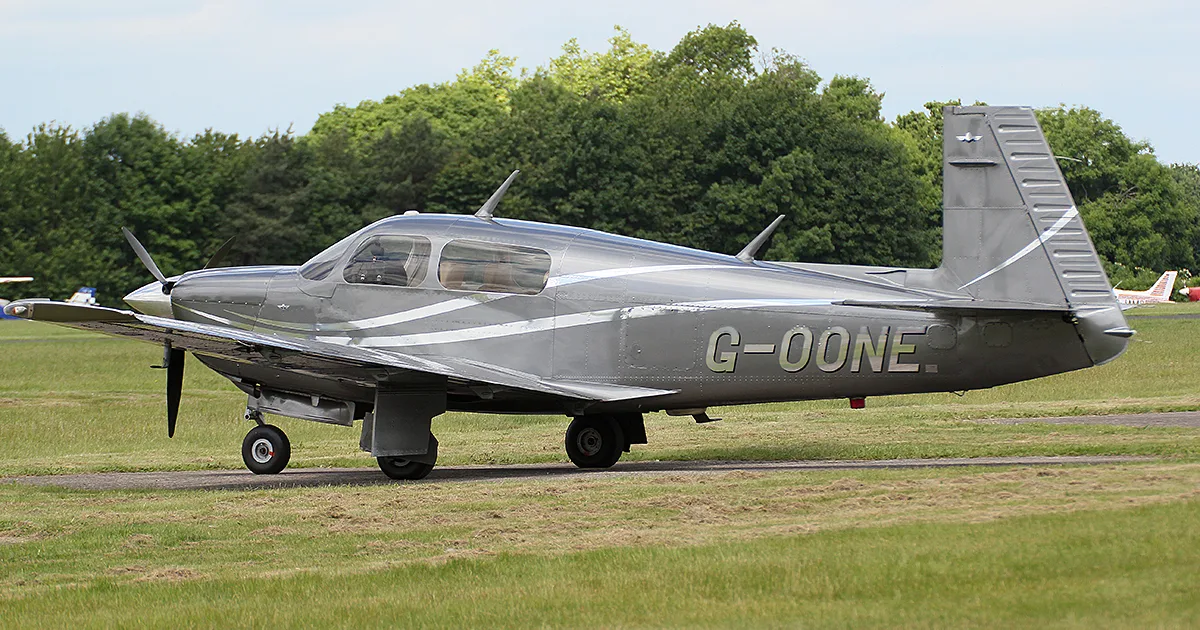
More Mooney M20L PFMmanuals & documents
If you fly the Mooney M20L PFM, you may also be researching these.


In this document
Logging Flight Time
This section outlines the definition of flight time, which begins when an aircraft moves under its own power for the purpose of flight and ends when it comes to rest after landing. It emphasizes the importance of accurately logging all flight time, including solo, cross-country, and instrument time.
Types of Flight Time
The document distinguishes between various types of flight time, including Pilot in Command (PIC) time, solo time, and cross-country time. It explains the criteria for logging each type and the significance of maintaining accurate records for FAA compliance.
Logging Instrument Time
Pilots can log instrument time when operating the aircraft solely by reference to instruments, whether in actual or simulated IMC. The section details the requirements for logging instrument approaches and the importance of adhering to regulations.
Cross-Country Flight Time
This section clarifies what constitutes cross-country flight time, including the 50 nautical mile rule for logging purposes. It explains how to properly document cross-country flights and the implications for certificate and rating requirements.
Maintaining Accurate Logbooks
The manual stresses the importance of keeping an organized logbook, including the need for legible entries and proper endorsements from instructors. It provides guidance on reconstructing logbooks if lost and the legal validity of electronic logbooks.
Safety notes
- Ensure all logbook entries are accurate and legible to avoid issues during inspections.
- Keep backup copies of electronic logbooks to prevent loss of records.
Full document text
LOGGING TIME 14 It’s a pilot’s prized possession—and it almost certainly contains mistakes. Most are inconsequential; some are missed opportunities, and others are time-bombs that could go off when you show up for a checkride or provide proof of currency to an FAA inspector. Get it right from the start and you’ll avoid the headaches. • Logbook is a broad term and it could be nearly anything. Electronic logbooks are fine. • Put anything you want in your logbook, but what really matters is time and operations for certificates, ratings, flight reviews, and currency. • Your logbook might not have columns for all of the items required to be logged for some currency, certificates, or ratings. • Flight time starts when you move forward and ends when you get to the chocks. • You may want two columns for cross-country time, because there are two kinds. • Being Pilot in Command is only tenuously related to logging PIC time. Loggable PIC time is much broader and even includes a “two-fer.” • There are two kinds of night for logging: One for night flight time and one for night currency. (And there’s night for turning nav lights on, but that’s not about logging.) • Instrument time can be in the aircraft or in a simulator, but the circumstances matter both for ratings and currency. • You need an instructor to log instrument time in a simulator toward a certificate or rating, but not for 61.57 currency. • Flying on autopilot still counts as manipulating the flight controls. • Don’t count on the fill-in-the-blank endorsements printed in the back of your logbook. The required forms of endorsements change every so often. • If you lose your logbook(s), there’s FAA guidance about how to reconstruct your records. • Calendar months are weird. Do I really care about logged time? If you’ve decided that you’re going to be a lifelong private pilot or that you’re only going to fly skydiv- ers with your Commercial Certificate, there’s nothing wrong with only logging the essential stuff like take- offs, landings, instrument approaches, etc. But understand two things. First, aviation has undergone massive changes in the last 10 years and it’s only going to change more. Maybe you were never interested in an airline gig, but the itch for a career change plus changes in pay, degree requirements, age eligibility, and other factors, might change your mind. Second, new certificates and ratings are a great way to continue to test your skills against objective standards even if you never exercise commercial or Logging Time These pages are from the "Pilot's Legal Guide" Manual at PilotWorkshops.com LOGGING TIME 15 ATP privileges. If you have a change of heart, you’re way better off having an accurate and current log- book than scrambling to recreate your loggable time. If you’re logging time toward a rating, 61.51(b) contains some specific requirements, not all of which apply to all situations. Many of those are explained below, but ensure that the essential ones are logged for any operation you wish to claim later in IACRA. What constitutes a logbook? Here’s an FAA interpretation on the matter (and it uses the word “decipher,” which is both charming and terrifying): “FAA does not define the term logbook in its regulations. A logbook can be a separate book with rows and columns for recording flight times, train- ing times, and endorsements. However, it also can be a training tabulation document, computer generated log sheets, or any other record from which FAA can decipher the training, aeronautical experience time and content, and currency of experience.”i Any collection of records (cocktail napkins, matchbook covers, sticky notes, e-mails, etc.) can be a logbook. Just spare a thought for the inspector or check airman who might have to wade through the mess. Be as organized as you can. The freeform definition of a logbook can be an advantage. Are you a CFI at a Young Eagles event who wants to log the instructional time, and the chapter ran out of those cool paperback logbooks? No prob- lem. You can record the instruction on anything you i FAA interpretation to Murphy (Dec. 22, 2008) like (the back of the Young Eagles certificate is a good bet unless the chapter has run out of those, too) and hand it to the kid. Some Young Eagles pilots and CAP orientation pilots carry preprinted stickers for this purpose. Are electronic logbooks legal? Yes, and they have been for more than 20 years. So are electronic signatures. The Electronic Signatures in Global and Nation- al Commerce Act (15 USC § 7001, et. seq.) (“ESIGN”) has been law since 2020. Under ESIGN, electronic records and signatures have the same validity as pa- per records and manual signatures in ink on paper. Outside of some narrow exceptions, a federal agency can’t refuse to accept electronic records and signa- tures. DPEs can only impose the requirements that the FAA says they can, so a DPE must accept elec- tronic records and signatures. Most DPEs have no issue with this. For the purposes of ESIGN and many states’ law, an electronic signature is “an electronic sound, symbol, or process, attached to or logically associat- ed with a contract or other record and executed or adopted by a person with the intent to sign the re- Make sure that you promote things like Young Eagles flights as “demonstration flights for marketing purposes and familiarization flights” (also called intro or discovery flights), as the TSA has characterized them, to avoid running afoul of the TSA rules for ensuring citizenship and other requirements in 49 CFR 1552. You don’t need that $30,000 worth of training and a type rating to become an ATP if you go for the airplane single-engine class. There’s no endorsement to take the knowledge or practical tests. You can simply show up with the proper amounts of time on IACRA or FAA Form 8710-1. Sample LOGGING TIME 16 cord.”ii Incidentally, a “record” is “information that
Show full textShow less
is inscribed on a tangible medium or that is stored in an electronic or other medium and is retrievable in perceivable form.”iii Scribbling in the box using a finger on Fore- Flight is an electronic signature meeting the law’s re- quirements. But so is a typed name or other symbol in a text message (e.g., “Joe Instructor (my electronic signature)” or “/s/ Joe Instructor”). So is a voice re- cording in the form of an audio file. It’s unlikely that you’ll need some esoteric electronic record solution on the morning of a checkride, but it’s nice knowing that a relatively uncomplicated e-mail to the check airman from your instructor can fix a missing sig- nature. Electronic records can be lost just like paper ones. Keeping backup copies of electronic records is ii 15 USC § 7006(5) iii 15 USC § 7006(9) essential. A thumb drive, Dropbox folder, or e-mail to yourself could do it. If you’re using an electronic logbook, whether as a part of an EFB or otherwise, export the data periodically and keep the exported file somewhere safe. Cloud backup companies can experience data CFIT and toast your records through no fault of your own. No matter how ugly some .CSV file of your flight time might be, it beats reconstruct- ing the data from scratch. What can I put in my logbook? You can put anything in your logbook that makes you happy. You can even write it in crayon or other more unconventional substances (although that might come off as unprofessional if you ever show up for an airline interview). That time you rode in the back of a Ford TriMotor? You bet! An autograph from Jeb Burnside on the cover? Have fun! What actually matters are time and operations that you claim for (a) a certificate or rating (on an IACRA application or 8710-1), (b) a flight review, or (c) currency. Currency includes things like takeoffs and landings (especially when at night and/or with a tailwheel) and instrument procedures (with safety pilot information if applicable).iv How persnickety do I need to be about logging time? That depends on your audience and there are two kinds of audience: FAA designees and Feds them- selves. It’s not uncommon for designated pilot examin- ers (DPEs) to scrutinize time entries to be sure that the time you claim for a certificate or rating quali- fies. It’s common that not all of the required informa- tion gets logged. This can even be as innocent as the pre-printed logbook not having enough (or the cor- rect) columns for the things that you’re supposed to track. Further—and this is of greatest importance to instructors—Part 61 specifically requires that candi- dates “receive and log ground and flight training” in specific areas of operation. Many DPEs accept gener- al attestations by instructors about such ground and flight training, but some require a line-by-line record of the training in each area of operation. The second audience is a Fed who’s conducting a iv 14 CFR 61.51(a) TIP The Integrated Airman Certification and Rating Application (IACRA) is the FAA web interface to apply for a certificate or rating, or renew one. It replaces the paper FAA Form 8710-1 … and outputs a PDF of the paper form. For the purposes of this chapter, “IACRA” and “8710-1” are treated as digital and paper versions of the same thing. Your mileage will vary, but audit your training record pre-checkride to make sure that it’s bulletproof. There are excellent arguments that the fleaspeck detail isn’t required, but you want to be the candidate with a bulletproof training record rather than the one starting the ride with an argument (even a winnable one). Sample LOGGING TIME 17 ramp inspection … or an investigation. If you balled up that Super Decathlon with a passenger onboard, the friendly Fed will demand to see evidence of your three takeoffs and landings to a full stop in a tailwheel airplane within the preceding 90 days. It would also be a great idea to have all of the other required infor- mation in relevant entries. It’s already a bad look if you balled up that Super D. It’s worse if you did it on the 91st day since your last logged tailwheel takeoffs and landings. Some instructors log all the takeoffs and land- ings for which they were present in the aircraft and giving instruction. If you’re in that camp, identify the ones for which you were the sole manipulator of the flight controls because only those count for currency purposes. There’s a practical argument that a landing should count double if you’re fighting a student for the controls but, alas, it doesn’t work that way. What time is loggable, and when does it start and stop? Flight time for all aircraft other than gliders with- out self-launch capability begins “… when an air- craft moves under its own power for the purpose of flight and ends when the aircraft comes to rest after landing .”v All flight time must be pilot time. To drop the other shoe, pilot time means time during which a person “(i) [s]erves as a required pilot flight crewmember; (ii) [r]eceives training from an authorized instructor in an aircraft, full flight sim- ulator, flight training device, or aviation training de- vice, (iii) gives training as an authorized instructor in an aircraft, full flight simulator, flight training de- vice, or aviation training device,” or serves as Second in command (SIC) under certain circumstances. To make matters more opaque, neither of those terms appear in most logbooks or 8710-1. Instead, we usually talk about total time. What’s a pilot to do? Practically speaking, you should keep track of your loggable time in each aircraft category and class, or device, that you may someday want to use for a rating (and is a field on 8710-1) or show an insurance company. If you don’t log any of your sim time learning or instructing in any FAA-approved device, then your v 14 CFR 1.1 cumulative flight time, pilot time, and total time would all be the same. If you do log sim time, your cumulative total time and pilot time would be equal, but greater than your flight time. Logging time in sims is odd and warrants its own section. (See “How do I log sim time?” on page 23.) If you’re trying to maximize loggable flight time—what we usually care about the most—let the aircraft move as soon after startup as is safe to do so. In most cases, this means letting off the brakes of your airplane and letting it creep a little as soon as the prop is turning and you’re verified that you have oil pressure. Just a few inches will do. When is an aircraft considered to have “come to rest after landing?” The FAA has essentially opined that flight time keeps going until you’re in the chocks, regardless of whether the aircraft stops one or more times on the way from the runway to those chocks. The context is a little weird as it’s usually found in Applicability and Definitions When it comes to logging time, a review of 61.1 is worth your time. It’s short, and the home of many of the references in this chapter and in- cludes the corner cases we’re not putting in the spotlight as they apply to a select few. (If that’s you, we might be jealous.) If you fly long enough, you’re going to have a time or two when you taxi all the way to the runup area, encounter a bad mag, and taxi back to the ramp or the hangar. Although a logbook entry with, say, 0.3 ASEL and no takeoffs or landings is odd, it’s completely legal as long as you intended to fly. Sample LOGGING TIME 18 Part 121 or 135 aircrew duty days, but the key text is “[O]nce flight time commences, it continues to accrue as long as the pilot is required to remain onboard the aircraft.”vi Most flight schools and instructors use Hobbs time as flight time. Given it measures actual elapsed time, it’s a pretty good indicator of flight time. What is solo time? Just like the English words suggest, you can log solo time when you’re the only person onboard. Unless, of course, you’re a student pilot performing the duties of PIC in an airship that requires more than one pi- lot flight crewmember, but then pity is taken on you because of how long it takes to log any cross-country time. What counts as cross-country time? This one is special because there are two varieties of cross-country time. You can log cross-country any time you land somewhere other than where you departed. That could be another airport, but seaplane pilots could count a different lake (or maybe some distance away on the same lake). It could be towing a glider out of an alfalfa field. (You know who you are, and the Amish community wishes that you’d stop by more often.) It’s more nuanced when it counts toward a cer- tificate or rating. Most pilots care more about this sec- ond kind because, well, certificates and ratings. Spe- vi FAA interpretation to Johnson (Aug. 5, 2016), citing FAA in- terpretation to Kania (April 29, 2004) cifically, it’s subsections (ii) through (vii) in 61.1(b) where cross-country is defined in the context of spe- cific certificates, ratings, and aircraft—and you’ll find what most GA pilots think of as the “50-NM rule.” Many CFI bar bets arise over the way this rule and similar rules work. Here are your crib notes so you get the free drink: • The essential element to what counts and what doesn’t is the original point of departure, which is the airport from which you must be able to draw a great- er than 50 NM straight-line distance to some other location. 5 1 N M 5 1 N M • Not every leg enroute to, or back from, the farthest airport has to be 50 NM. If there’s an airport every mile between the origin and an airport 50 NM away, you could land at every intermediate airport as long as you eventually land at the airport 50 NM away. The whole thing, including the flight back, would count toward 50-NM cross-country time. ATP Candidates Get Special Treatment If you’re logging cross-country time for a non-ro- torcraft ATP Certificate, or as a non-rotorcraft mil- itary pilot looking for a Commercial Certificate, the already familiar 50 NM distance doesn’t re- quire that you land. You could take off, fly more than 50 NM away, turn around in midair, and land back at the originating airport and log the time as cross-country for use in edge cases like these. The lore surrounding this seems to be the FAA cutting some slack to folks like pipeline patrol or carrier-based pilots, who may fly for hours only to land where they started, or other unusual cases. You’ll have to figure out how to describe the route of flight if you don’t land. If you flew over an airport or navaid or to a GPS waypoint that you need as a 50-NM point, specifying that point works. Even homebrew points should work, such as “KDET – 12 NM N of D95 – KPTK” or “KLOU – IIU073058 – KFFT.” You’ll probably also need a dedicated column or field in your logbook for ATP-qualified cross-country time that doesn’t meet the landing requirement for other ratings. By the time you get to 1500 hours total time, you’ll likely have several of these flights. Sample LOGGING TIME 19 • The “original point of departure” doesn’t have to be the airport from which you first depart that day—but this could affect what you can log. Say that you start at Airport A and fly to Air- port B, which is 25 NM due north. You land, take off, and fly to Airport C, which is 26 NM due south of Air- port A (and therefore 51 NM due south of Airport B). You land at Airport C before returning to Airport A. The flight from A to B is less than 50 NM, so it counts as cross-country time generally, but it’s not 50-NM cross-country— and you’re turning around to head back the direction you came. However, the B-C segment is over 50 NM, so it counts as does the subsequent C-A seg- ment. Airport B is the “original point of depar- ture” for the two-leg cross-country over 50 NM you’ll log. Make sure that your logbook identifies the B-C-A part separately by using two logbook lines or some- thing like: “2.0 A-B-C-A (1.5 B-C-A).” • The cross-country clock can start when the aircraft first moves under its own power, even though the first bit of it is getting to the runway, doing your runup, setting up your avionics, etc. Discussion-group pun- dits assert that cross-country time is only the time between wheels-up and wheels-down. However, the FAA has opined that, “when logging cross-country time, ‘flight time’ as defined in [14 CFR 1.1] should be used.”vii It’s also okay to stop, stretch your legs, get lunch, or whatever at an intermediate airport. That won’t break the chain and the taxi-in and -out at the intermediate airport counts as cross-country time. How much dallying breaks the chain? There’s no clear rule. One wise pilot once characterized the breaking event as “a sleep.” You can decide if you agree. vii FAA Interpretation to Grannis (June 30, 2016) When can I log PIC time? Pilot in Command per 1.1 is a person who “(1) [h]as final authority and responsibility for the operation and safety of the flight, (2) [h]as been designated as pilot in command before or during the flight, and (3) [h]olds the appropriate category, class, and type rat- ing, if appropriate, for the conduct of the flight.” Logging PIC time, however, bears only a tenu- ous relationship to acting as PIC. It’s all laid out in 61.51(e). A sport, recreational, private, commercial, or airline transport pilot may log PIC flight time in any of the situations when: • the pilot is the sole occupant in the aircraft. • the pilot is the sole manipulator of the controls of an aircraft for which the pilot is rated (or has sport pi- lot privileges for) in both category and class (if appro- priate). There are some narrow exceptions that likely won’t apply to you. Rated just means category and class. You might need complex, high-performance, and tailwheel endorsements to act as PIC of a Spar- tan Executive (look it up) but you could log PIC with a simple single-engine land if the owner deemed you worthy to manipulate the controls. • when the pilot performs the duties of PIC under the supervision as part of an approved PIC training pro- gram. This is a rarity in GA operations. Private, Commercial, and ATP Certificates also allow logging PIC when: • the pilot acts as PIC of an aircraft for which more than one pilot is required under the type certifica- tion of the aircraft or the regulations under which the flight is conducted. This is usually as a safety pilot 5 0 N M 5 0 N M 5 0 N M 5 0 N M A B C 25 nm 26 nm TIP PIC, for the purposes of 1.1, is mostly about responsibility, rather than manipulation of the controls. Nothing prevents you, as PIC, from letting another a Young Eagles kid, a CAP cadet, or your buddy manipulate the controls, provided that you retain responsibility for the flight. Just use your best judgment about when this is appropriate. Sample LOGGING TIME 20 under simulated instrument conditions, which is per- haps why sport and recreational pilots are exempted. The other two that come up often are: • A student pilot can log PIC time if they’re the sole occupant of the aircraft (presuming it’s not an air- ship). Because FAA doctrine says that there must be a PIC, you get to log it as such. Mighty magnanimous of them, eh? The student pilot must be duly endorsed as required by 61.87 and be undergoing training for a pilot certificate or rating. • A flight instructor can log PIC time while serving as the authorized instructor in an operation. The in- structor must be rated to act as PIC of that aircraft. So, a CFI probably can’t log PIC time while giving a flight review in the Spartan without complex, high-perfor- mance, and tailwheel endorsements. (You could ar- gue that endorsements aren’t ratings, but it’s a fight you probably shouldn’t take on.) But a CFI with those endorsements could log PIC without a current medi- cal or BasicMed. The instructor is rated to act as PIC even if that person can’t act as such without the med- ical or BasicMed. ATPs can log PIC time while acting as PIC of an operation requiring an ATP Certificate, and certain commercial pilots can log PIC time while acting as PIC under an approved SIC development program. But if you’re in either of those camps, you know that already. What’s training time and how do I log it? Training time under 61.1 means “training received (i) in flight from an authorized instructor, (ii) on the ground from an authorized instructor, or (iii) in a flight simulator or flight training device from an au- thorized instructor.” Per 61.51(h), the logbook entries must “(i) be endorsed in a legible manner by the authorized in- structor; and (ii) include a description of the train- ing given, the length of the training lesson, and the authorized instructor’s signature, certificate number, and certificate expiration date.” In fact, the instructor is required by 61.189 to sign your logbook. There are special logging cases, like flight engineer or night-vision goggle time, but if they apply, you’re probably too cool for this manual. Move along. Nothing to see here. Getting a Two-Fer on PIC Time Two pilots can simultaneously log PIC time during instrument practice when one pilot is un- der the hood and the safety pilot acts as PIC. The pilot under the hood is the sole manipu- lator of the flight controls and can therefore log PIC time. Easy. The safety pilot can log PIC time when acting as PIC because this is an operation for which more than one pilot is required. The require- ment is in 91.109(c)(1) and says that if a pilot is operating the aircraft in simulated instrument flight (under the hood), the other seat must be occupied by a safety pilot who possesses at least a Private Pilot Certificate with category and class ratings appropriate to the aircraft being flown. That safety pilot must meet all the requirements to act as PIC, including 61.57 currency, medical or BasicMed, appropriate endorsements (if ap- plicable), etc. If the safety pilot can’t act as PIC, that person can log SIC time under the same rule. That’s flight time, but it’s not as useful toward ratings. This two-fer is popular for building time to- ward certificates or ratings. Just remember that if you’re tooling along at altitude and your safety pilot is glaring at you, it’s because they’re un- able to log PIC time unless and until that hood comes down. Hint: If you can see them glaring at you, your hood is up. Safety pilots don’t need to pay a pro rata share of the flight expenses, even though they are logging time. i i FAA interpretation to Roberts (July 11, 2012) Sample LOGGING TIME 21 The only place in all of Part 61 with a require- ment that something be “legible” is 61.51(h). One could be forgiven for thinking that FAA experience shows that CFIs have some of the worst handwriting in existence. Under what circumstances can I log instrument time? Under two sets of circumstances: One in an aircraft and the other in a sim. In an aircraft, you can log instrument time during flight time when you operate the aircraft sole- ly by reference to instruments. This can be in actual IMC, simulated IMC (i.e. under the hood), or even on a “moonless night over the ocean.” The standard used by the FAA is that “use of instruments is necessary [to control the aircraft] based on sound judgment of the pilot.”viii If appropriate, you include the location and type of each instrument approach, and the name of the safety pilot if a safety pilot is required. An authorized instructor while giving instruction in an aircraft can also log instrument time, but only for the part of the flight that occurs in actual IMC. You can also log in- strument time in an appropriate sim. (See “How do I log sim time?” on page 23.) viii FAA interpretations to Carr 1984 When can I log an instrument approach in an airplane? New instrument pilots quickly discover that a typical IFR flight might include 0.2 actual IMC. Even if you descend through a layer as part of an instrument ap- proach, you often pop out at 1000 feet AGL. Can you log those approaches for 61.57(c) currency? None of the regs about “night” flying or equipment apply to solar eclipses. And, as a practical matter, it’s wicked cool. From the center of the totality in VFR with good altitude, you can see what looks like dawn/dusk for over 30 miles in every direction. Just ensure you’re proficient flying around in the dark before launching into totality. There’s Night and There’s Night, and then There’s Night Logging night flight time and logging night cur- rency use different definitions of night. Per 1.1, night means “the time between the end of evening civil twilight and the beginning of morning civil twilight, as published in the Air Al- manac, converted to local time.” At civil twilight, the geometric center of the sun is 6 degrees be- low the horizon, so it’s after sunset (usually by 20- 30 minutes). But atmospheric scattering means it’s still pretty light outside. This “night” is when you start logging night flight time toward the ex- perience requirements for certificates. The currency requirement of 61.57(b) for takeoffs and landings carrying passengers—a.k.a. night currency—is for 1 hour after sunset until 1 hour before sunrise. Your takeoffs and full-stop landings must be during this definition of night. This means you can land an airplane with passengers at night (by the civil twilight standard) even though you’re not night current (by the “1 hour after sunset” standard), if your wheels are down after the onset of civil twilight but no later than 60 minutes after sunset. That might not be the wisest move, but it is legal. Remember that ADS-B Out is a thing, so there’s little doubt about when you conducted the operations that you claim for that currency—or conducted while out of currency. Also keep in mind the third “night,” which has nothing to do with logging: Your nav lights must be on from sunset to sunrise. Sample LOGGING TIME 22 The FAA issued InFO 15012 on Sept. 8, 2015 to clear up matters. It’s worth a read in and of itself, but the key bits are: • You must be “established on each required seg- ment of the instrument approach to the minimum descent altitude (MDA) or decision altitude/decision height (DA/DH).” In other words, you have to fly the approach as published regardless of whether you’re looking out the window. “Each required” isn’t the same as “each published.” Getting vectors onto the final approach course is fine. • If you’ve flown the approach course as required and break out after the final approach fix —even one sec- ond after—you can log the approach for currency. It’s strongly implied by InFO 15012 that you can’t log the approach if you break out any earlier. • If you’re in simulated IMC (in a simulator or with a safety pilot), you must fly by reference to the instru- ments all the way to the MDA or DA/DH. You can combine instrument currency opera- tions for a given aircraft category. For example, you can combine approaches in an airplane in actual IMC, approaches under the hood, and approaches in an airplane sim in any combination you like. Calendar Months: Regulatory Ambiguity Versus Practical Reality The references in the regs to calendar months are plentiful (88 in Part 61 and 17 in Part 91, to name a few). It’s worth paying attention to the time mea- surements for currency and other matters. For example, instrument currency for operating under IFR must be “[w]ithin the 6 calendar months preceding the month of the flight.” Let’s say that such a flight is going to happen on August 15. Pricilla Pilot flew six approaches, holding, inter- ception, and tracking in January, but then flew no approaches in February, March, April, May, June, or July. Knowing her upcoming trip on August 15 could require IFR, she went out with a safety pilot on August 5 and flew the required six approach- es, holding, and interception, and tracking. Is she current? The “6 calendar months preced- ing the month of the flight” are February through July, when she flew no approaches. The reg does not say “within the period that begins at the start of the sixth calendar month prior to the calendar month of the flight.” By a strict reading, she can’t fly the flight under IFR on August 15, and, in fact, can’t fly the flight under IFR until September 1. Nobody interprets it this way in practice, but it could come up during the intense logbook review before a checkride or after an accident. Sometimes the way things tend to work in the real world can be at odds with the language in the regs. Call this another reason to exceed the mini- mums required for pure currency. Flight Time and Compensation The FAA takes a very broad view of what con- stitutes compensation. (See “Cost Sharing for Private Pilots” on page 3.) However, instructors are exempted here. Any compensation received by a CFI (flight time, money for instruction, reimbursement, etc.) is presumptively under the CFI’s instructor certifi- cate and not the CFI’s pilot certificate. That in- cludes logging PIC time while giving instruction. (See “When can I log PIC time?” on page 19.) If the CFI must also act as PIC for the flight (such as with a student pilot), only private privi- leges are needed. This would include any medi- cal requirements for the particular aircraft. Com- pensation is still allowed in this case. Sample LOGGING TIME 23 Does instrument instruction require a CFII? It depends. If you need the training and experience on flying by reference to instruments for a Private Pilot Certificateix or for a Commercial Certificate in rotorcraft,x your CFI doesn’t need to have an instru- ment rating on their certificate, (a.k.a. a “CFII”).xi Outside of those two cases, a flight instructor who provides the instrument training for the issu- ance of an instrument rating, a type rating not lim- ited to VFR, or the instrument training required for Commercial Pilot and ATP Certificates, must be a CFII. xii That’s all the instruction. You can’t do the re- quired 15 hours with a CFII and 25 more with a CFI unless the latter CFI is just acting as a safety pilot. An Instrument Proficiency Check (IPC)? That requires the CFII.xiii What about general proficiency training on instrument procedures. Or use avionics and an iPad for flying approaches? The regs say that even just generic training on flight by reference to in- struments requires an instrument rating on the in- structor’s certificate.xiv The moment you don a hood or foggles, that arguably goes into effect, even if the you already have an Instrument Rating and the au- topilot is keeping the wings level. So, aside from the carve outs mentioned above, if it feels like instrument instruction it should probably be from a CFII. How do I log sim time? What pilots colloquially call simulators range from enclosures the size of a Manhattan apartment and hoisted by hydraulics to desktop gaming rigs you buy on Amazon. What the FAA calls simulators tends to- ward the apartment-sized ones and qualify as Full Flight Simulators (FFSs). This rarely applies to GA pi- lots. If you’re logging time in one of those, it’ll be with a pro who will help you fill out your logbook. GA pi- lots are usually working with training devices without the word simulation in there, but this manual will call them sims anyway. The fancier GA setups are Fight Training Devices (FTDs), which are covered in Part 60. There are also Aviation Training Devices (ATDs), which come in Ba- ix 14 CFR 61.107(b)(1)(ix) and 61.109(a)(3) x 14 CFR 61.129(c)(3)(i) xi FAA interpretation to Grayson (Jan. 4, 2010) xii 14 CFR 61.195(c) xiii 14 CFR 61.57(d)(3)(iv) xiv 14 CFR 61.195 (l)(2) sic (B-ATD) or Advanced (A-ATD) flavor. These are covered in Part 61 and AC 6136B (FAA Approval of Aviation Training Devices and Their Use for Training). Each sim comes with an FAA designation, usu- ally in letter form (an LoA) and addressed to the manufacturer. That letter is then distributed to the purchasers of the sim. (For particularly complicated sims, the letters might be addressed to the actual user of the sim.) The letter contains a listing of the regula- tory sections (particularly in Parts 61 and 141) with respect to which the sim qualifies for training and experience. The operator of the sim should keep the letter available with the sim so that users can see it— framed on the wall, taped to the sim, dangling from the desk in laminated form, etc. A sim without the FAA letter is much like an airplane with no logbooks. It’s a sim-shaped paper- weight that can’t be used for any logged time or cur- rency. Which kind of sim qualifies for which train- ing or experience is a highly matrixed matter. Part 61 contains more than 50 references to sims of vari- ous kinds. Your best bet is referring to the FAA letter to verify that the sim does what you need it to do. If you’re depending on sim time for a certificate, rating, or recent experience, tuck a copy of that FAA letter into your logbook. Or take a picture of it with your mobile device. IFR in a VFR Aircraft? Sure You can file an IFR flight plan and fly in the sys- tem as an IFR flight in an aircraft that lacks IFR certification. However, you must remain in visual conditions (VMC). This is particularly important to those training in single-engine helicopters or airplanes like the Diamond DA20, which aren’t certified for IFR. Many such aircraft are fitted with all of the in- struments necessary for instrument training and are perfectly appropriate for getting your instru- ment rating. You can even fly the long instrument cross-country (which has to be filed and flown under IFR) in such an aircraft, but you should not expect special handling from ATC.i i FAA interpretations to Theriault (Oct. 8, 2010) and Hart- zel (Dec. 17, 2010) Sample LOGGING TIME 24 You must include the location and model of the sim in your logbook. It’s up to you whether you use the same column where you normally put make and model (or create a sim “make and model” for an elec- tronic entry). You should keep track of which ones are FTDs versus ATDs (or FFSs) because they appear in separate fields on the 8710-1 and have different al- lowed use towards ratings. You should also log it as dual received if it’s with an instructor (or given if you’re the instructor). If there’s an instructor present and the sim time is instructional, this also counts toward pilot time and total time for the pilot getting instruction, but not flight time. Oddly, you can use an FTD or ATD for instrument currency without an instructor present, but then it can’t count toward pilot/total time. You’d log it for currency, but that’s about it. Can I get a BFR in an FTD or ATD? Sort of, and the exact answer varies quite a bit from device to device. The flight review (often still called the biennial flight review, or BFR) can be conduct- ed in an FTD if done as part of an approved Part 142 curriculum at an approved training center. That doesn’t happen for the majority of GA pilots. You’re probably out of luck with any ATD, but it would say in the LoA. For example, the LoA for a Redbird FMX A-ATD says “the flight portion of a flight review specified in 61.56(a) cannot be accomplished in an A-ATD.” Even if you could do some of the review, you’d still need takeoff and landing currency in an actual aircraft for which you were rated as well. Can I get an IPC in an FTD or ATD? Almost. By which we literally mean, almost. The tasks required for the IPC are listed in the back of the Instrument Rating Airman Certification Standards (ACS). These tasks are required to com- plete the IPC, and include both a circle-to-land ma- The keys to the kingdom with a sim are in the LoA that should be posted near the sim or available behind the counter at the FBO. It spells out exactly what can be logged for that device and under what circumstances. This Redbird LoA says these A-ATDs can be used for an IPC, but only per the instrument ACS. As of this writing, that includes some tasks the A-ATD isn’t approved for. If you’re using a sim for instrument currency, you can do it solo, provided that the logged data includes “the training device, time, and the content” of the activities. Using the sim to train for a certificate or rating requires a flight instructor present to “verify the time and the content of the training session” and sign the logbook. A ground instructor (even an advanced or instrument one) isn’t enough. Training toward an Instrument Rating requires a flight instructor with a instrument rating on their instructor certificate (CFII). for Training and Experience. The Redbird Flight Simulations, Inc. model LD, SD, FMX, MCX airplane AATD is approved for use in satisfying the following sections of parts 61 and 141: Redbird Flight Simulations, Inc. Model LD, SD, FMX, MCX Airplane Single and Multiengine Land Advanced Aviation Training Device (AATD) • § 61.51(b)(3) – Logbook entries; • § 61.51 (h) – Logging training time; • § 61.57(c) – Instrument experience; • § 61.57(d)(1) – Instrument proficiency check, per the Instrument ACS; • § 61.65(i) – Instrument rating; up to 20 hours; • § 61.109(k)(1) – Private Pilot Certificate aeronautical experience: up to 2.5 hours; • § 61.129(i)(1)(i) – Commercial Pilot Certificate: up to 50 hours; • § 61.159(a)(4)(i) – Airline Transport Pilot Certificate: up to 25 hours; and • § 141.41(b) – Approved for use under the part 141 appendices as follows: Appendix B – Up to 15% toward the total Private Pilot training time requirements; Appendix C – Up to 40% toward the total Instrument training time requirements; Appendix D – Up to 20% toward the total Commercial Pilot training time requirements; Appendix E – Up to 25% toward the total Airline Transport Pilot training time requirements; Sample LOGGING TIME 25 neuver and a straight-in landing from an instrument approach. So you could do almost all of the tasks in an FTD or A-ATD where those tasks were listed in the letter taped to the wall by the sim, but you won’t find landings on that list. You’d need to finish up by doing those two tasks in an aircraft for which you were rated. Also note that the same ACS appendix specifically states that a B-ATD can’t be used for the IPC. Can I log time while using an autopilot? Yes. “The FAA considers a pilot’s use and manage- ment of the autopilot to be the equivalent of manip- ulating the controls, just as one manages other flight control systems, such as trim or a yaw dampener. The autopilot system’s sophistication does not affect a pilot’s responsibility to manipulate and manage all control systems, including an autopilot, appropriate- ly. Therefore, a pilot may log PIC flight time as the sole manipulator of the controls for the time in which he or she engages an autopilot.”xv Is time from a previous certificate or rating reusable? In many cases, yes. In some cases, no. In other cases, it depends on how you log it. Let’s take the easy one first. Where the require- ments are general, such as “flight time,” it’s cumula- tive.xvi That 65 or so hours of flight time with which the average applicant achieves a Private Pilot Certifi- cate may count toward the 250 hours of flight time for a Commercial Certificate and for the 1500 (or some- times fewer) hours required for an ATP Certificate. It gets stickier as descriptions get more specific. The essence is that the time probably counts, but you must (a) perform the required items, and (b) log it the right way. An example is the instrument train- ing required for a Commercial Certificate.xvii Can the training built for an Instrument Rating count?xviii Many elements contained in the instrument train- ing requirements are included in the requirements for the commercial, but not all. If you want your in- strument training to count when you show up for a xv FAA Interpretation to Murphy (Mar. 4, 2015) xvi As in 14 CFR 61.109(a), 61.129(a), 61.159(a), etc. xvii 14 CFR 61.129 xviii 14 CFR 61.65 commercial checkride, make sure your instructor in- cludes those specific elements in the logbook entries (possibly even by reference to regulation subsection numbers).xix Other things are mutually exclusive. The com- mercial requirement of “10 hours of solo flight time in a single engine airplane or 10 hours of flight time performing the duties of pilot in command in a sin- gle engine airplane with an authorized instructor on board” must be either/or.xx You can’t mix three of one and seven of the other or use any other combina- tion. “[A] pilot must choose to log all 10 hours as solo flight time … or, in the alternative, log all 10 hours performing the duties of a pilot in command … with an authorized instructor on board. A combination of hours is not permissible under the rule.”xxi What do I do if I lose my logbook? The FAA guidance gives some broad strokes on this, but isn’t very clear. FAA Order 8900.1, Vol. 4, Ch 1, Sec. 8, Para. 5-171 says that “[a] pilot logbook is the primary evidence of pilot experience.” But it goes on, in Para. 5-172, to talk about reconstruction of time records. “Inspectors should advise airmen that they may reconstruct lost logbooks or flight records by providing a signed statement of previous flight time.” The guidance lays out several sources that can be used to substantiate the claimed time, including aircraft logbooks, receipts or flight school records xix FAA interpretations to Theriault (Oct. 8, 2010) and Hartzell (Dec. 17, 2010) xx 14 CFR 61.129(a)(4) xxi FAA interpretation to Granis (April 21, 2016) TIP If you have an older logbook, some of the fill-in-the-blank endorsements in the back are likely outdated. Old endorsements can be left alone, but have your instructor check AC 61-65 (version H as of this writing) for the recommended verbiage before completing any new ones. Also put a copy of (or link to) this AC on your phone before a checkride in case an examiner takes exception to any endorsement wording. Don’t print the AC. The resulting three-ring binder would put you over gross weight for most two-seat training aircraft. Sample LOGGING TIME 26 for aircraft rentals, operator records, copies of air- man medical files, and previous versions of 8710-1. The gravamen seems to be that a personal certifica- tion is the baseline, but the FAA is probably going to require additional information to substantiate what you claim. Probably the best non-logbook record of your time is via IACRA and the 8710-1. A check airman reviewing your 8710-1 information at a checkride can, and probably will, ask for verification of those numbers in the form of logbook entries. 8710-1 in- formation is therefore a generally reliable form of substantiating information. In fact, FAA guidance says, “Inspectors should encourage pilots to com- plete the flight time sections of official record forms, even though it would not be required for that specific certificate. These records document a chronological development of flight time in case personal records become lost.” Some examiners encourage only including time necessary for the certificate or rating sought in IACRA. Claiming only limited time makes it easi- er for the examiner by not verifying lots of time that doesn’t matter to the actual certificate or rating sought. Entering all your time does not, as CFIs might assert at the bar, “lock in the time forever so you can’t lose it.” But 8710-1 information is regarded as more reliable than other forms that the information could take and it’s more likely to be accepted by the FAA. You can also update these times during a flight instructor renewal or even by submitting an IACRA entry for a flight review. (Really, there’s a checkbox for that.) The best way for you to get those totals is through your IACRA account. You should also be able to get them (eventually) by snail mail from: FAA Airmen Certification Branch, AFB-720 P.O. Box 25082, Oklahoma City, OK 73125. Less reliable is the information that you sub- mit through MedXPress if you have, or had, an FAA medical certificate (because an AME isn’t likely to ask for logbooks). But it’s still helpful to have. You should be able to get that through your MedXPress account, or from: FAA Aerospace Medical Certifica- tion Division, AAM-300, P.O. Box 25082, Oklahoma City, OK 73125. If you enter all your time on every IACRA appli- cation, do the check airman a favor and make it easy to show those totals in your paper logbook, spread- sheet, electronic device, or otherwise. Then keep that information in a safe place in case your logbook sud- denly squawks 7500. Instruction and Passengers Although not strictly a logbook issue, this is an appropriate place to talk about currency require- ments in the context of flight instruction. Several currency requirements under 61.57 apply only when carrying passengers (takeoffs and landings during the day or at night most no- tably). Have you heard a pilot recount landing 20 NM short of the destination 45 minutes after sunset, chasing out the passengers, making three trips around the pattern, then herding the passen- gers back aboard before proceeding the last 20 NM? It’s a thing. The FAA has opined that “[a]n authorized in- structor providing instruction in an aircraft is not considered a passenger with respect to the per- son receiving instruction, even where the person receiving the instruction is acting as PIC. Neither is the person receiving instruction a passenger with respect to the instructor.” The FAA has even made it clear that the person receiving the in- struction need not be rated in the aircraft or even hold a pilot certificate. It’s the instructor-student relationship that makes neither a passenger. How- ever, the instructor-student thing does not apply to a student who’s not seated at a control station. A person riding in the back seat of a 172—even if that person is also a student and gets a lot out of the experience—is a passenger. This logic applies to any 61.57 requirement that addresses carrying passengers. Could a CFI who is appropriately rated but has performed no night operations for years meet a brand-new ab initio student at the airport in the middle of the night and launch together for some dual? Legally, yes. Even in a tailwheel airplane, if the CFI was so endorsed. Would that be smart? Probably not. But this a legal manual, not a smart manual. You know who you are. Sample