Robinson R66 NxG Checklist
Robinson R66 NxG · Checklist
Overview
This document serves as a checklist for the Robinson R66 NxG helicopter, providing pilots with essential procedures and safety checks to ensure safe operation. It is designed for both experienced pilots and those new to the R66 model, emphasizing critical pre-flight, in-flight, and post-flight checks. The checklist format allows for quick reference and easy navigation, ensuring that all necessary steps are followed before and during flight operations. Key sections include preflight inspections, engine start procedures, and emergency protocols, all tailored specifically for the R66 NxG.
- Always perform a thorough preflight inspection to ensure safety.
- Follow the specific engine start procedures to avoid damage.
- Be familiar with emergency procedures to handle in-flight issues effectively.
- Conduct a post-flight inspection to maintain the helicopter's condition.
Document
Source
Originally published by www.aerosociety.com. Sprinkle hosts a reference copy with an added summary, specifications and searchable full text.
Document details
- Type
- Checklist
- Year
- 2025
- Pages
- 60
- File size
- 6.2 MB
- Publisher
- www.aerosociety.com
Common. One of the most common aircraft types we track.
Most owners only have the POH. Here's the essential set for the Robinson R66 NxG.
- Pilot's Operating Handbook / AFM
- Checklist
- Maintenance Manual
- Parts Catalog (IPC)
- Systems & Wiring
- Service Bulletins
- Type Certificate (TCDS)
Robinson R66 NxG for sale now


Free — save the R66 to your watchlist and track it in one place.
More Robinson R66 NxGmanuals & documents
- Robinson R66 NxG Weight & BalanceWeight And Balance
- Systems Description for the Robinson R66 NxGSystems Description
- PORTARIA Nº 14983/SAR, DE 08 DE JULHO DE 2024Checklist
- BAĞIŞIKLIK, BESLENME ve YAŞAM TARZI RAPORUOther Documents
- Business & Commercial Aviation June 2019Pilot's Operating Handbook
- SECTION 2 LIMITATIONSPilot's Operating Handbook
- ROBINSON MODEL R66Pilot's Operating Handbook
If you fly the Robinson R66 NxG, you may also be researching these.


In this document
Preflight Inspection
The preflight inspection section outlines the necessary checks before flight, including verifying fuel levels, oil levels, and the condition of the rotor blades. Pilots should ensure that all external components are secure and that there are no visible leaks. The checklist emphasizes the importance of checking the weight and balance to ensure safe flight operations.
Engine Start Procedures
This section details the steps for safely starting the R66 NxG engine. It includes checks for the battery condition, fuel selector position, and ensuring that all warning lights are functioning correctly. The checklist specifies the order of operations for starting the engine and monitoring the gauges for normal readings.
Emergency Procedures
Emergency procedures are critical for ensuring pilot preparedness in the event of an in-flight emergency. This section provides a list of potential emergency scenarios, such as engine failure or electrical malfunctions, along with the recommended actions to take in each situation.
Post-Flight Inspection
After landing, the post-flight inspection checklist guides pilots through the necessary checks to ensure the helicopter is secure and in good condition for the next flight. This includes checking for any signs of wear or damage and ensuring that all systems are powered down appropriately.
Safety notes
- Ensure all safety equipment is functional before flight.
- Always check weather conditions before departure.
Full document text
WOULD YOU FLY ON AN AUTONOMOUS AIRLINER? SWARMING DRONES THE RISE OF AIRCRAFT LEASING APACHE MARKS HALF A CENTURY – HOW NEW TECH WILL KEEP IT RELEVANT STILL FIRING AT 50 SEPTEMBER 2025 www.aerosociety.com www.aln.aero Your parts have a destination We know the way GLOBAL NETWORK OF SPECIALISTS IN AEROSPACE TRANSPORTATION Do you have an urgent transportation challenge? We’re here for you 24 hours a day 365 days a year Contact us now on 24/7/365 AOG Hotline: 00 8000 264 8326 1 f i SEPTEMBER 2025 @aerosociety Find us on LinkedIn Find us on Facebook www.aerosociety.com ContentsEDITORIAL Muzzling the military Regulars 4 Radome The latest aviation and aeronautical intelligence, analysis and comment. 13 Pushing the Envelope Rob Coppinger investigates the potential of aluminium iron zirconium powder for 3D printing. 14 Transmission Your letters, emails and social media feedback. 58 The Last Word Keith Hayward looks at the vexing matter of the ancillary charges employed by low- cost carriers. Features Volume 52 Number 9 September 2025 Correspondence on all aerospace matters is welcome at: publications@aerosociety.com 3 Editor-in-Chief Tim Robinson FRAeS +44 (0)20 7670 4353 tim.robinson@aerosociety.com Deputy Editor Stephen Bridgewater FRAeS +44 (0)20 7670 4351 stephen.bridgewater@aerosociety.com Features Editor Jack Richardson +44 (0)20 7670 4352 jack.richardson@aerosociety.com Production Manager Wayne J Davis FRAeS +44 (0)20 7670 4354 wayne.davis@aerosociety.com Production Executive Annabel Hallam +44 (0)20 7670 4361 annabel.hallam@aerosociety.com Book Review Editor Tony Pilmer FRAeS book.reviews@aerosociety.com Editorial Office Royal Aeronautical Society No.4 Hamilton Place London W1J 7BQ, UK +44 (0)20 7670 4300 publications@aerosociety.com www.aerosociety.com Chief Executive David Edwards FRAeS Advertising +44 (0)20 7670 4346 partners@aerosociety.com AEROSPACE is published by the Royal Aeronautical Society (RAeS). Unless specifically attributed, no material in AEROSPACE shall be taken to represent the opinion of the RAeS. Reproduction of material used in this publication is not permitted without the written consent of the Editor-in-Chief. Printed by Buxton Press Limited, Distributed by Mail International. 2025 AEROSPACE subscription rates: Non-members, £236 (10% agency discount) To place your order, contact: Wayne J Davis +44 (0)20 7670 4354 aerosubs@aerosociety.com Any member not requiring a print version of this magazine should contact: membership@aerosociety.com ISSN 2052-451X Afterburner 46 Message from our President 47 Message from our Chief Executive Officer 48 Library Additions 50 Falcon 2 Cleared for Take-Off 51 Diary 52 Obituary: Pierre Jean Jeanniot 53 Obituary: Lord Norman Tebbit 54 International Air Cadet Exchange 55 Elections 55 From the Archives 56 Royal Observer Corps remembered 56 MP visits the National Aerospace Library 57 New Member Spotlight Front cover: Still fabulous at fifty? (Richard Freail) Tim Robinson FRAeS, Editor-in-Chief tim.robinson@aerosociety.com @RAeSTimR Additional content is available to view online at: aerosociety.com/aerospaceinsight Including: The Quick and the Dead 2.0: Can a demonstrator speed up Britain’s next fighter? Mach to the future, SCAF - Dead on arrival? Finding the right blend, Betting it all on red and A bag for life? Read AEROSPACE and the Insight blog on your smartphone or tablet with the AEROSPACE app. Available from Apple App Store and Google Play. APP This month the global defence industry descends on London’s Docklands for the biennial DSEI exhibition – a showcase of military technology and equipment. With Europe rearming at speed, the world grappling with new uncertain geopolitical realities and, for the UK, a recent Strategic Defence Review, this is set to be one of the most important DSEIs in recent years. Yet the UK MoD, and its senior officers, who will be front and centre at this event – and there to help promote UK PLC’s aerospace and defence industry – are now hampered by Orwellian new media rules seemingly emanating from the Cabinet Office and No10. As such, they cannot speak to the press unless it is via carefully vetted pre-approved public scripts. This has already affected defence conferences and events where UK top brass were present, such as the RAF’s Global Air and Space Chiefs’ Conference (see p34) – stifling debate and healthy discussion. At GASCC, for example, there was the bizarre scene where any RAF and UK senior officers on panels were described as ‘not for reporting,’ while their international peers were allowed to speak freely – a policy that effectively muzzled the RAF at its own conference. This disturbing trend of restricting media access to senior officers is not limited to the UK either. In the US, long enjoying the protection of the First Amendment, the current administration is now clamping down on the press – with new restrictions, including journalists being banned from certain areas of the Pentagon without an escort. Additionally, a new policy has seen the US military withdraw support from officials attending think tank events, conferences and forums – with approval now done on a case-by-case basis. These changes in transparency and accountability come at a time when the public is increasingly worried about the threat of war, emerging technologies and the national defence readiness to meet these challenges. For a functioning democracy, restricting the reporting of military officials at this critical time – when there is broad support for increased defence spending but the public want to be informed about the actual risks – is likely to be self-defeating when governments may need one day to explain why young people are being sent off to die. 16 Space for growth The UK Space Conference came to Manchester in July. 2024 Would you board an AI- piloted airliner? How do we balance trust, safety and innovation in aviation when it comes to autonomous systems with safety-critical functions?
Show full textShow less
The Apache’s enduring reign As the Apache approaches its golden anniversary, is the changing face of the battlefield catching up with the gunship? Rent, don’t buy: inside the economics of aircraft leasing Why are airlines increasingly renting instead of buying their aircraft? 40 Boeing 26 S Bridgewater/RAeS Air power faces ‘Next Storm Rising’ Global air and space chiefs descended on London in July for GASCC 2025. 30 MARSS Militarised murmurations Can we take inspiration from nature to create a murmuration of AI-enabled swarming drones? 22 Firefly/Wayne J Davis ESA/Will Clarke 34 Crown Copyright Blueprint Spirit Engineering 4 AEROSPACE Affordable flying The ready-to-fly factory built SE-1 has a basic ‘fly away’ price of $69,500 (just over £50,000). The V2 engine burns just 7.5 litres of mogas per hour. Proprietary powerplant Not content with designing an all-new aircraft in complete secrecy, Spirit Engineering has also created its own powerplant in-house. The 1288cc Spirit V2 is a normally- aspirated, two-cylinder inverted ‘v’, four-stroke engine. Air-cooled with a direct-drive, it produces 42hp and weighs just 45kg. The company recommends running the engine on 91 octane unleaded, ethanol-free, automotive gasoline (mogas) but aviation grade 100LL gasoline (avgas) is also approved. Snug cockpit The single-seat cockpit is 25in wide and the adjustable seat and rudder pedals provide up to 37in in height from seat pan to rollbar and between 37in and 41in of legroom. The seat is fitted with four-point safety restraint. The maximum pilot weight is 125kg (19st 9lb) and a 3ft3 compartment can hold up to 9kg of luggage. The aerodynamic design of the open cockpit is claimed to minimise the effect of moderately cold weather flying. Spirit SE-1 Wingspan 24ft 7in Length 18ft Height 6ft 8in Gross Weight 336kg Empty Weight 200kg Powerplant 42hp Spirit V2 Max Speed 97kt Cruise Speed 87kt VNE 122kt Stall Speed 39kt Climb Rate 750ft /min Ceiling 17,500ft Take-off Roll 152m Landing Roll 244m GENERAL AVIATION Secret retro design breaks cover US-based Spirit Engineering amazed the aviation world at July’s EAA AirVenture event in Oshkosh, Wisconsin by debuting a hitherto unknown aircraft. Not content with bringing one aircraft to the show, the team flew no fewer than four SE-1s to the event. Developed in utmost secrecy over the last ten years, the SE-1 has been created to combine vintage art deco looks with modern ease of operation. Constructed of corrosion-resistant Alclad aluminium, the aircraft is fitted with modern MGL Avionics instruments but owners have the option to register the aircraft as an Experimental Light Sport Aircraft (ELSA) and fit avionics of their choice. The aircraft even comes with dual USB charging ports. Although currently only available as an open cockpit taildragger, the company is already working on enclosed canopy and tricycle geared options. While stressed to 4G, aerobatics are currently prohibited. 5 SEPTEMBER 2025 Folding wings The wings can be manually folded outboard of the undercarriage, reducing the aircraft’s size to just 7ft 5in wide and 13ft 11in long. This is hoped to reduce hangarage costs and even means the aircraft can be stored in a standard car garage and transported in an enclosed trailer. Secret factory Colorado-based Spirit Engineering also released photographs of its impressive manufacturing base in Grand Junction with more than 20 SE-1s approaching completion. When asked in a media brief whether the images were AI-generated, officials phoned the factory and asked for photographs from different angles to prove their legitimacy. The company says it will begin deliveries this autumn and with orders typically ready to ship within three to six weeks after purchase. Spirit Engineering 6 Radome AEROSPACE NEWS IN BRIEF Boeing employees working on F-15 and F-18 production have gone on strike in a dispute over pay and conditions. Some 3,000 workers, represented by the International Association of Machinists and Aerospace Workers at the company’s St Louis, Missouri plant, refused a Boeing offer which would increase their pay and retain existing overtime rules. It comes after a seven-week strike last year disrupted Boeing civil aircraft production. Swiss International Air Lines has taken delivery of ‘solar fuel’ which has been produced by technology company, Synhelion. Under this process, electricity captured from solar energy produces synthetic crude oil which can then be refined into jet fuel. The first batch was delivered to SWISS at Hamburg Airport. Seventy years to the day since the prototype Lockheed U-2 performed its inadvertent maiden flight in the hands of Tony LeVier on 1 August 1955, a U-2S landed back at Beale AFB in California, having established a new endurance record. It landed 14 hours and more than 7,000 miles later, having overflown all 48 contiguous US states at 70,000ft. Although originally slated to be retired in 2026, the House Appropriations Committee announced in June that it had barred the USAF from retiring more than eight U-2 aircraft in FY26 and authorised $55m to fully restore three jets. UK-based rocket manufacturer, Skyrora has gained a licence to launch its Skylark L vehicle from UK soil. Plans will build on lessons learned from the vehicle’s unsuccessful launch from Iceland in 2022. This comes after the Financial Times reported that the company was looking to launch from outside of the UK due to the amount of time needed to obtain a licence. (See ‘Space for growth’, p16) Swiss OEM, Pilatus is to temporarily pause deliveries of its PC-12 and PC-24 aircraft to the US due to the 39% tariff rate. The company stressed support to its existing US customers will not be interrupted UK and Türkiye sign Eurofighter MoU EASA has suspended its research into the viability of single-pilot airliner operations (SPO) and extended minimum crew operations (eMCO) over safety doubts. Work done so far has found that the necessary technology to enable one pilot to oversee the cruise phase of a flight is not sufficiently mature at the moment. The report concluded: “An equivalent level of safety between EASA backs away from single-pilot ops eMCO and normal crew operations can currently not be demonstrated.” For now, the focus will be on improving self-diagnostics and automation. Pilot unions campaigning against SPO welcomed the move with Capt Tanja Harter, ECA President, saying: “To us – European pilots – this very straightforward conclusion confirms our long-standing concerns.” DEFENCE AEROSPACE NASA has been undertaking further eVTOL safety trials – focused on crashworthiness. These involved dropping a test fuselage of a representive eVTOL from a gantry in order to show how energy-absorbing lightweight materials will be able to protect passengers in the event of a crash. On 23 July, the UK and Türkiye signed a Memorandum of Understanding which moves the latter one step closer to purchasing the Eurofighter Typhoon. UK Defence Secretary, John Healey MP and his Turkish counterpart, Yasar Güler signed the MoU on the opening day of the IDEF expo in Istanbul. German opposition has so far delayed this proposed purchase but agreement from the German government paves the way for a contract for up to 40 Typhoons to be signed later this year. The deal could also include MBDA Meteor BVR missiles. Also at IDEF, Türkiye’s TAI signed an agreement with GE Aerospace to explore collaboration, potentially fitting the F404 engine to the forthcoming Hürjet advanced jet trainer. SPACEFLIGHT AIR TRANSPORT China’s Lanyue lunar lander undertook its first ascent and landing tests on 6 August at the Extraterrestrial Landing Test Site in Huailai County, Hebei Province. The device consists of a crew and a propulsion module and is envisaged as a way to transport astronauts and supplies from lunar orbit to the surface of the Moon. According to Chinese authorities, it has the capacity to carry two astronauts, a lunar rover and scientific payloads. NASA trials crashworthy eVTOL tech NASA China tests human lunar lander China Academy of Space Technology Read the 2024 RAeS paper Shaping the Future of Advanced Air Mobility Safety here. AEROSPACE GENERAL AVIATION 7 and some Pilatus aircraft components that are produced in the US could be exempt from Trump's reciprocal tariffs. A team at the University of Cincinnati is researching how the flight dynamics of an albatross seabird can be applied to UAVs. The aim of this is to demonstrate how a drone can adapt its flight profile to changing wing conditions, mimicking the albatross’ ability to glide for up to 100 miles over the course of a week. The project has recently been the recipient of $700,00 in DARPA funding. Cathay Pacific has ordered an additional 14 Boeing 777-9s. These aircraft will be split between examples with a denser seating across three classes and aircraft which have four classes, including a newly redesigned first class. The first of these new aircraft should arrive in 2027. Cathay's total 777-9 commitments are now 35 with options for seven additional airframes. Spain is no longer considering the Lockheed Martin F-35 as its next fighter to replace its fleet of F/A-18 Hornets as tensions continue to be strained between the US government and its NATO allies. Switzerland too is reported to be mulling cancelling its acquisition of 36 F-35s after the US hit the country with a 39% trade tariff. NASA has announced that it has used AI software in a satellite providing pictures of the Earth for the first time. Called Dynamic Targeting, this sees the satellite rapidly assess its orbital path and analyse imagery to determine the optimum place to point its camera. This process took place without any human input in less than 90 seconds. Dynamic Targeting can be applied to missions such as searching for weather systems. . The UK’s National Police Air Service is to trial the use of UAVs for surveillance over England and Wales. The trial will use the Camcopter S-100 drone and cover defined areas in the South West, demonstrating how policing can use BVLOS UAVs. Ukraine has adapted an agricultural aircraft to carry air-to-air missiles in order to counter the threat of Russian drones. Pictures of the Czech-built Zlin Z-137 Agro Turbo (known in NATO as the 'Archer') carrying two IR R-73 missiles have appeared on social media. The R-73 has also been adapted to be carried by uncrewed boats, which have shoot down Russian helicopters, and shipping containers that are placed in key locations for distributed air defence. Piper lands biggest ever flying school order Aircraft financing company, Avalon has placed a new order for Airbus aircraft, divided between 15 of the A330neo and 75 of the A321neo. As a result, the company’s portfolio of each type will rise to 79 and 264 respectively. ( See ‘Rent don’t buy: inside the economics of aircraft leasing’ p 40). AIR TRANSPORT DEFENCE Piper Aircraft has agreed a deal for up to 188 aircraft with the University of North Dakota’s John D Odegard School of Aerospace Sciences. The initial contract, worth around $155m, covers 145 training aircraft with the option for another 43,, encompassing the Archer TX and Seminole models. Deliveries will start in 2027 and depending on options could run until 2036. The partnership in this deal dates back almost four decades and the new agreement builds on this for up to another decade into the future. UND's existing fleet is spread across a total of 176 aircraft and training devices. An earlier UND agreement in 2016 covered 112 aircraft and will conclude next year. UK allocates extra funding to scale up SAF The UK government is to provide £63m funding to 17 companies to fund the continued development of sustainable aviation fuel (SAF). This builds on £198m which has been allocated through the Advanced Fuels Fund and comes after the UK's SAF mandate entered force in earlier in January. Recipients include the University of Sheffield’s Energy Innovation Centre, OXCCU Tech and LanzaJet. OXCCU now has a demonstration plant at Oxford Airport and claims it could be producing fuel by the end of this decade. Meanwhile, three SAF initiatives in India, Argentina and Indonesia have respectively seen a SAF refinery certificated, a $400m JV launched and the first batch of cooking oil derived SAF delivered. Airbus SEPTEMBER 2025 Ukraine arms cropduster Ukraine arms cropduster with AAMs with AAMs Lessor Avalon places 90-strong Airbus order Via X AEROSPACE 8 A fifth Boeing 777-9 twin aisle airliner has flown as the manufacturer moves closer to bringing the latest 777 variant into service. This will be followed by ground tests ahead of the first 777-9 being delivered next year. International Air Transport Association figures for June indicated that growth in the global air cargo market had stalled amid renewed trade uncertainty, driven by US tariffs. Total demand was up just 0.8% year-on-year but demand in the US fell by 8.3% and Middle East demand fell by 3.2% in light of regional conflicts. In contrast, Asia-Pacific airlines recorded a robust 9.0% expansion. German UAV manufacturer, Quantum-Systems has been supplying innovative drone systems to Ukraine. One is a catapult launched mothership called Sparta which can deploy an undisclosed number of UAVs or be modified for other roles. The second is the Vector which is AI-powered and uses acoustic sensors to ‘hear’ enemy artillery, drones and small arms, then pass data up the command chain. On 1 August, SpaceX performed its 100th flight of the year, carrying 24 of Amazon’s Project Kuiper satellites. This encompassed 97 Falcon 9 launches deploying satellites and three flights of the Starship Super Heavy. At this rate, the company is expected to surpass its 2024 total of 138 launches. The Rhyxeon General Aircraft Company and Liaoning General Aviation Academy of Shenyang Aerospace University have successfully flown a hydrogen-hybrid electric four-seat light aircraft. The RX4M combines hydrogen fuel cells with batteries and is the latest development of the RX4 series, which already includes electric and hydrogen-powered variants. The UK’s Civil Aviation Authority has revealed the findings of 18 months of Department for Transport funded work into the safety of eVTOLs. The research has used cases, such as the British Grand Prix at Silverstone where eVTOLs are likely to be used in the future. 50 high-priority areas were identified, including the Radome AEROSPACE ANA introduces AI-driven turbulence prediction Following a period of testing, All Nippon Airways has begun using an AI-based turbulence prediction service developed by BlueWX. The prediction model, developed using deep learning techniques and a decade of turbulence data, has a reported 86% accuracy rate and operational trials involving 2,500 ANA pilots confirmed its reliability, leading to its formal integration into ANA’s weather data infrastructure. NEWS IN BRIEF SPACEFLIGHT Finnish synthetic aperture radar specialist, ICEYE has offered customers a new imaging mode for its satellites. Scan Wide will enable areas from 60,000 to 120,000km2 to be surveyed, allowing for cueing of narrow search modes. The latter is valuable for applications, such as maritime surveillance with ICEYE then able to zoom in for further identification. Poland has signed a contract to upgrade its F-16C/D Fighting Falcon fleet to the latest F-16V standard. The 48-strong fleet will be overhauled at the state-run Military Aviation Works No 2 with the upgrade including changes, such as the AN/ APG-83 active scalable agile beam radar, as well as open-architecture mission systems and identification friend or foe capability. Overall, the upgrade will cost $3.8bn and will see the aircraft fitted with new weapons, including the AIM-9X Block II Sidewinder. Other NATO nations operating, or preparing to operate the Block 70/72 Viper include Slovakia, Bulgaria and Greece. AIR TRANSPORT China’s AutoFlight has carried out the first shore-to-oil-rig flight of a 2t cargo eVTOL. The uncrewed V2000CG CarryAll delivered fresh fruit and emergency medical supplies from the coastal city of Shenzhen to the China National Offshore Oil Corporation’s Huizhou 19-3 rig on 3 August. The autonomous flight across open water lasted 58 minutes and covered more than 90 miles each way. The CarryAll has a claimed range of 125 miles with a 400kg payload. DEFENCE Poland to upgrade F-16s to latest V standard in $3.8bn deal ICEYE gets wider field of view AutoFlight demos offshore eVTOL ops ICEEYE AutoFlight ANA and Keio University have been working on the prediction system since 2019 and co-founded BlueWX in July 2023. In-flight turbulence is reported to be on the increase, caused by climate change, although some sources also point to airspace closures channelling more flights through known storm regions, as well as economic and sustainability pressures to save fuel instead of going around bad weather. challenge of airspace integration and vertiport operation standards. The findings will now feed into the CAA’s airspace modernisation strategy to prepare for eVTOLs in UK skies. On 31 July, Jetstar Asia carried out its final flight, marking the end of 20 years in operation. The Airbus A321 flew from Manila to Singapore and comes after owner, Qantas decided to close the subsidiary in June. A USMC MV-22 Osprey tiltrotor has conducted an anti-submarine warfare (ASW) sortie for the first time. During the flight, the aircraft deployed sonobuoys while working with MH-60 Romeo ASW helicopters flying from the aircraft carrier USS George Washington. Airbus has completed the preliminary design review stage for ESA's TRUTHS Earth observation satellite. The role of this satellite will be to measure the radiation from the Sun onto the surface of the Earth, reusing a platform from the Copernicus CRISTAL mission and acting as the ‘gold standard’ reference for climate measurements. UK-based operator 2Excel has become the largest operator in the world of the Diamond DA62 MPP aircraft. This milestone was reached after 2Excel received its fifth example. 2Excel uses these aircraft for missions, including maritime surveillance and environmental monitoring. ICAO has released its ICAO 2025 Safety Report State of Global Aviation Safety, which found that there were 95 accidents involving scheduled commercial flights in 2004, up from 66 in 2023. The report noted ten areas of concern, including GPS jamming/ spoofing, turbulence, runway safety, timeliness of accident reports, intergration of advanced air mobility and UAVs and health promotion and mental wellbeing (See RAeS Mental Health in Aerospace Awareness Event 6 October, RAeS HQ, London). Start-up Saudi airline, Riyadh Air will reportedly begin services to the Saudi capital from London Heathrow Airport on 26 October. The new service will most likely be intially carried out using British Airways' slots and a former Oman Air Boeing 787-9. GENERAL AVIATION AEROSPACE SEPTEMBER 2025 9 Joby targets military missions EVTOL developer, Joby has become the latest OEM in the advanced air mobility sector to offer a hybrid version for defence applications and will work with defence contractor, L3Harris, which will ‘missionise’ the eVTOL for military roles. The new hybrid VTOL, to be based on the S4, will be able to operate in either piloted or autonomous roles, with flight testing to begin later this year and demonstrations expected in 2026. Modified eVTOLs with greater range than the all-electric versions could be particularly useful for logistics or ISR in austere locatons, such as the Indo-Pacific where they cost far less to operate than legacy platforms. DEFENCE Robinson Helicopters will collaborate with magniX to produce an electric demonstrator version of the ubiquitous R66 single-engine helicopter. The aircraft will use the magniX HeliStorm engines and Samson batteries, with a maiden flight planned for 2026. MagniX flew a Robinson R44 retrofitted with electric motors during 2022 and, in March 2025, another R44 was flown using a hydrogen-electric powerplant. Hotel tycoon, Surinder Arora has proposed an alternative to Heathrow Airport’s expansion plan (right). The owner of the Arora Group has suggested a shorter runway which would not divert the M25 motorway and could be operational by 2035. His scheme claims it could cost less than £25bn and would include a new terminal which would open in two stages, in 2036 and 2040. The following day, Heathrow unveiled the costings for its own expansion plan (left) to be £49bn which, as well as the new runway, would involve closing Terminal 3, modernising Terminal 2 and three new ‘satellite’ terminals. Heathrow claims that Arora’s ‘Heathrow West’ plan would not have sufficient capacity and that its changes to the M25 would improve the motorway. Heathrow Airport Spirit AeroSystems takeover cleared by UK regulators The UK’s Competition and Markets Authority has approved Boeing’s planned takeover of aerostructure giant, Spirit AeroSystems The regulator’s investigation was triggered over concerns about the impact the proposal would have on competition. The regulator will now not instigate a more detailed 'Phase 2' investigation into the deal. Boeing agreed in 2024 to buy Spirit in a $4.7bn deal to insource production and address quality control issues. The deal will see Boeing acquire a portion of Spirit's Northern Ireland business, with other parts to be acquired by Airbus. As well as Belfast, Airbus is also set to take over Spirit factories supplying Airbus parts in Prestwick, Scotland, Casablanca, Morocco, Wichita, Kansas, Kinston, North Carolina, and Saint-Nazaire, France. AIR TRANSPORT Dogfight over rival Heathrow plans Arora Group ‘Here’s to you, magniX Robinson...’ Robinson Helicopters Radome NEWS IN BRIEF 10 AEROSPACE ON THE MOVE Nikhil Ravishankar has been appointed as the new CEO of Air New Zealand in succession to Greg Foran, effective from 20 October. Air Vice-Marshal Suraya A Marshall is to be promoted to Air Marshal and to be Deputy Commander Cyber and Specialist Operations Command in December. USAF Chief of Staff of the Air Force Gen David W Allvin has announced he will step down early in the coming months - halfway through a typical four year role. Latvian carrier Air Baltic has named Erno Hildé former SFO of SAS as its new CEO, repalcing Martin Gauss who was dismissed in April. He officially takes over on 1 December. New-look Alaska sets sights on Europe Alaska Airlines will operate two new routes from the spring of next year. One will be a year-round service to London Heathrow and the second a summer season route to Keflavik International Airport in Iceland. Both will operate from Seattle-Tacoma. The London flights will use the Boeing 787-9 Dreamliner while those to Iceland will utilise the smaller Boeing 737 MAX 8. As Alaska expands its international network, the carrier has also revamped its livery to a blue and green scheme, evoking the Northern Lights and representing its core market of the Pacific Northwest. At the UK High Court in London in June, five airliner lessors won a landmark legal victory against insurers over the $4.5bn worth of leased airliners stranded in Russia since the invasion of Ukraine. The group, which includes major industry players AerCap, DAE Capital, Merx Aviation Finance, Falcon 2019-1 Aircraft 3 Ltd, and Genesis Leasing, can now can seek to recover money for the lost 147 aircraft from insurers AIG Lloyd's, Chubb, and Swiss Re. In a historic decision, the High Court ruled that these aircraft were covered by war risks insurance policies after the Russian Government effectively banned its airlines returning the aircraft to their owners, after the lessors attempted to recover their aircraft in February and March 2022 following the invasion of Ukraine AEROSPACE On 12 August, the Ariane 6 heavy rocket successfully made its third flight, launching the Metop-SGA1 advanced weather satellite probe into a polar orbit from the ESA spaceport, Kourou, French Guiana. This comes after the rocket's second flight in March this year when it launched a French spy satellite. The Metop-SGA1 weather and climate sat will be operated by EUMETSAT (European Organisation for the Exploitation of Meteorological Satellites) and has a service life of seven and a half years. Built by Airbus Defence and Space, Metop-SGA1 is the first of six planned satellites in the Metop Second Generation constellation which will use polar orbits to deliver data for weather forecasting and environmental monitoring. Under Project AETHER, the UK MoD has carried out trials of surveillance balloons with compnaies Voltitude, Landguard Systems and Aerostar. The balloons fly at 60-80,000ft for applications, such as ISR, communications relay and weather observation. These trials have taken place over the US state of South Dakota and have seen the balloons carry payloads of up to 3kg demonstrating persistent coverage of a target zone for nearly a month. SPACEFLIGHT France’s Dassault Falcon 8X-based Archange SIGINT aircraft performed its maiden flight on 25 July. Launched in 2019, the Archange (Avion de Renseignement à CHArge utile de Nouvelle GEnération) programme is scheduled to deliver three airframes by 2030 to replace the C-160G Gabriel SIGINT aircraft. A proposal has emerged for a ‘rotating lightsail’ to allow chipsats to cross interstellar distances after being flung from a lightsail sped up by the Sun. The Torqued Accelerator using Radiation from the Sun (TARS) concept would see a pair of ‘paddles’ with contrasting colour sides to accelerate the tiny probes to 558 miles per second or 0.3% of the speed of light. As part of efforts to enable US to get ahead in the use of UAVs, the US Department of Transportation has proposed new BVLOS rules. Changes include streamlining the system so that operators no longer have to get permission to use a drone on a case-by-case basis. Safran is to build a new carbon brake factory in Lyon, France. The site beat competition from rival options elsewhere in France as well as both the US and Malaysia. Lessors win landmark $4.5bn ‘war risks’ claim DEFENCE UK MoD tests high-altitude spy balloon constellation AIR TRANSPORT Alaska Airlines Ariane 6 launches next-gen weather satellite MoD 11 SEPTEMBER 2025 News Analysis MOSAIC aims to revitalise recreational flying in US Following a decade of research and discussion with General Aviation (GA) groups and pilots across the US, the Federal Aviation Administration (FAA) has revealed new rules that it hopes will revitalise ‘flying for fun.’ Announced by US Transportation Secretary, Sean Duffy and FAA Deputy Administrator, Chris Rocheleau during July’s EAA AirVenture event at Oshkosh, Wisconsin, the Modernization of Special Airworthiness Certification (MOSAIC) rules will take effect on 22 October, updating the Light Sport Aircraft (LSA) rules and Sport Pilot licencing that have been in place since 2004. A weight off metaphorical shoulders Crucially, the 1,320lb maximum take-off weight (MTOW) limit that applies to LSA aircraft and those exercising Sport Pilot privileges has been abolished. While this had previously allowed pilots to fly simple aircraft, the weight restriction meant it kept the useful load impractically low – with pilots often having to choose between baggage or fuel to legally remain below the limit. In place of a weight limit, the primary limitation will now be a clean (ie with landing gear and flaps retracted) stall speed of 59 knots calibrated airspeed (KCAS) – itself an increase from LSA’s 45 KCAS. Gliders and flexwing ultralights with no flaps retain the 45 KCAS max stall speed. All types will now have a maximum permitted air speed of 250 KCAS instead of the LSA’s limit of 120 KCAS and Sport Pilots will also now be able to fly at night (following suitable training and approval) if they have an FAA third class medical. MOSAIC also allows Sport Pilots to fly four-seat aeroplanes – albeit with a maximum of one passenger. This allows them to utilise the larger type’s MTOW to carry more fuel or useful load, making them useful touring machines. Limiting the number of passengers reflects the desire to mitigate the risk of flying with a ‘lesser’ medical certification but increasing the MTOW also allows for the carriage of more avionics, safety features, such as ballistic recovery systems and allows for safety- design flexibility. Sport Pilots are also now allowed to fly aircraft with variable-pitch propellers and retractable landing gear if they obtain the appropriate training and endorsements. There are also fewer restrictions on powerplants, including the formal adoption of electric power, with the only exception now being rocket motors! Whereas LSAs were subject to mandatory compliance with manufacturer safety directives (MSDs) and airworthiness directives (ADs), MOSAIC rules mean manufacturers and operators are only required to voluntarily comply with MSDs (ADs remain unchanged). During the consultation period, the FAA noted that “rapid advances are occurring in aircraft automation and flight control technology,” and that flight controls may “no longer resemble those found in traditional aircraft cockpits.” Intriguingly, MOSAIC introduces a new criteria called ‘simplified flight controls’, which is considered by many to be a step towards allowing pilots to fly automated (or semi-automated) aircraft that are ‘push-button simple’ to fly. What is staying the same? When it was first adopted, Sport Pilot gave new opportunities to those pilots unable to obtain a standard FAA medical certificate. This has been retained by MOSAIC, with pilots only requiring a current valid US driver’s licence as evidence of medical eligibility for daytime flying (provided they have not had a previous FAA medical certificate denied or revoked). While ‘cost sharing’ is allowed, pilots cannot carry passengers for hire. They can, however, conduct paid aerial work, such as infrastructure and forest inspections, photography/filming and agricultural surveillance for the first time. A Sport Pilot can still go on to earn a ‘full’ Private Pilot Licence (PPL) with hours and experience from their LSA flying counting towards a PPL. They can also still take a one-off 16 hour course to learn how to inspect their aircraft and repair an Experimental Light Sport Aircraft (E-LSA) and this is now expanded to Experimental Amateur-Built (EAB) aircraft, including those built from kits and plans. Previously, unless owners were the original builder of the EAB (or held the specific repairman certificate for that airframe), they had to employ a qualified mechanic to perform inspections. As of the end of 2024, FAA records showed that 7,309 pilots held a Sport Pilot certificate – just 1.5% of the approximately 500,000 pilots who hold private and commercial licences. The FAA, EAA, AOPA and other GA bodies in the US hope the long-awaited MOSAIC will mean the pieces fall into place for people to experience the fun of flying in a practical, safe and affordable way. Stephen Bridgewater FRAeS Brazil’s Montaer Aeronaves debuted its new MC-04 four-seater at EAA AirVenture event. A development of the two-seat MC-01, the all-metal aircraft has been optimised to comply with the new MOSAIC rules and is fitted with a ballistic parachute recovery system. GENERAL AVIATION Montaer Aeronaves 12 AEROSPACE Wayne J Davis/RAeS By the Numbers Understanding the world of Aerospace through data Apaches in service around the world Australian Army UAE Joint Aviation Command Republic of Korea Army Japanese Ground Self-Defence Force Indonesian Army Hellenic (Greek) Army Emirate of Qatar Air Force Polish Land Forces 2,700 Apaches across all variants have been produced to date. Data correct at time of going to print. Royal Moroccan Air Force Royal Netherlands Air Force United States Army The iconic Boeing AH-64 Apache marks its 50th anniversary on 30 September 2025 (see ‘The Apache’s enduring reign’ p26). Republic of China (Taiwan) Army Republic of Singapore Air Force 29 (E) on order 30 (A/D/E) 36 (E) 12 (D) 8 (E) 29 (A/D) 24 (E) 96 (E) on order Saudi Land Forces and National Guard 34 (A/D/E) Indian Army and Air Force 28 (E) 824 (D/E) 29 (E) 18 (D) 24 (E) 28 (E) Kuwait Air Force 24 British Army 50 (E) Israeli Air Force Egyptian Air Force 48 AH-64Ai configuration 46 (D) at the NCDMM, managing the $2.1m project to generate material properties data for the use of this new aluminium iron zirconium alloy for aerospace manufacturing. “It was specifically designed for laser powder beds,” Felger said. “It is a lightweight material [and] it tends to have significantly less post-processing time. It is showing better thermal stability over conventional aluminium alloys [and] we’re hoping to further that research in this project.” The research is being carried out using Californian firm, Nikon Advanced Manufacturing’s multi-laser NXG XII 600 series powder bed fusion machine, which works with an initial layer of powder and, according to the design, a laser will fuse a pattern across that layer. The bed moves down and an additional layer of powder is added. The same design pattern is then fused, combining that layer together with the layer beneath, and so the process continues until the 3D part is completed. The Aheadd CP1 aluminium iron zirconium powder is produced by the French aluminium specialist, Constellium. It has thermal and electrical conductivity properties that are “close to pure aluminium,” Felger explained, adding that CP1 has also demonstrated “exceptional corrosion performance,” and is compatible with “multiple chemical, electrochemical and hybrid surface finishing options.” The NXG XII 600 series system produces small coupons of CP1 which are then tested to confirm the printing has delivered the desired properties. Felger said that the coupons go through tensile strength and fatigue testing, carried out in accordance with the standards of the American Society for Testing and Materials. The project, funded by the Office of the Under Secretary of Defense Manufacturing Technology, is being guided by aerospace defence contractors, including Lockheed Martin, Northrop Grumman and Honeywell Aerospace Technologies. Felger explained that these companies participate in briefings and bring their “professional expertise input into the process because it is a research and development project … we’re laying the groundwork for future work … we’re developing the data set for basic data to tell us how to move forward.” The project’s results will be shared with the industrial partners of NCDMM. Additive manufacturing, or 3D printing as it is commonly known, has garnered a huge amount of publicity for many years for its potential to replace centuries old, albeit now computer controlled, manufacturing processes. Where parts were once formed by casting, forging and the use of lathes, they can now be created by fusing together particles of materials, with even large structures now possible. This has promised revolutionary change but the stringent regulations surrounding certification in the aerospace sector have stymied this otherwise apparently inevitable transformation of the means of production. Two decades ago, 3D printing was seen mostly for rapid prototyping. Slowly, over the last 10 years, the US FAA and the EU’s EASA regulatory bodies have paved the way for non-metal, metal non-structural and non-safety critical parts to be 3D printed and even engine components can now be produced. EASA’s CM–S-008 certification memorandum for additive manufacturing was first issued in 2017, which was the same year that the FAA published an updated strategic roadmap for additive manufacturing. The latter saw ‘low criticality’ parts being made immediately, with ‘safety-critical’ parts available in the near term and ‘multi-material’ products and even aftermarket 3D printed components available in the longer term. At the time, the US DoD was funding research to accelerate the certification and qualification of 3D printed metal parts but the expensive metallic and non-metallic powders needed, the high capital cost of the printing machines and the slow process times have also been barriers to widespread adoption. Lighter, faster, cheaper Additive manufactured parts not only have to be as reliable as cast, forged or machined components, they must also be cost competitive. At the National Center for Defense Manufacturing and Machining (NCDMM) in Pennsylvania, a joint project with industry is producing datasets for a new aluminium alloy that could help reduce secondary operations for that metal. Allison Felger is Senior Project Engineer Pushing the Envelope The potential of aluminium iron zirconium powder for 3D printing Robert Coppinger 13 SEPTEMBER 2025 THE SAME DESIGN PATTERN IS THEN FUSED, COMBINING THAT LAYER TOGETHER WITH THE LAYER BENEATH, AND SO THE PROCESS CONTINUES UNTIL THE 3D PART IS COMPLETED Exploring advances on the leading edge of aerospace AEROSPACE 14 Transmission LETTERS f in @aerosociety Find us on LinkedIn Find us on Facebook www.aerosociety.com in f Response to ‘New RAeS Journal of Aeronautical History paper asks if the F-14’s aerodynamics were to blame for Goose’s death in the classic 1986 movie, Top Gun?’(3) Robin Trewinnard-Boyle If Iceman had pulled off to the right like Maverick told him to (rather than pull up vertically), then Mav would not have flown through the jetwash and the aerodynamic issues wouldn’t even have factored! How that never came up in the court martial is beyond me, with Iceman never taking any responsibility and eventually getting promoted to Admiral... (Yes, I know it is just a movie). Dudley Henriques I can attest that an F-14A was tested for flat spin mode at Strike at the Naval Air Test Center back in the 70s. One of the spin modes tested resulted in an unrecoverable upright spin. The pilot ejected successfully, although under -7G and the RIO (in the back over the spin axis) ejected with no issues. Both crew members lived through the experience and the aircraft after recovered itself before impacting the water. Investigations revealed that the force of the ejections countered the inertia spin mass and recovered the aeroplane. The film has long been used in a safety format – hopefully it has saved some lives over the years. Putting the ‘air’ into the Air Cadets: a call to action I was delighted to read the article ‘Putting the ‘air’ into the Air Cadets’ (AEROSPACE July 2025)(1) about the National RPAS Training Squadron, 2 FTS, RAF Air Cadets. That is not because I have a particular interest in RPAS but I am passionate about the RAF Air Cadets. Older readers may recall the Air Training Corps (ATC) from their youth but let me reassure you that the RAF Air Cadets is just the broader term for the ATC and Combined Cadet Force (CCF). As a supporter of the RAeS, you wish to further the advancement of aeronautical art, science and engineering – but have you thought of doing so by passing on your passion to the next generation? If so I would urge you to get in touch with your nearest Air Cadets unit and, with 1,500 individual units, there will be one near you. Why not offer to visit for an evening and talk about your job? Whatever you do in the aeronautical family you will be given a warm welcome – but do not be surprised if you get some incisive questions. Of course, if you could volunteer to work with the Air Cadets that would be even better. We have 10,000 volunteers – both in and out of uniform – but many of us do not have the direct connection with STEM and aerospace that you probably do. For example, in my unit I am the only aeronautical engineer, current pilot and former member of the RAF. The rest of the team is passionate about our work and has a wide range of skills. Triggered by immediate Past- President David Chinn’s Design, Build, Fly theme, I set up an agile project for our cadets that saw them design, build and fly an aircraft (albeit mostly made of paper) as far as possible, carrying as much payload as possible and as cheaply as possible. Six months in, they are still going strong and learning lots about project management, aircraft design and cost control, while also having lots of fun. Sqn Ldr Alan Ferguson, MRAeS, 1249 (Dereham) Sqn Air Cadets Response to ‘History repeating itself? As the KC-135 predated the 707, can JetZero turn its BWB tanker into a next gen airliner?’(2) Gary Vermaak The USAF has just put in a massive order for KC-46 tankers so I do not think the prospects for BWB tankers are bright. Richard Wilson I view such configurations as an aerodynamicist’s dream! Although it would be great to see one fly, once you dial in the solutions to its many challenges I suspect that the remaining fuel burn benefits don’t justify its very probable substantially higher total operating costs. James Alderman This aerodynamicist is not a fan either. When looking into these configurations some time ago the aerodynamic challenges I recall included low wing loadings, suggesting high cruise altitudes and the predominant gust condition at cruise was not 2.5G but somewhat higher. Unless it is a very big aircraft the centre section was prone to strong normal shocks. Low sectional loading did help. They are a fun configuration to look into though as it feels aerodynamically the ‘right’ thing to do as everything is integrated and lifting. Of course the conventional tube fuselage does generate lift so is contributing to the optimum span loading. Malcolm Foster And we have not even mentioned the issues related to pressurisation. Stephen McParlin I concur about the shortcomings of BWB designs. The moment you lose the tailplane, the aerodynamic design of the rest of the vehicle becomes compromised by the need to generate longitudinal stability and trim, and for a stable aircraft that means a poor high-lift system, limited trimmable CG range plus inadequate control power for both take-off rotation and pitch-down authority at higher alpha. The distribution of mass and inertia is also problematic. The lack of pitch damping means that you need active control to stop the SPO exciting the phugoid… while increased inertia about the yaw axis implies some ‘interesting’ Dutch roll characteristics. A combination of poor stall characteristics, lack of pitch control authority and lower pitch inertia versus higher roll inertia all point at wing drop feeding into an inverted flat spin being a likely consequence. It is not an aerodynamics issue; it is a controllability issue. Shape of wings to come? Talk to me, Goose! Response to ‘On this day in aviation history, on 8 August 1986, the British Aerospace Experimental Aircraft Programme (EAP) took to the skies on its maiden flight.’ Dale Shakeshaft Could EAP have made it into service as a stand-alone project or was it too experimental? Neil Chavner EAP had features, such as a Tornado fin and undercarriage and RB.199 engines. Replace those and you basically have the Typhoon. It was delayed for years by Germany’s post- Cold War hesitation. Martin Bayliss The main difference is that Germany insisted on a simpler wing which reduced the Typhoon’s top speed and manoeuvrability, compared to the EAP. The UK really should have gone it alone and productionised the EAP. It would have entered service at least a decade earlier and would have been much more widely exported. Robert Hencher This is why I am glad we have got the Japanese on board with GCAP. Tempest cannot take as long to get into service and hopefully the Japanese will drag the UK kicking and screaming to get the job done on time. Graeme Gladwinfield Proud to have been one of the airframe engineers on EAP. I stood on the apron with son of the test pilot (Dave Eagles) watching its first take-off. Tony Murrell I was on a course at Warton and watched its maiden flight. ONLINE Productionising EAP Paramount Pictures British Aerospace 15 SEPTEMBER 2025 1. aerosociety.com/news/putting-the-air-into-the-air-cadets/ 2. aerosociety.com/news/finding-the-right-blend/ 3. aerosociety.com/publications/jah-goose-didn-t-have-to-die-the- evolution-of-lateraldirectional-departure-metrics-and-the-design- of-the-f-14a 4. aerosociety.com/news/the-quick-and-the-dead-20-can-a-demon- strator-speed-up-britain-s-next-fighter/ 5. aerosociety.com/news/scaf-dead-on-arrival/ 6. businessinsider.com/ukraine-new-way-keep-f-16s-moving-strate- gy-west-looking-2025-7 Dispersed F-16 ops An ATP by any name SCAF: Dead on arrival? FCAS Demonstrator Response to ‘On this day in aviation history, on 6 August 1986, the British Aerospace Advanced Turbo Prop (ATP) took to the skies on its maiden flight.’ Paul Glover We had them at BMI and they became known as the Advanced Technical Problem. John Horton ATP was known by many names including: Avro Taking the Pi$$, Ancient Technology Perpetuated, Apprentice’s Turbo Prop, Wigwam (because it is ‘A Tepee’). ATP was also rendered by some as 80p (or by extension Sixteen Bob by those who could remember pre-decimal currency) as it was claimed that was all they were really worth. Advanced Tato (Potato) Pie was an in-joke at Woodford, after someone transferred from catering to production. Perhaps most imaginative of all though was Parrot or New World Parrot, because it was essentially a bigger HS.748 Budgie, and all too often as ‘sick as a parrot’ too! Experimenting works A bag for life Türkçe Typhoons Finding the right blend BAE Systems British Aerospace JetZero Airbus Ukrainian MoD Response to ‘Do X-plane experimental demonstrators really help deliver aircraft programmes ‘at pace’?(4) @dragonat60 Things may look good on the VR, but ‘real life’ often throws up details and changes can be made. That is why we still need an early model as a demo. Response to ‘Does the mood music from Europe mean the end of the continent’s multinational SCAF future fighter programme?’(5) @mahonj They would be better off concentrating on drones and cruise missiles (thousands of them). It is like they are building airships in 1938. Look at Ukraine to get a vision of the future. @epelgrino Trappier, in his last interview, mentioned real technical challenges for Safran to come up with an engine thrust sufficient enough to push a 33-34t loaded airframe. @GripenNews Airbus should stand down. Only two countries in the EU can design fighter jets within reasonable costs: France and Sweden. The other nations should first agree on operational requirements, give Dassault design lead, then decide on the work share. @NicolasLDavout I know I am biased because I am French – but Dassault has a point. The standard European governance model for defence produces expensive equipments, out of schedule and with requirements that never fit the needs of everybody. The Eurodrone is a prime example. Germany can take the lead on the future main battle tanks. Response to ‘With a few vehicles and some smart thinking, can you turn F-16 base doctrine into Gripen- style dispersed ops?’(6) @BO3673 Persistence seems to be key in Ukraine. If you can remain dispersed the mere threat of you popping up may be a very strong influence on how hard the enemy presses you. @TeroTweet It is the only way to survive! The Finnish Ilmavoimat has been training dispersal ops from roadbases and secondary airfields for decades. First with MiG-21s and Drakens, now with F/A- 18 Hornets and, in the future, with our F-35As. Response to ‘With JetZero and Outbound Aero both having flown subscale prototypes, are BWB the future shape of airliners?’(2) @jgarth22 Not until they relax the requirement to egress an aircraft in 90 seconds with the exits on one side inoperable. @ian_bill67 I took part in some trial emergency evacuations on a mocked up BWB at Cranfield. @Julianspoiler Do you see any certification risk, such as crosswind, low speed high AoA behaviour or icing formation? @FacelessManTwit Digital twins do not behave like the real deal in the air, as Boeing has learned the hard way from the T-7A fiasco, forcing them to redesign T-7A and start over testing which threw out around 700 hours worth of flight data. @ValkStrategy I would stress the ‘capstone’ idea. You do not want a news story in 2035 to begin: “A problem quickly emerged because Typhoon development had spanned the late 1980s and 1990s, and even senior leaders on GCAP had no experience of building a complex new aircraft from scratch.” Response to ‘UK and Türkiye sign MoU for potential Typhoon purchase. A massive boost to UK Typhoon production line in Warton.’ @BeaverWestminst This is geopolitically important – government to government, air force to air force and industry to industry. @MartinStrumpfer I guess that is one way of keeping Warton busy until GCAP comes. Get another MoD to support them! @mattfle02898557 New ones or are we selling some of ours to them? @areid602 Both. Osint sources suggest some of the RAF’s just retired Tranche 1s will be donated for training purposes – and be flying with the Türk Hava Kuvvetleri in 2026. Then 20-24 new builds will be assembled at BAE’s Warton facility. Response to ‘Videos show people evacuating burning airliner in Denver with their hand luggage.’ @robareback If I am on a aircraft that is evacuating, and you are getting your bag, I am going over or through you! That said, you should consider flying with your ID and money on your person so you do not feel so compelled to get your bag. @timba_captain All luggage coming off the aircraft during an evacuation should be confiscated and destroyed. That will put an end to this selfish idiocy. @MichaelJPryce It is notable how many topple over when getting up at the bottom of the slide, possible due to lugging a bag. Many also go straight to their phone while they are still in the smoke! No bag, no shoes - or just no clue! Response to ‘Work under way on Future Combat Air Demonstrator. In the age of digital twins and high fidelity simulation, why is the UK building a supersonic technology demonstrator?’(4) @pmathia0 Theory will only get you so far. AEROSPACE 16 SPACEFLIGHT UK Space Conference 2025 Space came to Manchester in July. KATE ARKLESS GRAY reports from the UK Space Conference. The UK Space Conference took place in Manchester on 16-17 July over a busy couple of days that saw the city host space executives, rub shoulders with newly minted graduates in gowns and Oasis fans in bucket hats as they ran for shelter from the rain. A bit of bad weather was not enough to dampen the spirits though, and, despite not getting a ticket for one of their home gigs, even the Rosalind Franklin Mars rover was seen sporting an Oasis hat. There was a lot to be positive about at the conference which had the theme ‘Space for Growth’ running throughout. From funding announcements to lively discussions and a bustling exhibitor hall, there was a real sense that space is gaining proper recognition as critical infrastructure in the UK. The presence of UK Minister of State at the Department for Science, Innovation and Technology and the Department for Culture, Media and Sport, Sir Chris Bryant, Mayor of Greater Manchester, Andy Burnham, and Scottish Minister for Business and Employment, Richard Lochhead indicated that those in power are taking note of the benefits and opportunities that the sector can bring. Yet, despite these positive signs, there was also a tangible undercurrent of frustration, be it confusion about the multitude of sources of funding and organisations to engage with, the lack of a joined-up approach to communicating the benefits of space in the UK or concerns around attracting and developing talent in the sector. UK Space Agency Nevertheless, UK Space Agency (UKSA) CEO, Dr Paul Bate was upbeat, announcing news of an additional £1.6m of funding for the space clusters around the UK and £4.5m for four innovative projects from MDA Space, Orbit Fab, SSTL and Viasat. “Space tech is deeply embedded in the UK and global economy,” said Bate, pointing to the fact that 18% of UK GDP is underpinned by, or reliant on, space and satellite services. He declared the direct economic return from every £1 the UK contributed Rafel Jorda Siquier, CEO and founder, Open Cosmos, at the UK Space Conference. 17 SEPTEMBER 2025 to the European Space Agency (ESA) was £7.49, according to a new report. “We have a strong story to tell,” he said, adding that there is still work to be done with companies reporting a shortage of skilled workers, growing competition from Europe and the need for a more connected approach. There is a move toward a ‘one government’ concept, with space now central to government thinking, he said. This was echoed by Sir Chris Bryant, Minister for Space and Telecoms, who said: “It’s vital that we are co-ordinating right across government to unlock space’s incredible potential.” “Our focus must be on three priorities: national security, economic growth and leveraging UK advantages, such as launch capabilities,” he added. European Space Agency Over at ESA, its Director General, Dr Josef Aschbacher, was happy to report that investment in European space is coming not just from the public sector but increasingly from the private sector. However, in terms of public investment in space, he warned that Europe is lagging behind other countries. “The good news is that Europe is efficient in using its funding and very successful in developing some of the world’s best missions,” he said. He praised UK involvement in the James Webb Space Telescope (JWST), Aeolus, Moonlight, the European Launcher Challenge, ExoMars, Biomass and Vigil. With the current turbulent geopolitical environment, the topic of space and defence came up repeatedly during the conference. Dr Aschbacher recounted the deep discussions that were had at ESA Council last year on what the ESA convention allows them to do regarding defence and dual-use technologies. “It was made crystal clear that we can work on defence without any question,” he said, “but what we cannot do and will never do, is work on weapons of aggression.” Funding growth With ‘Space for Growth’ the theme of the conference, Rafel Jorda Siquier, Founder and CEO of Open Cosmos commended the UK’s role in the Industrial and Digital revolutions and made an impassioned plea for the UK to be a pioneer of the Intelligence Technology revolution. He called for the Modern Industrial Strategy, Strategic Defence Review and Mansion House Agreements (that allow pensions to be invested in high-growth areas and companies) to move from strategy and agreement into action. “Now is the moment to play our part,” he said. Following this rallying cry, Anita Bernie, Managing Director, MDA Space UK claimed that, despite creating pioneering companies that helped fuel the Digital Revolution, “we didn’t work hard enough to keep ARM and Deep Mind in the UK.” On the subject of dual-use space, she said: “Prosperity and security are two sides of the same coin. We have to recognise that if we don’t have security, we won’t have prosperity.” “Other nations do a really good job of communicating that,” she continued. “One of the most important things would be having a single focal point, or single voice at Cabinet level, that can promote that message for us,” she suggested. “At the moment it’s just not landing and people don’t want to stray into dual- use as they think it’s a problem but actually it’s really important.” There was also a consensus that partnerships will be vital to maintaining a vibrant ecosystem. Kate Robson Brown, VP Research, Innovation and Impact at University College Dublin, highlighted the many ways that universities can bring value “but what we can’t control is university resilience.” She warned that a funding crisis means they are facing a lack of sustained funding across years, which is what space projects require. Meanwhile, Stephanie Ayres, Head of Policy at UKspace, highlighted a huge range of potential funding for the sector but questions were asked about how accessible funding is and the scope IT WAS MADE CRYSTAL CLEAR THAT WE CAN WORK ON DEFENCE, WITHOUT ANY QUESTION, BUT WHAT WE CANNOT DO AND WILL NEVER DO, IS WORK ON WEAPONS OF AGGRESSION Dr Josef Aschbacher Director General, ESA ESA astronauts Tim Peake (centre) and Rosemary Coogan (far right) at the ESA Vigil mission press briefing. AEROSPACE 18 Funding confusion With a list of new bodies for industry to engage with including the Space Industry Advisory Group, Defence Innovation Unit, Strategic Public Investment Forum and Commercial Innovation hub, Bernie said: “I feel a sense of confusion, frankly, that there are so many organisations that we need to tap into. My call to action back to these organisations is how can they make it easy for us to connect with them? They need our capability, our skills, our talent.” Dr Emma Haynes, Partnerships Director, NPL, agreed: “Frankly, I find it horrifying that we keep standing up more acronyms that just become more and more difficult to navigate,” she said. “If we create more and more bureaucracy, make it harder and harder for firms to access the funding and the skills and the support, then I think we’re doing it wrong. Let’s not have silos, let’s not have bureaucracy and let’s not have any more acronyms.” Day One without space Following a live link into the Chief of the Air Staff’s Global Air & Space Chiefs’ Conference, Col Chris Fogarty, Head of UK Space Command, joined Harshbir Sangha, Missions and Capabilities Director, UKSA, to discuss threats to space-critical national infrastructure (CNI). Fogarty described space as “the fifth domain of warfighting” and noted the increase in hostile threats to space infrastructure that keep him up at night. “We need to recognise our dependence on space,” he said, adding that close collaboration and understanding between Space Command and the UKSA is important for building resilience. He talked about a recent joint exercise called ‘Day One Without Space’, which brought government, military, industry and academia together to consider the impact of a threat – such as space weather – preventing access to space assets for a limited period. The exercise was of what it can be used for, depending on the source of funds. RAeS President-Elect, Prof Malcolm Macdonald sees an opportunity for the Society to help the UK meet its potential in space. “I think the Modern Industry Strategy gives the space and aerospace sectors some much needed clarity,” he said. “Both sectors feature in the Advanced Manufacturing Sector Plan and we heard clear statements recognising the sectors will be critical to the Defence Sector Plan.” “It’s great that the contribution of the space sector to our economy, our way of life and our national security is being recognised but this also emphasises the need to ensure a strong supply of suitably qualified and experienced people if this growth potential is to be realised. I believe this is an area where the RAeS has a vital role to play in supporting the continuing development, sustainability and diversity of our sector.” SPACEFLIGHT UK Space Conference 2025 Director General, Dr Josef Aschbacher and his European Space Agency colleages during the show. Aschbacher warned that, in terms of public investment in space, Europe is lagging behind other countries. A model of MicroCarb satellite, which has the ability to map CO2 emissions over cities and help plan sustainable urban areas in future. ESA/Will Clarke RAeS President Elect Prof Malcom MacDonald (right) with Ed Fyfe, Ed Fyfe Design (centre) and Alan Thompson, Head of Government Affairs, Skyrora (left). 19 SEPTEMBER 2025 intended to help those with ‘space blindness’ to realise how sectors, such as agriculture, finance and transport all heavily rely on space to work properly. Sangha said the exercise highlighted the lack of knowledge about space in the UK and raised questions about how you can increase the understanding of space and its impact, and how you prepare the public for a time where space resources and data are not accessible. It is not just hostile threats but the challenges of space debris, space weather and even launch that we need to consider. Fogarty advised businesses to ensure that their continuity plans include a section on what to do if you are denied space services and said the military is starting to apply education to every level of training so that everyone is upskilled on their reliance on space. Sangha added that another challenge is that space is moving so fast. “How do we ensure that the regulatory environment moves as fast as the space industry is moving?” he asked, before adding that “it’s not down to the agency or the MoD to try to do everything. It’s a collective thing we need to do working with businesses.” Momentum for launch With space being recognised as part of our CNI and launch capability specifically mentioned in the government’s Modern Industrial Strategy, Richard Lochhead MSP, talked about the momentum for launch in Scotland, saying that it was “a watershed moment for our country.” It was recently announced that UK company, Orbex made it onto the shortlist for ESA’s European Launcher Challenge with Rocket Factory Augsburg (which also plans to launch from Scotland) making it through to the final five as well. Orbex CCO, John Bone said the company is looking forward to its first launch next year and is actively wanting to hear from the defence community to understand what its requirements are for launches. He hopes that in five years’ time it will be launching its larger rocket, Proxima, which can take 4.5 tonnes to Low Earth Orbit, but the launch site is yet to be decided. It is looking at whether it is safe and feasible to launch from Scotland or not. Skills development In a first for the UK Space Conference, there was a dedicated session on skills and workforce development. “Space is no longer a ‘nice to have;’ it’s a must have,” emphasised Prof Anu Ojha, Director of Championing Space at the UKSA, adding: “we are From left to right: The Royal Astronomical Society’s Supermassive Podcast recorded with ESA’s Tim Peake, Meganne Christian and John McFall at the event, asking ‘Why send humans to space?’ ESA Director General, Dr Josef Aschbacher. RAeS President Elect Malcolm Macdonald and Membership Development Officer Kelsey Bauley on the Society’s stand. Mayor of Greater Manchester, Andy Burnham (left), with UKSA, CEO Dr Paul Bate. ESA/Will Clarke 20 AEROSPACE The future of the UKSA During networking breaks one hot topic of conversation was the future of the UKSA and whether it would survive the current government review into arms-length bodies (ALBs) or be absorbed by the Department for Science, Innovation and Technology (DSIT). Speaking in the House of Lords, Baroness Anderson of Stoke-on-Trent said there was “a presumption that they will be closed or merged or have functions returned to government departments unless justified.” Responding to a question about the agency’s future, a UKSA spokesperson stated: “In April, the Cabinet Office commissioned a review of ALBs across government. There are more than 300 ALBs in total, employing around 400,000 people. The UKSA is one of 16 ALBs of DSIT. The outcome of the ALB review will be announced in due course. Whatever the outcome, the UKSA and DSIT Space Directorate will continue to work closely together and champion a more coherent, ‘one government’ approach to supporting the space sector and delivering on our shared priorities.” Monitoring climate change Other notable moments at the conference included a briefing on MicroCarb, a joint UKSA/ Centre national d’études spatiales (CNES) mission which launched in the early hours of 26 July. This is the first European mission to map the sinks and sources of carbon dioxide and has the ability to map CO2 emissions over cities, which could feed into more sustainable urban planning in future. Data from satellites, such as MicroCarb, is used to monitor our progress towards the goals of the Paris Climate Agreement. Having recognised space weather as a critical risk to the UK economy, the UK is leading on ESA’s Vigil mission, which is set to launch in 2031 and will vastly improve our ability to predict and mitigate against it. When operational, Vigil’s position will allow it to predict earlier solar events that might impact Earth and deliver more accurate and timely forecasts. Given the potential damage to satellites, astronauts, aviation and ground-based power infrastructure caused by space weather, an accurate advance warning system is vital. Overall, there was a sense of cautious optimism in Manchester and an appetite to tackle issues head-on and move the UK space sector forward. “We should never forget the ability of space to inspire and challenge us and bind us in common endeavour,” concluded Dr Paul Bate. “Every nation shares a border with the cosmic coastline. Space is a team sport.” competing in a larger field of careers and we need to be more assertive and proactive.” “Inspiration is an easy word that is used way too often,” he added. “It’s great for a photo-op or a soundbite, but how much strategic prioritisation is actually given to it? How much resource is given to it? How much sustainability, political platforming is given to it?” he asked. Prof Lucy Berthoud from the University of Bristol asked industry to heed her warning that, with increasing numbers of international students on STEM courses in the UK, there are fewer places for domestic students and in a few years’ time the industry might face a problem since visa issues mean that we cannot keep the talent from overseas that we have invested in. The biggest skills gaps are in software, data and AI where we are competing with the technology sector, said Joseph Dudley, Director, Space Skills Alliance. However, there could be opportunities for a ‘brain gain’ from the US, given the funding uncertainty that space professionals, academics and researchers are facing in the US, he said. SPACEFLIGHT UK Space Conference 2025 ‘Champagne Super Rover in the sky...?’ With Oasis playing in Manchester on the same day as the conference, even the Rosalind Franklin Mars rover was seen sporting the band’s trademark hat. All: Kate Arkless Gray unless stated s Earn Your PMQ or PFQ Qualification with RAeS Strengthen your project management skills with two industry-recognised qualifications available through Aeroversity. Visit aeroversity.aerosociety.com to access PMQ/PFQ. Project Fundamentals Qualification (PFQ) A solid introduction for anyone new to project environments. Learn the core principles of project management. Project Management Qualification (PMQ) A comprehensive qualification for those who want to deepen their knowledge and take the next step in project management. Courses are delivered in partnership with 20/20 Project Management. AEROVERSITY +44 (0)20 7670 4332 I cpd@aerosociety.com From daring experiments of the early 20th century to the elegant floating palaces of the sky in the 1930s, airships once represented the cutting edge of aviation and the promise of a new age in travel. Join us at the National Aerospace Library as we explore the golden Join us at the National Aerospace Library as we explore the golden age of lighter-than-air flight, focusing on iconic vessels from the Nulli Secundus to the Hindenburg. Drawing on material from our collections, we'll explore the ambition, innovation and the tragedy that defined the airship era and how the airships’ downfall shaped the future of aviation. The Airship Era: From Glory to Ground 14 September: 10:00-16:00, Tour & Talks at 10:00, 11:30, 13:30, 15:00 21 September: 10:00-16:00, Tour & Talks at 10:00, 11:30, 13:30, 15:00 Timings & Tours Location The National Aerospace Library, The Hub Q134, Fowler Avenue, Farnborough, Hampshire, GU14 7JP To find out more about Heritage Open Days, please visit: https://www.heritageopen days.org.uk/ Visit the National Aerospace Library for Heritage Open Days AEROSPACE 22 AIR TRANSPORT Autonomous aviation How do we balance trust, safety and innovation in aviation when it comes to autonomous systems with safety-critical functions? Dr RASHID ALI FRAeS, Future Transport Engineering, Coventry University and Chair of the RAeS C3 Specialist Group, considers the key issues. Would you board an AI-piloted airliner? There are two types of analyses: qualitative and quantitative. We engineers mainly deal with quantitative data, but qualitative data can also be used effectively to arrive at robust conclusions. As an academic, I run a three-hour seminar on qualitative data analysis and on one occasion I requested the organisers not to divulge my identity. When I entered the seminar room, 24 postgraduate students were waiting for me including nurses, lawyers, accountants, managers etc, but not a single engineer. As such, this was a perfect setting to demonstrate to the participants the power of qualitative data. I placed a pen and sheet of A4 paper in front of the students and asked them to write three or four responses – either for or against – an idea that I put up on the screen. This secrecy was to ensure that the participants could not look me up, or my interests or background. This ensured total elimination of researcher bias in the responses. The data I collected was without bias and is presented as actual responses in this article in italics. For the purposes of this article, I have rendered my thoughts and deductions as a story that unfolds at an airport terminal. The participants become the passengers and their responses pivotal in formulating the argument. PEOPLE DO NOT TRUST WHAT THEY DO NOT UNDERSTAND 23 SEPTEMBER 2025 Ready for boarding The airport was alive with the usual pre-flight commotion—families saying their goodbyes, business travellers finalising work calls and tourists eagerly preparing for their journey. However, as passengers waited to board their flight to New York, an unexpected announcement changed the atmosphere entirely: “Ladies and gentlemen, Flight 205 to New York is now ready for boarding. Passengers are requested to board the aircraft by zone numbers, we are calling passengers in Zone 5 to come forward. Please note that this flight is operated entirely by a computer with no human pilot on board.” For a moment, silence filled the gate. Then came the murmurs of confusion, concern and outright fear. Some passengers exchanged uneasy glances, while others voiced their worries aloud. The overwhelming response was one of hesitation and mistrust. Despite decades of advancements in automation, many people still struggle to place their lives in the hands of artificial intelligence, especially at 35,000ft. Fear of the unknown One of the strongest reactions from passengers was uncertainty. The announcement felt like an experiment, and most people do not want to be test subjects when it comes to their safety. “Would this be the first time?” one passenger asked nervously. Others assumed outright that AI-piloted flights had never been done before, making the risk seem even greater. A common concern was the comparison to self-driving cars, with one traveller noting: “They still have accidents.” While autonomous systems have made progress, high-profile failures in self- driving technology have made people sceptical of AI handling something as complex and high-risk as flying an aeroplane/aircraft. Another passenger simply pointed out how unfamiliar it felt: “This is not a common method for passenger transport.” That lack of precedent was enough to trigger unease. People trust what they know and, right now, fully autonomous aeroplanes remain an untested concept in commercial travel. The role of safety testing The key to overcoming these fears lies in transparency and rigorous safety testing. Passengers want proof: has this technology been tested thoroughly? Have there been real-world trials? What safeguards are in place? Without clear answers to these questions, trust cannot be built. Aviation authorities and airlines must ensure that AI-driven flight systems undergo the same (or even more rigorous) certification, stress testing and redundancy checks as human pilots. Until the public is reassured of extensive real-world testing and foolproof safety measures, fear of the unknown will remain a major barrier. Trust in human judgement Even those familiar with modern aviation systems were uncomfortable with a fully pilotless flight. One traveller pointed out: “Aeroplanes fly by computer anyway, with minimal human action required but a human is always present.” Embraer At the 2024 National Business Aviation Association event Embraer and Bombardier provided a futuristic vision of an AI-piloted business jet. AEROSPACE 24 Feeling misled: the importance of transparency As the reality of the situation set in, frustration began to build. Many passengers felt that they had not been given enough information beforehand. “I was not informed upfront,” one person complained. Another added: “No prior warning was given.” For some, the issue was not just AI itself – it was how the information was delivered. They were not given a chance to process the idea, ask questions or weigh the risks before arriving at the airport. Instead, it was presented as a last-minute surprise, which only heightened their anxiety. Others were frustrated by the lack of technical reassurance: ● “No verification of technology and methods.” ● “Not enough information, such as will there be a standby human pilot?” ● “Computer has not been tested fully to assume it is safe.” The role of clear communication Airlines and aviation authorities must make public trust a priority. This means: ● Early and clear communication about AI flight operations. ● Providing passengers with full details about safety measures. ● Holding public demonstrations to showcase AI’s capabilities. This highlights a key issue: people trust AI as an assistant but not as the sole decision-maker. While automation can handle routine flying, passengers need to know that, if something goes wrong, a human is there to take control. Several passengers voiced this exact concern: ● “What if something goes wrong? I like the idea of a human being there to problem-solve.” ● “Computers are heavily involved in flying the aeroplane so what is the risk? I will fly but only with human pilots on board.” ● “If anything goes wrong, can a computer really make the right decision?” Building trust in AI decision-making AI may be able to react faster than a human in some cases but can it think critically in unforeseen emergencies? That is the core of the trust issue. To address this, AI flight systems must: ● Undergo extreme real-world testing in simulated and live conditions. ● Demonstrate their ability to handle rare and complex emergencies. ● Be paired with a fail-safe human oversight system, at least initially. People will not trust AI pilots simply because the technology exists. They need to see proof, they need to see trials, and they need to know there is a back-up plan. AIR TRANSPORT Autonomous aviation WHEN IT COMES TO AVIATION, PEOPLE ARE NATURALLY RISK-AVERSE Embraer 25 SEPTEMBER 2025 People do not trust what they do not understand. If airlines want passengers to feel safe, they must invest in education, transparency and public engagement long before AI-piloted flights become the norm. The risk factor For many passengers, this was not just an interesting new technology – it was a matter of life and death. Some made their decision immediately: ● “I refuse to be an experiment.” ● “No, I will not take the risk because I have children.” ● “It is highly risky for just a holiday.” When it comes to aviation, people are naturally risk-averse. If a flight operated by a human has a 99.999% safety rating, but an AI flight is new and unproven, many will choose the known option – even if the risk is only slightly higher. How to overcome the risk perception ● Demonstrate AI safety through real-world trials. ● Introduce AI pilots gradually, rather than suddenly removing human pilots. ● Make AI systems highly redundant, with multiple fail-safes. Over time, as AI pilots prove themselves in real-world operations, public confidence may shift. However, for now, many passengers are unwilling to take the leap without proof of absolute reliability. Earning public trust This moment at the airport highlights an undeniable truth: technology alone is not enough – trust must be earned. For AI-piloted aeroplanes to gain public acceptance, airlines and regulators must focus on three key pillars: 1 Safety: AI must be tested to the highest standards, with redundant safety systems and real-world trials proving its reliability. 2 Transparency: Passengers need clear, early communication – not surprises at the gate. Public trust grows when people understand how AI works and why it is safe. 3 Gradual adoption: AI should be introduced alongside human pilots first, allowing time for people to adjust and gain confidence before moving to fully autonomous flights. Right now, the biggest question in passengers’ minds remains: “If something goes wrong, who will take control?” Until that question has a widely accepted answer, airlines will struggle to convince people to board an AI-piloted flight. Trust must be built, not expected. Driverless cars still have accidents – is the world ready for pilotless passenger aeroplanes? LHP Engineering Embraer and Bombardier vision of an AI-piloted business jet includes a cabin with three zones, including passenger seating where the cockpit is traditionally located. AEROSPACE 26 DEFENCE AH-64 at 50 As it approaches its 50th anniversary, the AH-64 Apache family remains the premier Western attack helicopter, but while it has been continuously updated JACK RICHARDSON asks if the changing face of the battlefield is finally catching up with the gunship. The Apache’s enduring reign 27 SEPTEMBER 2025 As armed forces and industries across the world race to develop sixth-generation fighter aircraft and ever more complex drone systems, less attention has seemingly been paid to rotary-wing aircraft. While innovation does continue in this area, one platform has been a solid presence for half a century. On 30 September 1975, Robert G Ferry and Raleigh ‘Bud’ Fletcher lifted the prototype Hughes YAH-64 into the air for its maiden flight – just a day before the rival Bell YAH-63. Built to replace the Vietnam-era Bell AH-1 Cobra, the helicopter would become the AH-64 Apache, passing to McDonnell Douglas when the company acquired Hughes in 1984 and, in turn, Boeing in 1997 when Boeing and McDonnell Douglas merged. Over the years, the aircraft has evolved to meet changing threats around the world and is showing no signs of stopping yet. Entering service in 1984 as the AH-64A, the Apache’s original planned role was countering Soviet tanks in Europe. As well as a 30mm cannon and unguided rockets, it was designed to use the Helicopter Launched, Fire and Forget Missile (Hellfire) weapon. James Murrell, Apache Experimental Test Pilot at Boeing, described the aircraft’s journey to date: “Each evolution of the Apache – from the AH-64A to today’s AH-64E – has delivered advanced attack helicopter capabilities that are operationally proven, mature, low-risk and optimised for readiness.” The helicopter gunship came of age as a concept during the Vietnam War with the Cobra being used to attack North Vietnamese forces. However, when the war ended and the emphasis shifted from Southeast Asia back to Europe, a larger and more powerful platform was needed to tackle the pre-eminent threat of massed Soviet armoured formations attacking over diverse terrain, potentially at night. The aircraft made its operational debut in 1989’s Operation Restore Hope in Panama but it was in the Gulf where the aircraft earned its main operational spurs. Operation Desert Storm was launched to liberate Kuwait in January 1991 and the opening salvo was fired by US Army Apaches carrying out low-level strikes against an Iraqi radar site, allowing the wider allied air campaign to commence. Longbow Following the Gulf War, the Apache undertook its first major upgrade. The new AH-64D Longbow Apache featured improved engines and avionics, updating the A model’s cockpit – which had 1,200 switches - with multi-function displays and cutting the number of switches to 200, bringing a largely analogue helicopter into the digital age. The D model’s flagship upgrade, however, came in the form of new Longbow radar, leading to the new designation ‘Longbow Apache’. Mounted above the rotors, this detachable sensor can detect, locate and classify up to 256 simultaneous moving and stationary targets, processing them in seconds to present to the crew the 16 most dangerous. Crucially, this allowed ‘fire and forget’ operation for the Hellfire missile, as well as integrated communication with other assets. It was not long before the Longbow Apache saw action, with the aircraft rapidly deploying to Kosovo in 1999 as part of Operation Allied Force. However, it was following 9/11 that the aircraft saw the bulk of its use, with US Army Apaches deploying to Iraq at the height of the counterinsurgency campaign. However, it would be in this theatre where another facet of the Apache’s high technology emerged, with gun camera recordings becoming part of the high-profile pieces of information leaked by Edward Snowden, demonstrating how modern equipment can have its own role in altering the perceptions and conduct of war. UK Apache force During the later war in Afghanistan, the Apache once again found itself operating in a very different environment from the one for which it had been designed. For the British Army, an early export customer for the type, this is where the aircraft had its operational debut, flying a variety of missions from close air support to pre-planned strikes and convoy escort, notably being flown by Prince Harry during his service with the Army Air Corps. Despite the very different nature of the conflict, the aircraft’s sensors proved especially valuable with the Longbow radar able to classify potential threats and then enable closer inspection using the optical sensors, thereby preventing unnecessary civilian casualties. In total, the UK purchased 67 Apaches, most of which were built under licence at the then AgustaWestland facility in Yeovil and fitted with Rolls- Royce Turbomeca RTM322 engines among other enhancements, including improved countermeasures. Designated the WAH-64 and operated by the Army as the Apache AH.1, the British machines also had the ability to operate at sea thanks to their folding rotor blades, a capability that was proven operationally in 2011 when the type prosecuted a variety of targets along Libya’s coastline while operating from HMS Ocean. Earlier this year in March, the 50th remanufactured AH-64E was delivered to the UK Army Air Corps from Boeing’s Mesa Arizona, production line, completing an upgrade from the WAH-64 fleet. Murrell described this as his favourite memory of flying the Apache, having done so since 2004. “Testing the aircraft, knowing the increased capability was heading to the British Army was a great experience and one I’ll cherish,” he said. Apache Echo Like previous upgrades, AH-64E features upgraded engines, now combined with a new composite THE APACHE IS A FORCE MULTIPLIER, ENABLING GREATER LETHALITY, SURVIVABIL- ITY, REACH, SITUATIONAL AWARENESS AND ADAPT- ABILITY THAN UNCREWED SYSTEMS CAN ACHIEVE ALONE Stephen Bridgewater/RAeS AEROSPACE 28 and seamless capability integration through an open systems approach – enabling it to remain a dominant element of defence forces.” However, could modern developments be the Apache’s undoing? The future of the attack helicopter Throughout the war in Ukraine, videos have emerged of low-flying helicopters from both sides being shot down, raising the possibility that rotorcraft may now be too slow and vulnerable for future peer-on-peer conflicts. With this concern in mind, the US Army has taken steps, including the cancellation of the FARA scout helicopter, instead using uncrewed systems in the aerial scout role – a move that Japan has also followed. Meanwhile, Bell’s faster, higher-flying V-280 Valor tiltrotor was selected for its flagship Future Long- Range Assault Aircraft (FLRAA) programme. rotor and compatibility with Link 16. However, perhaps the biggest change is in what the crew can now do outside of the helicopter as the ‘Echo’ is equipped with the ability for the crew to control UAVs. This allows a crewed-uncrewed teaming arrangement where UAVs, such as the MQ-1C Gray Eagle and RQ-7B Shadow V2, can scout ahead and designate targets for the Apache, allowing the crew to control both the drone and its sensors while maintaining a safe distance. Murrell explained the significance of this, saying: “the Apache is a force multiplier, enabling greater lethality, survivability, reach, situational awareness and adaptability than uncrewed systems can achieve alone.” In parallel with these situational awareness enhancements, the US Army is in the process of fitting the aircraft with the AGM-179 Joint-Air-to-Ground- Missile (JAGM), in addition to the Israeli-developed Rafael Spike NLOS (Non Line Of Sight) anti-tank missiles already fitted to its Apaches. In the meantime, the Hellfire has been adapted to enable it to engage drone swarms, something that could be done by the 70mm Hydra 70 rocket as well. This munition has been developed from its initial unguided form to a precision weapon in the form of the Advanced Precision Kill Weapon System (APKWS), where the rocket guides itself on the final trajectory using a laser. Such is the accuracy of this system that USAF F-16s have used it to neutralise Houthi UAVs over Yemen, potentially creating another role for the Apache. The British Army has ordered both the JAGM (instead of an indigenous variant of the Brimstone missile) and APKWS for its AH-64Es with others likely to follow. Evolution has been a trend throughout the Apache’s lifetime as Murrell says: “Ongoing modernisation efforts are demonstrating the combat-proven Apache’s ability to absorb the newest capabilities, while paving the way forward for rapid In 2013, Prince Harry (Captain Wales as he was known in the Army Air Corps) took his place in the front seat of the Apache AH.1 for both the aircraft’s solo flying display and its appearance in the MERT (Medical Emergency Response Team) demonstration at the RAF Cosford Air Show. The prototype AH-64 flew 50 years ago. Unlike production variants, it had a prominent ‘T’ tail. Boeing 29 SEPTEMBER 2025 Now named the MV-75, this aircraft, which is designed for long-range operations in the Asia- Pacific region, leaves questions regarding how the Apache will fit the future force structure. In the 1990s, the US Army banked on the Boeing-Sikorsky RAH-66 Commanche low- observable helicopter to scout ahead and find targets for the Apache. As costs grew and the RAH-66 was cancelled in 2004, this mission transferred to legacy designs, such as the OH-58D Kiowa which itself has subsequently been retired, shifting the reconnaissance role onto the Apache. Accordingly, there have been questions about whether a large attack helicopter, such as the Apache, is the right platform for reconnaissance missions in high- intensity conflict. In October 2022, Boeing unveiled what it called the ‘modernised Apache,’ complete with a range of enhancements, including what appeared to be a new radar, full colour screen crew stations and engines designed to reduce their heat signature. Potentially, the most significant addition, however, is the ability to launch drones through canisters carried on extended stub wings. If these air-launched effectors could be deployed and controlled from a safe distance, this new concept of operations could allow the Apache to continue prosecuting targets with long-range missiles – of which the aircraft is shown carrying up to 16 – from beyond the range of anti-access, area-denial systems. The aircraft is also depicted with what could be a directed laser weapon mounted on the expanded pylon for protecting against small UAV threats. Meanwhile, only last month the British Army started searching for an autonomous collaborative platform to accompany its Echo models and carry out roles such as reconnaissance, target acquisition and defeating countermeasures. Plans for this VTOL device with a proposed payload of around 200kg is another case of the Apache becoming part of a ‘system of systems.’ Exporting the Echo Although earlier Boeing concepts for evolving the Apache – including a retractable landing gear and compound tail rotor – seem to have been discarded, the type’s continued adaptability is proven by the number of countries that continue to order it. The AH-64E model has been purchased by countries, such as Poland, which if it receives all 96 on order will become the second largest operator after the US. Having originally operated the rival Eurocopter Tiger, Australia decided that the type no longer met its requirements so ordered 29 AH-64Es in 2021 instead. Boeing has so far delivered more than 800 Apache ‘Echoes,’ including 50 to the UK and others to India, Indonesia, Morocco, the Netherlands, Qatar, Saudi Arabia, South Korea, Taiwan and the UAE. According to Murrell, current upgrades will see software reducing workload. “These upgrades will allow the system to be more intuitive, allowing the crew to work with greater efficiency and maximise the effectiveness of new capabilities, like launched effects to maintain dominance on the battlefield.” Now entering its sixth decade, the Apache is continuing to prove its worth to customers around the world, facing a wide range of threats all over the globe. According to Boeing, there is currently enough demand for Apache production to run until 2028 and the aircraft has a roadmap to remain relevant and in service until the 2060s. While it continues to face the threat of evolving technologies that could make it obsolete, its sound design and ability to evolve, means the Apache demonstrates how an aircraft can continue to remain relevant over many decades. British Army WAH-64 Apaches were modified to operate from helicopter carriers and did so from HMS Ocean in 2011 during operations over Libya. The AN/APG-78 Longbow fire-control radar is housed in a bulbous unit over the rotor hub assembly. This allows the Apache to hover behind cover scanning for targets, with only the radar unit exposed. It can also monitor local air traffic or be used for surveillance and terrain profiling. Crown Copyright Stephen Bridgewater/RAeS Militarised murmurations AEROSPACE 30 DEFENCE Swarming drones Can we take inspiration from startled starlings to create a murmuration of AI-enabled swarming drones? DR DAVE SLOGGETT thinks we have a lot to learn from bird brains. Helsing THERE IS A DANGER THAT MILITARY PLANNERS ARE LOOKING, ONCE AGAIN, AT WHAT IS OFTEN REFERRED TO AS THE LAST WAR 31 SEPTEMBER 2025 Innovation In Contact (IIC) is central to contemporary military operations and, in the 21st Century, wars are increasingly likely to be fought in ways that are divergent from doctrine. The adage that the enemy gets a vote applies, especially when a conflict pits a numerically stronger adversary against one that is weaker in numbers. In such a situation those who can rapidly create novel ways of exploiting technology can rebalance their apparent disadvantage. The Russian-Ukraine War is an example of such asymmetry. On paper, Russia has the strategic depth and the resources that, once fully mobilised, should see it be able to force its will on Ukraine, subjugating its people. However, this rather simplistic view of Russia’s dominance has been shredded as the Ukrainians have created new ways of conducting military operations. These have been conducted at scale, and made the Russian military machine look sluggish, conventional (in a Cold War sense) and mired in historical approaches to warfare. Conversely, Ukrainians have shown, with help from Western allies, that creativity and flexibility can hold the line. Arguably their greatest innovation has come in the rapid ways in which drone technologies have evolved to help counter any movement of land- based military formations to a wider range of tasks projecting military power over vast ranges. Operation Spiderweb As a result, a new warfighting adage has emerged from this war. If you can be seen, you will be engaged and likely destroyed. Rusting hulks of Russian tanks and infantry vehicles litter the battlefields of Ukraine as testimony to this perspective. Perhaps the most extreme example of this has been the spectacular success the Ukrainians enjoyed launching Operation Spiderweb on 1 June, 2025. This operation, years in the planning, saw Ukraine transport more than 100 drones (in container lorries) to launching points deep inside Russia and within a few kilometres of major strategic airbases, from which the destruction of a number of Russian bombers and other key strategic aviation assets was successfully conducted. Reporting on the raid, however, suffered from a single significant drawback – the use of the term ‘drone swarms.’ In Hollywood, and the minds of fiction writers, drone swarms are now a routine part of military operations but the reality is far from this state of affairs and many people have little appreciation of the technical issues underlying the crea
What's in the Robinson R66 NxG TCDS
A Type Certificate Data Sheet (TCDS) is the FAA's record of what an aircraft type was approved as. It is the source of truth for weights, seating, fuel and the rules the design was certified against. Expand any line to see what it means.
21 Robinson R66 NxG parts for sale
See all →
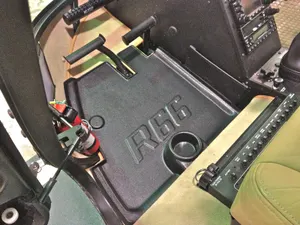
Parts listed for sale by vetted eBay sellers — confirmed on eBay at checkout.