FINAL REPORT ACCIDENT OF M/S. AIRCRAFT SALES AND SERVICES BEECHCRAFT-1900D AIRCRAFT, REG. NO. AP-BII ON 18TH MARCH, 2016 AT JIAP, KARACHI
Beechcraft 1900D · Other Documents
Overview
This document is a final report on the accident involving a Beechcraft 1900D aircraft, registration AP-BII, which occurred on March 18, 2016, shortly after takeoff from Karachi. The report details the circumstances leading to the accident, including a suspected engine failure that resulted in a belly landing. It provides a comprehensive analysis of the flight, crew performance, and technical findings related to the aircraft and its systems. The report aims to identify causes and recommend measures to prevent future occurrences. It is intended for aviation safety authorities, operators, and other stakeholders in the aviation industry.
- The aircraft was a Beechcraft 1900D, registration AP-BII.
- The accident occurred on March 18, 2016, shortly after takeoff due to suspected engine failure.
- The calculated V1 and V2 speeds were 104 Kts and 106 Kts, respectively, with a stalling speed of 84 Kts.
- The aircraft made a belly landing and sustained damage to its belly and propellers.
- The investigation concluded that uncommanded propeller feathering of the No. 2 engine was a primary factor in the accident.
Document
Source
Originally published by mod.gov.pk. Sprinkle hosts a reference copy with an added summary, specifications and searchable full text.
Document details
- Type
- Other Documents
- Year
- 2016
- Pages
- 15
- File size
- 2.3 MB
- Publisher
- mod.gov.pk
Common. Rarer than 1% of the aircraft models we track.
Most owners only have the POH. Here's the essential set for the Beechcraft 1900D.
- Pilot's Operating Handbook / AFM
- Checklist
- Maintenance Manual
- Parts Catalog (IPC)
- Systems & Wiring
- Service Bulletins
- Type Certificate (TCDS)
Beechcraft 1900D for sale now
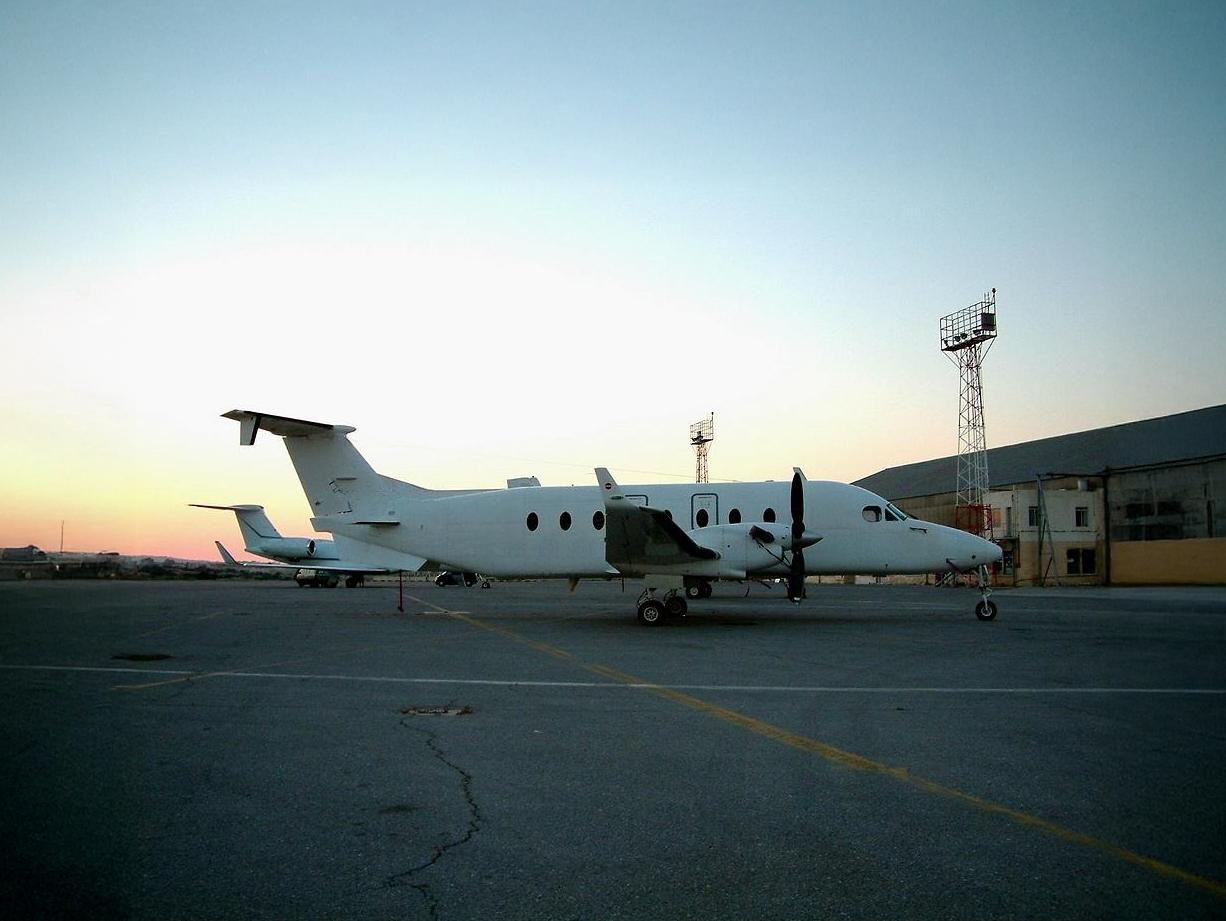


Free — save the 1900D to your watchlist and track it in one place.
More Beechcraft 1900Dmanuals & documents
See all 33 →- SAFETY INVESTIGATION REPORTOther Documents
- Fuel Consumption of the 50 Most Used Passenger AircraftOther Documents
- Type Acceptance Report TAR 98/07 – Beech 1900 SeriesOther Documents
- Airline Transport Pilot Oral Exam Guide—BE-1900 SystemsPilot's Operating Handbook
- BART: MAY - JUNE - 2020Other Documents
- THE FULLY INTEGRATED, ALL-GLASS UPGRADE FOR THE BEECH 1900D GARMIN® G950 NXi RETROFITAvionics Manual
- SERVICE BULLETIN INDEX - April 27, 2017Service Bulletins
- Master Minimum Equipment List (MMEL)Emergency Procedures
- Advisory Circular Subject: Airworthiness DirectivesSupplemental Type Certificate
- Aircrew Quick Reference Guide to the METAR and TAF CodesV Speeds Reference
- C&L AerospaceService Bulletins
- Alert Service Bulletin HC-ASB-61-316 Propeller - Hub InspectionService Bulletins
If you fly the Beechcraft 1900D, you may also be researching these.


In this document
Factual Information
The flight was a chartered operation from Karachi to Sui. After takeoff, the crew experienced a power loss in the right engine, leading to a gear-up landing on the runway. The aircraft sustained damage to its belly and propellers, but all occupants survived, with two individuals suffering serious injuries.
Injuries to Persons
The accident resulted in serious injuries to the captain and one passenger, while all other occupants remained unharmed. The report includes a detailed table of injuries.
Damage to Aircraft
The aircraft suffered significant damage to its belly, both propellers, and the lower portion of the engines. No other damages were reported.
Meteorological Information
On the day of the accident, the weather at Jinnah International Airport was fair with visibility of 7 km, few clouds at 200 and 1000 feet, wind from 250 degrees at 8 knots, and a temperature of 26°C.
Technical Analysis
The investigation revealed that the No. 2 engine experienced uncommanded propeller feathering, leading to the loss of power. The report discusses the examination of the engines and propeller governors, concluding that no anomalies were found that could have contributed to the incident.
Safety notes
- The cockpit crew did not follow the emergency procedure for engine failure during takeoff, which could have prevented the accident.
Full document text
Final Report_ ASSL B1900, AP-BII on 18-03-2016 Page 1 of 15 FINAL REPORT ACCIDENT OF M/S. AIRCRAFT SALES AND SERVICES BEECHCRAFT-1900D AIRCRAFT, REG. NO. AP-BII ON 18TH MARCH, 2016 AT JIAP, KARACHI Synopsis The accident was reported to Safety Investigation Board (SIB), Pakistan by the operator through Mandatory Occurrence Report. The accident was notified in accordance with ICAO Annex-13. Aviation Division, Government of Pakistan issued memorandum vide letter No. HQCAA/1901/376/SIB/211 dated 31 st March, 2016 for inquiring into circumstances under which the accident took place and to recommend suitable measures to prevent a recurrence. The aircraft made a belly landing just after takeoff on right side of the runway centerline, due to suspected one engine failure. After touchdown the aircraft went off the runway towards right side and then came back on the runway before coming to a final stop. The aircraft belly, both propellers and lower portion of the engines sustained damage. All occupants of the aircraft remained safe except Captain and 01 passenger who received serious injuries were shifted to the hospital. 1. FACTUAL INFORMATION 1.1 History of the Flight. The Aircraft Sales and Services (Private) Limited (ASSL) aircraft Beechcraft-1900D Registration No. AP-BII was scheduled for a chartered flight on 18 th March, 2016 from Karachi to Sui. Just after takeoff from runway 25L at 0820 hrs local time, the crew observed power loss of right engine and made a gear up landing on the remaining runway on the right side of centreline. After touchdown, the aircraft went off the runway towards right side and then came back on the runway before coming to a final stop 1050ft short from the end of runway. 1.2 Injuries to Persons. The Captain and 01 passenger received serious injuries due to hard impact of the aircraft with ground. All other passengers and technician remained unhurt. The details of injured persons as a result of this accident are tabulated below: Injuries Crew Passengers Others Total Fatal - - - - Serious 01 01 - 02 Minor - - - - Total 01 01 - 02 1.3 Damage to Aircraft. The aircraft belly, both propellers and lower portion of the engines sustained damage. 1.4 Other Damages. None. 1.5 Personnel information. The cockpit crew included one captain and one first officer (FO). Their details are mentioned below: Captain • Date of Birth : 10th September, 1958 • ATPL No. : 1188 (A) • Medical Validity Date : 31 st March, 2016 • Total Flying Experience : 2885:20 hrs • Total Hrs on Beechcraft 1900 : 717:10 hrs Final Report_ ASSL B1900, AP-BII on 18-03-2016 Page 2 of 15 First Officer (A qualified rated Captain on Beechcraft 1900D) • Date of Birth : 10th May, 1967 • ATPL No. : 1576 (A) • Medical Validity Date : 30 th June, 2016 • Total Flying Experience : 3614:40 hrs • Total Hrs on Beechcraft 1900 : 245:00 hrs 1.6 Aircraft and Engines Information. Aircraft Information Aircraft Registration ( Certificate # 773/1) AP-BII Aircraft Make and Model Beechcraft 1900D Aircraft Manufacture Serial No. (MSN) UE-45 Aircraft Manufacturing Year 1993 Aircraft C of A ( Charter, Aerial Work) Valid till 22nd January, 2017 Aircraft Time Since New (TSN) / Cycles Since New (CSN) 19574.9 Hours / 30623 Cycles Aircraft Phase Inspection Performed on 19519.9 TSN on 30 th Jan, 2016, Next due 19719.6 TSN on 30 th May, 2016 Power Plant (PT6A-67D) Information Power Plant Part Serial No. Time Since New (Hours/ Cycles) Time Since Overhaul (Hours/ Cycles) Gas Generator No. 1 (Left) PCE-114264 25292.3 / 38028 2910.1/4762 Power Section No. 1 PS-114022 31862.4/45332 5310.5/ 7778 Propeller No. 1 HJ-1846 29832.3/- 520.5/- Gas Generator No. 2 (Right) PCE-114014 20708/33436 4612.6/9465 Power Section No. 2 PS-114011 21719/36090 5516/9199 Propeller No. 2 HJ-1398 29542.1/- 520.5/- 1.6.1 The No. 2 Engine Propeller Governor Pt No. 8210-410 Serial Number 2490719 was overhauled by International Governor Services, Broomfield, USA in July, 2008. The unit has flown 2526.4 hours against its overhaul life of 6000 hours. The applicable aircraft documents did not reveal any record showing the unit was ever removed / serviced / repaired in the field after the last overhaul in 2008. 1.6.2 The aircraft was maintained in accordance with approved maintenance schedule and there was no previous reported defect which could contribute towards the occurrence. No inspection or life component of the aircraft and power plant was overdue. The last six months documented defects were scrutinized and there was no reported defect of propeller feathering malfunction. Final Report_ ASSL B1900, AP-BII on 18-03-2016 Page 3 of 15 1.7 Meteorological Information. On 18 th March, 2016 the weather prevailing at Jinnah International Airport (JIAP), Karachi is appended below: Outlook Visibility Clouds Wind Temp QNH Fair 7 Km Few 020 Few 100 250 0 08Kt 26 0 C 1010 1.8 Aids to Navigation. Beechcraft 1900D aircraft was equipped with serviceable ADF, VOR / DME, ILS and GPS equipment for the conduct of flight operations. All ground equipment related to ADF, VOR / DME and ILS was found serviceable at the time of occurrence. 1.9 Communications. Beechcraft 1900D aircraft was equipped with two VHF sets for radio contact with all concerned / relevant agencies during the conduct of flight. 1.10 Aerodrome Information. The JIAP, Karachi detailed aerodrome data is appended below: 1.11 F a D re re p g se 1.12 W p to p light Recor nd Cockpit V Data from the eport and C eport conclu arameter wa round oper egments. Pr Wreckage a ropellers, be o gear up la ictures are s rders. The F Voice Reco e units was CVR recordi uded that p as included i ration; howe ropeller Rev nd Impact elly of the ai nding conta shown below Flight Data R rder (CVR) retrieved an ng were eff pitch attitude in the report ever, the p erse parame Information ircraft and lo act with the r w: Recorder (FD
Show full textShow less
Part No. 93 nd used for t fectively util e parameter t. Pressure A parameters eter could no n. The aircr ower part of runway. The DR) Part No. -A100-83 S he purpose ized for the r ranges we Altitude cont were seem ot be validat raft remaine the engine e aircraft pa . S703-1000 erial No. 59 of investiga e investigatio ere invalid; ained out of mingly valid ted by NTSB ed intact afte cowlings su th on runwa 0-00 Serial N 9113 remaine tion. The NT on. The NT however, u f bound spike d during op B. er the incide ustained dam ay and other No. 01124 ed intact. TSB FDR TSB FDR unverified es during perational ent. Both mage due r relevant No. 2 Pro ma Aircraft op marks: Di arks 65 to 10 right side- P In istance betw 09 inches. Prop in feath nitial runway ween her marks No. 1 Prop M mar A Marks : Dist rks 19 to 22 Aircraft left s tance betwe inches side een Final Report_ ASSL B1900, AP-BII on 18-03-2016 Page 6 of 15 Aircraft Belly : Looking forward Aircraft Belly : Looking rearward 1.13 Medical and Pathological Information. Due to the hard impact of the aircraft with ground, the captain and one passenger received serious injuries. Both seriously injured persons’ backbones were fractured necessitating prolonged hospitalization and lengthy treatment involving surgical procedures. Immediately after the accident, the Cockpit Crew (Captain and First Officer), were taken to hospital and necessary medical evaluations were conducted. The results of pertinent medical evaluation were within normal limits. 1.14 Fire. There was no evidence of pre-impact inflight or post impact fire. It was neither observed by the captain nor the FO. Moreover, the investigation team members also did not observe it at the site. 1.15 Survival Aspects. Not Applicable. 1.16 Test and Research. Post occurrence tear down examination of the right engine was conducted by Vector Aerospace Australia. Right Engine Prop Governor examination was conducted by Woodward Inc, USA. Analysis of FDR data was also conducted by Pratt & Whitney Canada. 1.17 Organisational and Management Information. Not applicable. 1.18 Additional Information. 1.18.1 ATC Tape Extracts. ATC Tower Tape Extracts were retrieved and utilised during the course of investigation for detailed analysis. 1.18.2 Crew Resource Management (CRM). At the time of occurrence, Captain of the aircraft was the Pilot Flying (PF) whereas FO was Pilot Monitoring (PM), and both the cockpit crew had valid CRM certification. 1.19 Use of Effective Investigation Techniques. Besides employing various investigation techniques and procedures, data extracted from CVR and FDR was extensively utilized for development of flight profile and events leading to the accident and their analyses. 2. ANALYSIS 2.1 Operational Analysis 2.1.1 The mishap flight was a chartered flight to convey personnel of Pakistan Petroleum Limited from Karachi to Sui on Friday, 18 th March, 2016. The flight was planned to take off at 0300 UTC and flight crew was informed a day in advance about it. 2.1.2 On the day of occurrence all 18 passengers came well in time to board the aircraft. Pre flight formalities were completed at M/s ASSL parking area at JIAP, Karachi. The calculated weight of 18 passengers and 01 technician in the cabin was 1429 Kgs. The baggage accompanied by the passengers weighed 227 Kgs. The total weight of the onboard load was within maximum takeoff weight limits. The calculated V 1 and V 2 speeds were 104 Kts and 106 Kts respectively, whereas the stalling speed was 84 Kts. 2.1.3 Captain was Pilot Flying (PF) and the FO was Pilot Monitoring (PM) for this sector. However, the FO was a qualified Captain on Beechcraft 1900D aircraft. Final Report_ ASSL B1900, AP-BII on 18-03-2016 Page 7 of 15 2.1.4 Before flight, aircrew obtained latest weather of departure aerodrome, enroute, destination airfield and alternate aerodrome. The weather at all of these places was within limits. They also conducted a very short informal pre flight brief as mentioned by captain in his statement. 2.1.5 The boarding of aircraft started at 0250 UTC and aircraft taxied out at 0305 UTC. The aircraft start up and taxiing was normal. 2.1.6 Flight was given runway 25L for takeoff. The aircraft lined up on the runway and after obtaining takeoff clearance completed pre take off checks during which, Flaps were rechecked “SET” and Autofeather “Armed”. No abnormality was detected or observed till this place. 2.1.7 At 0323:06 UTC, take off thrust was applied very gradually by PF and the aircraft started to roll. The crew paused advancing power levers at approx 1400 ft/lbs Torque 10 seconds after beginning of advancing the power. 2.1.8 At 0323:31 UTC, the PM announced “Max Power Set” when propeller rpm reached 1691 and 1699 respectively for No. 1 and No. 2 Engine. The indicated torque value at this time was 3401 ft/lbs and 3211 ft/lbs for No. 1 and No. 2 Engine respectively. The aircraft had started takeoff roll and speed was building up. Five seconds after reaching the max power, at 0323:35 UTC the PM announced speed 80 kts. FDR data indicated that the speed cross check at this stage was correct, however an increasing trend in torque and drop in propeller rpm of No. 2 engine had set in, which was not monitored by the cockpit crew. The torque value touched 3895.95 ft/lbs followed by fluctuations while the propeller rpm continued to drop to minimum 709 rpm in next 11 seconds. Also, trend of drop in No. 1 Engine torque to 2288 ft/lbs had also started (without any significant change in rpm) which increased to 3549 at 0324:01 UTC. The aircraft was still rolling for takeoff and crossing 95 kts of speed. When the No. 2 Engine propeller rpm started to drop, the PF announced aircraft drifting towards right. The PM replied as “continue...continue”. Final Report_ ASSL B1900, AP-BII on 18-03-2016 Page 8 of 15 2.1.9 At 0323:44 UTC when the aircraft was crossing 96.75 kts of speed during takeoff roll, the PM asked PF to turn left and apply left rudder. From this moment onwards the aircraft speed started to decrease gradually for next six seconds i.e. till 0323:50 UTC and reached 94.82 kts. 2.1.10 The cockpit crew could not realize at this stage that there was a problem with both engines and they were still below V1 which, as per pre flight calculation / planning, was 104 kts. The applicable procedure given in Pilot Checklist (B1900 Emergency Procedures) for ‘Engine Failure During Takeoff’ at or below V1 was not followed which mentions to abort takeoff. Their decision to continue take off with one engine not providing sufficient power at aircraft speed below V1 was not correct. 2.1.11 At 0323:49 UTC the First Officer asked captain to increase the power of left engine. By this time the drop in No. 1 engine torque had been arrested. It appears that the First Officer had a glance on torque indicator and asked Captain to increase power. Whereas, earlier suggestion to ‘turn left’ by ‘applying left rudder’ and later to increase left engine power for controlling direction, appear to be incongruous. 2.1.12 At 0323:53 UTC the Captain glanced at the engine instruments and wanted to express his concern about loss of power. The recorded speed in FDR at this time was 98.33 kts. The captain had yet not expressed his concern when FO announced ‘V 1...rotate’ at 0323:55 UTC and 101.4 kts of speed. 2.1.13 At 0324:02 UTC the aircraft got airborne at following parameters: Heading (Deg) Airspeed (Kts) Prop RPM (Left) Prop RPM (Right) Torque (Left) Torque (Right) Actual 271.43 102.62 1692 800 3540.52 3422.49 Final Report_ ASSL B1900, AP-BII on 18-03-2016 Page 9 of 15 2.1.14 After getting airborne, the speed decreased to 101 kts and aircraft continued to drift towards right. In order to control the dropping speed and direction loss, the First Officer took over the controls. 2.1.15 At 0324:08 UTC when decreasing speed had reached 98.64 kts the First Officer asked Captain to raise the landing gears in order to reduce drag and gain speed. At this time, the FDR recorded that the landing gears were raised within next 2 seconds when No. 2 engine torque was near the maximum value (3382 ft/lbs) but No. 1 engine torque was still fluctuating and crossing through 3146 ft/lbs (corresponding engine rpms were 1692 and 798 for No. 1 and No. 2 engines respectively). The aircraft had climbed to approximately 39 feet above ground and the Captain asked First Officer to lower the nose in order to arrest the speed. 2.1.16 At 0324:15 UTC the speed got arrested with a very gradual increase to 100.8 kts in next four seconds. 2.1.17 At 0324:19 UTC when the aircraft was at 100.8 kts and approximately 41 feet above ground level, the First Officer asked Captain to raise the flaps. FDR recorded raising of flaps at this time. 2.1.18 The landing gears and flaps were raised without ensuring (no call out present in CVR) positive climb established which is contrary to Pilot Checklist “Takeoff Procedure” (page N-23). 2.1.19 As soon as the flaps were raised the aircraft suddenly started losing altitude and an increase in speed was recorded. The corresponding engine parameters were: RPM (No. 1 Engine) RPM (No. 2 Engine) Torque (No. 1 Engine) Torque (No. 2 Engine) 1692 933 3409 4699 2.1.20 At 0324:23 UTC, while aircraft was losing altitude, the maximum speed 105.29 kts was recorded and aircraft was passing through 10 feet above ground level. Also, at this time the First Officer asked Captain to reduce the left engine power. The corresponding engine parameters were: Final Report_ ASSL B1900, AP-BII on 18-03-2016 Page 10 of 15 RPM (No. 1 Engine) RPM (No. 2 Engine) Torque (No. 1 Engine) Torque (No. 2 Engine) 1692 829 2425 3571 2.1.21 According to First Officer’s statement, at this time he observed the aircraft not climbing (losing height) and sluggish controls response (due low airspeed) and there was no option other than to make the aircraft land on the remaining runway. So, he attempted to land the aircraft and in that bargain hit the runway surface hard approximately 9000 ft from runway 25L beginning in right half. The aircraft continued to drag on the runway while continuously drifting right for 800 ft before departing towards right side on fair weather strip. 2.1.22 After travelling approximately 600 ft on fair weather strip, the aircraft veered towards left and came to final stop on the runway 1050 ft short from end of runway. 2.1.23 As the Captain was seriously injured, the First Officer brought Fuel Control Levers, Propeller Levers and Power Levers back; put Battery and Generators Off after the aircraft came to halt. An immediate evacuation of the passengers was carried out. 2.2 Technical Analysis 2.2.1 The post incident inspection revealed that No. 2 engine propeller blades broke approximately from mid point along the blade length whereas the No. 1 engine propeller blades broke from the root section. The consecutive runway marks of propeller blades of No. 2 engine were separated more as compared to No. 1 engine; indicating that that No. 2 engine was rotating at relatively lower RPM than No. 1 engine. 2.2.2 Post incident visual inspection of No. 2 engine propeller blades indicated that blades were at feather position. 2.2.3 The fuel samples from aircraft and oil samples from both engines were drawn and submitted to Perac Research and Development Foundation (PRD) Karachi for analysis. The PRD reports did not reveal any abnormality with fuel and oil of the mishap aircraft. 2.2.4 Pitot static lines got damaged after the crash landing and therefore leakage test could not be performed on the aircraft. The airspeed indicators (ASI) were checked for correct indication at PIA shop test bench. The test results showed that both ASIs were under reading on the average by 3 knots around take airspeeds. The ASI calibration check precluded the possibility of premature takeoff because of instrument error (at lower than indicated speeds). 2.2.5 The NTSB FDR report and FDR tabular data file was shared with Pratt & Whitney (PWC) Canada. The PWC report concluded that :- 2.2.5.1 FDR data was characteristic of an un-commanded propeller feathering event of No. 2 engine as shown by the sharp propeller speed reduction being concurrent with the torque increase. 2.2.5.2 The engine turbo-machine and engine fuel governing system was not a likely contributor to the event, as shown by the high torque value reached. 2.3 Description of the Propeller Pitch Change Mechanism. The aircraft is equipped with PT6A-67D engines and Hartzell HC-E4A-3J four bladed constant speed, feathering and reversing propellers. The following paragraphs summarize the system as described in Hartzell Propeller Owner Manual. 2.3.1 While the propeller is operating the four forces are constantly present. The Spring Force and Counter Weight Forces, which attempt to rotate the blades towards higher blade angle (coarse pitch). The Centrifugal Twisting Moment of Blade, which attempts to rotate the blade towards lower blade angle (fine pitch). The Aerodynamic Twisting Moment of Blade, which is relatively small in magnitude and can attempt to increase or decrease blade angle. The summation of these constantly present forces is towards the higher blade angle (coarse pitch) and is opposed by variable force of oil pressure. Final Report_ ASSL B1900, AP-BII on 18-03-2016 Page 11 of 15 Propeller pitch change mechanism schematic 2.3.2 The oil pressure attempts to move the pitch towards lower blade angle (fine pitch). The pressurized oil is supplied by the internal pump of propeller Governor. The Governor uses its speed sensing mechanism to sense the desired selected RPM and directs oil to the propeller pitch change mechanism or drains it out to keep it at desired RPM (according to Propeller Control position) with varying power lever position and aircraft flight conditions. 2.3.3 If governor oil pressure is lost during operation, the propeller will increase pitch and feather. Feathering occurs because the summation of the propeller forces causes the oil to drain out of the propeller until the feather stop position is reached. 2.3.4 Normal in-flight feathering is accomplished when the pilot retards the Propeller Control lever past the Feather detent. This action operates Feather Dump Valve through mechanical linkages and drains oil from the propeller and returns it to the engine sump. The action of spring and counter weights moves the blades to feather position. 2.3.5 Control of the propeller blade angle in Reverse is accomplished by the Beta Valve. In Reverse mode of operation, the Governor operates in an under speed condition to act strictly as a source of pressurized oil, without attempting to control RPM. The cockpit control causes Beta Valve to supply oil from the Governor pump to the propeller. The controls and linkages provide blade angle feedback to the Beta Valve which is in turn maintains the desired reverse pitch position by regulating oil flow. 2.3.6 Study of the Propeller Pitch Change Mechanism showed that uncommanded feathering may take place because of Loss of oil pressure, Auto-feather system malfunction or Malfunction of propeller governor. 2.4 The No. 2 engine was examined by Vector Aerospace Australia. The examination report concluded that there was no anomaly with the engine which could contribute to the experienced un-commanded auto-feather. The over torque sustained was within limits and no maintenance action was required as per Maintenance Manual. No apparent damage to the engine was found as consequent to the crash landing. 2.5 The Primary Propeller Governor and Overspeed Governor of No. 2 engine were examined by Woodward Inc, USA. This examination report ascertained that there was no anomaly found which could cause the reported event of un-commanded auto feathering. Although few anomalies were observed at the IDLE settings, however, same can’t cause the auto feathering as it had occurred at Max Power Settings of Take Off. 2.6 Components of Auto Feathering System comprising of two switches (Pressure Switch High and Pressure Switch Low) were subjected to Shop check at M/s PIAC Component Overhaul Shop and found with no discrepancy or anomaly which could contribute towards the reported incidence. 2.7 The operator was operating the aircraft since November, 2008. The authorized Release Certificate FAA form 8130-3 showed that Propeller Governor Part No. 8210-410 Serial No. 2490719 was overhauled and recalibrated in accordance with Woodward Manual 61-20-35 Rev (10/98) and Woodward SB 33531 was complied with. The Overhaul was performed by International Governor Services, Broomfield, USA on 14 th July, 2008. Final Report_ ASSL B1900, AP-BII on 18-03-2016 Page 12 of 15 2.8 The Woodward finding that Propeller Governor Serial No. 2490719 was serviced by a facility other than Woodward and its several operating parameters were found away from the Woodward specifications indicated that the last servicing of the governor was improper but had no contribution towards the reported event of auto feathering. 2.9 The investigation therefore concluded that some internal malfunction of the Governor of No. 2 engine propeller may have caused uncommanded auto feather. However, exact cause of the occurrence could not be determined. 3. CONCLUSION 3.1 Technical Findings 3.1.1 The post incident inspection revealed that No. 2 engine was rotating at relatively lower RPM than No. 1 engine. 3.1.2 Post incident visual inspection of No. 2 engine propeller blades indicated that blades were at feather position. 3.1.3 The fuel samples from aircraft and oil samples from both engines did not reveal any abnormality with fuel and oil of the mishap aircraft. 3.1.4 Pitot static lines got damaged after the crash landing and therefore leakage test could not be performed on the aircraft. 3.1.5 The airspeed indicators (ASI) were checked for calibration which precluded the possibility of premature takeoff because of instrument error being at lower than indicated speeds. 3.1.6 The NTSB FDR report concluded that the relevant parameters were seemingly valid during operational segments. 3.1.7 The NTSB FDR report and FDR tabular data file were shared with Pratt & Whitney Canada (PWC). 3.1.8 The PWC report concluded that FDR data was characteristic of an un-commanded propeller feathering event of No. 2 engine. 3.1.9 The suspected No. 2 engine examined by Vector Aerospace Australia concluded that there was no anomaly with the engine which could contribute to the experienced un-commanded auto-feather. 3.1.10 The Primary Propeller Governor and Overspeed Governor of No. 2 engine were examined by Woodward Inc. USA, however could not find any anomaly which could cause the reported event of un-commanded auto feathering. Although few anomalies were observed at the IDLE settings, however, same can’t cause the auto feathering as it has occurred at Max Power settings for Take Off. 3.1.11 Components of Auto Feathering System were subjected to Shop check at M/s PIAC Component Overhaul Shop and found with no discrepancy or anomaly which could contribute towards the reported incidence. 3.1.12 The operator was operating this aircraft since November, 2008. 3.1.13 The Propeller Governor (Part No. 8210-410 Serial No. 2490719) was overhauled and recalibrated in accordance with Woodward Manual 61-20-35 Rev (10/98) and Woodward SB 33531 by International Governor Services, Broomfield, USA on 14 th July, 2008. The unit has flown 2526.4 hours (42%) against its overhaul life of 6000 hours 3.2 Operational Findings 3.2.1 The cockpit crew had valid licenses and medical fitness certificates; also they were authorized to undertake the flight. 3.2.2 The operator had provided sufficient rest to the cockpit crew before undertaking the flight. Final Report_ ASSL B1900, AP-BII on 18-03-2016 Page 13 of 15 3.2.3 The cockpit crew was trained on Beechcraft 1900D aircraft and operationally fit to fly the aircraft on mishap day. 3.2.4 Before flight, aircrew obtained latest weather of departure aerodrome, enroute, destination airfield and alternate aerodrome. The weather at all of these places was within limits. They also conducted a very short informal pre flight brief as mentioned by captain in his statement. 3.2.5 The mishap flight was a chartered flight to convey personnel of Pakistan Petroleum Limited from Karachi to Sui on Friday, 18 th March, 2016. The flight was planned to take off at 0300 UTC. The cockpit crew had been informed on 17 th March, 2017 and they had sufficient time for flight planning and rest before undertaking flight. 3.2.6 The aircraft was boarded with 18 passengers and 01 technician in the cabin. Pre flight formalities were completed at M/s ASSL parking area at JIAP, Karachi. The calculated weight of 18 passengers was 1429 Kgs. The baggage accompanied by the passengers weighed 227 Kgs. 3.2.7 Captain was Pilot Flying (PF) and the First Officer was Pilot Monitoring (PM) for this sector. First Officer was a qualified Captain on Beechcraft 1900D aircraft. 3.2.8 The aircraft taxied out at 0305 UTC. The aircraft start up and taxiing to departure runway was normal. 3.2.9 Flight was given runway 25L for takeoff. The aircraft lined up on the runway and after obtaining takeoff clearance completed pre take off checks during which Flaps were rechecked “SET” and Autofeather “Armed”. No abnormality was detected or observed till this place. 3.2.10 At 0323:06 UTC, take off thrust was applied very gradually by PF and the aircraft started to roll. The crew paused advancing at approx 1400 ft/lbs Torque 10 seconds after beginning of advancing the Power. 3.2.11 At 0323:31 UTC, the PM announced “Max Power Set” when propeller rpm reached 1691 and 1699 respectively for No. 1 and No. 2 Engine respectively. The indicated torque value at this time was 3401 ft/lbs and 3211 ft/lbs for No. 1 and No. 2 Engine respectively. The aircraft had started takeoff roll and speed started to build up. 3.2.12 Five seconds after reaching the max power, at 0323:35 UTC the pilot announced speed 80 kts. FDR data indicated that the speed cross check at this stage was correct, however an increasing trend in torque and drop in propeller rpm of No. 2 engine had started which was not monitored by the cockpit crew. The torque value touched 3895.95 ft/lbs followed by fluctuations while the propeller rpm continued to drop to min.709 rpm in next 11 seconds. 3.2.13 A similar trend of drop in No. 1 Engine torque to 2288 ft/lbs had also started without any significant change in rpm before rebuilding to 3549 ft/lbs at 0324:01. The aircraft was still rolling for takeoff and crossing 95 kts of speed. When the propeller rpm started to drop the PF announced aircraft drifting towards right. The PM replied as “continue...continue”. 3.2.14 At 0323:44 UTC when the aircraft was crossing 96.75 kts of speed, the PM asked PF to turn left and apply left rudder. From this moment onwards the aircraft speed started to decrease gradually for next six seconds i.e. till 0323:50 UTC and reached 94.82 kts. 3.2.15 The cockpit crew could not realize at this stage that there was a problem with both engines and they were still below V1 which, as per pre flight calculation / planning, was 104 kts. The applicable procedure given in Pilot Checklist (B1900 Emergency Procedures) for ‘Engine Failure During Takeoff’ at or below V1 was not followed which mentions to abort takeoff. Their decision to continue take off with one engine not providing sufficient power at aircraft speed below V1 was not correct. 3.2.16 At 0323:49 UTC the First Officer asked captain to increase the power of left engine. By this time the drop in No. 1 engine torque had been arrested. It appears that the First Officer had a glance on torque indicator and asked Captain to increase power. Whereas, earlier suggestion to ‘turn left’ by ‘applying left rudder’ and later to increase left engine power for controlling direction, appear to be incongruous. Final Report_ ASSL B1900, AP-BII on 18-03-2016 Page 14 of 15 3.2.17 At 0323:53 UTC the Captain glanced at the engine instruments and wanted to express his concern about loss of power. The recorded speed in FDR at this time was 98.33 kts. The captain had yet not expressed his concern when first officer announced ‘V1 ...rotate’ at 101.4 kts of speed. 3.2.18 At 0324:02 UTC the aircraft got airborne at following parameters: Heading (Deg) Airspeed (Kts) Prop RPM (Left) Prop RPM (Right) Torque (Left) Torque (Right) Actual 271.43 102.62 1692 800 3540.52 3422.49 3.2.19 After getting airborne, the speed decreased to 101 kts and aircraft continued to drift towards right. In order to control the dropping speed and direction loss, the First Officer took over the controls. 3.2.20 At 0324:08 UTC when decreasing speed had reached 98.64 kts the First Officer asked Captain to raise the landing gears in order to reduce drag and gain speed. 3.2.21 Landing gears were raised within next 2 seconds when No. 2 engine torque was near the maximum value (3382 ft/lbs) but No. 1 engine torque was still fluctuating and crossing through 3146 ft/lbs (corresponding engine rpms were 1692 and 798 for No. 1 and No. 2 engines respectively). The aircraft had climbed to approximately 39 feet above ground and the Captain asked First Officer to lower the nose in order to arrest the speed. 3.2.22 As the nose was lowered, the speed got arrested and showed very gradual increase to 100.8 kts in next four seconds. 3.2.23 At 0324:19 UTC when the aircraft was at 100.8 kts and approximately 41 feet above ground level, the First Officer asked Captain to raise the flaps. FDR recorded raising of flaps at this time. 3.2.24 The landing gears and flaps were raised without ensuring (no call out present in CVR) positive climb established which is contrary to Pilot Checklist “Takeoff Procedure” (page N-23). 3.2.25 As soon as the flaps were raised the aircraft suddenly started losing altitude and an increase in speed was recorded. The corresponding engine parameters were: RPM (No. 1 Engine) RPM (No. 2 Engine) Torque (No. 1 Engine) Torque (No. 2 Engine) 1692 933 3409 4699 3.2.26 While aircraft was losing altitude, the maximum speed 105.29 kts was recorded when aircraft was passing through 10 feet above ground level. Also, at this time the First Officer asked Captain to reduce the left engine power. The corresponding engine parameters were: RPM (No. 1 Engine) RPM (No. 2 Engine) Torque (No. 1 Engine) Torque (No. 2 Engine) 1692 829 2425 3571 3.2.27 According to First Officer’s statement, at this time he observed the aircraft not climbing (losing height) and sluggish controls response (due low airspeed) and there was no option other than to make the aircraft land on the remaining runway. So, he attempted to land the aircraft and in that bargain hit the runway surface hard approximately 9000 ft from runway 25L in right half. The aircraft continued to drag on the runway while continuously drifting right for 800 ft before departing towards right side on fair weather strip. 3.2.28 After travelling approximately 600 ft on fair weather strip, the aircraft veered towards left and came to final stop on the runway 1050 ft short from end of runway. Final Report_ ASSL B1900, AP-BII on 18-03-2016 Page 15 of 15 3.2.29 As the Captain was seriously injured, the First Officer brought Fuel Control Levers, Propeller Levers and Power Levers back; put Battery and Generators Off after the aircraft came to halt. An immediate evacuation of the passengers was carried out. All passengers remained safe during evacuation. 3.3 Cause of Occurrence 3.3.1 The investigation therefore, concludes that: 3.3.1.1 Some internal malfunction of the Propeller Governor Part No. 8210-410 Serial No. 2490719 was the cause of experienced uncommanded auto feather. However, exact cause of the occurrence could not be determined. 3.3.1.2 Continuing take off below V 1 speed (104kts) after encountering engine malfunction and after takeoff raising flaps below recommended height (400ft AGL) lead to decrease in lift and unsustainability of flight. 4. SAFETY RECOMMENDATIONS 4.1 International Governor Services; Broomfield, USA may like to identify and remove the inadequacies at their overhauling facility as highlighted by Woodward Inc. in their strip examination report on the Governor of misshaped propeller. 4.2 Flight Standards Directorate, HQCAA may issue necessary instructions to all General Aviation Aircraft Operators to discuss takeoff / landing critical emergency procedures during pre flight briefing. 4.3 All operators to advise their aircrew to follow OEM recommended emergency procedures religiously during critical phases of flight. 4.4 The involved Captain and First Officer may undergo refresher simulator training especially focusing on takeoff / landing emergencies, followed by a route check under supervision of PCAA Flight Inspector for formal clearance of routine flight operations. 4.5 The involved Captain and First Officer are to undergo CRM refresher training.
What's in the Beechcraft 1900D TCDS
A Type Certificate Data Sheet (TCDS) is the FAA's record of what an aircraft type was approved as. It is the source of truth for weights, seating, fuel and the rules the design was certified against. Expand any line to see what it means.
376 Beechcraft 1900D parts for sale
See all →



Parts listed for sale by vetted eBay sellers — confirmed on eBay at checkout.