
Technical Data
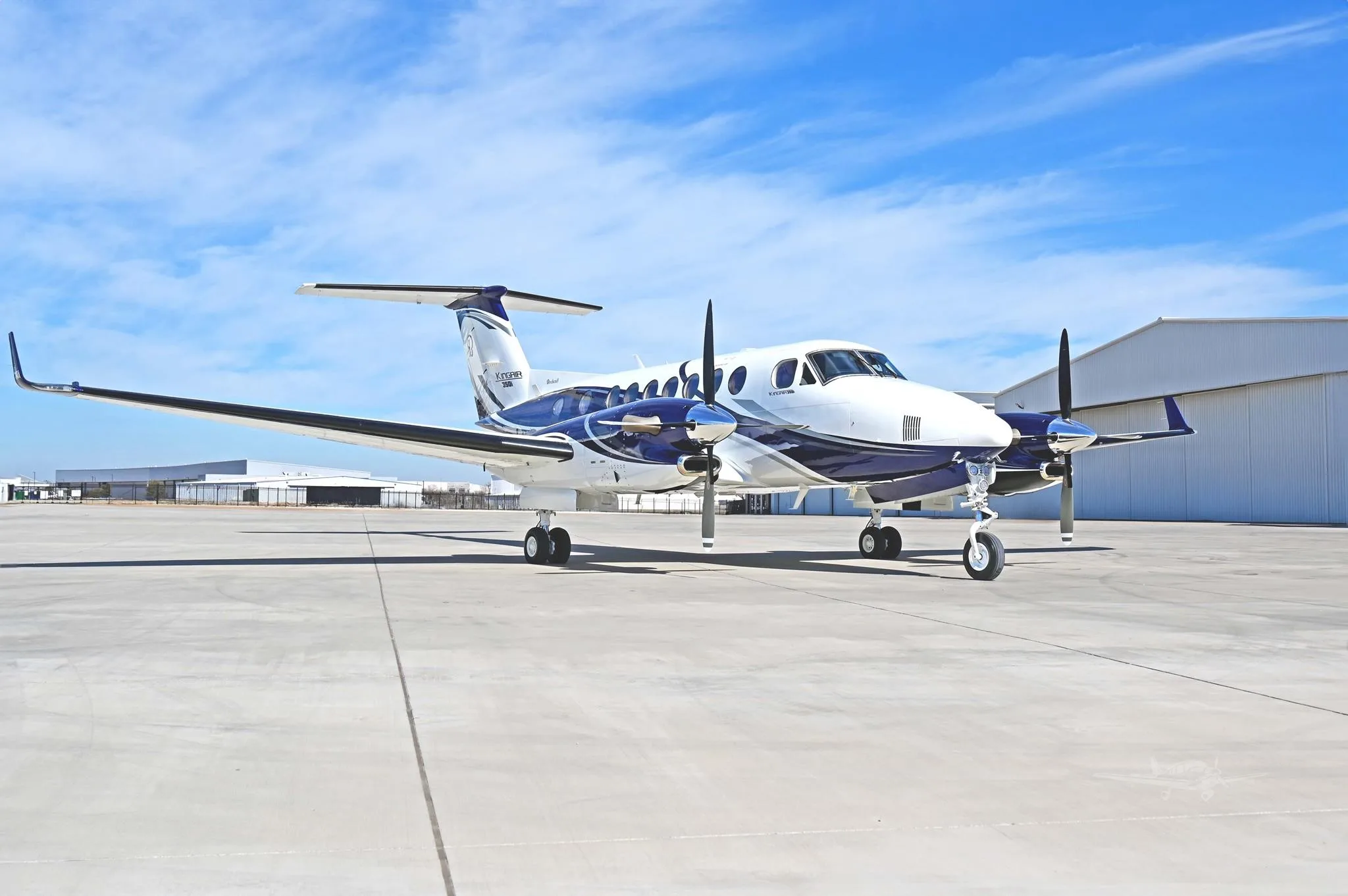
Specifications for the Beechcraft King Air 350
PDF, 5 pages, 37 KB, from Sprinkle’s own files.
What it covers
This document provides detailed specifications and performance data for the Beechcraft King Air 350. It is intended for pilots, aviation enthusiasts, and maintenance personnel who require precise technical information about the aircraft. The document includes weight statements, performance characteristics, cabin dimensions, and airport performance metrics, allowing users to understand the operational capabilities and limitations of the King Air 350. Key data points such as maximum weights, fuel capacities, and performance figures are clearly outlined to assist in flight planning and operational decision-making.
Key points
- Max Ramp Weight: 15,100 lb (6,849 kg)
- Max Takeoff Weight: 15,000 lb (6,804 kg)
- Max Landing Weight: 15,000 lb (6,804 kg)
- Max Payload: 2,800 lb (1,270 kg)
- Cruise Speed: 312 kt (359 mph) at FL 240
Figures in this document
As the document states them. Check them against the PDF before you rely on one.
Specifications
- Range (nm)
- 899
- Engine (hp)
- 1,050
- Height (ft)
- 14
- Length (ft)
- 46
- Wingspan (ft)
- 58
- Engine model
- PT6A-60
- Max speed (kt)
- 312
- Cruise speed (kt)
- 274
- Empty weight (lb)
- 9,456
- Fuel capacity (gal)
- 539
- Rate of climb (fpm)
- 2,731
- Service ceiling (ft)
- 35,000
- Max takeoff weight (lb)
- 15,000
Performance
- Landing over 50ft
- 2,692
- Takeoff over 50ft
- 3,300
- Landing distance (ft)
- 2,692
- Takeoff distance (ft)
- 3,300
Weight and balance
- Useful load (lb)
- 5,400
- Max ramp weight (lb)
- 15,100
- Basic empty weight (lb)
- 9,456
- Max landing weight (lb)
- 15,000
- Max takeoff weight (lb)
- 15,000
Main sections
Weight Statement
The King Air 350 has a maximum ramp weight of 15,100 lb (6,849 kg) and a maximum takeoff weight of 15,000 lb (6,804 kg). The maximum landing weight is also 15,000 lb (6,804 kg), with a maximum zero fuel weight of 12,500 lb (5,670 kg). The fuel capacity is 3,611 lb (1,638 kg), and the basic empty weight is 9,456 lb (4,289 kg). The useful load is 5,400 lb (2,449 kg).
Specifications and Performance Characteristics
The King Air 350 can accommodate 1 crew member and up to 9 passengers, or a total of 15. It has a wing loading of 48.4 lb/sq. ft. and a power loading of 7.14 lb/SHP. The takeoff noise level is measured at 72.1 dBA. The aircraft's external dimensions include a length of 46 ft 8 in (14.22 m), a height of 14 ft 4 in (4.37 m), and a wingspan of 57 ft 11 in (17.65 m).
Cabin Dimensions and Capacity
The cabin length is 19 ft 6 in (5.94 m), with a height of 4 ft 9 in (1.45 m) and a width of 4 ft 6 in (1.37 m). The total cabin volume is 440 cu. ft. (12.46 cu. m), which includes 355 cu. ft. (10.05 cu. m) for the passenger cabin. Internal baggage capacity is 55.3 cu. ft. (249 kg), while external nacelle lockers provide an additional 16.0 cu. ft. (272 kg).
Airport Performance
At maximum takeoff weight, the King Air 350 requires a takeoff field length of 3,300 ft (1,006 m) at sea level under standard conditions. The landing distance at maximum landing weight is 2,692 ft (821 m). The aircraft can climb to 25,000 ft in approximately 15 minutes with an all-engine climb rate of 2,731 fpm (832 m/min).
Cruise Performance and Range
The King Air 350 achieves a high-speed cruise of 312 kt (359 mph) at FL 240 with a fuel flow of 773 lb/hr (351 kg/hr). For long-range cruise, it operates at 237 kt (273 mph) at FL 330 with a fuel flow of 362 lb/hr (164 kg/hr). The maximum range with NBAA IFR reserves is 899 nm (1,665 km) with a payload of 2,800 lb.
The document’s text
Show the text read from the PDF
Technical Data 1 King Air 350 Weight Statement Design Weights Max. Ramp Weight ........................................................................... 15,100 lb. 6,849 kg. Max. Takeoff Weight ........................................................................ 15,000 lb. 6,804 kg. Max. Landing Weight........................................................................ 15,000 lb. 6,804 kg. Max. Zero Fuel Weight ..................................................................... 12,500 lb. 5,670 kg. Fuel Capacity ...................................................................................... 3,611 lb. 1,638 kg. Weight Breakdown Basic Empty Weight *......................................................................... 9,456 lb. 4,289 kg. 1 pilot .................................................................................................... 200 lb. 91 kg. Basic Operating Weight....................................................................... 9,656 lb. 4,380 kg. Typical Options: Brake De-ice ............................................................................................ 17 lb. 8 kg. Forward Right Side Cabinet ..................................................................... 27 lb. 12 kg. Typically Equipped Basic Operating Weight...................................... 9,700 lb. 4,400 kg. Max. Payload ...................................................................................... 2,800 lb. 1,270 kg. Useful Load ........................................................................................ 5,400 lb. 2,449 kg. * Basic Empty Weight includes 8 lateral tracking chairs, nacelle baggage lockers, EGPWS and Collision Awareness System -- 1 of 5 -- Technical Data 2 Specifications and Performance Characteristics Seating (Crew + Pax) ....................................................................... 1 + 9 / 15 Wing Loading ............................................................................ 48.4 lb./sq. ft. Power Loading ............................................................................ 7.14 lb./SHP Noise: Takeoff .................................................................................. 72.1 dBA External Dimensions Length ............................................................................................. 46 ft. 8 in. (14.22 m) Height .............................................................................................. 14 ft. 4 in. (4.37 m) Span............................................................................................... 57 ft. 11 in. (17.65 m) Engines Manufacturer ..................................................................................... 2 P&WC Model ................................................................................................ PT6A-60 Output .......................................................................... 1,050 SHP/ISA+10°C Inspection Interval............................................................................. 3,600 hrs. Weights Max Ramp ........................................................................................ 15,100 lb. (6,849 kg.) Max Takeoff ..................................................................................... 15,000 lb. (6,804 kg.) Max Landing..................................................................................... 15,000 lb. (6,804 kg.) Max Zero Fuel .................................................................................. 12,500 lb. (5,670 kg.) Basic Operating .................................................................................. 9,700 lb. (4,400 kg.) Payload / Capacities Max Payload ....................................................................................... 2,800 lb. (1,270 kg.) Useful Load ........................................................................................ 5,400 lb. (2,449 kg.) Max Fuel Capacity .............................................................................. 3,611 lb. (1,638 kg.) (1 US gal = 6.7 lb./US gal.)............................................................ 539 US gal. Fuel w/max payload ............................................................................ 2,600 lb. (1,179 kg.) -- 2 of 5 -- Technical Data 3 Specifications and Performance (continued) Cabin Dimensions Length ............................................................................................. 19 ft. 6 in. (5.94 m) Height ............................................................................................... 4 ft. 9 in. (1.45 m) Width................................................................................................. 4 ft. 6 in. (1.37 m) Cabin Volume Cockpit .............................................................................................. 85 cu. ft. (2.41 cu. m) Passenger Cabin .............................................................................. 355 cu. ft. (10.05 cu. m) (including lav. & bag) Total Volume ................................................................................... 440 cu. ft. (12.46 cu. m) Baggage Capacity Internal - Heated, Pressurized .............................................. 55.3 cu. ft./550 lb.(1.57 cu. m/249 kg.) External Nacelle Lockers..................................................... 16.0 cu. ft./600 lb.(0.45 cu. m/272 kg.) Pressurization Differential............................................................................................ 6.6 PSI Sea Level Cabin ................................................................................ 15,293 ft. -- 3 of 5 -- Technical Data 4 Specifications and Performance (continued) Airport Performance Takeoff Field Length Max. TO Wt., SL, ISA........................................................................ 3,300 ft. (1,006 m) Max. TO Wt., 5,000 ft. elevation, 25°C .............................................. 5,376 ft. (1,639 m) Landing Distance Max Landing Wt., SL, ISA ................................................................. 2,692 ft. (821 m) Vapproach ............................................................................................. 109 kt Climb Performance (Max Takeoff Weight) Time to Climb / Altitude ......................................................... 15 min / FL 250 All-engine Climb Rate, flaps up ......................................................... 2,731 fpm (832 m/min) All-engine Climb Gradient, flaps up .................................................. 917 ft./nm (151 m/km) Engine-out Rate, T/O flaps ................................................................. 552 fpm (168 m/min) Engine-out Gradient, T/O flaps ......................................................... 304 ft/nm (50 m/km) Ceilings Certified............................................................................................ 35,000 ft. (10,668 m) All Engine Service............................................................................. 35,000 ft. (10,668 m) Engine-out Service............................................................................ 21,500 ft. (6,553 m) Cruise Performance High Speed Cruise Speed ...................................................................................... 312 kt/359 mph (578 km/hr) Fuel Flow......................................................................................... 773 lb./hr. (351 kg./hr) Altitude ................................................................................................ FL 240 Long Range Cruise Speed....................................................................................... 237 kt/273 mph (439 km/hr) Fuel Flow......................................................................................... 362 lb./hr. (164 kg./hr) Altitude ................................................................................................ FL 330 -- 4 of 5 -- Technical Data 5 Specifications and Performance (continued) Maximum Range Performance (NBAA IFR reserves (w/100 nm alternate) – High Speed Cruise Maximum Payload with Available Fuel (2,800 lb. payload) Range ................................................................................................... 899 nm (1,665 km) Average Speed ...................................................................................... 274 kt. (507 km/hr) Trip Fuel............................................................................................. 1,897 lb. (860 kg.) Maximum Fuel with Available Payload (1,789 lb. payload) Range ................................................................................................ 1,489 nm (2,758 km) Average Speed ...................................................................................... 280 kt. (519 km/hr) Trip Fuel............................................................................................. 2,916 lb. (1,323 kg.) 4 passengers (800 lb. payload) Range ................................................................................................ 1,545 nm (2,861 km) Average Speed ...................................................................................... 286 kt. (530 km/hr) Trip Fuel............................................................................................. 2,959 lb. (1,342 kg.) Ferry (Zero payload) Range ................................................................................................ 1,572 nm (2,911 km) Average Speed ...................................................................................... 290 kt. (537 km/hr) Trip Fuel............................................................................................. 2,966 lb. (1,345 kg.) Mission Performance (4 passengers) 300 nm mission Flight Time..................................................................................... 1 hr. 02 min Trip Fuel................................................................................................ 879 lb. (399 kg.) Flight Level........................................................................................... FL 250 600 nm mission Flight Time..................................................................................... 2 hr. 01 min Trip Fuel............................................................................................. 1,465 lb. (665 kg.) Flight Level........................................................................................... FL 290 1,000 nm mission Flight Time..................................................................................... 3 hr. 26 min Trip Fuel............................................................................................. 2,092 lb. (949 kg.) Flight Level........................................................................................... FL 330 -- 5 of 5 --
Read from the PDF by machine, so tables and diagrams come out rough. The PDF is the document.
More Beechcraft King Air 350 documents
All 21 →- 2012 King Air 350i
This document provides specifications and details for the Beechcraft King Air 350i, specifically for the aircraft with serial number FL-811. It includes information on the aircraft's ownership, maintenance history, engine details, weight specifications, avionics, cabin features, and performance metrics. The document is intended for potential buyers and aviation enthusiasts looking for comprehensive technical data about this specific model. Key highlights include the aircraft's total time, engine cycles, and various capabilities that enhance its operational efficiency and passenger comfort.
- 2003 Beechcraft King Air 350
This document provides specifications for the 2003 Beechcraft King Air 350, detailing its airframe, engines, propellers, avionics, and additional features. It is intended for potential buyers and aviation enthusiasts who require detailed technical information about this aircraft model. The document includes operational hours, equipment specifications, and interior and exterior features, ensuring that users have a comprehensive understanding of the aircraft's capabilities and configurations.
- Beechcraft King Air 350 Model Guide
The Beechcraft King Air 350 is a twin-turboprop in production since 1990. It uses two Pratt & Whitney PT6A-60 engines rated 1,050 SHP each. The technical data lists seating as 1 + 9 / 15 (crew + pax). Broker data shows a 15,000 lb max takeoff weight, 35,000 ft maximum altitude and 320 knot high-speed cruise.
- Flight Simulation Training Device Qualification Certificate
This document is a qualification certificate for a flight simulation training device specifically designed for the Beechcraft King Air 350 (B300). It certifies that the Royal Flying Doctor Service of Australia has a simulator that meets EASA Level 1 standards for training purposes. The simulator is equipped with advanced systems including a Proline Fusion avionics suite and is capable of simulating various flight scenarios and instrument approaches. The document outlines the specifications of the simulator, the conditions for its operation, and the training activities that can be conducted using it. It is intended for use by authorized instructors and training organizations to ensure pilots are proficient in operating the King Air 350.
- Halo 350 Ica For Super King Air B300/B300C
This document serves as the Instructions for Continued Airworthiness (ICA) for the Super King Air B300 and B300C series airplanes that have been modified by CenTex Aerospace’s Halo 350 Conversion. The conversion enhances the aircraft's maximum takeoff weight and integrates several safety systems to improve overall safety for both the aircraft and its passengers. This manual is essential for maintenance personnel and operators to ensure compliance with FAA regulations and to maintain the airworthiness of the modified aircraft. It supplements existing Textron Aviation Aircraft Maintenance Manuals (AMM) and provides specific guidelines for the Halo 350 modifications, including maintenance procedures, inspection schedules, and troubleshooting information for newly installed systems.
- Halo 350 Wiring Diagram Manual
The HALO 350 Wiring Diagram Manual provides detailed wiring diagrams for the equipment and modifications associated with CenTex Aerospace's Halo 350 Conversion on Beechcraft Super King Air models B300 and B300C. This manual includes essential safety systems such as the Ice Mode Stall Warning System and the Takeoff Trim Warning System. It serves as a critical resource for maintenance personnel and technicians involved in the installation and upkeep of these systems. The manual also references other Textron Aviation wiring diagram manuals for existing aircraft wiring information, ensuring comprehensive coverage of the electrical systems in these aircraft.
- King Air 300/350 Business Aircraft Maintenance Training
This document is a maintenance training manual specifically designed for the Beechcraft King Air 300 and 350 aircraft. It outlines the training objectives, expectations, and various maintenance training courses available for technicians. The manual emphasizes the importance of proper aircraft maintenance to ensure safety in business aviation. It provides a comprehensive overview of the systems and components of the King Air series, including hands-on training modules and theoretical knowledge necessary for effective maintenance practices. The training is aimed at certified Airframe and Powerplant Mechanics or those with equivalent experience, ensuring that technicians are well-prepared to maintain and troubleshoot these aircraft models.
- King Air Nose Extension & EO/IR Lift
This document outlines the Supplemental Type Certificate (STC) modifications made by Sierra Nevada Corporation (SNC) for the Beechcraft King Air series, specifically focusing on the King Air 350 model. The modifications include a structural extension of the aircraft's nose to accommodate a retractable electro-optical/infrared (EO/IR) sensor. This STC allows for significant flexibility in mission requirements while maintaining the aircraft's original weight and center of gravity limitations. The document is intended for operators and maintainers of the King Air 350, providing essential information about the modifications and their operational benefits.
Supplemental Type Certificate · 2022PDF · 2 pages · 1.8 MB of King Air Nose Extension & EO/IR Lift, opens in a new tabRequest removal of King Air Nose Extension & EO/IR Lift
Beechcraft 300 for sale now
View all 32 for sale →Aircraft that this specifications covers, listed on the sites Sprinkle reads. Asking prices, not sales. Beechcraft 300 asking prices by year built.

Also useful for the Beechcraft King Air 350
From Sprinkle’s library of aircraft documents. PDFs open from Sprinkle’s own files. Read Aug 7, 2026.
Want this document taken down? Request removal