Cessna 336 Skymaster Model Guide
Cessna 336 Skymaster · Model Guide
Overview
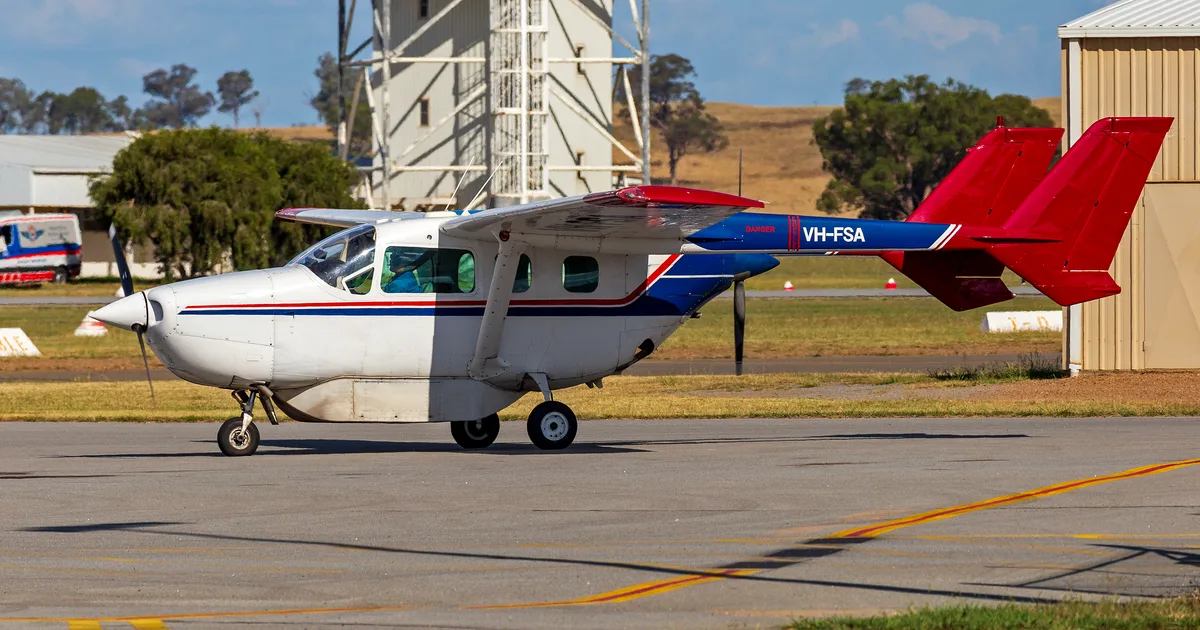
The Cessna 336 Skymaster is a twin-engine piston, high-wing aircraft built 1963-1964, seating 4 to 6. It has fixed tricycle landing gear and two Continental IO-360-A engines, one pulling at the front of the fuselage and one pushing at the rear. Registry figures for the 336 family are up to 150 kt cruise and a 19,000 ft ceiling.
- The key check is front wing spar fatigue cracking: Service Letter ME72-26 and FAA AD 73-4-2 cover high-time Skymasters.
- Inspect at 3000 hours, then every 300, if flown below 1500 ft AGL or history is unknown. Otherwise inspect at 5000 hours, then every 500.
- It is a push-pull twin: one Continental IO-360-A in front, one in the rear, with fixed tricycle gear. A six-seat cabin exists.
- Get airframe and engine hours and the logbooks. One AAIB-reported 1963 example had 1,990 hours at its 1994 airworthiness renewal.
Summary written by AI from the source document. Check the original before relying on it. See which parts of Sprinkle are written by AI.
Reference only, not for flight. Use the current approved manual for your aircraft. See terms, section 5.
Document
Source
Copy found at sprinkle.com. Sprinkle hosts a reference copy with an added summary, specifications and searchable full text.
Document details
- Type ·
- Model Guide
- Year ·
- 2026
- File size ·
- 47 KB
- Copy found at ·
- sprinkle.com
What is the biggest known inspection item on a Cessna 336 Skymaster?
For the Cessna 336 Skymaster, it is the front wing spar. Cracks started in a bolt hole in the lower spar cap at the strut attachment. Service Letter ME72-26 and AD 73-4-2 set eddy current inspections by hours in service.
When is the spar inspection due?
On a Cessna 336 Skymaster flown mainly below 1500 feet AGL or with unknown history, it is due at 3000 hours and every 300 hours after. Above 1500 feet AGL, it is due at 5000 hours and every 500 hours after.
What engines does the Cessna 336 Skymaster have?
The Cessna 336 Skymaster in the AAIB report has two Continental IO-360-A piston engines with variable-pitch propellers. One is at the front of the fuselage driving a tractor propeller. The other is at the rear driving a pusher propeller.
What is the Cessna 336 Skymaster Model Guide?
The Cessna 336 Skymaster Model Guide is a model guide for the Cessna 336 Skymaster, dated 2026.
What year was the Cessna 336 Skymaster Model Guide published?
The Cessna 336 Skymaster Model Guide — the Cessna 336 Skymaster model guide on file — is dated 2026.
Common. More common than 61% of the aircraft models we track.
Most owners only have the POH. Here's the essential set for the Cessna 336 Skymaster.
- Pilot's Operating Handbook / AFM
- Checklist
- Maintenance Manual
- Parts Catalog (IPC)
- Systems & Wiring
- Service Bulletins on file
- Type Certificate (TCDS)
Free — save the 336 to your watchlist and track it in one place.
More Cessna 336 Skymastermanuals & documents
Related documents
- Cessna 337 Super Skymaster Model GuideCessna 337 Super Skymaster · Model Guide
- CESSNA F-337 Skymaster G Model GuideCESSNA F-337 Skymaster G · Model Guide
- CESSNA 337G Model GuideCESSNA 337G · Model Guide
- CESSNA P337G Model GuideCESSNA P337G · Model Guide
- Turbo-System Super SkymasterCessna 337 Super Skymaster · Systems Description
If you fly the Cessna 336 Skymaster, you may also be researching these.


In this document
Front wing spar fatigue
Service Letter ME72-26 (December 12, 1972) followed fatigue cracks found in a bolt hole in the lower front spar cap at the strut attach point. Both aircraft were pipeline patrollers with over 4000 hours. Eddy current is used because X-ray did not always reveal small cracks. If a crack is found, both lower spar caps must be replaced before further flight.
Inspection intervals to verify
Models 336 and 337 flown mostly below 1500 feet AGL, or with unknown history, need inspection at 3000 hours and each 300 hours after. Those flown above 1500 feet AGL need it at 5000 hours and each 500 hours after. AD 73-4-2 requires 5000 hours and 500-hour repeats. The Pressurized Skymaster is not due until 10,000 hours. Ask for proof of compliance.
Layout and history example
AAIB describes the 336 as a twin-engine, high-wing aluminium aircraft with fixed tricycle gear and variable-pitch propellers. Its example, G-ASKS (1963), was restored in 1988 at 1,814 hours. AAIB found no evidence of pre-accident failure or malfunction. That aircraft struck a hillside in level flight in poor weather.
Summary written by AI from the source document. Check the original before relying on it. See which parts of Sprinkle are written by AI.
Safety notes
- A fatigue crack at the lower front spar cap bolt hole led to ME72-26. Low-level work, such as pipeline patrol, brought the 3000-hour inspection.
- If a spar crack is found, the lower spar caps in both wings must be replaced before further operation. Repairs were at the owner's expense.
- In the AAIB case, the aircraft flew into hills hidden by cloud. The investigation found no technical fault.
Summary written by AI from the source document. Check the original before relying on it. See which parts of Sprinkle are written by AI.
Full document text
Cessna 336 Skymaster Model Guide The Cessna 336 Skymaster is a twin-engine piston, high-wing aircraft built 1963-1964, seating 4 to 6. It has fixed tricycle landing gear and two Continental IO-360-A engines, one pulling at the front of the fuselage and one pushing at the rear. Registry figures for the 336 family are up to 150 kt cruise and a 19,000 ft ceiling. • The key check is front wing spar fatigue cracking: Service Letter ME72-26 and FAA AD 73-4-2 cover high-time Skymasters. • Inspect at 3000 hours, then every 300, if flown below 1500 ft AGL or history is unknown. Otherwise inspect at 5000 hours, then every 500. • It is a push-pull twin: one Continental IO-360-A in front, one in the rear, with fixed tricycle gear. A six-seat cabin exists. • Get airframe and engine hours and the logbooks. One AAIB-reported 1963 example had 1,990 hours at its 1994 airworthiness renewal. Front wing spar fatigue Service Letter ME72-26 (December 12, 1972) followed fatigue cracks found in a bolt hole in the lower front spar cap at the strut attach point. Both aircraft were pipeline patrollers with over 4000 hours. Eddy current is used because X-ray did not always reveal small cracks. If a crack is found, both lower spar caps must be replaced before further flight. Inspection intervals to verify Models 336 and 337 flown mostly below 1500 feet AGL, or with unknown history, need inspection at 3000 hours and each 300 hours after. Those flown above 1500 feet AGL need it at 5000 hours and each 500 hours after. AD 73-4-2 requires 5000 hours and 500-hour repeats. The Pressurized Skymaster is not due until 10,000 hours. Ask for proof of compliance. Layout and history example AAIB describes the 336 as a twin-engine, high-wing aluminium aircraft with fixed tricycle gear and variable-pitch propellers. Its example, G-ASKS (1963), was restored in 1988 at 1,814 hours. AAIB found no evidence of pre-accident failure or malfunction. That aircraft struck a hillside in level flight in poor weather. Safety notes: • A fatigue crack at the lower front spar cap bolt hole led to ME72-26. Low-level work, such as pipeline patrol, brought the 3000-hour inspection. • If a spar crack is found, the lower spar caps in both wings must be replaced before further operation. Repairs were at the owner's expense. • In the AAIB case, the aircraft flew into hills hidden by cloud. The investigation found no technical fault.