
Operational Suitability Data (OSD) – Flight Crew
Type Certificate for the Cessna 510 Citation Mustang
PDF, 12 pages, 315 KB, from Sprinkle’s own files.
What it covers
This document provides Operational Suitability Data (OSD) for the Cessna 510 Citation Mustang, specifically aimed at flight crew training and operational evaluation. It outlines the necessary training requirements, operational evaluations, and pilot licensing endorsements for operating the aircraft. The document is essential for ensuring that pilots are adequately prepared to operate the Mustang under various conditions, including low visibility operations and compliance with European aviation standards. It includes detailed information on training prerequisites, specifications for pilot training, and recurrent training requirements, making it a critical resource for flight schools and operators of the Cessna 510.
Key points
- Maximum operating altitude: 41,000 feet
- Maximum takeoff mass (MTOM): 3,921 kg
- Minimum crew requirement: 1 pilot
- Initial type rating training must include familiarity with Garmin 1000 avionics
- Recurrent training must comply with EU regulations
Main sections
Introduction
The introduction outlines the purpose of the document, which is to provide guidance on the operational suitability of the Cessna 510 for flight crew. It emphasizes the importance of adhering to current regulations and the need for additional assessments for any modifications to the aircraft.
C-510 Operational Evaluation
This section details the operational evaluation conducted for the Cessna 510, which took place from April 30 to May 11, 2007. The evaluation was performed by an Operational Evaluation Board (OEB) pilot and was compliant with EASA regulations.
Aircraft Specifics
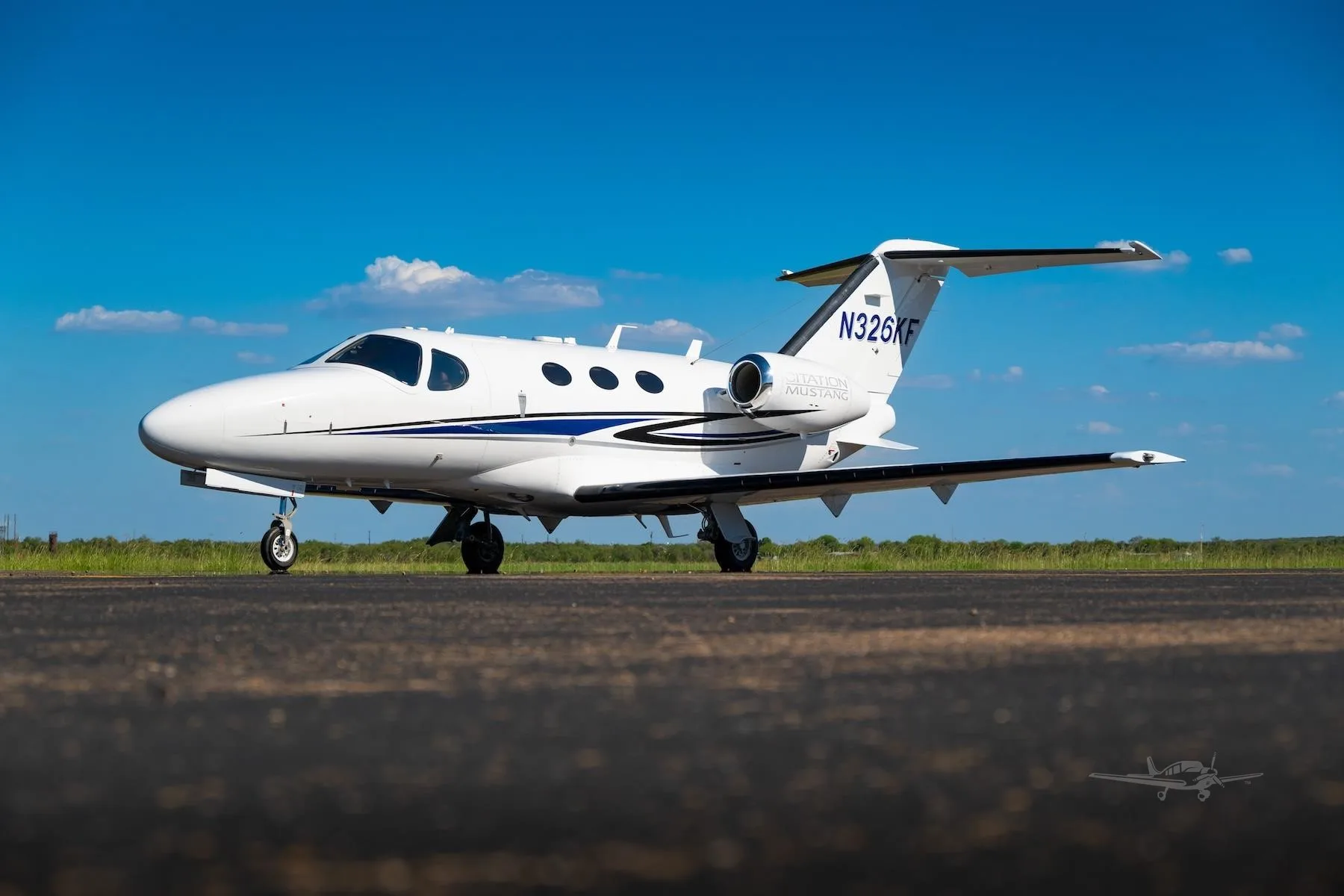
The C-510 is a low-wing aircraft with retractable tricycle landing gear and a pressurized cabin. It is powered by two turbofan engines and has a maximum operating altitude of 41,000 feet. The maximum takeoff mass (MTOM) is 3,921 kg, and it is certified for a minimum crew of one pilot.
Specifications for Pilot Training
This section outlines the prerequisites and training syllabus for initial type rating training on the C-510. It specifies that pilots should be familiar with the Garmin 1000 avionics and includes details on the training areas of special emphasis.
Recurrent Training
Recurrent training requirements are discussed, emphasizing compliance with EU regulations and the need for operators to establish an approved recurrent training program relevant to the aircraft variant.
Safety notes
- Modifications to the aircraft require additional OSD assessment.
- Pilots must meet specific prerequisites for type rating training.
The document’s text
Show the text read from the PDF
Cessna Document Reference # 510OSDFC-01 Signature MARCUS S.VANDERPOOL, Pilot and Maintenance Training, Textron Aviation Operational Suitability Data (OSD) Flight Crew Cessna Model C-510 (Mustang) 10 February 2015 -- 1 of 12 -- Operational Suitability Data – Flight Crew C-510 OSD FC C-510 – Original Page 2 of 12 -- 2 of 12 -- Operational Suitability Data – Flight Crew C-510 OSD FC C-510 – Original Page 3 of 12 CESSNA C-510 (Mustang) Operational Suitability Data (OSD) – Flight Crew Captain Herbert Meyer Section Manager Flight Crew Training EASA Flight Standards Directorate European Aviation Safety Agency (EASA), Postfach 10 12 53 D-50452 Köln, Germany Revision Record Rev. No. Content Date OEB Report Rev 2 Operational Evaluation Board Report Cessna C- 510 22 Oct 2010 OSD FC Original Replaces and incorporates the OEB report (Rev. 2) for the Cessna C-510 10 Feb 2015 -- 3 of 12 -- Operational Suitability Data – Flight Crew C-510 OSD FC C-510 – Original Page 4 of 12 Contents Page Revision Record ............................................................................................................................. 2 Contents ........................................................................................................................................ 3 Acronyms ....................................................................................................................................... 4 Preamble ....................................................................................................................................... 6 1. Introduction .................................................................................................................... 6 2. C-510 operational evaluation ......................................................................................... 6 3. Operational Evaluations – Group Composition ............................................................... 7 Operational Suitability Data (OSD) – Flight Crew ........................................................................... 8 1. Aircraft Type Designation and Pilot License Endorsement ............................................. 8 2. Aircraft Specifics ............................................................................................................ 8 2.1 Aircraft Approach Category .................................................................................. 8 2.2 All Weather / Low Visibility Operations .................................................................. 8 3. Operator Differences Requirements (ODR) .................................................................... 8 4. Master Differences Requirements (MDR) ....................................................................... 8 5. Specifications for Pilot Training ...................................................................................... 9 5.1 C-510 Initial Type Rating Training ......................................................................... 9 6. Line Flying Under Supervision (LIFUS) / Supervised Operating Experience (SOE) / Familiarization Flights ........................................................................................ 9 7. Recurrent Training ....................................................................................................... 10 8. Specification for Checking ............................................................................................ 10 Appendix 1 Pre-requisites and training for initial type rating training on the C-510 ................................. 11 -- 4 of 12 -- Operational Suitability Data – Flight Crew C-510 OSD FC C-510 – Original Page 5 of 12 Acronyms ADC ......................... Air Data Computer AFCS ........................ Automatic Flight Control System AFM ......................... Airplane Flight Manual AHRS ....................... Attitude and Heading Reference System AP ............................ Autopilot CAS ......................... Crew Alerting System CPD .......................... Common Procedures Document for conducting Operational Evaluation Boards, dated 10 June 2004 CS-FCD ................... Certification Specifications for Operational Suitability Data (OSD) Flight Crew Data CS-FCD, Initial issue, 31 January 2014 CS-FSTD(A) ............ Certification Specifications for Aeroplane Flight Simulation Training Devices of 4 July 2012 Difference Level ....... a designated level of difference as defined in CS-FCD EASA ....................... European Aviation Safety Agency EFIS ......................... Electronic Flight Instrument System EGPWS ................... Enhanced Ground Proximity Warning System EICAS ...................... Engine Indicating and Crew Alerting System EU-OPS .................... Commission Regulation (EC) No 859/2008 of 20 August 2008 amending Council Regulation (EEC) No 3922/91 as regards common technical requirements and administrative procedures applicable to commercial transportation by aeroplane FADEC .................... Full Authority Digital Engine Control FD ............................ Flight Director FDR ......................... Flight Data Recorder FFS .......................... Full Flight Simulator (Level C or D) FMS ......................... Flight Management System FTD .......................... Flight Training Device GPWS ...................... Ground Proximity Warning System DH ........................... Decision Height LED .......................... Light Emitting Diode LST .......................... License Skill Test MDA ......................... Minimum Descend Altitude MFD ......................... Multi-Function Display MSA ......................... Minimum Safe Altitude MTOM ...................... Maximum Take Off Mass OAT ......................... Outside Air Temperature OEB ......................... EASA Operational Evaluation Board OPC ......................... Operator Proficiency Check OSD ......................... Operational Suitability Data -- 5 of 12 -- Operational Suitability Data – Flight Crew C-510 OSD FC C-510 – Original Page 6 of 12 Part-FCL ................... Annex I to Commission Regulation (EU) No 1178/2011 of 3 November 2011 laying down technical requirements and administrative procedures related to civil aviation aircrew pursuant to Regulation (EC) No 216/2008 of the European Parliament and of the Council (as amended) Part-ORO .................. Annex III to Commission Regulation (EU) No 965/2012 of 05 Oct 2012 laying down technical requirements and administrative procedures related to air operations pursuant to Regulation (EC) No 216/2008 of the European Parliament and of the Council (as amended) Part-SPA................... Annex V to Commission Regulation (EU) No 965/2012 of 05 Oct 2012 laying down technical requirements and administrative procedures related to air operations pursuant to Regulation (EC) No 216/2008 of the European Parliament and of the Council (as amended) OTD ......................... Other Training Device PF ............................ Pilot Flying PFD ......................... Primary Flight Display PNF ......................... Pilot Non Flying Route Sector ............ as defined in Part-FCL [“Route sector" means a flight comprising take-off, departure, cruise of not less than 15 minutes, arrival, approach and landing phases] RVSM ...................... Reduced Vertical Separation Minimum SOP ......................... Standard Operating Procedures TAWS ...................... Terrain Awareness Warning System TCAS ....................... Traffic Alert and Collision Avoidance System TCDS ....................... Type Certificate Data Sheet -- 6 of 12 -- Operational Suitability Data – Flight Crew C-510 OSD FC C-510 – Original Page 7 of 12 Preamble 1. Introduction Where references are made to requirements and where extracts of reference texts are provided, these are at the amendment state at the date of evaluation or publication of this document. Users should take account of subsequent amendments to any references, in particular concerning requirement for civil aviation aircrew and air operations. Determinations made in this document are based on the evaluations of specific configurations of aircraft models, equipped in a given configuration and in accordance with current regulations and guidance. Modifications and upgrades to the aircraft evaluated require additional OSD assessment for type designation, training / checking / currency, operational credits, and other elements within the scope of the OSD evaluations. In accordance with Commission Regulation (EU) No 69/2014 of 27 Jan 2014, the Operational Suitability Data contained in this document are identified as follows: [M] .............. mandatory Operational Suitability Data, bearing the status of rule (see GM No 3 to 21A.15(d)) [AMC] ......... non-mandatory Operational Suitability Data, bearing the status of Acceptable Means of Compliance (see GM No 3 to 21A.15(d)) 2. C-510 operational evaluation An operational evaluation of initial pilot type rating training was performed by one OEB pilot during the period 30 April - 11 May 2007 at Flight Safety International (FSI) in Wichita, Kansas. The aircraft configuration of the evaluated model was in accordance with EASA TCDS EASA.IM.A.502 of 21 May 2007. The evaluation was performed in accordance with the Common Procedures Document (CPD), EU- OPS and JAR- FCL1 and are compliant with the provisions of CS-FCD. -- 7 of 12 -- Operational Suitability Data – Flight Crew C-510 OSD FC C-510 – Original Page 8 of 12 3. Operational Evaluations – Group Composition Name Organization Function Per Kirk Laursen 1) EASA OEB Chairman Herbert Meyer 2) EASA EASA Section Manager Evan Nielsen 1) EASA EASA Flight Standards Manager Poul Rasmussen 1) EASA OEB Section Manager Business Jets 1) Operational evaluation May 2007 2) OSD transition Oct 2014 -- 8 of 12 -- Operational Suitability Data – Flight Crew C-510 OSD FC C-510 – Original Page 9 of 12 Operational Suitability Data (OSD) – Flight Crew 1. Aircraft Type Designation and Pilot License Endorsement [M] With reference to Part-FCL, FCL.010 (‘type of aircraft’) and GM1 FCL.700, the C-510 has been evaluated for aircraft categorisation and license endorsement. The license endorsement is established as “C510”. Manufacturer Aircraft Model / Name License Endorsement Variants Complex SP / SP HPA / MP OEB FC REPORT / OSD FC available Remarks Cessna 510 (Citation Mustang) C510 ̶ X SP HPA X OSD FC C-510, dated 27 Jan 2015 2. Aircraft Specifics The C-510 is a low wing aircraft with retractable tricycle landing gear, T-tail, pressurized cabin, and two turbofan engines which are pylon mounted on the rear fuselage. The maximum operating altitude is 41.000 feet, the Vmo/Mmo are 250 kts/M 0.63, and the MTOM is 3921 kgs. The aircraft is certified for a minimum crew of one pilot, specific operations may require a crew of two pilots. 2.1 Aircraft Approach Category [M] With reference to Part-CAT, CAT.OP.MPA.320(b) the minimum straight-in approach category for the C-510 is as follows: Aircraft Category C-510 B 2.2 All Weather / Low Visibility Operations [AMC] The operational evaluations were limited to Approach Category I operations and standard take-off minima. 3. Operator Differences Requirements (ODR) Not applicable. 4. Master Differences Requirements (MDR) Not applicable. -- 9 of 12 -- Operational Suitability Data – Flight Crew C-510 OSD FC C-510 – Original Page 10 of 12 5. Specifications for Pilot Training 5.1 C-510 Initial Type Rating Training 5.1.1 Prerequisites [M] Pilot pre-requisites are contained at Appendix 1. [AMC] Pilots should be familiar with the Garmin 1000 avionics operation and EFIS/FMS systems prior to C-510 initial type rating training. 5.1.2 Training syllabus [M] 5.1.2.1 Training must be in compliance with the elements contained at Appendix 1. [AMC] 5.1.2.2 The training syllabus evaluated by EASA is the Cessna Citation Mustang (C-510) Type Rating Training Programme, dated 25 April 2007. Training consists of classroom instruction and programmed instruction in OTD and FFS. Classroom instruction is mixed with OTD instruction and FFS lessons as a follow up on each day subjects. OTD sessions are designed to reinforce classroom learning, as well as to introduce crews to SOPs, normal, abnormal, and emergency check list application, as well as to the practical operation of the aircraft. 5.1.3 Training Areas of Special Emphasis (TASE) [M] The following item must receive special emphasis during initial type rating training: • Interpretation and use of the Crew Alerting System (CAS) combined with the Pilots´ Abbreviated Checklist. 6. Line Flying Under Supervision (LIFUS) / Supervised Operating Experience (SOE) / Familiarization Flights LIFUS should be performed in accordance with ORO.FC.220 and AMC1 ORO.FC.220(e). Furthermore, GM1 ORO.FC.220(d) provides guidelines for operators to use when establishing their individual requirements. Supervised Operating Experience (SOE) may be established in accordance with Part-FCL, FCL.720.A (g) through the operational suitability evaluation. [M] Pilots obtaining an initial type rating on a C-510 without previous experience on a turbo-jet, pressurised turbo-prop, or multi-engine turbo-prop aircraft must receive the number of hours of LIFUS / SOE as shown in the table of Appendix 1. [AMC] Where there is a change of operating conditions or route structure this should be taken into account and may need additional route sectors to cover these elements. -- 10 of 12 -- Operational Suitability Data – Flight Crew C-510 OSD FC C-510 – Original Page 11 of 12 7. Recurrent Training Recurrent training must be compliant with EU regulations for civil aviation aircrew and air operations, as applicable, and include the identified Training Areas of Special Emphasis. [AMC] The applicable requirements established in EU regulations for civil aviation aircrew and air operations should be considered as a minimum and expanded, as appropriate, for pilots who have had only limited exposure and/or who do no longer fulfil the currency requirements. [M] Operators must establish an approved recurrent training and checking programme which is relevant to the aircraft variant(s) flown and its intended operation. [AMC] The requirements for a recurrent training programme may vary with several factors which have a significant influence. Some of these factors are: actual exposure of the flight crew member(s), specific routes and aerodromes used by the operator and new developments in technology. These factors and/or a combination thereof will determine the required recurrent training. 8. Specification for Checking Part-FCL, Appendix 9, A. paras. 13 - 17 contain specific requirements for the skill test / proficiency check for SP aeroplane type ratings, when operated in MP operations. [M] With reference to Part-FCL, Appendix 9 B., initial and recurrent testing/checking must follow the Part-FCL profile for "Multi-Pilot Aeroplanes and Single-Pilot High-Performance Complex Aeroplanes" [M] In accordance with Part-FCL, Appendix 9 B.6.(h), when a skill test or proficiency check is performed in MP operations, the type rating shall be restricted to MP operations. If privileges of SP are sought, the manoeuvres / procedures referenced in B.6.(h) must be completed in addition as SP. [AMC] Pilots having completed training in the SP role should take the skill test / proficiency check acting as the only cockpit crew member throughout the test / check. Where the test is conducted in a full flight simulator, the examiner should not occupy the second cockpit seat. [AMC] The LST for SP operations should consist of 2 hours as PF. The LST for MP operations should consist of 2 hours as PF and 2 hours as PNF. -- 11 of 12 -- Operational Suitability Data – Flight Crew C-510 OSD FC C-510 – Original Page 12 of 12 Appendix 1 [M] Pre-requisites and training for initial type rating training on the C-510 Part-FCL, FCL.720.A (b) and (c) applies regarding experience requirements and prerequisites for type ratings for SP high performance complex aeroplanes. In addition, pilots seeking the privilege to operate the aeroplane in MP operations shall meet the requirements of FCL.720.A (d) (4). In accordance with Part-FCL, Appendix 9, paragraph B. 6 (h), when a skill test or proficiency check is performed in MP operations, the type rating shall be restricted to MP operations. If SP privileges are sought, the manoeuvres / procedures referenced in Part-FCL, Appendix 9, paragraph 6 (h) must be completed in addition as single-pilot. Pilots who do not meet the prerequisites for operations as PIC should receive a license endorsement containing the limitation "Co-pilot only". License and Experience prerequisites to start training Combined aircraft and FTD/OTD training Combined FFS and FTD/OTD training Testing SOE or LIFUS (as PF) SP OPERATIONS OR MP OPERATIONS AS PIC ATPL(A) + any previous turbo-jet aircraft type rating 12 hrs + 4 hrs FTD or OTD * SP: 16 hrs FFS MP: 16 hrs FFS + 16 hrs FTD or OTD Partial Skill Test 0 hrs ME Rating + IR Rating Min. 1000 hrs 25 hrs ME Rating + IR Rating Min. 500 hrs 50 hrs MP OPERATIONS AS CO-PILOT CPL + IR Rating Min. 200 hrs Min. 70 hrs PIC 12 hrs + 4 hrs FTD or OTD * 16 hrs FFS + 16 hrs FTD or OTD Skill Test License Endorsement: “Co-pilot only” 0 hrs *Training of selected emergency procedures -- 12 of 12 --
Read from the PDF by machine, so tables and diagrams come out rough. The PDF is the document.
More Cessna 510 Citation Mustang documents
All 31 →- TYPE-CERTIFICATE DATA SHEET NO. EASA.IM.A.502 for Cessna 510 (Mustang)
This document is a Type Certificate Data Sheet (TCDS) for the Cessna 510, also known as the Mustang. It provides essential information regarding the aircraft's certification, technical characteristics, operational limitations, and service instructions. The TCDS is intended for use by aviation professionals, including pilots, maintenance personnel, and regulatory authorities, ensuring compliance with safety and operational standards. It outlines the aircraft's specifications, including dimensions, weight limits, engine details, and operational capabilities, which are critical for safe operation and maintenance of the aircraft.
- CESSNA 510 Citation Mustang Model Guide
The CESSNA 510 Citation Mustang is a twin-engine business jet. It has two Pratt & Whitney PW615F turbofan engines and is FAA approved in the normal category under 14 CFR 23. The source documents give weights, speeds, training and maintenance items. They give no registry range, seat count or production-year data, so confirm those against the specific airframe.
- Airplane Flight Manual for Cessna 510 Citation Mustang
This document is an accident report by the Australian Transport Safety Bureau (ATSB) detailing a runway excursion involving a Cessna 510 Citation Mustang, registered VH-SQY, on January 11, 2025. The aircraft was conducting a non-emergency medical transport flight from Narrandera Airport to Bankstown Airport. During landing, the pilot encountered reduced braking performance due to a combination of factors including a tailwind, wet runway conditions, and worn tyres. The report outlines the circumstances of the incident, findings from the investigation, and subsequent safety actions taken by the operator and relevant authorities. It serves as a critical resource for understanding the operational challenges and safety measures associated with the Cessna 510.
- Aviation Investigation Final Report
This document is an Aviation Investigation Final Report concerning an accident involving a Textron Aviation Inc 510 Citation Mustang (registration N510HM) and a Raytheon Hawker 850XP (registration N269AA). The report details the events leading up to the collision, the actions of the flight crews, and the subsequent investigation findings. It highlights critical factors such as the lack of a takeoff clearance for N269AA, the distraction of the flight crews, and the importance of adhering to standard operating procedures. The report serves as a comprehensive analysis for aviation safety and operational awareness, particularly for pilots and operators of the Cessna 510.
- OE-FFB Status Report Cessna
This document is a status report for the Cessna 510 Citation Mustang, detailing maintenance tasks, inspection documents, and operational hours for the aircraft owned and operated by GlobeAir AG. It includes information on engine hours, landing counts, and upcoming maintenance requirements.
- Cessna Citation Mustang CE-510 Note Taking Guide
This document is a Note Taking Guide for the Cessna 510 Citation Mustang, designed to assist pilots in memorizing critical procedures and limitations. It includes memory items for emergency situations, takeoff briefings, and various system overviews such as fuel, electrical, hydraulics, and environmental systems. The guide emphasizes the importance of memorization for safety and operational efficiency, providing structured practice pages for pilots to fill out from memory. It also outlines key performance limitations and operational parameters essential for safe flight operations.
- CESCOM 10 - Aircraft Status Report
This document is a maintenance report for the Cessna 510 Citation Mustang, specifically detailing the aircraft's status, maintenance inspections, and compliance with airworthiness directives. It serves as a comprehensive record for the aircraft's operational history, including utilization metrics, maintenance tasks, and inspection documentation. The report is intended for maintenance personnel and operators to ensure the aircraft remains compliant with regulatory requirements and is safe for flight operations. Key sections include maintenance inspections, components status, and upcoming maintenance tasks, which are crucial for maintaining the aircraft's airworthiness and operational readiness.
- Serious incident to the CESSNA 510 Citation Mustang registered F-GMTJ on 22 January 2019 at Paris – Le Bourget (Seine Saint Denis)
This document is an investigation report by the Bureau d'Enquêtes et d'Analyses (BEA) concerning a serious incident involving the Cessna 510 Citation Mustang registered F-GMTJ. The incident occurred on January 22, 2019, during a landing approach at Paris-Le Bourget airport. The report details the flight history, pilot information, meteorological conditions, and airport specifics at the time of the incident. It highlights the pilot's experience, the approach procedures used, and the challenges faced during the landing, particularly at night and in adverse weather conditions. The report aims to identify contributing factors to the incident and provide safety lessons to improve future aviation safety.
Other Documents · 2021PDF · 7 pages · 558 KB of Serious incident to the CESSNA 510 Citation Mustang registered F-GMTJ on 22 January 2019 at Paris – Le Bourget (Seine Saint Denis), opens in a new tabRequest removal of Serious incident to the CESSNA 510 Citation Mustang registered F-GMTJ on 22 January 2019 at Paris – Le Bourget (Seine Saint Denis)
Cessna 510 for sale now
View all 42 for sale →Aircraft that this type certificate covers, listed on the sites Sprinkle reads. Asking prices, not sales. Cessna 510 asking prices by year built.


Also useful for the Cessna 510 Citation Mustang
From Sprinkle’s library of aircraft documents. PDFs open from Sprinkle’s own files. Read Mar 9, 2026.
Want this document taken down? Request removal