
TYPE-CERTIFICATE DATA SHEET NO. EASA.IM.A.502 for Cessna 510 (Mustang)
Type Certificate for the Cessna 510 Citation Mustang
PDF, 10 pages, 738 KB, from Sprinkle’s own files.
What it covers
This document is a Type Certificate Data Sheet (TCDS) for the Cessna 510, also known as the Mustang. It provides essential information regarding the aircraft's certification, technical characteristics, operational limitations, and service instructions. The TCDS is intended for use by aviation professionals, including pilots, maintenance personnel, and regulatory authorities, ensuring compliance with safety and operational standards. It outlines the aircraft's specifications, including dimensions, weight limits, engine details, and operational capabilities, which are critical for safe operation and maintenance of the aircraft.
Key points
- Maximum Take-Off Weight: 3921 kg (8645 lbs)
- Maximum Operating Altitude: 12,497 m (41,000 ft)
- Wingspan: 13.16 m (43 ft 2 in)
- Fuel Capacity: 2568 lbs (383.3 gal / 1450.95 liters)
- Engine Type: Pratt & Whitney Canada PW615F-A turbofans
Main sections
General Information
The Cessna 510 is categorized under 14 CFR 23 Normal Category. The type certificate holder is Textron Aviation Inc., with the EASA certification application date being 9 September 2003. The FAA type certification date is 8 September 2006.
Technical Characteristics and Operational Limitations
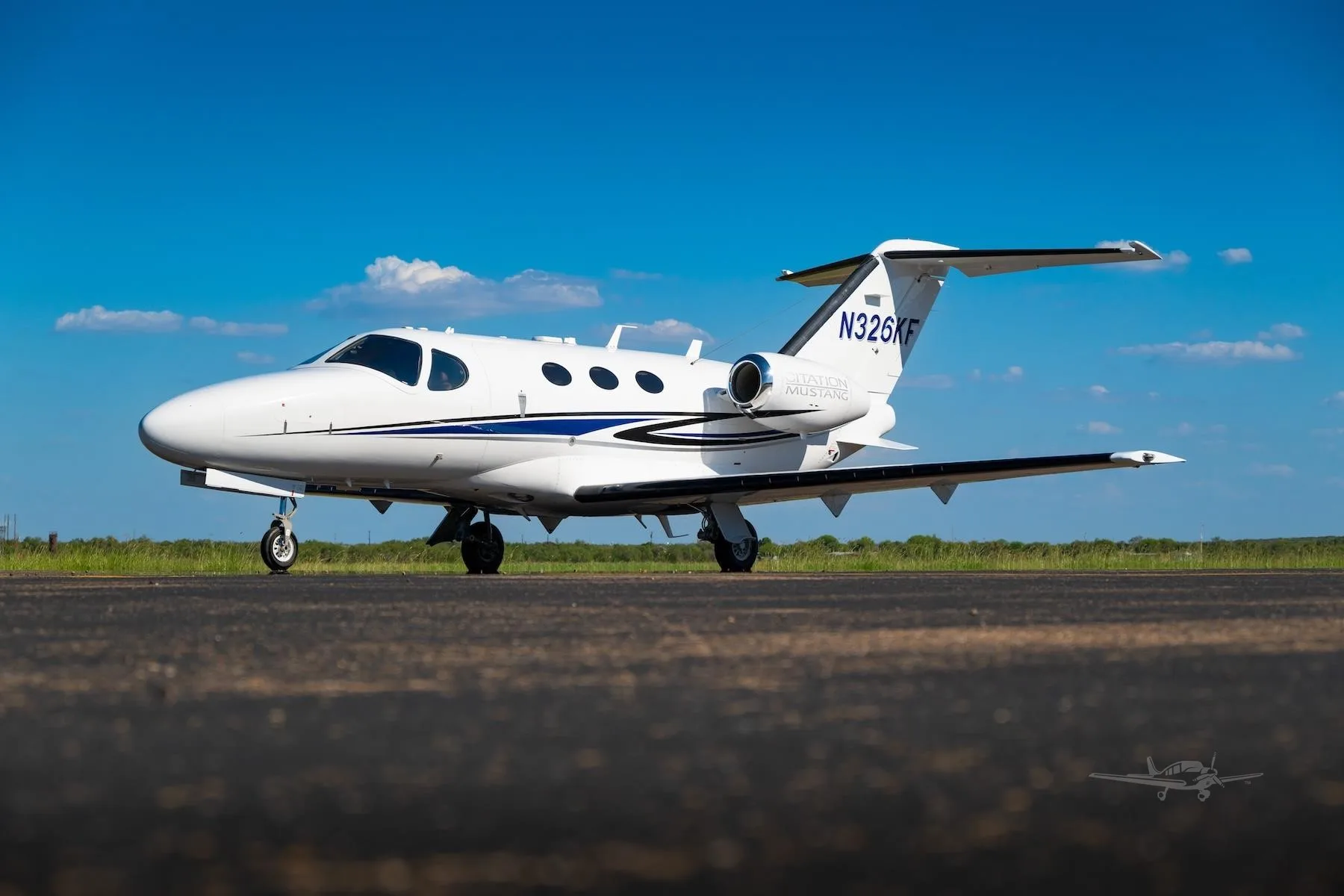
The Cessna 510 is a low-wing aircraft featuring retractable tricycle landing gear, a T-tail, and a pressurized cabin. It is powered by two Pratt & Whitney Canada PW615F-A turbofan engines. Key dimensions include a wingspan of 13.16 m (43 ft 2 in), a length of 12.37 m (40 ft 7 in), and a height of 4.09 m (13 ft 5 in). The maximum operating altitude is 12,497 m (41,000 ft).
Engine Specifications
The aircraft is equipped with two Pratt & Whitney Canada PW615F-A turbofans, providing a static thrust of 662 kg (1,460 lbs) at standard day, sea level conditions. The fuel capacity is 2568 lbs (383.3 gal / 1450.95 liters), with each wing tank holding 1284 lbs (191.6 gal / 725.28 liters) usable.
Weight and Balance
The maximum take-off weight for the Cessna 510 is 3921 kg (8645 lbs), with a maximum landing weight of 3629 kg (8000 lbs). The aircraft can accommodate a maximum of 6 passengers, plus 2 crew members.
Operational Suitability Data
The TCDS includes operational suitability data, which outlines the requirements for operating the aircraft under various conditions, including VFR and IFR operations. It also specifies the need for RVSM approval for certain operations.
The document’s text
Show the text read from the PDF
TCDS No.: EASA.IM.A.502 Cessna 510 (Mustang) Issue: 03 Date: 21 June 2018 TE.CERT.00048-001 © European Aviation Safety Agency, 2018. All rights reserved. ISO9001 Certified. Page 1 of 10 Proprietary document. Copies are not controlled. Confirm revision status through the EASA-Internet/Intranet. An agency of the European Union TYPE-CERTIFICATE DATA SHEET NO. EASA.IM.A.502 for Cessna 510 (Mustang) Type Certificate Holder: Textron Aviation Inc. One Cessna Boulevard Wichita, Kansas 67215 USA For models: 510 -- 1 of 10 -- TCDS No.: EASA.IM.A.502 Cessna 510 (Mustang) Issue: 03 Date: 21 June 2018 TE.CERT.00048-001 © European Aviation Safety Agency, 2018. All rights reserved. ISO9001 Certified. Page 2 of 10 Proprietary document. Copies are not controlled. Confirm revision status through the EASA-Internet/Intranet. An agency of the European Union CONTENT SECTION A: 510 A.I. General A.II. Certification Basis A.III. Technical Characteristics and Operational Limitations A.IV. Operation and Service Instructions A.V. Operational Suitability Data (OSD) A.VI. Notes ADMINISTRATIVE SECTION I. Acronyms II. Type Certificate Holder Record III. Change Record -- 2 of 10 -- TCDS No.: EASA.IM.A.502 Cessna 510 (Mustang) Issue: 03 Date: 21 June 2018 TE.CERT.00048-001 © European Aviation Safety Agency, 2018. All rights reserved. ISO9001 Certified. Page 3 of 10 Proprietary document. Copies are not controlled. Confirm revision status through the EASA-Internet/Intranet. An agency of the European Union SECTION A: 510 A.I. General Data Sheet No.: EASA IM.A.502 Issue 1 1. a) Model: 510 b) Variant: N/A 2. Airworthiness Category: 14 CFR 23 Normal Category 3. Type Certificate Holder: Textron Aviation Inc P.O. Box 7704 Wichita, Kansas 67277 USA 4. Manufacturer: Textron Aviation Inc. P.O. Box 7704 Wichita, Kansas 67277 USA 5. EASA Certification Application Date: 9 September 2003 for 510-0001 and On 6. FAA Type Certification Date: 8 September 2006 for 510-0001 and On 7. EASA Type Certification Date: 21 May 2007 A.II. EASA Certification Basis 1. Reference Date for determining the 9 September 2003 for 510-0001 and On Applicable requirements: 2. (reserved) 3. (reserved) 4. Certification Basis: FAR 23 Certification Basis in TCDS A00014WI, PLUS: 5. Special Conditions: CRI B-01 Human Factors NPA 15/2004, §1302 CRI F-02 High Intensity Radiated Fields CS 23.1301, .1309 CRI F-05 Aeroplane System Wiring CS 23.1309, .1529 CRI F-06 Solid State Power Controllers CS 23.1357 CRI F-07 Battery Endurance Requirement CS 23.1353 CRI F-08 Thickness of Bonded Fuel Tank Skins, CS 23.867 Lightning Protection -- 3 of 10 -- TCDS No.: EASA.IM.A.502 Cessna 510 (Mustang) Issue: 03 Date: 21 June 2018 TE.CERT.00048-001 © European Aviation Safety Agency, 2018. All rights reserved. ISO9001 Certified. Page 4 of 10 Proprietary document. Copies are not controlled. Confirm revision status through the EASA-Internet/Intranet. An agency of the European Union 6. Exemptions: N/A 7. Equivalent Level of Safety Findings: CRI F-10 External LED Navigation and Anti- CS 23.1385 Collision Lights 8. (reserved) EASA Environmental Standards: EASA Certification Specification34, “Aircraft Engine Emissions and Fuel Venting”, EASA Decision 2003/03/RM. EASA Certification Specification 36, “Aircraft Noise”, EASA Decision 2003/04/RM. A.III. Technical Characteristics and Operational Limitations 1. Type Design Definition: Specified in EASA CRI A-06; Cessna Airplane Assembly Drawing Number 7000000-1, Document No. A00014WI, latest FAA approved revision. 2. Description: Low wing aircraft with retractable tricycle landing gear, T- tail, pressurized cabin, and two turbofan engines pylon mounted on the rear fuselage. 3. Equipment: Equipment List according to AFM, 510FM-00 or later approved revision (See Note 2) 4. Dimensions: Span 13.16 m (43 ft. 2 in.) Length 12.37 m (40 ft. 7 in.) Height 4.09 m (13 ft. 5 in.) Wing Area 19.51 sq.m (210 sq. ft.) 5. Engines: Two Pratt & Whitney Canada PW615F-A turbofans (TCDS EASA.IM.E.025) Engine Limits: Static thrust standard day, sea level: Takeoff*: 662 kg (1,460 lbs) * Other engine limitations: refer to the engine TC 6. (reserved) 7. (reserved) -- 4 of 10 -- TCDS No.: EASA.IM.A.502 Cessna 510 (Mustang) Issue: 03 Date: 21 June 2018 TE.CERT.00048-001 © European Aviation Safety Agency, 2018. All rights reserved. ISO9001 Certified. Page 5 of 10 Proprietary document. Copies are not controlled. Confirm revision status through the EASA-Internet/Intranet. An agency of the European Union 8. Fluids 8.1 Fuel: Commercial kerosene Jet A, Jet A-1, or JP-8. (See Note 1) 8.2. Oil: Aero Shell Turbine Oil 500 (Type II Standard) or Aero Shell Turbine Oil 560 (Type II HTS; MIL-PRF- 23699F) BP Turbo Oil 2380 (Type II Standard) or BP Turbo Oil 2197 (Type II HTS; MIL-PRF-23699F) Castrol 5000 Mobil Jet Oil Type II (Type II Standard) or Mobil Jet Oil 254 (Type II HTS; MIL-PRF-23699F) Royco Turbine Oil 500 (Type II Standard) or Royco Turbine Oil 560 (Type II HTS; MIL-PRF-23699F) TurboNycoil TN 600 8.3. Coolant: Not applicable. 9. Fluid capacities: 9.1 Fuel: Total usable: 2568 lbs. (383.3 gal./1450.95 litres). Two wing tanks with 1284 lbs. (191.6 gal/725.28 litres) usable each (See Note 1 for unusable fuel) 9.2 Oil: 4.85 liters usable each engine (See Note 1) 10. Airplane Limit Speeds (KCAS) Maximum Operating VMO: Sea Level to 27,120 feet 250 MMO: above 27,120 feet 0.63 Maneuvering VA 182 * See AFM for variations with weight and altitude Flaps Extended VFE 185 (Flaps 15°) 150 (Flaps 30°) Landing Gear Operating VLO 250 (Extending) 185 (Retracting) Landing Gear Extended VLE 250 Minimum Control Air VMCA 92 (Flaps 0°) 81 (Flaps 15°) -- 5 of 10 -- TCDS No.: EASA.IM.A.502 Cessna 510 (Mustang) Issue: 03 Date: 21 June 2018 TE.CERT.00048-001 © European Aviation Safety Agency, 2018. All rights reserved. ISO9001 Certified. Page 6 of 10 Proprietary document. Copies are not controlled. Confirm revision status through the EASA-Internet/Intranet. An agency of the European Union 11. Maximum Operating Altitude 12,497 m (41,000 ft.) 12. Operational Capacity: VFR Day and Night IFR Day and Night RVSM (See Note 6) Flight into Known Icing (See Limitations Section of EASA Approved Airplane Flight Manual) 13 Maximum Certified Weights in kg (lbs) Aircraft Serial Number Max. Zero Fuel Weight Max. Ramp Weight Max. Take-Off Weight Max. Landing Weight 525-0001 and on 1728 kg (6750 lbs) 3960 kg (8730 lbs) 3921 kg (8645 lbs) 3629 kg (8000 lbs) 14. Center of Gravity Range (Gear Extended)* Forward Limits: Linear variation from 287.04 in. aft of datum (21.32% MAC) at 8730 lb. to 285.59 in. aft of datum (19.00 % MAC) at 6927 lb.; 285.59 in. aft of datum (19.00 % MAC) at 6927 lb. or less. Aft Limits: 292.46 in. aft of datum (30% MAC) at 8730 lb. or less Landing Gear retracting moment (-1302.87) in-lb. * Straight line variation between given points 15. Datum 143.7 in. forward of the jig point (nose jack pad location) 16. (Reserved) 17. Levelling means Longitudinal – In board crew seat rails at FS 196.00. Lateral - In board crew seat rails at FS 196.00. 18. Minimum Flight Crew (See Note 5 for cockpit equipment/arrangement restrictions): One pilot (in the left pilot seat) plus additional equipment as specified in the Kinds of Operations Equipment List (KOEL) contained in the Limitations Section of the FAA Approved Airplane Flight Manual OR One pilot and one copilot 19. Maximum Passenger Seating Capacity: 6 Passengers (two crew plus four passenger seats) 20. (Reserved) -- 6 of 10 -- TCDS No.: EASA.IM.A.502 Cessna 510 (Mustang) Issue: 03 Date: 21 June 2018 TE.CERT.00048-001 © European Aviation Safety Agency, 2018. All rights reserved. ISO9001 Certified. Page 7 of 10 Proprietary document. Copies are not controlled. Confirm revision status through the EASA-Internet/Intranet. An agency of the European Union 21. Baggage / Cargo Compartment Nose Compartment 145 kg (320 lbs) Tailcone 136 kg (300 lbs) 22. Wheels and Tires Main Landing Gear (MLG) 22 x 6.75-10 (Dunlop DR25526T) Main Landing Gear (MLG) 22 x 6.75-10 (Michelin 021-523-0) Nose Landing Gear (NLG) 16 x 4.4 (Dunlop DR17026T) Nose Landing Gear (NLG) 16 x 4.4 (Michelin 079-606-0) A.IV. Operation and Service Instructions Airplane Flight Manual (AFM) Airplanes must be operated according to the EASA Approved Airplane Flight Manual, part number 510FM-00 (or later approved revision). Airplane Maintenance Manual Model 510 Maintenance Manual, 510MM00 or later approved revision. See Chapter 4, “Airworthiness Limitations” for inspections, mandatory retirement life information and other requirements for continued airworthiness. “Airworthiness Limitations” may not be changed without the approval of EASA. A.V. Operational Suitability Data OSD FC OSD FC Original Issue or later approved Revision MMEL MMEL 510MMELEU, Initial Issue or later Approved Revision V. Notes NOTE 1: Current weight and balance information, including list of equipment included in certificated empty weight, and loading instructions are provided for each airplane in the EASA Approved Airplane Flight Manual (AFM) at the time of original certification. The certificated empty weight and corresponding center of gravity location must include: Unusable fuel 53.40 lbs at +290.56 in Full oil 20.2 lbs at +363.11 in Hydraulic Fluid 10.23 lbs at +192.45 in NOTE 2: Airplanes must be operated according to the EASA Approved Airplane Flight Manual (AFM), part number 510FM-00. Required placards and markings are listed in Chapter Eleven (11) of Maintenance Manual, part number 510MM00. -- 7 of 10 -- TCDS No.: EASA.IM.A.502 Cessna 510 (Mustang) Issue: 03 Date: 21 June 2018 TE.CERT.00048-001 © European Aviation Safety Agency, 2018. All rights reserved. ISO9001 Certified. Page 8 of 10 Proprietary document. Copies are not controlled. Confirm revision status through the EASA-Internet/Intranet. An agency of the European Union NOTE 3: See Maintenance Manual, Chapter Four (4), “Airworthiness Limitations” for inspections, mandatory retirement life information, and other requirements for continued airworthiness. NOTE 4: All replacement seats (crew and passenger), although they may comply with TSO C127, must also be demonstrated to comply with installation requirements into the aircraft listed in 14 CFR §§23.2, 23.561, 23.562, and 23.785. The foam cushion buildup of all seats (crew and passenger) may not be altered. Any deviations in the foam construction or stiffness must be demonstrated by test to comply with the 14 CFR 23.562 paragraph. NOTE 5: Approval for operation with a minimum crew of one pilot is based upon the cockpit equipment installation and arrangement evaluated during FAA certification testing. No significant changes may be made to the installed cockpit equipment or arrangement (EFIS, autopilot, avionics, etc.), except as permitted by the approved MMEL, without prior approval from the responsible Aircraft Certification Office. NOTE 6: S/N 510-001 and On: All airplanes are equipped with Garmin G1000 dual RVSM capable Air Data Computers and pilot’s and o-pilot’s Primary Flight Displays as standard equipment. Each operator must obtain RVSM operating approval in accordance with applicable operating rules. NOTE 7: The model 510 is approved for One Engine Inoperative 10 minutes thrust capability with the Pratt & Whitney Canada PW615F-A turbofan engine, per FAA Policy Memo “Project Specific Policy on Approval for 10-Minute Rated Takeoff Thrust during Takeoff with One- Engine Inoperative (OEI) under 14 CFR Part 23 and 14 CFR Part 33 for Cessna model 510 Airplane with PW615F-A Engines”, dated August 15, 2006, from Standards Office, Small Airplane Directorate and Standards Office, Engine and Propeller Directorate. NOTE 8: The System Safety Assessment process has identified mandatory maintenance actions, which must be performed at specific intervals to compensate for latent failures. A list of those actions is contained in report RL-510-176, and cannot be changed without participation from the certificating ACO. This document has influenced certain maintenance actions documented in Airworthiness Limitations section (Chapter 4) of the maintenance manual. Those particular items cannot be changed without participation from the certificating ACO. -- 8 of 10 -- TCDS No.: EASA.IM.A.502 Cessna 510 (Mustang) Issue: 03 Date: 21 June 2018 TE.CERT.00048-001 © European Aviation Safety Agency, 2018. All rights reserved. ISO9001 Certified. Page 9 of 10 Proprietary document. Copies are not controlled. Confirm revision status through the EASA-Internet/Intranet. An agency of the European Union ADMINISTRATIVE SECTION I. Acronyms A.C. – Advisory Circular A.D. – Airworthiness Directives AFM – Airplane Flight Manual C.G. – Centre of Gravity CFR – Code of Federal Regulations CRI – Certification Review Items CS – Certification Specifications EASA – European Aviation Safety Agency EFIS – Electronic Flight Information System EU – European Union F.S. – Frame Status FAA – Federal Aviation Administration FADEC – Full Authority Digital Engine Control FC – Flight Crew FT – Feet GAL – Gallons ICAO – International Civil Aviation Organization IFR – Instrument Flight Rules KCAS – Knots Calibrated Air Speed KG – Kilo Grams KIAS – Knots Indicated Air Speed LBS – Pounds L.E. – Leading Edge MAC – Mean Aerodynamic Chord MIL – Military Standard MMEL – Master Minimum Equipment List N.A.A. – National Aviation Authority OSD – Operational Suitability Data RVSM – Reduced Vertical Separation Minimum S.B. – Service Bulletin T.O. – Take Off TC – Type Certificate TCDS – Type Certificate Data Sheet TCDSN – Type Certificate Data Sheet – Noise. TSO – Technical Standards Order VFR – Visual Flight Rules -- 9 of 10 -- TCDS No.: EASA.IM.A.502 Cessna 510 (Mustang) Issue: 03 Date: 21 June 2018 TE.CERT.00048-001 © European Aviation Safety Agency, 2018. All rights reserved. ISO9001 Certified. Page 10 of 10 Proprietary document. Copies are not controlled. Confirm revision status through the EASA-Internet/Intranet. An agency of the European Union II. Type Certificate Holder Record Since 29 July 2015: Textron Aviation Inc. One Cessna Boulevard P.O. Box 7704 Wichita, Kansas 67277 USA From 15 Oct 1992 to 28 Jul 2015: Cessna Aircraft Company P.O. Box 7704 Wichita, Kansas 67277 USA III. Change Record Issue Date Changes Issue 1 21 May 2007 Initial Release Issue 2 17 Dec 2015 TC holder transfer from Cessna Aircraft Company to Textron Aviation Inc. Corrections throughout all documents, Addition of OSD, Issue 3 21 June 2018 Alignment of Type name -- 10 of 10 --
Read from the PDF by machine, so tables and diagrams come out rough. The PDF is the document.
More Cessna 510 Citation Mustang documents
All 31 →- Operational Suitability Data (OSD) – Flight Crew
This document provides Operational Suitability Data (OSD) for the Cessna 510 Citation Mustang, specifically aimed at flight crew training and operational evaluation. It outlines the necessary training requirements, operational evaluations, and pilot licensing endorsements for operating the aircraft. The document is essential for ensuring that pilots are adequately prepared to operate the Mustang under various conditions, including low visibility operations and compliance with European aviation standards. It includes detailed information on training prerequisites, specifications for pilot training, and recurrent training requirements, making it a critical resource for flight schools and operators of the Cessna 510.
- CESSNA 510 Citation Mustang Model Guide
The CESSNA 510 Citation Mustang is a twin-engine business jet. It has two Pratt & Whitney PW615F turbofan engines and is FAA approved in the normal category under 14 CFR 23. The source documents give weights, speeds, training and maintenance items. They give no registry range, seat count or production-year data, so confirm those against the specific airframe.
- Airplane Flight Manual for Cessna 510 Citation Mustang
This document is an accident report by the Australian Transport Safety Bureau (ATSB) detailing a runway excursion involving a Cessna 510 Citation Mustang, registered VH-SQY, on January 11, 2025. The aircraft was conducting a non-emergency medical transport flight from Narrandera Airport to Bankstown Airport. During landing, the pilot encountered reduced braking performance due to a combination of factors including a tailwind, wet runway conditions, and worn tyres. The report outlines the circumstances of the incident, findings from the investigation, and subsequent safety actions taken by the operator and relevant authorities. It serves as a critical resource for understanding the operational challenges and safety measures associated with the Cessna 510.
- Aviation Investigation Final Report
This document is an Aviation Investigation Final Report concerning an accident involving a Textron Aviation Inc 510 Citation Mustang (registration N510HM) and a Raytheon Hawker 850XP (registration N269AA). The report details the events leading up to the collision, the actions of the flight crews, and the subsequent investigation findings. It highlights critical factors such as the lack of a takeoff clearance for N269AA, the distraction of the flight crews, and the importance of adhering to standard operating procedures. The report serves as a comprehensive analysis for aviation safety and operational awareness, particularly for pilots and operators of the Cessna 510.
- OE-FFB Status Report Cessna
This document is a status report for the Cessna 510 Citation Mustang, detailing maintenance tasks, inspection documents, and operational hours for the aircraft owned and operated by GlobeAir AG. It includes information on engine hours, landing counts, and upcoming maintenance requirements.
- Cessna Citation Mustang CE-510 Note Taking Guide
This document is a Note Taking Guide for the Cessna 510 Citation Mustang, designed to assist pilots in memorizing critical procedures and limitations. It includes memory items for emergency situations, takeoff briefings, and various system overviews such as fuel, electrical, hydraulics, and environmental systems. The guide emphasizes the importance of memorization for safety and operational efficiency, providing structured practice pages for pilots to fill out from memory. It also outlines key performance limitations and operational parameters essential for safe flight operations.
- CESCOM 10 - Aircraft Status Report
This document is a maintenance report for the Cessna 510 Citation Mustang, specifically detailing the aircraft's status, maintenance inspections, and compliance with airworthiness directives. It serves as a comprehensive record for the aircraft's operational history, including utilization metrics, maintenance tasks, and inspection documentation. The report is intended for maintenance personnel and operators to ensure the aircraft remains compliant with regulatory requirements and is safe for flight operations. Key sections include maintenance inspections, components status, and upcoming maintenance tasks, which are crucial for maintaining the aircraft's airworthiness and operational readiness.
- Serious incident to the CESSNA 510 Citation Mustang registered F-GMTJ on 22 January 2019 at Paris – Le Bourget (Seine Saint Denis)
This document is an investigation report by the Bureau d'Enquêtes et d'Analyses (BEA) concerning a serious incident involving the Cessna 510 Citation Mustang registered F-GMTJ. The incident occurred on January 22, 2019, during a landing approach at Paris-Le Bourget airport. The report details the flight history, pilot information, meteorological conditions, and airport specifics at the time of the incident. It highlights the pilot's experience, the approach procedures used, and the challenges faced during the landing, particularly at night and in adverse weather conditions. The report aims to identify contributing factors to the incident and provide safety lessons to improve future aviation safety.
Other Documents · 2021PDF · 7 pages · 558 KB of Serious incident to the CESSNA 510 Citation Mustang registered F-GMTJ on 22 January 2019 at Paris – Le Bourget (Seine Saint Denis), opens in a new tabRequest removal of Serious incident to the CESSNA 510 Citation Mustang registered F-GMTJ on 22 January 2019 at Paris – Le Bourget (Seine Saint Denis)
Cessna 510 for sale now
View all 42 for sale →Aircraft that this type certificate covers, listed on the sites Sprinkle reads. Asking prices, not sales. Cessna 510 asking prices by year built.


Also useful for the Cessna 510 Citation Mustang
From Sprinkle’s library of aircraft documents. PDFs open from Sprinkle’s own files. Read Mar 9, 2026.
Want this document taken down? Request removal