AOPA PILOT / October 2021
Cirrus SR22 G2 · Service Bulletins
Overview
This document is an article from AOPA Pilot, focusing on the management of cylinder head temperatures (CHT) in piston aircraft engines, particularly in the context of the Cirrus SR22. It discusses the importance of maintaining reasonable CHT levels to ensure engine longevity and prevent catastrophic failures. The article provides insights into optimal CHT ranges for different engine types, diagnostic methods for high CHTs, and adjustments that can be made to improve engine performance. It is aimed at pilots and aircraft owners who seek to understand and manage their engine temperatures effectively.
- Maximum CHT for Continental engines: 460°F; for Lycoming engines: 500°F.
- Recommended CHT targets: 380°F for Continental, 400°F for Lycoming.
- Common causes of high CHTs include running too lean, cooling airflow issues, and advanced ignition timing.
- Adjust CHT targets downward by 20°F in cold conditions or with efficient cooling systems.
- Ignition timing should be set accurately, typically between 20° and 28° BTDC.
Document
Source
Originally published by www.savvyaviation.com. Sprinkle hosts a reference copy with an added summary, specifications and searchable full text.
Document details
- Type
- Service Bulletins
- Year
- 2021
- Pages
- 3
- File size
- 815 KB
- Publisher
- www.savvyaviation.com
Common. Rarer than 7% of the aircraft models we track.
Most owners only have the POH. Here's the essential set for the Cirrus SR22 G2.
- Pilot's Operating Handbook / AFM
- Checklist
- Maintenance Manual
- Parts Catalog (IPC)
- Systems & Wiring
- Service Bulletins
- Type Certificate (TCDS)
Cirrus SR22 G2 for sale now

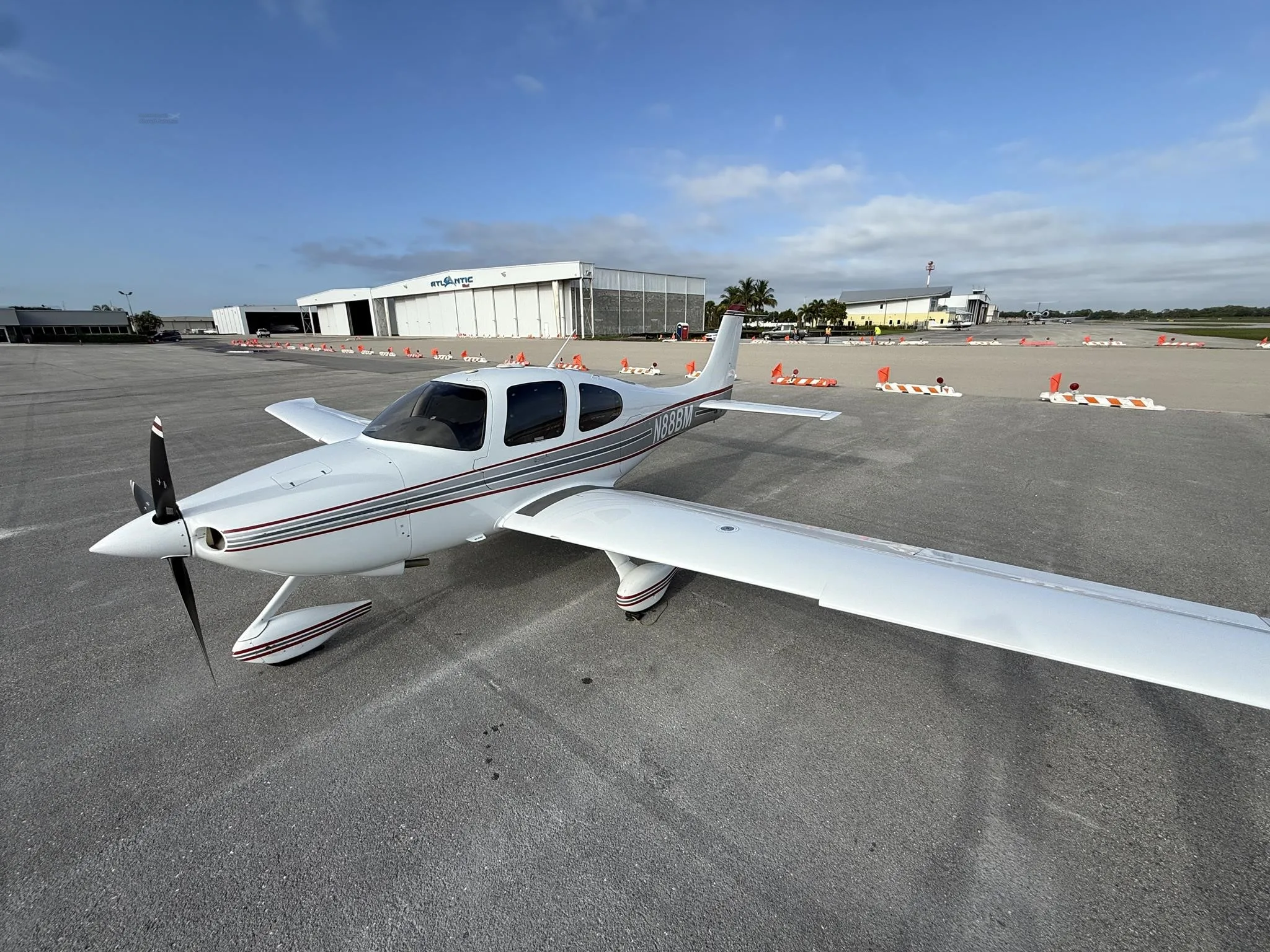
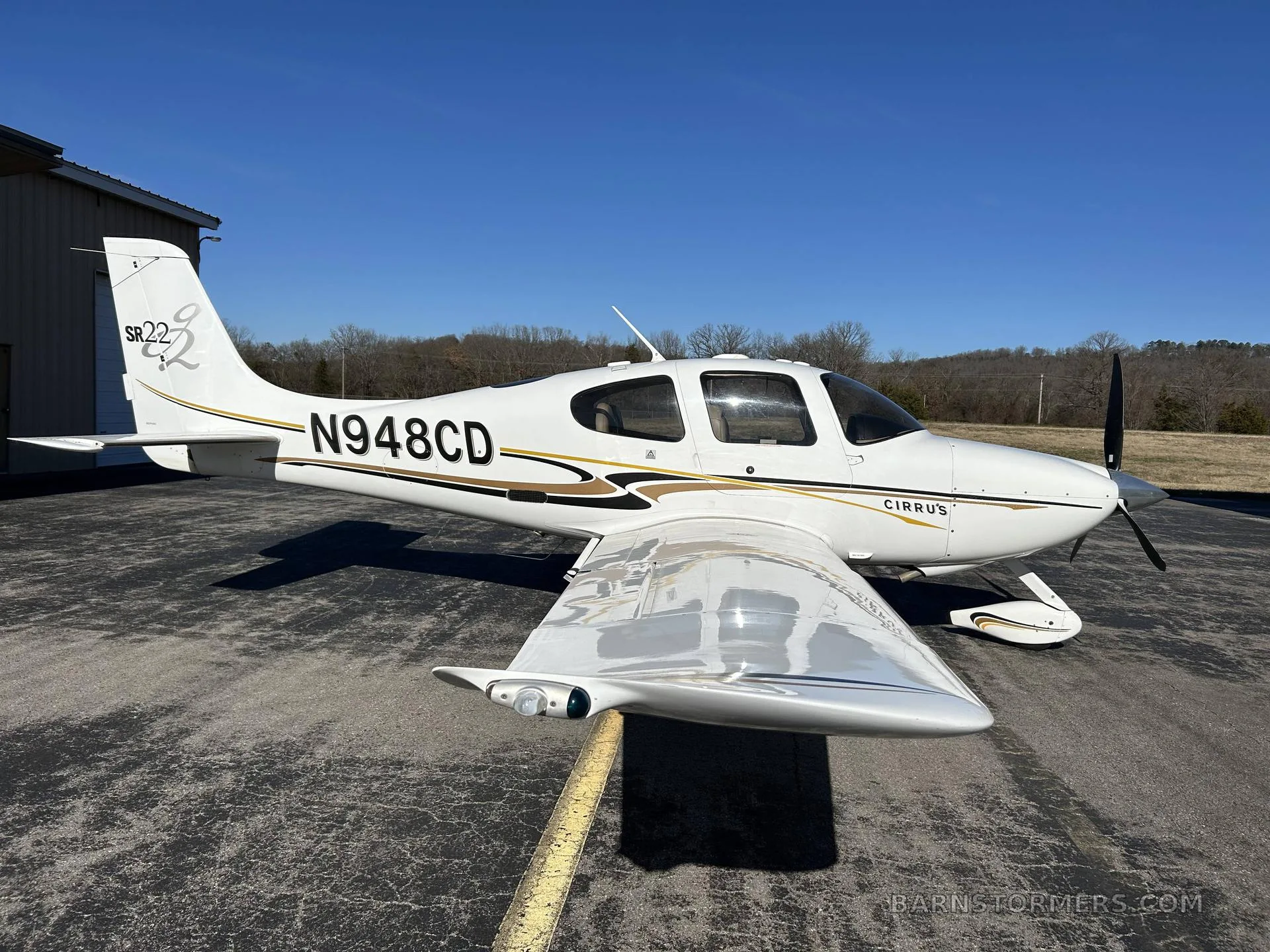
Free — save the SR22 G2 to your watchlist and track it in one place.
More Cirrus SR22 G2manuals & documents
- UMX Cirrus SR22T BNF BasicParts Catalog
- ForeFlight Performance Planning GuidePerformance Data
- PILOT’S OPERATING HANDBOOK AND FAA APPROVED AIRPLANE FLIGHT MANUAL for the CIRRUS DESIGN SR22Pilot's Operating Handbook
- Tornado Alley Turbo, Inc. TAT SB10-02, Rev. BService Bulletins
- TECHTALK • Cirrus sr20/sr22 MODel HistOry 1999-2007Service Bulletins
- Pilot’s Operating HandbookPilot's Operating Handbook
- Tornado Alley Turbo, Inc. TAT SB07-01Service Bulletins
- Supplemental Type CertificateType Certificate
- Cirrus Aircraft Maintenance ManualMaintenance Manual
If you fly the Cirrus SR22 G2, you may also be researching these.



In this document
Understanding CHT Limits
The article emphasizes the importance of maintaining cylinder head temperatures (CHT) within safe limits to avoid engine damage. For Continental engines, a maximum CHT of 460°F is noted, while for Lycoming engines, the limit is 500°F. However, pilots are advised to keep CHTs below 400°F for Continental and 420°F for Lycoming engines to ensure longevity.
Diagnosing High CHTs
The article outlines three common reasons for elevated CHTs: running too lean, insufficient cooling airflow, and advanced ignition timing. Each issue has specific diagnostic steps, such as testing mixture settings and inspecting cooling baffles.
Adjusting CHT Targets
Pilots are encouraged to set personal CHT targets lower than the maximum limits, with suggested targets of 380°F for Continental engines and 400°F for Lycoming engines. These targets help maintain engine health and prevent overheating.
Impact of Outside Air Temperature
The article notes that CHT targets should be adjusted based on outside air temperatures and the efficiency of the aircraft's cooling system. For colder temperatures, targets should be lowered by about 20°F.
Ignition Timing Considerations
Proper ignition timing is crucial for managing CHTs. The article discusses the historical context of timing settings for the Lycoming IO-360 engine and how adjustments can lead to improved CHT performance.
Safety notes
- Allowing CHTs to exceed redline can lead to catastrophic engine failure.
- Maintain CHTs below recommended targets to ensure engine longevity.
Full document text
AOPA PILOT / October 2021 90 RUDDER & W RENCH S AV V Y M A I N T E N A NCE / OP INION Hot-heads What to do about uncomfortably high CHT BY MIKE BUSCH way engines are instrumented when they run on General Aviation Modifications Inc.’s (GAMI’s) engine test stand in Ada, Oklahoma—one of the most sophisticated piston aircraft engine test facilities in the world. But it’s not practical to install this sort of instrumentation in our aircraft, so CHT is our best proxy for internal cylinder pressure (ICP). If we want to protect our engines against excessive ICP, we need to limit CHT to a reasonable value. What’s reasonable CHT? Just this week, I received an inquiry from the owner of a Van’s RV complaining that he simply couldn’t keep the CHTs on his Lycoming IO-360 engine below 370 degrees Fahrenheit no matter how hard he tried, and asking for my advice. I explained that 370 degrees F was not a realistic CHT limit for his engine, and in fact was a bit FOR DEC A DE S, I’ve been preaching that the two keys to piston aircraft engine longevity are avoiding extended periods of disuse and managing cylinder head temperatures. If you allow your engine to sit unflown for weeks at a time, you risk internal corrosion—and corrosion is the number one reason that engines fail to make time between overhauls (TBO). If you allow your CHTs to get too hot, you increase the stress on the engine’s reciprocating components (especially connecting rod bearings and bushings, piston pins, and valves), and increase the risk of catastrophic failure from destructive detonation, preignition, and head-to-barrel separation. In a perfect word, we would have sensors in each of our cylinders measuring peak combustion chamber pressure and instrumentation that would let us see this in the cockpit. This is exactly the Savvy Maintenance coverage sponsored by AIRCRAFT SPRUCE Visit AOPA.org/creditcard to learn more. *Certain points and purchases restrictions apply, see full Rewards Terms and Conditions for full details at AOPA.org/creditcard. 1. Rewards points can be redeemed for Cash Back or other items pro- vided through AOPA Pilot Rewards. A Cash Back redemption is applied as a statement credit. The statement credit will reduce your balance but you are still required to make at least your minimum payment. A minimum of 2,500 points is needed to redeem for Cash Back. Values for non-cash back redemption items such as merchandise, gift cards, and travel may vary. 2. Please note that merchants self-select the cat- egory in which transactions will be listed and some merchants may be owned by other companies, therefore transactions may not be counted in the category you might expect. Purchases made using Near Field Communication (NFC), virtual wallets, or similar technology may not be eligible for bonus points. 3.You will earn 4% Cash Back (1 regular point + 3 bonus points = 4%) for every $1 of Net Merchandise Purchas- es on select AOPA purchases, 3% Cash Back (1 regular point + 2 bonus points = 3%) for every $1 of Net Merchandise Purchases made at select AOPA partners, 2% Cash Back (1 regular point + 1 bonus points = 2%) for every $1 of Net Merchandise Purchases made at FBOs (fixed based operators), aviation and auto fuel, and flight schools, and 1% Cash Back (or 1 point) for every $1 of other Net Merchandise Purchases. For example, if you spend $100, you will earn 100 points which is equal to $1 in Cash Back rewards. A maximum of 2,500 bonus points will be awarded per calendar quarter, per rewards account. Please allow up to five business days after the transaction posts to your account for bonus points to be awarded. Cash Back1 on purchases at FBOs & Flight Schools2-3 and on purchases of Aviation & Auto Fuel2-3 2% A CASH BACK 1 REDEMPTION IS APPLIED AS A STATEMENT CREDIT. QUARTERLY BONUS POINT CAP OF 2,500 POINTS FINALLY! A CARD FOR PILOTS. 2109p_R&W.indd 90 2109p_R&W.indd 90 8/18/21 1:42 PM 8/18/21 1:42 PM AOPA PILOT / October 2021 91 Continental head-to-barrel separation. cooler than optimal. I’m not sure where he got the idea that he should limit his CHTs to that extreme. With some exceptions, I like to see CHTs no greater than about 400 degrees F for Continental engines and 420 degrees F for Lycomings to avoid stresses that may be detrimental to engine and cylinder longevity. Statistical studies from my company’s database of engine monitor data show that Lycoming CHTs run about 20 degrees F hotter than Continental CHTs, and for good engineering reasons— chiefly Lycoming’s use of sodium-filled exhaust valves that transfer heat from the valve to the head more efficiently than the solid-stem valves Continental uses. Lycoming cylinders are built to take this additional heat, with a more robust head- to-barrel junction. This is reflected in Lycoming’s higher redline CHT of 500 degrees F compared with Continental’s redline of 460 degrees F. It’s important to understand that these CHT redlines should be treated as emergency values only. We never want to let our CHTs get anywhere near that hot. (I once reviewed engine monitor data from a Continental-powered Cirrus SR22 whose pilot allowed one cylinder’s CHT to slowly rise to 466 degrees F—just 6 degrees F above redline—at which point the cylinder’s head abruptly separated from the barrel and the pilot found himself flying behind a five-cylinder engine that was running rough as a cob.) Personally, I like to leave myself a little cushion, so I’m inclined to set CHT targets of about 380 degrees F for Continentals and 400 degrees F for Lycomings. These aren’t not-to-exceed values, they’re just comfortable targets. A good way to think of them is to imagine a CHT gauge with a green arc that tops out at these targets, followed by a yellow arc that extends 20 degrees F higher and terminates with a redline. This is different from the actual markings on your CHT gauge, which probably has a green arc extending all the way up to the manufacturer’s redline of
Show full textShow less
460 or 500 degrees F, but it’s good mental image to use to ensure maximum engine and cylinder longevity. These numbers should be adjusted for some special situations. They should be adjusted downward by 20 degrees F or so if you’re flying in unusually cold outside air temperatures (below ISA), and also if your airplane has an extraordinarily efficient cooling system (e.g., Cirrus, Columbia, Diamond). Also, the not-to-exceed values should be increased by about 20 degrees F when breaking in new or newly honed cylinders because CHTs naturally run hotter than usual for the first few hours until break-in is complete. Also, while we don’t want CHTs to be too hot, we don’t want them to be too cool, either. If CHTs get cool enough, there may be lead scavenging issues that cause excessive deposit buildup in the combustion chamber and particularly on exhaust valve stems, resulting in valve sticking issues (especially in Lycomings). For this reason, I suggest your mental CHT green arc extend downward to about 350 degrees F for Lycomings or 330 degrees F for Continentals, with a yellow arc below. That’ll keep you in the sweet spot. Keep in mind there’s nothing magic about any of these numbers. Nothing terrible will happen if a CHT runs in the “mental yellow arc” or if there a brief exceedances above the “mental redline.” I’m offering them only as suggestions, not commandments or operating limitations. Cures for hot cylinders You ought to be able to keep your CHTs in the sweet spot if you’re paying attention. But what if you can’t? In that case, you need to diagnose why your cylinders are running too hot. There are three common reasons for high CHTs, and your mission (if you accept it) is to figure out which one is the culprit. One common reason is that the too- hot cylinder is running too lean. If it’s a fuel-injected engine, perhaps there’s a partially clogged fuel nozzle; if the engine is carbureted, maybe there’s an induction system leak. This issue is super easy to diagnose. Simply do a test flight in which you first cruise with a rich-of-peak (ROP) mixture and then switch to a lean-of-peak (LOP) mixture. If a cylinder is running too lean, it’ll have higher-than-normal CHT during ROP operation and lower- then-normal CHT during LOP operation. Frequently such a cylinder will “switch rank” from being the hottest cylinder when ROP to being the coolest cylinder when LOP. If you see this, you can be sure the cylinder in question has a mixture issue. A second common reason for a hot- running cylinder is that there isn’t sufficient cooling air passing over the cylinder’s cooling fins. That’s generally due to some issue with the engine’s rigid 2109p_R&W.indd 91 2109p_R&W.indd 91 8/18/21 1:42 PM 8/18/21 1:42 PM AOPA PILOT / October 2021 92 RUDDER & W RENCH It’s almost impossible to achieve accurate ignition timing with an old-fashioned “flowerpot” timing indicator. Always use a modern digital inclinometer. cooling baffles or flexible baffle seals. If there’s a cooling air problem, the cylinder will run hot both ROP and LOP since the cooling airflow isn’t affected by the mixture setting. If you suspect this might be the issue, you may want to look at my column “It’s Baffling” in the December 2020 issue of AOPA Pilot for some tips. A third common reason for too-high CHT—particularly when all cylinders are running hot—is advanced ignition timing. Your magneto (or electronic ignition) is supposed to be set to a specific number of degrees before top dead center (BTDC) that is marked on the engine data plate— typically between 20 degrees and 28 degrees BTDC. It is essential that the timing be set very accurately—the tolerance is plus 0 degrees and minus 1 degree—and it should be set using a digital inclinometer accurate to 0.1 degrees. If the timing of one or both mags is even slightly advanced (i.e., too many degrees BTDC), it will have a profoundly adverse effect on CHT. The Lycoming IO-360-series offers an interesting case study. When the IO-360 was originally certified, Lycoming specified that the magneto timing be set to 25 degrees BTDC—a relatively aggressive value. But the engines had so many issues with excessive CHTs that Lycoming subsequently issued a service bulletin authorizing the engine timing to be retarded to 20 degrees BTDC. Making this timing change had an insignificant effect on horsepower but a dramatic improvement in CHT. Since the timing change was authorized by noncompulsory service bulletin rather than compulsory airworthiness directive, we now have a mixture of IO-360s flying, some timed to 25 degrees BTDC and some to 20 degrees BTDC. When I generate a CHT histogram of the thousands of IO-360s in our database, I see two distinct peaks in the data. Curiously, the Lycoming service bulletin applied only to the IO-360 family, not the O-360s, O/IO-320s, or O/IO-540s, all of which remain specified at 25 degrees BTDC. I’ve counseled numerous operators of RVs and other experimental aircraft using these engines to try retarding their ignition timing by a couple of degrees, and they’ve been very pleased with the results. I can’t really offer the same advice to operators of certified aircraft, but at least backing the timing off to 24 degrees BTDC (the bottom of the tolerance band) will provide some improvement. mike.busch@savvyaviation.com savvyaviation.com Ask the A&Ps / Every month, experts Mike Busch, Paul New, and Colleen Sterling answer your toughest aviation maintenance questions on our Ask the A&Ps podcast. Submit your questions to podcasts@aopa.org. aopa.org/news-and-media/ podcasts/podcasts/ask-the-a-and-ps Switch today to the AOPA World Mastercard® , and stop paying too much on your aviation purchases. Visit AOPA.org/creditcard to learn more. *Certain points and purchases restrictions apply, see full Rewards Terms and Conditions for full details at AOPA.org/creditcard. 1. Rewards points can be redeemed for Cash Back or other items pro- vided through AOPA Pilot Rewards. A Cash Back redemption is applied as a statement credit. The statement credit will reduce your balance but you are still required to make at least your minimum payment. A minimum of 2,500 points is needed to redeem for Cash Back. Values for non-cash back redemption items such as merchandise, gift cards, and travel may vary. Cash Back1 Every Purchase 1% A CASH BACK 1 REDEMPTION IS APPLIED AS A STATEMENT CREDIT. QUARTERLY BONUS POINT CAP OF 2,500 POINTS FINALLY! A CARD FOR PILOTS. 2109p_R&W.indd 92 2109p_R&W.indd 92 8/18/21 1:43 PM 8/18/21 1:43 PM
1,001 Cirrus SR22 G2 parts for sale
See all →




Parts listed for sale by vetted eBay sellers — confirmed on eBay at checkout.