Accident Prevention Vol. 55 No. 7
Beechcraft 1900D · Other Documents
Overview
This document is an accident report detailing the events surrounding a rejected takeoff of a Beechcraft 1900D on January 10, 1997, at Bangor International Airport. It highlights the factors leading to the incident, including inadequate training and procedural failures by the flight crew and airport personnel. The report is based on the investigation by the U.S. National Transportation Safety Board (NTSB) and aims to provide insights into safety improvements for the Beech 1900D operations. It serves as a critical resource for pilots and aviation safety professionals, emphasizing the importance of proper training and adherence to operational procedures in preventing accidents.
- The Beech 1900D has a maximum takeoff weight of 16,950 pounds (7,704 kg).
- Stalling speed at maximum takeoff weight with flaps retracted is 101 knots.
- The aircraft is powered by two Pratt & Whitney Canada PT6A-67D engines, each rated at 1,279 shaft horsepower.
- Inadequate training and procedural failures contributed to the accident.
- The NTSB recommended updates to the pilot operating handbook for better stall-warning procedures.
Document
Source
Originally published by flightsafety.org. Sprinkle hosts a reference copy with an added summary, specifications and searchable full text.
Document details
- Type
- Other Documents
- Year
- 1998
- Pages
- 8
- File size
- 98 KB
- Publisher
- flightsafety.org
Common. Rarer than 1% of the aircraft models we track.
Most owners only have the POH. Here's the essential set for the Beechcraft 1900D.
- Pilot's Operating Handbook / AFM
- Checklist
- Maintenance Manual
- Parts Catalog (IPC)
- Systems & Wiring
- Service Bulletins
- Type Certificate (TCDS)
Beechcraft 1900D for sale now
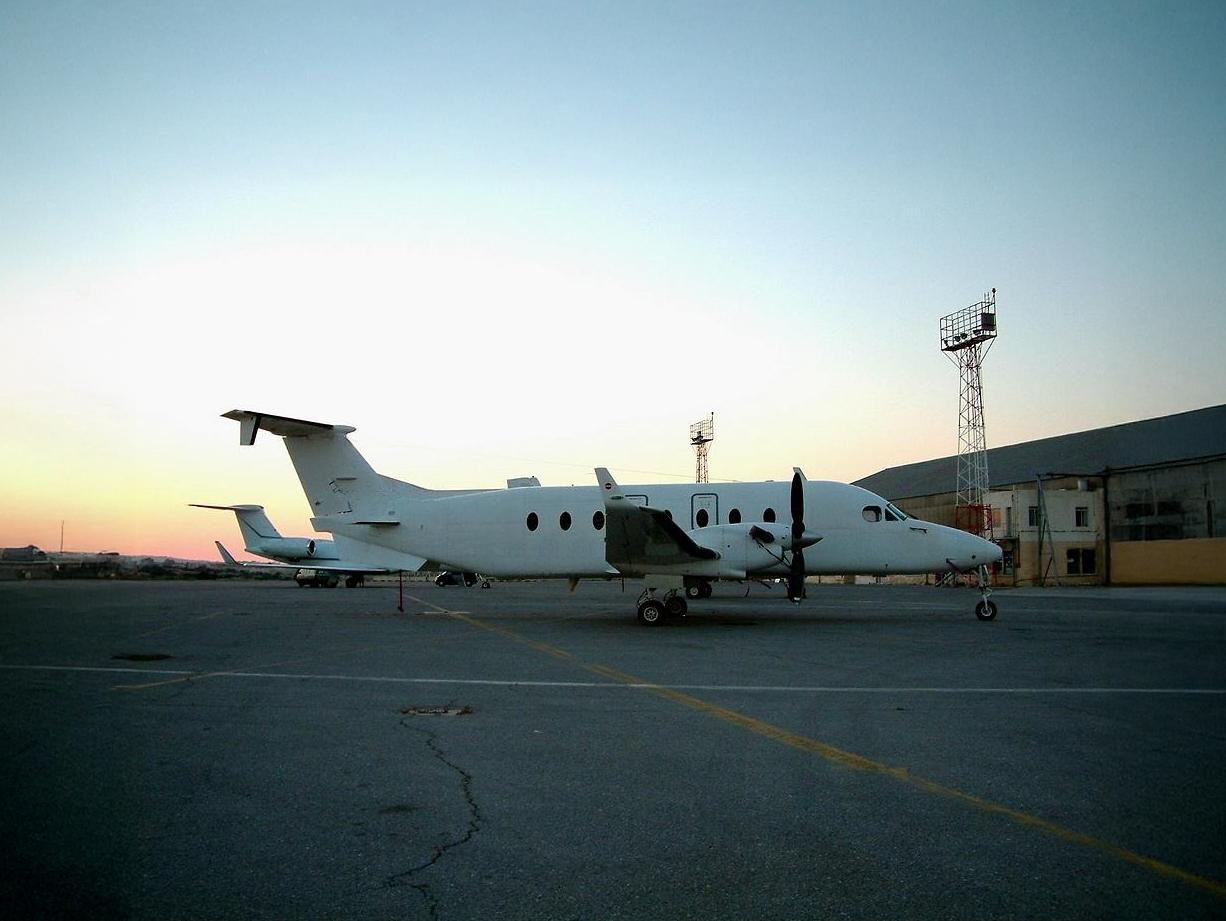


Free — save the 1900D to your watchlist and track it in one place.
More Beechcraft 1900Dmanuals & documents
See all 33 →- SAFETY INVESTIGATION REPORTOther Documents
- Fuel Consumption of the 50 Most Used Passenger AircraftOther Documents
- Type Acceptance Report TAR 98/07 – Beech 1900 SeriesOther Documents
- Airline Transport Pilot Oral Exam Guide—BE-1900 SystemsPilot's Operating Handbook
- BART: MAY - JUNE - 2020Other Documents
- THE FULLY INTEGRATED, ALL-GLASS UPGRADE FOR THE BEECH 1900D GARMIN® G950 NXi RETROFITAvionics Manual
- SERVICE BULLETIN INDEX - April 27, 2017Service Bulletins
- Master Minimum Equipment List (MMEL)Emergency Procedures
- FINAL REPORT ACCIDENT OF M/S. AIRCRAFT SALES AND SERVICES BEECHCRAFT-1900D AIRCRAFT, REG. NO. AP-BII ON 18TH MARCH, 2016 AT JIAP, KARACHIOther Documents
- Advisory Circular Subject: Airworthiness DirectivesSupplemental Type Certificate
- Aircrew Quick Reference Guide to the METAR and TAF CodesV Speeds Reference
- C&L AerospaceService Bulletins
If you fly the Beechcraft 1900D, you may also be researching these.


In this document
Accident Overview
The report details an incident where a Beech 1900D, operated by Mesa Airlines as USAir Express Flight 5326, experienced a stall warning during takeoff. The captain aborted the takeoff after the aircraft was airborne, leading to a collision with a snowbank. Fortunately, there were no serious injuries among the crew and passengers.
Contributing Factors
The NTSB identified several contributing factors to the accident, including inadequate winter operations training for the flight crew, the captain's decision to abort takeoff after reaching V1, and improper snow removal procedures at the airport. The stall warning was triggered by ice contamination on the stall-warning vane.
Aircraft Specifications
The Beech 1900D is a twin-turboprop regional transport aircraft powered by two Pratt & Whitney Canada PT6A-67D engines, each rated at 1,279 shaft horsepower. It has a maximum takeoff weight of 16,950 pounds and a maximum landing weight of 16,600 pounds. The aircraft's stalling speed at maximum takeoff weight is 101 knots.
Training and Procedures
The report emphasizes the need for comprehensive training in winter operations, including specific procedures for deicing and stall recovery. The NTSB recommended that the Beech 1900 pilot operating handbook be updated to include checks for the stall-warning vane during preflight inspections and to conduct stall-warning tests before takeoff in icing conditions.
Recommendations
The NTSB made several recommendations to improve safety, including ensuring that stall-warning systems are checked before each flight, especially in winter conditions, and that pilots receive adequate training in recognizing and responding to stall warnings.
Safety notes
- Inadequate flight and winter-operations training contributed to the accident.
- The stall-warning vane must be checked during preflight inspections, especially in winter conditions.
Full document text
F L I G H T S A F E T Y F O U N D A T I O N Accident Prevention Vol. 55 No. 7 For Everyone Concerned with the Safety of Flight July 1998 After Beech 1900D Lifts off from Runway, Stall Warning Prompts Crew to Reject Takeoff On Jan. 10, 1997, a Beech 1900D was taking off from Bangor (Maine, U.S.) International Airport when the stall-warning horn sounded. The captain commanded an abort after the aircraft was airborne. During the subsequent landing, the aircraft struck a snowbank on the runway and was substantially damaged. The flight crew and seven passengers were not injured; two passengers sustained minor injuries. In its final report on the accident, the U.S. National Transportation Safety Board (NTSB) said that the probable causes of the accident were: • “The inadequate flight and winter-operations training provided by the operator; [and,] • “The pilot’s improper decision to abort the takeoff while airborne above V1, due to a false stall warning.” [At the time of the accident, V 1 was defined by U.S. Federal Aviation Regulations (FARs) Part 1 as “takeoff-decision speed.”] “Also causal was the airport operations [personnel’s] improper decision to discontinue [snow] plowing and their failure to remove a snow pile [from] the runway,” said the NTSB. “Factors relating to the accident were an easterly crosswind; the narrow, icy runway conditions; inadequate FAA [U.S. The aircraft was substantially damaged when it collided with a snowbank during the rejected takeoff, but there were no serious injuries. The U.S. National Transportation Safety Board said that inadequate training of the flight crew and the captain’s improper decision to reject the takeoff after the aircraft had reached takeoff-decision speed were the probable causes of the accident. FSF Editorial Staff Federal Aviation Administration] oversight in allowing the operator to continue operations with an inadequate training program that continued over several years; and the manufacturer’s checklist, which delayed the activation of the stall vane heat until just prior to takeoff.” The aircraft was operated by Mesa Airlines as USAir Express Flight 5326. On the day of the accident, the flight crew flew the aircraft from Boston (Massachusetts, U.S.) to Bangor, arriving at 0856 local time. They were scheduled for a quick turnaround at Bangor and a return flight to Boston that morning. The captain, 32, had an airline transport pilot (ATP) certificate and a Beech 1900 type rating. He had 5,800 hours of flight time, including 350 hours in type. He was hired by Mesa Airlines in October 1994 and had flown as an Embraer 120 first officer before his assignment as a Beech 1900 captain in July 1996. “During an interview with the captain, he stated that he had received no crew resource management (CRM) training,” said the NTSB. “He recalled that he did receive ‘some’ winter- operations training during his initial-hire training in October 1994. He also stated that he was unfamiliar with operations in snow conditions and that this was only his third takeoff and landing in snow.” 2 FLIGHT SAFETY FOUNDATION • ACCIDENT PREVENTION • JULY 1998 “The [first officer] did not recall any winter-operations or deicing training but did state that winter operations were ‘mentioned’ in the company flight manual and general- operations manual.” The NTSB said that the company’s training manual did not have specific procedures for winter-operations training. “Specific curricula or training modules for winter operations — including airplane-surface contamination, airplane performance and flight characteristics with surface contamination, cold-weather preflight-inspection procedures and techniques for recognizing contamination on the airplane — were not specifically mentioned in the training manual,” said the NTSB. “Stall training provided by the operator did not include BE1900 simulators, and all recoveries were initiated at the stall horn,” said the NTSB. “The FAA practical test standard for type ratings required the recognition of the stall buffet, stick shaker or decay of control effectiveness.” “Multiple FAA inspections over several years revealed [that] the operator was not in compliance with regulations, which included their training program; however, they continued to operate unrestricted,” said the NTSB. Instrument meteorological conditions existed at the Bangor airport on the morning of the accident. The current automatic- terminal-information-service (ATIS) report, identified as Information Foxtrot, said that the surface winds were from 060 degrees at 10 knots, the visibility was one-half statute mile (0.8 kilometer) in snow and fog, the ceiling was 200 feet (61 meters), the temperature and the dew point both were minus six degrees Fahrenheit (minus 21 degrees Celsius), and Runway 33 was in use. Witnesses described the consistency of the snow as dry and the snowfall intensity as moderate to heavy. Airport- maintenance personnel had begun to clear accumulated snow from Runway 33, which was 11,439 feet (3,466 meters) long and 300 feet (91 meters) wide. The snow-removal operation was discontinued before the entire surface of the runway was cleared of accumulated snow. “At 0815, the FAA [Bangor] air traffic control tower advised the plow crews to [vacate] the runway, due to a Boeing 727 that was to depart in five minutes,” said the NTSB. The snow- removal crews and equipment actually vacated the runway at 0855. “The [airport] maintenance supervisor stated that, at that time, Runway 15-33 had been plowed 150 feet [46 meters] east [of the runway centerline] and 75 feet [23 meters] west of the centerline,” said the NTSB. “The supervisor reported that the plowed area was covered with a light dusting of snow less than one-quarter inch [0.6 centimeter] high and [that] braking action was ‘fair.’” The first officer, 28, had an ATP certificate and 4,100 hours of flight time, including 1,065 hours in type. She was hired by
Show full textShow less
Mesa Airlines in September 1995 and had served as a first officer in Beech 1900s. “During an interview with the [first officer], she stated that she had received ‘a good one and one-half hours of CRM’ during her recurrent training in August 1996,” said the NTSB. Beech 1900D The Beech 1900D is a twin-turboprop regional transport that entered service in 1991 and currently is manufactured by Raytheon Aircraft Co. The airplane is a derivative of the Beech 1900, which first flew in 1982. The 1900D has a flat floor, a maximum cabin height of 5.9 feet (1.8 meters) and 28.5 percent more cabin volume than its predecessor, the Beech 1900C. Standard accommodation is for two flight crew members and 19 passengers. The airplane is powered by two Pratt & Whitney Canada PT6A-67D engines, each flat rated at 1,279 shaft horsepower (954 kilowatts), and Hartzell four-blade, composite propellers. Maximum takeoff weight is 16,950 pounds (7,704 kilograms). Maximum landing weight is 16,600 pounds (7,546 kilograms). Maximum cruising speed at 15,000 pounds (6,818 kilograms) gross weight and 25,000 feet altitude is 274 knots. Stalling speed at maximum takeoff weight with flaps retracted is 101 knots. Source: Jane’s All the World’s Aircraft FLIGHT SAFETY FOUNDATION • ACCIDENT PREVENTION • JULY 1998 3 The airport maintenance supervisor also said that piles of snow at the edges of the plowed area of the runway were one foot [0.3 meter] high and 10 feet [three meters] wide. The piles were created by the snow-plowing operation and the drifting of snow. Because of the snowfall, the flight crew elected to have the Beech 1900D deiced before takeoff. The deicing with 39 gallons [150 liters] of Type 1 fluid (a heated mixture of glycol and water) was accomplished between 0912 and 0917. “According to the captain and the deicing crewmembers, the deicing began with the left wing, then proceeded counterclockwise to the tail, right wing, then to the nose of the fuselage,” said the NTSB. The NTSB said that this deicing sequence did not conform with company procedures. Mesa Airlines operations specifications said, “The left wing will be deiced first with the deicing accomplished in a clockwise fashion. This will ensure the aircraft tail is deiced last.” The cockpit voice recorder (CVR) transcript shows that at 0918:31, after the aircraft’s engines were started, the captain (the pilot not flying) told the first officer (the pilot flying) that the engine ice vanes were extended. The crew requested departure on Runway 33 from the intersection of Taxiway Kilo, which provided 8,120 feet of runway for takeoff. The crew was cleared to take off from the intersection at 0921:05. At 0921:10, the captain said, “Takeoff final items.” The NTSB said that among the tasks recommended on the takeoff-final-items checklist when icing conditions exist are activation of fuel-vent heat, pitot heat, alternate static-system heat and stall-warning-vane heat. At 0921:21, the first officer said, “Ice protection.” At 0921:22, the captain said, “Extended six plus props, and I’ll turn the windshield [heat] on as soon as we’re airborne.” The captain explained during the investigation, that “extended” meant that the engine ice vanes were extended and “six” meant that the switches were set for left and right fuel-vent heat, left and right pitot heat, alternate static heat and stall-warning- vane heat. Mesa Airlines operations specifications for ground-icing conditions said, “The pilot-in-command is responsible to ensure [that] his or her aircraft is free from snow, ice or frost contamination prior to each takeoff. A visual inspection must be accomplished within five minutes of takeoff. The visual Cockpit Voice Recorder Transcript, USAir Express Flight 5326, Jan. 10, 1997 Time Source Content 0917:00 HOT-2 clear right. 0917:02 HOT-1 * uh, roger. 0917:05 CAM-B [repetitive ramping sound similar to engine ignition] 0917:25 CAM [sound similar to aircraft engine being started] 0917:36 CAM [sound similar to altitude alert signal] 0917:59 CAM-B [repetitive ramping sound similar to engine ignition] 0918:13 HOT-1 I’d take it from Kilo too, if you want. you know, flying with @ every time I have to tell him, every time. he always have to call ground twice he can’t say it on the first time either. 0918:25 HOT-2 [sound of chuckle] 0918:26 CAM [sound similar to altitude alert signal] 0918:31 HOT-1 ice vanes are extended, avionics masters on, AC buses on checked, EFIS aux power, is on … 0918:36 INT-3 Welcome aboard. The Beechcraft 1900 airlines has many features for your comfort and safety. Please take a moment to review the safety briefing card located in the seat pocket in front of you. There are four emergency exists that could be used in the unlikely event of an emergency evacuation. There are two exits over the right wing, one over the left wing and the door through which you entered. To operate the over wing exits, push the seat back forward, pull the red handle down while pulling the exit toward you, then discard the exit out the opening. To operate the air stair door, press the button while pulling up on the handle, then push the door open. For those passengers seated in row four on the right side and both seats in row six, please be advised you are sitting in an emergency exit seat. Federal regulations require you to review the passenger briefing card in your seat back pocket which outline certain requirements which must be met. There are specific functions you must be willing and able to perform. If you cannot meet the requirements outlined on the card, or you feel you may be harmed or cannot perform the functions listed, or do not choose to perform these functions, please identify yourself to a crew member at this time, so that you may be re-seated. There are two fire extinguishers on board. One is located under the right side pilot seat and the other is located on the coat closet wall. To operate the extinguisher, pull the pin, aim at the base of the flames, and squeeze the handle. This aircraft is pressurized for your comfort. Should oxygen use become 4 FLIGHT SAFETY FOUNDATION • ACCIDENT PREVENTION • JULY 1998 inspection procedure is as follows: The flight crew … will look at their respective wings (that portion visible from the cockpit) and visually ensure the wing is free from contamination.” At 0921:28, the captain said, “Roger and uh, my wing is, clean.” At 0921:28, the first officer said, “So is mine.” The crew had calculated V1 to be 108 knots, VR (rotation speed) also to be 108 knots and V2 (takeoff safety speed) to be 118 knots. At 0920:03, while conducting the takeoff briefing, the captain had said, “Engine failure, fire prior to V one, pilot noting the malfunction [will] call abort … abort abort, flying pilot [will] abort the takeoff, any indication malfunction … bring it to my attention, I decide, abort [or] continue the takeoff.” At 0921:59, the CVR transcript shows that engine power was increased for takeoff. At 0922:09, the first officer told the captain to set takeoff power. At 0922:12, the captain said, “Eighty knots cross checked.” [This means that he observed that his airspeed indicator and the first officer’s airspeed indicator both were showing 80 knots.] At 0922:17, the captain said, “The wind is from the rrrright.” [The NTSB said that excess letters were included in the CVR transcript to represent phonetically how words were spoken.] The captain later said that he believed that the airplane was drifting “a little to the left,” but that after he reminded the first officer of the crosswind, she corrected the aircraft’s track. At 0922:19, the captain said, “V one rotate.” The first officer said that she pulled the control wheel back with both hands and increased pitch to coincide with the flight- director command bars in her electronic attitude-director indicator. Both pilots said that they heard the stall-warning horn begin to sound during rotation. The first officer said that she released back pressure on the control wheel and observed that the airspeed indicator was showing 120 knots. She then applied more back pressure on the control wheel. She said that the airplane lifted off the runway but felt “sluggish.” The captain said that he was confused by the stall-warning horn. “The captain said he felt that the airplane was not climbing,” said the NTSB. “He did not remember looking at the altimeter and did not remember calling ‘positive rate’ [a call normally made when the vertical-speed indicator shows a positive rate 0918:36 INT-3 necessary, a mask will be automatically deployed near your seat. Simply place the mask over your nose and mouth and breathe normally. If you are traveling with a small child, put your mask on first, then assist the child. Seatbelts must be worn for takeoff and landing. We suggest for your safety, that you keep your seatbelt securely fastened at all times. To fasten your seatbelt, insert the metal tab into the buckle, and tighten by pulling the strap. To release the belt, pull up on the face of the metal buckle. Federal regulations prohibit smoking on board this aircraft at all times. Federal regulations also prohibit the operation of portable electronic devices on board the aircraft, since they may interfere with the aircraft’s navigation equipment. At this time, please be sure that all carry on items are stowed under the seat in front of you. Also check to see that your seat back and tray table, are in an upright and locked position. Once again, welcome aboard. We ask now that you sit back, relax and enjoy the flight. 0918:36 RDO-2 ground, Air Shuttle fifty three twenty six, IFR to Boston, and also requesting a three three Kilo departure * intersection. 0918:41 HOT-1 load meters parallel within **, lights ** CVR’s checked, brakes are released, checked. 0918:43 GND is that Air Shuttle fifty three twenty six? 0918:45 RDO-2 yes sir. 0918:47 GND Air Shuttle fifty three twenty six taxi runway three three Kilo intersection departure approved. understand you have Foxtrot? 0918:51 RDO-2 yes sir. 0918:52 GND OK, I have your clearance when ready. 0918:54 RDO-2 ready. 0918:55 GND Air Shuttle fifty three twenty six is cleared to the Boston airport as filed. fly runway heading on departure. maintain one zero thousand. expect one two thousand, one zero minutes after departure. departure control frequency will be one two five point three. squawk four six five three. 0919:10 RDO-2 we’re cleared as filed, runway heading, ten twelve in ten minutes twenty five three, four six five three. 0919:14 GND that’s correct 0919:16 HOT-1 before takeoff check list it looks good on your side doesn’t it, nope snow banks? 0919:19 HOT-2 it, it does man you you, missed ’em. 0919:24 HOT-1 OK, before takeoff check list when you get a chance. 0919:32 HOT-2 briefings rollin’, pressurization is set. three trim tabs set set plus three. flaps set indicating zero, manual feathering? 0919:38 HOT-1 checked. 0919:39 HOT-2 avionics and radar set for departure, flight instruments? (continued) FLIGHT SAFETY FOUNDATION • ACCIDENT PREVENTION • JULY 1998 5 of climb]. The captain said he had never heard the stall-warning horn on takeoff. The first officer said she had experienced hearing a stall-warning horn on takeoff twice previously.” “The captain said he knew the airplane was in the air but [sensed that] it had a sluggish climb. He said he could see the runway while the airplane was airborne. The stall warning kept sounding, but there was no buffet. The airplane did not feel like it was climbing so the captain said he commanded, ‘Doris, abort! Abort!’ The captain said he did not recall looking at the instruments. “The first officer estimated the airplane was approximately 20 feet [six meters] in the air when the captain commanded, ‘Abort! Abort!’ She said she [moved the power levers to idle] — as she described it, ‘eased them back’ — and the airplane contacted the ground approximately on the centerline of the runway. In response to [an investigator’s] question, the first officer stated she was positive the [power levers] were not placed in ‘ground fine’ while airborne. “The captain stated he did not take control of the airplane. He said the first officer reduced the power levers and did not say anything or otherwise acknowledge his command other than by reducing power. He said there was no time to declare an emergency or notify the tower or passengers. “[The first officer said that] as soon as the airplane contacted the ground … ‘visibility went to zero because of the flying snow.’ While the airplane was skidding across the ground, she said she brought the ‘throttles to ground fine’ and felt the captain’s hand on top of hers as she moved the [power levers] into reverse.” Figure 1 (page 6) shows the aircraft’s path. “The airport authority determined that the airplane touched down 7,200 feet [2,189 meters] from the approach end of Runway 33, with the right main landing gear 35 feet [11 meters] to the left of the runway centerline,” said the NTSB. “The track determined from the airplane’s left main gear departed the plowed portion of the runway at 7,802 feet [2,364 meters] at an angle of 329 degrees magnetic.” The measured runway heading was 339 degrees. The nose gear separated as the aircraft traveled 819 feet [248 meters] in the unplowed portion of the runway. The propeller blades then separated from both engines. The NTSB said that at least one of the propeller blades from the right engine contacted the fuselage behind the first passenger seat. The passenger in the first seat on the right side of the cabin (seat 1F) was not hurt. The passenger in the second seat on the right side of the cabin (seat 2F) said that he was thrown forward against his seat belt and could not sit upright. “He then noticed to his right that the ‘side of the plane was coming open,’ and he saw a flash and saw something come through,” said the NTSB. “He instinctively put up his right hand to deflect whatever it was. [He said that] it knocked him out of 0919:43 HOT-1 uuuh, two nine three five set cross checked. 0919:45 HOT-2 flight controls? 0919:48 HOT-1 free and correct. 0919:49 HOT-2 auto-feather? 0919:50 GND Air Shuttle fifty three twenty six runway three three visual range more than six thousand all points. 0919:51 HOT-1 armed. 0919:54 RDO-2 thank you for that. 0919:56 HOT-1 # hard taxi, without centerline. 0919:59 HOT-2 eight, eighteen, twenty two, pilot briefing. 0920:02 HOT-1 set. 0920:03 HOT-1 OK, you gonna make the takeoff, up to uh, three thousand runway heading and engine failure, fire prior to V one, pilot noting the malfunction, call abort … abort abort flying pilot abort the takeoff, any indication malfunction malfunction bring it to my attention, I decide, abort continue the takeoff uh, we do uh, we get vectors to ILS three three as briefed earlier. checklist is in the box. do you have any questions? 0920:26 HOT-2 *. 0920:28 HOT-1 where is the # centerline. 0920:40 HOT-1 I think we will have the vanes extended for takeoff. 0920:42 HOT-2 OK. 0920:43 HOT-1 and all the ice on. it’s the only difference, different thing. 0920:51 HOT-2 all righty then … ready? 0920:56 HOT-1 yeah, I’m ready. 0920:58 RDO-2 * tower, Air Shuttle fifty three twenty six ready, three three Kilo. 0921:01 TWR Air Shuttle, fifty three twenty six Bangor tower, runway three three Kilo, cleared for takeoff. 0921:05 RDO-2 cleared for takeoff, Air Shuttle fifty three twenty six. 0921:10 HOT-1 takeoff final items. 0921:12 HOT-2 lights? 0921:13 HOT-1 got a landing taxi ice. nav beacon strobe, rrrrrrrecog reading. 0921:17 HOT-2 environmental mode bleeds off, transponder altitude auto-ignition? 0921:19 HOT-1 armed. 0921:20 HOT-2 ice vanes? 0921:21 HOT-1 extended. 0921:21 HOT-2 ice protection. 0921:22 HOT-1 extended six plus props and I’ll turn the windshield on as soon as we’re airborne. 0921:26 HOT-2 props are forward annunciators are checked. 0921:28 HOT-1 roger and uh, my wing is, clean. 6 FLIGHT SAFETY FOUNDATION • ACCIDENT PREVENTION • JULY 1998 his seat. He thought it was part of the propeller.” He and the passenger in seat 5F sustained minor injuries during the accident. The aircraft stopped 8,796 feet [2,666 meters] from the approach end of Runway 33. “From the determined touchdown [point] to final stop, the airplane traveled 1,596 feet [484 meters],” said the NTSB. “Although the tracks indicate the airplane departed the plowed portion of the runway, the tracks indicate the airplane did not depart the runway.” The NTSB said, “The captain shut down the engines while the first officer left the cockpit. The first officer said the cockpit door had come open during the accident and she went out to open the main cabin door. She said she may have said something like, ‘OK, let’s get out of here!’ to the passengers but saw the passengers had already opened the overwing exits and were evacuating.” The flight crew did not notify the airport control tower that their aircraft was still on the runway. Another aircraft landed on Runway 33 soon after the Beech 1900 came to a stop on the runway. The captain of the landing aircraft said that he had completed the landing and was taxiing slowly down Runway 33, looking for a taxiway, when he saw the Beech 1900 and people standing around the disabled airplane ahead and to the left of the runway centerline. The air traffic controller said that she issued landing clearance to the other aircraft after observing, on her radar display, the Beech 1900D (Flight 5326) climbing through 400 feet. “I instructed [Flight 5326] to contact departure control and received no response,” said the controller. “I asked [the departure controller] via interphone if he was talking to [Flight 5326]. [He] answered negative. I called [Flight 5326] again and received no response. I visually scanned the runway. At this time, the visibility was increasing. I then observed [Flight 5326] north of Taxiway Mike on Runway 33 facing east. Personnel were observed around the aircraft. I activated the Klaxon … and advised the [control tower] supervisor via interphone of the status of the aircraft.” The captain of the accident aircraft said that, before leaving the accident site, he checked the stall-warning vane, which is mounted on the leading edge of the wing. “[He] found ice had frozen the stall-warning vane in [a fixed] position,” said the NTSB. “He said he wiggled the vane and broke it free of [the] ice holding it in place.” After repairs were completed on the aircraft, ground and flight tests showed that the stall-warning system, including the stall- warning vane heater, was operating within limits. The NTSB said that 10 service-difficulty reports (SDRs) concerning false stall-warning-horn activations were submitted to the FAA by Beech 1900 operators from 1990 through 1996. Flight Path of USAir Express Flight 5326, Bangor (Maine, U.S.) International Airport, Jan. 10, 1997 Figure 1 Note: Diagram is not to scale. Runway 33 was 11,439 feet (3,466 meters) long and 300 feet (91 meters) wide. The runway was cleared of snow for its full length; snow had been cleared 150 feet (46 meters) east of the centerline and 75 feet (23 meters) west of the centerline, for a total cleared width of 225 feet (68 meters). Source: U.S. National Transportation Safety Board 15 X Accident Site 33 N MAGVAR 18.5 ° W Accident Site is 8,796 feet (2,666 meters) from the approach end of Runway 33. Taxiway Mike Taxiway Lima Taxiway Juliet Taxiway Kilo Flight Path Taxiway Kilo is 3,319 feet (1,006 meters) from the approach end of Runway 33. FLIGHT SAFETY FOUNDATION • ACCIDENT PREVENTION • JULY 1998 7 0921:31 HOT-2 so is mine. 0921:32 HOT-1 roger. 0921:34 HOT-1 *** holding clear left. 0921:37 HOT-2 clear right. 0921:44 HOT-1 ooooohhhhh, mercy mercy. 0921:50 HOT-1 you have the controls. 0921:51 HOT-2 I got em. 0921:59 CAM [sound similar to increase in propeller RPM] 0922:03 HOT-1 props topped annunciators checked … two good engines 0922:08 TWR BIZEX four forty six Bangor tower, cleared to land. 0922:09 HOT-2 set takeoff power. 0922:10 446 thank you maam, cleared to land. BIZEX four forty six. 0922:12 HOT-1 eight knots cross checked. 0922:17 HOT-1 the wind is from the rrrright. 0922:19 HOT-1 V one rotate. 0922:21 CAM [sound of horn similar to stall warning starts] 0922:26 HOT-1 abort abort. 0922:28 CAM [sound of horn similar to stall warning stops] 0922:29 HOT-1 abort Doris Doris. 0922:30 CAM [sound of two short beeps similar to landing gear warning horn] 0922:31 CAM [sound of impact] 0922:31 END of RECORDING HOT = Crewmember hot microphone voice or sound source RDO = Radio transmission from accident aircraft CAM = Cockpit area microphone voice or sound source CAM-B = Sound source heard through both pilots audio panels and CAM channel TWR = Radio transmission from the Bangor tower controller GND = Radio transmission from Bangor ground controller 446 = Radio transmission from the BIZEX flight 446 -1 = Voice identified as Pilot-in-Command (PIC) -2 = Voice identified as Co-Pilot (SIC) -3 = Recorded announcement from aircraft public address system * = Unintelligible word @ = Non pertinent word # = Expletive [ ] = Editorial insertion … = Pause Note 1: Times are expressed in local times. Note 2: Words shown with excess letters or drawn-out syllables are a phonetic representation of the words as spoken. Source: U.S. National Transportation Safety Board Two SDRs said that takeoffs were rejected because of the stall warnings; the stall-warning vanes were found to be contaminated with ice; and the ice was removed by activating the stall-warning-vane heater. The NTSB also said that there was one report to the U.S. National Aeronautics and Space Administration Aviation Safety Reporting System (ASRS) of a false stall warning encountered by a Beech 1900D flight crew during a takeoff from an airport in New York, U.S. The ASRS report said that the aircraft was deiced, the engines were started and the stall-warning-vane heater was activated about three minutes before takeoff. “The first officer made the takeoff, and the extremely loud stall-warning horn activated continuously after liftoff,” said the report. “Aircraft control was transferred to the captain during climb, and the first officer pulled the stall-warning-horn CB [circuit breaker]. “After level-off about five minutes later, the CB was pushed back in, the stall-warning horn activated again, and the CB was immediately pulled back out. About five minutes after [beginning] cruise, the CB was again pushed back in with no stall-warning horn. “No deicing was done [during] the remainder of the seven legs of the shift with the same aircraft, and no further problems were experienced with the stall-warning horn. Many, many other BE1900D pilots have experienced the same problem after deicing.” Based on its investigation, the NTSB suggested that the aircraft manufacturer make the following changes to the Beech 1900 pilot operating handbook (POH): • Recommend that the stall-warning vane be checked during each preflight inspection (the POH recommended that the stall-warning vane be checked only during the first preflight inspection each day); • Recommend that a stall-warning test be accomplished before each takeoff in icing conditions (this procedure, which includes a test of stall-warning-vane movement, was recommended only before engine start); and, • Recommend that the stall-warning heat switch be turned on after the engines are started (the POH included activation of stall-warning heat on the takeoff-final-items checklist).© Editorial note: This article was based on the U.S. National Transportation Safety Board’s factual report and brief-of- accident report on the accident, NTSB identification NYC97FA045. The 364-page factual report contains diagrams, photographs and appendixes. The two-page brief-of-accident report contains the investigation findings. 8 FLIGHT SAFETY FOUNDATION • ACCIDENT PREVENTION • JULY 1998 We Encourage Reprints Articles in this publication may, in the interest of aviation safety, be reprinted, in whole or in part, in all media, but may not be offered for sale or used commercially without the express written permission of Flight Safety Foundation’s director of publications. All reprints must credit Flight Safety Foundation, Accident Prevention, the specific article(s) and the author(s). Please send two copies of the reprinted material to the director of publications. These reprint restrictions apply to all Flight Safety Foundation publications. What’s Your Input? In keeping with FSF’s independent and nonpartisan mission to disseminate objective safety information, Foundation publications solicit credible contributions that foster thought-provoking discussion of aviation safety issues. If you have an article proposal, a completed manuscript or a technical paper that may be appropriate for Accident Prevention, please contact the director of publications. Reasonable care will be taken in handling a manuscript, but Flight Safety Foundation assumes no responsibility for submitted material. The publications staff reserves the right to edit all published submissions. The Foundation buys all rights to manuscripts and payment is made to authors upon publication. Contact the Publications Department for more information. ACCIDENT PREVENTION Copyright © 1998 FLIGHT SAFETY FOUNDATION INC. ISSN 1057-5561 Suggestions and opinions expressed in FSF publications belong to the author(s) and are not necessarily endorsed by Flight Safety Foundation. Content is not intended to take the place of information in company policy handbooks and equipment manuals, or to supersede government regulations. Staff: Roger Rozelle, director of publications; Rick Darby, senior editor; Mark Lacagnina, senior editor; Wayne Rosenkrans, senior editor; John D. Green, copyeditor; Karen K. Ehrlich, production coordinator; Ann L. Mullikin, assistant production coordinator; and David A. Grzelecki, librarian, Jerry Lederer Aviation Safety Library Subscriptions: US$80 (U.S.-Canada-Mexico), US$85 Air Mail (all other countries), twelve issues yearly. • Include old and new addresses when requesting address change. • Flight Safety Foundation, Suite 300, 601 Madison Street, Alexandria, VA 22314 U.S. • Telephone: (703) 739-6700 • Fax: (703) 739-6708 Visit our World Wide Web site at http://www.flightsafety.org A Joint Meeting of 5l st FSF International Air Safety Seminar (IASS) 28th IFA International Conference, and IATA For additional registration information contact: Flight Safety Foundation, Suite 300, 601 Madison Street, Alexandria, VA 22314 U.S. Telephone +(703) 739-6700 Fax +(703) 739-6708 Susan M. Hudachek, membership services manager, ext. 105 or Joan Perrin, director of marketing and development, ext. 109 Hosted by International Federation of Airworthiness 28th International Conference International Air Transport Association Flight Safety Foundation Aviation: Making a Safe System Safer Monday, l6 November –Thursday, l9 November l998 CAPE TOWN, SOUTH AFRICA
What's in the Beechcraft 1900D TCDS
A Type Certificate Data Sheet (TCDS) is the FAA's record of what an aircraft type was approved as. It is the source of truth for weights, seating, fuel and the rules the design was certified against. Expand any line to see what it means.
376 Beechcraft 1900D parts for sale
See all →




Parts listed for sale by vetted eBay sellers — confirmed on eBay at checkout.