Cessna 404 Titan Model Guide
Cessna 404 Titan · Model Guide
Overview
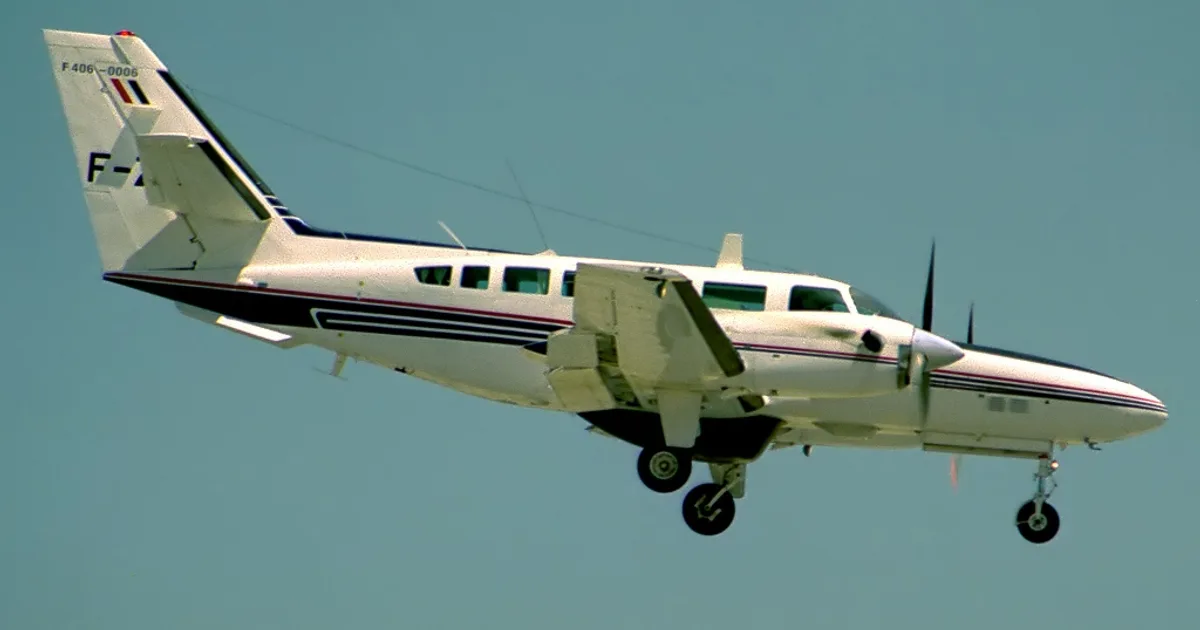
The Cessna 404 Titan is an unpressurised, low-wing light twin piston aircraft, built from 1976 to 1982. It has two crew and nine passengers (8 to 10 seats in the library entry; the type certificate allows a maximum of 11). It grew out of the 402B, with a larger wing, a 35-inch fuselage stretch and large fowler flaps. Two Continental GTSIO-520-M engines power it. Maximum takeoff weight is 8,400 lb (3,810 kg).
- Two Continental GTSIO-520-M engines; each is rated 375 hp maximum continuous. Maximum takeoff weight is 8,400 lb, and maximum landing weight is 8,100 lb.
- Total fuel capacity is 348 US gal, of which 344 gal is usable. Use 100/130 fuel.
- Review the AD schedule: nose gear actuator rod, engine beams, fuel float valves and exhaust system are all listed.
- Accident reports show the engine-out and icing risks. Check weight and balance, and feather the failed engine's propeller promptly.
Summary written by AI from the source document. Check the original before relying on it. See which parts of Sprinkle are written by AI.
Reference only, not for flight. Use the current approved manual for your aircraft. See terms, section 5.
Document
Source
Copy found at sprinkle.com. Sprinkle hosts a reference copy with an added summary, specifications and searchable full text.
Document details
- Type ·
- Model Guide
- Year ·
- 2026
- File size ·
- 49 KB
- Copy found at ·
- sprinkle.com
Specifications & performance
Extracted from this document.
Specifications
- Usable fuel (gal) ·
- 344
- Max crosswind (kt) ·
- 20
- Max continuous power (hp) ·
- 375
- Total fuel capacity (gal) ·
- 348
V-speeds
- VS_KTS ·
- 83
- VY_KTS ·
- 109
- VFE_KTS ·
- 182
- VNE_KTS ·
- 241
- VNO_KTS ·
- 212
- VSO_KTS ·
- 70
- VMCA_KTS ·
- 78
- VYSE_KTS ·
- 109
Weight & balance
- Max landing weight (lb) ·
- 8,100
- Max takeoff weight (lb) ·
- 8,400
What is the Cessna 404 Titan's maximum takeoff weight?
The Cessna 404 Titan has a maximum takeoff weight of 8,400 lb (3,810 kg) and a maximum landing weight of 8,100 lb. A 1999 accident aircraft was calculated at between 8,320 and 8,600 lb, so weigh the load carefully.
How much fuel does it carry and what grade?
The Cessna 404 Titan carries 348 US gal in total, of which 344 gal is usable. The checklist specifies 100/130 fuel.
What engines does it use?
The Cessna 404 Titan uses two Continental GTSIO-520-M engines with McCauley 3FF32C501/90UMB-0 propellers. Each engine is rated 375 hp maximum continuous.
Are there airworthiness directives to check?
Yes. The NZ CAA schedule for the Cessna 404 Titan lists 15 directives. They cover the nose landing gear actuator rod, engine beams, emergency gear extension, seats, fuel float valves, hoses, icing, autopilot, trim tab and exhaust.
What is the Cessna 404 Titan Model Guide?
The Cessna 404 Titan Model Guide is a model guide for the Cessna 404 Titan, dated 2026.
What year was the Cessna 404 Titan Model Guide published?
The Cessna 404 Titan Model Guide — the Cessna 404 Titan model guide on file — is dated 2026.
Common. More common than 73% of the aircraft models we track.
Most owners only have the POH. Here's the essential set for the Cessna 404 Titan.
Cessna 404 Titan for sale now
Free — save the 404 to your watchlist and track it in one place.
More Cessna 404 Titanmanuals & documents
See all 20 →- Fumes event involving Cessna 404, VH-LADOther Documents
- Controlled flight into terrain involving Cessna 404, VH-OZOOther Documents
- AHAC-INCID-01-2019, CESSNA 404 TITAN MATRICULA HR-AYDAirworthiness Directives
- Type Acceptance Report TAR 8/21B/8 – Cessna 404Other Documents
- Cessna 404 Systems DescriptionSystems Description
- Engine-driven fuel pump – material substitutionOther Documents
- Airworthiness Directive Schedule Aeroplanes Cessna 404 SeriesAirworthiness Directives
- AAIB Bulletin: 6/2007 G-OOSI EW/A2006/12/02Other Documents
- Fuel starvation – 102 km N Adelaide, SA – 18 October 2007, VH-TMP, Cessna Aircraft Company C404Service Bulletins
- AVIATION SAFETY INVESTIGATION 200303579Other Documents
- Cessna 404’s Left Engine Fails on TakeoffOther Documents
- FINAL REPORT HCL 37/02 IncidentOther Documents
If you fly the Cessna 404 Titan, you may also be researching these.





In this document
What you are buying
An unpressurised low-wing twin with two crew and nine passengers. The design uses a bonded metal wet wing, trailing-link main landing gear and large fowler flaps. The hydraulic system comes from the 421C. Engines are Continental GTSIO-520-M with McCauley 3FF32C501/90UMB-0 propellers. The type certificate is FAA A25CE, held by Textron Aviation Inc.
Limits and speeds (checklist, KIAS)
Vne 241, Vno 212, Vfe 182, Vle and Vlo 182. Vmca is 78, stall 83 and 70 in landing configuration. Best rate of climb is 109, and 109 single-engine (Vyse). Maximum crosswind is 20 kt. Oil pressure limits are 10 to 100 psi. Maximum oil temperature is 240 F and maximum cylinder head temperature is 460 F. Take these from a checklist, and confirm them against the aircraft's own flight manual.
What to check before buying
Ask for evidence of compliance with the AD schedule: nose landing gear actuator rod (S/N 404-0001 to 404-0859), engine mount beams, fuel inlet float valves, exhaust system, seats, and the severe-icing flight manual revision. Past reports cite a fatigue-failed starter gear (accessory gear train), a fatigue-failed aileron outer hinge bolt (over-torqued nut), and fuel pump failure history. Inspect these areas closely.
Summary written by AI from the source document. Check the original before relying on it. See which parts of Sprinkle are written by AI.
Safety notes
- A 1999 Glasgow accident: the left engine's accessory gear train failed, the failed engine's propeller was not feathered, and the aircraft could not climb on one engine.
- A 2002 incident in icing conditions saw partial power loss on both engines, a temporary loss of control and a significant loss of altitude.
- Cabin fumes can incapacitate crew. One operator now requires oxygen equipment secured within seated reach of the pilot.
Summary written by AI from the source document. Check the original before relying on it. See which parts of Sprinkle are written by AI.
Full document text
Cessna 404 Titan Model Guide The Cessna 404 Titan is an unpressurised, low-wing light twin piston aircraft, built from 1976 to 1982. It has two crew and nine passengers (8 to 10 seats in the library entry; the type certificate allows a maximum of 11). It grew out of the 402B, with a larger wing, a 35-inch fuselage stretch and large fowler flaps. Two Continental GTSIO-520-M engines power it. Maximum takeoff weight is 8,400 lb (3,810 kg). • Two Continental GTSIO-520-M engines; each is rated 375 hp maximum continuous. Maximum takeoff weight is 8,400 lb, and maximum landing weight is 8,100 lb. • Total fuel capacity is 348 US gal, of which 344 gal is usable. Use 100/130 fuel. • Review the AD schedule: nose gear actuator rod, engine beams, fuel float valves and exhaust system are all listed. • Accident reports show the engine-out and icing risks. Check weight and balance, and feather the failed engine's propeller promptly. What you are buying An unpressurised low-wing twin with two crew and nine passengers. The design uses a bonded metal wet wing, trailing-link main landing gear and large fowler flaps. The hydraulic system comes from the 421C. Engines are Continental GTSIO-520-M with McCauley 3FF32C501/90UMB-0 propellers. The type certificate is FAA A25CE, held by Textron Aviation Inc. Limits and speeds (checklist, KIAS) Vne 241, Vno 212, Vfe 182, Vle and Vlo 182. Vmca is 78, stall 83 and 70 in landing configuration. Best rate of climb is 109, and 109 single-engine (Vyse). Maximum crosswind is 20 kt. Oil pressure limits are 10 to 100 psi. Maximum oil temperature is 240 F and maximum cylinder head temperature is 460 F. Take these from a checklist, and confirm them against the aircraft's own flight manual. What to check before buying Ask for evidence of compliance with the AD schedule: nose landing gear actuator rod (S/N 404-0001 to 404-0859), engine mount beams, fuel inlet float valves, exhaust system, seats, and the severe-icing flight manual revision. Past reports cite a fatigue-failed starter gear (accessory gear train), a fatigue-failed aileron outer hinge bolt (over-torqued nut), and fuel pump failure history. Inspect these areas closely. Safety notes: • A 1999 Glasgow accident: the left engine's accessory gear train failed, the failed engine's propeller was not feathered, and the aircraft could not climb on one engine. • A 2002 incident in icing conditions saw partial power loss on both engines, a temporary loss of control and a significant loss of altitude. • Cabin fumes can incapacitate crew. One operator now requires oxygen equipment secured within seated reach of the pilot.