AOPA PILOT
CESSNA T310 · Pilot's Operating Handbook
Overview
This document is a detailed overview of the Cessna 310R and its variants, providing insights into their operational characteristics, performance metrics, and maintenance considerations. It is aimed at pilots and aviation enthusiasts who are interested in understanding the intricacies of flying and maintaining the Cessna 310 series. The text discusses the evolution of the 310 model, highlighting the differences between various iterations and the specific features of the 310R. It emphasizes the importance of thorough preflight checks, engine management, and the handling characteristics of the aircraft, making it a valuable resource for current and prospective owners.
- The Cessna 310R features 285-hp Continental IO-520-M engines.
- Normal takeoff is conducted without flaps, with a recommended rotation speed of Vmc + 10 knots.
- Each main fuel tank holds 300 pounds of fuel, and transfer pumps must be operational for safe flight.
- Engine starts require careful management to avoid flooding, especially in cold weather.
- Landing can be challenging due to heavy elevator control during flare, necessitating smooth handling.
Document
Source
Originally published by aeroresourcesinc.com. Sprinkle hosts a reference copy with an added summary, specifications and searchable full text.
Document details
- Type
- Pilot's Operating Handbook
- Year
- 1983
- Pages
- 9
- File size
- 7.5 MB
- Publisher
- aeroresourcesinc.com
Specifications & performance
Extracted from this document.
Specifications
- Engine (hp)
- 240
- Propeller
- three-blade McCauley
- Engine model
- Continental 0-470-B
- Max speed (kt)
- 170
- Cruise speed (kt)
- 156
- Empty weight (lb)
- 2,960
- Rate of climb (fpm)
- 3,000
- Service ceiling (ft)
- 35,000
- Max takeoff weight (lb)
- 4,700
Performance
- Fuel burn (gph)
- 25
Weight & balance
- Basic empty weight (lb)
- 2,960
- Max takeoff weight (lb)
- 4,700
Common. Rarer than 24% of the aircraft models we track.
Most owners only have the POH. Here's the essential set for the CESSNA T310.
- Pilot's Operating Handbook / AFM
- Checklist
- Maintenance Manual
- Parts Catalog (IPC)
- Systems & Wiring
- Service Bulletins
- Type Certificate (TCDS)
Free — save the T310 to your watchlist and track it in one place.
More CESSNA T310manuals & documents
See all 13 →- On-Call Amphibious Scooping SEAT Flight ServicesPilot's Operating Handbook
- BLM On-Call AIR ATTACKOther Documents
- Sky-Tec Flyweight™ Starters & Solenoids Aircraft Fit GuideV Speeds Reference
- Service Bulletin No. 058 Turbocharger - Back Plate Assembly Replacement at OverhaulWeight And Balance
- Hartzell Propeller Inc. Service Letter HC-SL-30-279 De-ice: Hartzell De-ice Boots and De-ice KitsWeight And Balance
- Hartzell De-ice Boots for Cessna 310 and T310 Installed Under Hartzell Propeller Inc. STC SA234CHFlight Manual
- SCHEDULE OF AIRWORTHINESS DIRECTIVESService Bulletins
- Supplemental Type Certificate for Cessna 310Supplemental Type Certificate
- Cessna Turbo 310R IIPilot's Operating Handbook
- Federal Register, Volume 37, Number 91Supplemental Type Certificate
- Aircraft tire Engineering DataType Certificate
- MICRO Vortex Generator KitPilot's Operating Handbook
If you fly the CESSNA T310, you may also be researching these.
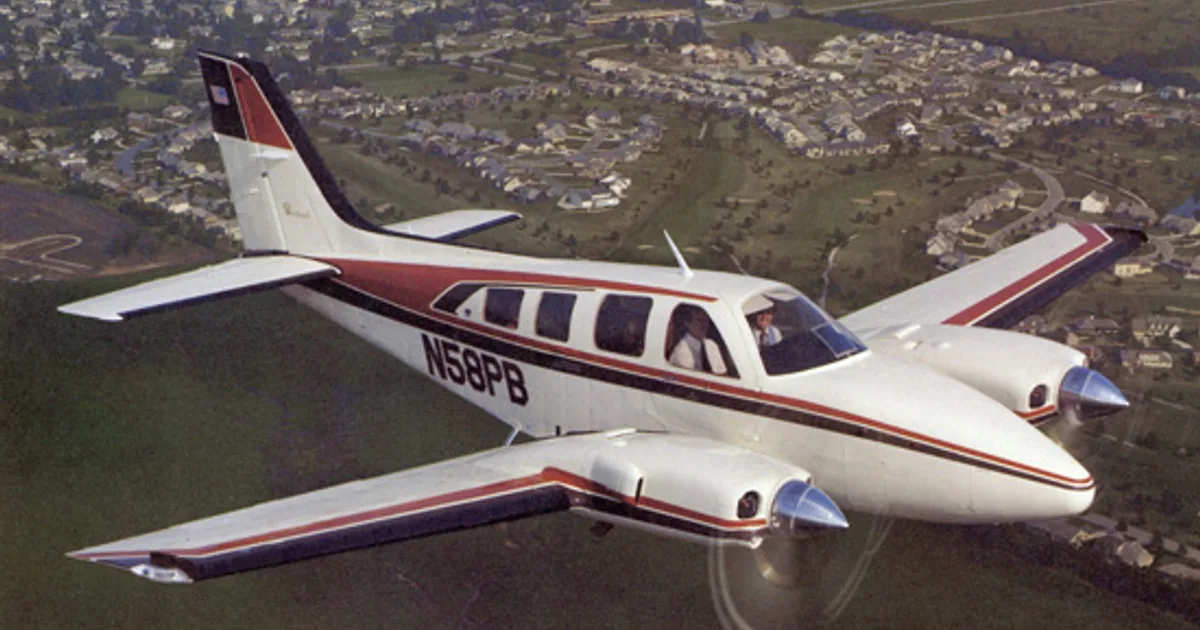


In this document
Preflight Preparation
Preflight checks for the Cessna 310R require careful attention, particularly due to the unique fuel system and engine characteristics. Pilots should ensure that fuel levels in the main and auxiliary tanks are adequate and check the functionality of fuel transfer pumps, as an inoperative pump is a no-go item. Additionally, oil dipsticks should be inspected for corrosion, and the nose gear should be checked for proper inflation and play.
Engine Start Procedures
Starting the engines of the Cessna 310R requires a practiced touch to avoid flooding, especially in cold conditions. If flooding occurs, pilots must allow time for fuel to drain before attempting to restart. Proper engine management is crucial to prevent potential hazards such as fire or explosion.
Takeoff and Climb Performance
Normal takeoffs are conducted without flaps, with a recommended rotation speed of Vmc plus 10 knots. The 310R accelerates quickly past Vyse, the best single-engine rate of climb speed. Pilots are advised to maintain Vxse during initial climb to maximize altitude gain before leaving the airport vicinity.
Landing Characteristics
Landing the Cessna 310R can be challenging due to its heavy elevator during the flare, often resulting in a hard landing if not managed correctly. Pilots should anticipate a significant pitch-up when extending flaps and plan accordingly to maintain smooth landings.
Fuel System Management
The fuel system in the Cessna 310R can be complex, especially with auxiliary tanks. Each main tank holds 300 pounds of fuel, and pilots must manage fuel levels carefully to ensure proper operation of transfer pumps and to avoid running out of fuel in flight.
Safety notes
- An inoperative fuel transfer pump is a no-go item.
- Over-priming the engine can lead to flooding and potential fire hazards.
- Check for corrosion on oil dipsticks to prevent them from falling into engine sumps.
Full document text
" ;,. l ·- ==:=i .,.,,~.>. I • AOPA PILOT • 35 II II I I I I ,I I Ij 11 I I COllti/1Ut'd e were conducting the pre-start check for the 1978 Cessna Turbo 310R when our concentration was interrupted by a smooth and pow- erful rumble. A 1955 Model 310 stalked by, gliding tall on spindly land- ing gear and thrusting its straight tail and large wing tanks proudly into the air. For a moment, our small piece of the ramp was a living museum, dis- playing two fundamentally similar but . substantially different airplanes. The original 310 was heralded by the company as its first business air- plane. The newcomer hit the market like a lightning bolt on a clear day. The 310 quickly eclipsed its closest compet- itors, the Aero Commander 520 and the Beech Twin Bonanza B50, and es- tablishe~ itself as a pilot's airplane. It is debatably the handsomest twin ever built by Cessna or any other manufac- turer. The 310 also is an airplane that demands attention, a thorough under- standing of its systems and operating procedures and a lot of respect. With its swept tail, canted tip .tanks, turbosupercharged engines, deice and anti-ice systems and optional fuel tank- age, the R model we were sitting in was a reflection of 23 years of nearly constant refinement. During the later years of its develop- ment, the 310 retained its popularity despite strong competition from Beech- craft's Barons. But last year, Cessna de- cided it was time for a change and re- placed the 310 with the T303 Crusader (see "Cessna Crusader," March Pilot, p. 108). Today, prices range from about $20,000 for a good, early-model 310 to more than $100,000 for a Q or R model. A buyer who is careful in his selection and willing to fly and main- tain the airplane properly can get very good performance and a lot of enjoy- ment in return for his investment. The airplanes are fast, have good short-field capabilities and relatively good single-engine performance. Most owners contacted for this report said their 310s are not exceptionally expen- sive to operate and to maintain. One owner, however, conceded that he may have made an overly hasty decision. He bought his 310 for about $15,000, not knowing there was a hairline crack in one of the engine crankcases and a rather nasty case of wing spar corro- sion. Getting the airplane airworthy cost another $15,000. A thorough check-out by an experi- enced 310 pilot/instructor is a must. The airplane has many performance and handling characteristics that are best learned under the tutelage of a graybeard. Preflight preparation is straightfor- ward but does tend to require an un- usually long amount of time to accom- plish thoroughly. Unless you are ex- ceptionall y tall, you may need a stepstool to check the fuel levels in the wing tip tanks, which on the 310 are the mains. The master switch should be turned on momentarily to check for the sound of the fuel transfer pumps. They transfer fuel from the rear of the tanks to the ports in front to ensure an adequate flow at high angles of attack. An inoperative transfer pump is a no- go item. When the oil quantities are checked, the dipsticks themselves should be examined for evidence of corrosion. There are several service difficulty reports of rusted dipsticks that broke away from their caps and fell into the engine sumps. In addi- tion, the dipsticks in several 310 models are channeled nearly horizon- tally into the engines. If the dipstick is not secured properly, oil can bJ pumped overboard. The nose wheel has rather limited steering travel, and its linkage can be damaged by a careless ground tow. On preflight, therefore, the nose gear scis- sors should be checked for play. The sho~k strut also should be checked carefully for leaks and proper inflation. There are reports of under-inflated struts that allowed the nose gear to hit and jam against other components dur- ing retraction. Engine starts require a practiced touch. It is easy to over-prime one of the Continentals, especially on a cold day. If an engine floods, the pilot should allow sufficient time for any collection of raw fuel to exit through the manifold drain lines before trying again to start the engine. Otherwise, the pilot faces the possibility of an ex- plosion or fire. While taxiing, the rudder pedals can steer the nosewheel up to 15 degrees on older models and 18 degrees on newer 310s. For tighter maneuvering, the pilot can use differential braking and power application to pivot the air- plane's nosewheel up to 55 degrees right or left. Normal takeoffs are conducted with- out flaps. A 310 reaches recommended rotation speed-usually minimum sin- gle-engine control speed (Vmc) plus 10 knots-or recommended safe single- engine speed (Vsse)-very quickly. With the gear retracted, the airplane then accelerates rapidly past Vyse, the best single-engine rate of climb speed. However, the gear retracts rather slowly and a good procedure for initial climb is to maintain the best single- engine angle of climb speed (Vxse) to gain as much altitude as possible be- fore leaving the airport fence. The 310s have relatively high wing loadings and become fairly stable once airspeed has built beyond the white arc. The 31O's controls are heavy but well harmonized. The airplanes give plenty of warning of an impending stall. THE THREE-TEN Flap and gear speeds are rather low, and it takes some planning to slow a 310 down to mingle in the pattern. In slow flight, it is easy to over- control a 310. There is a lot of weight out at the wing tips, and once a wing is in motion it likes to stay in motion. Until the right control touch is devel- oped, the beginner may find himself engaged in some interesting Dutch roll oscillations on initial climb and short
Show full textShow less
final. Turbulence also can initiate a rather annoying oscillation, even on the newer models, which have ventral fins. A good yaw damper is a welcome piece of equipment in any 310. Visibility is excellent over the ta- pered nose and the trim engine na- celles. Only the tip tanks spoil what otherwise might be a panoramic view from the pilot's seat. Noise is a prob- lem with all 310s, but especially for occupants of older models that have unmuffled, over-wing exhaust systems and very little soundproofing. There are no cowl flaps on normally aspirated 31Os. Early models have aug- mented exhaust systems. As the ex- haust gases leave the engine, they cre- ate a low-pressure area that draws cooling air over the engine. (Air pres- sure from wind blowing against the augmentors can hamper the flow of cooling air over the engines. Therefore, the pilot should keep a sharp eye on the engine temperature indicators while holding for takeoff.) The nor- mally aspirated 310R model has tighter engine nacelles and manually adjust- able modulators (the operating manual insists on calling them cowl flaps) that bring cooling air in through louvers in the center of the nacelles. There are true cowl flaps on all 320s and turbo- supercharged 31Os. Fuel systems in 310s equipped with auxiliary wing and nacelle locker tanks can keep the pilot quite busy. Each of the main (tip) tanks holds 300 pounds of fuel. Since all excess fuel is returned to the main tanks, they must be drained down to about 180 pounds each before selecting the auxiliary wing tanks, which should be used only dur- ing level flight. Fuel from the nacelle locker tanks is transferred directly into the main tanks. The locker tank trans- fer pumps are lubricated by fuel, and the pilot must be careful to turn them off once the transfer is completed. Some 310s have only one locker tank, and crossfeed must be used to transfer the fuel evenly into the main tanks. The landing gear and split wing flaps are electrically actuated. The max- imum extension speeds are relatively low, even on the newer models, and it takes some planning to slow a 310 down to approach and pattern speeds. The 310 is an exceptionally clean air- AOPA PILOT • 37 plane, and any changes in configura- tion result in marked changes in atti- tude. Flap extension, for instance, causes the airplane's nose to pitch up vigorously. To avoid startling the pas- sengers, the pitch up should be antici- pated and countered with a healthy push on the control wheel. When it comes to landings, the 310 is much like the Piper Twin Comanche in that consistent smoothness proves rather evasive. The 310's elevator be- comes very heavy during the flare. Usually, the mains contact the runway hard, followed by the solid clunk of the nosewheel. Two consecutive greasers are cause for breaking out a bottle of champagne. The airplane in the accompanying photographs is owned by Leonard C. Rennie Jr. and his son, Leonard C. (Tres) Rennie lll, both of Cheverly, Maryland. Their 310 is one of only 14 built during 1954 (and pronounced 1955 models by Cessna). N2610C has been modified with a one-piece wind- shield and over-wing exhaust port ex- tensions. The Rennies have owned their 310 for almost two years and like it so much they are considering selling their prized 1947 Bonanza. They normally operate the 310 at its optimum cruising 38· APRIL1983 THE THREE-TEN The cockpit of a 310 is a great place to be for anyone who knows the systems and the procedures. To avoid surprises, the engines and the gear require careful attention. altitude, 8,000 feet, where it clips along at 170 knots, true, while burning about 25 or 26 gallons of fuel per hour. At 65-percent power, the 310 cruises at about 156 knots and burns about 24 gph. According to Tres, the 240-hp Continental 0-470-B engines also burn or blow about one quart of oil each hour. The original 310's range is not what one might desire from a twin. The Rennies flight plan for an endur- ance of three hours, which leaves enough fuel remaining for another hour of flight at low power settings. Tres is an airframe and powerplant mechanic and does almost all of the work on N2610C. "It actually is a very easy airplane to work on," he said. "The landing gear and engines require careful attention; but other than that, the 310 is not a maintenance-intensive airplane." Tres noted, however, that a 310, just like any machine, can deterio- rate quickly if neglected. Cessna offered auxi1iary wing blad- The Cessna 310 was not on the market long before people began figuring ways to make it go faster. The most notable exam- ple was the Riley Turbostream. Equipped with turbosupercharged, 350-hp Lycom- ings, the Turbostream climbs at 3,000 fpm, cruises at 280 knots and has a maxi- mum operating altitude of 35,000 feet. The Turbostream modification no longer is available, but there are quite a few compa- nies that are still actively engaged in the business of tweaking the 310-for a price. Air' America of Avoca, Pennsylvania (717/343-1228), offers two Turbocruiser conversions, both of which can cruise at 260 knots at 24,000 feet. One Turbocruiser has 310-hp Teledyne Continental T510- 520-N engines and three-blade McCauley propellers. According to Air America, rate of climb at sea level is 2,000 fpm and nor- mal cruise at 12,000 feet is 235 knots. This conversion costs from $30,000 to $62,000, depending on the model. The other Turbocruiser is powered by 350-hp Lycoming LTIO- and TIO-540- J2BD engines and three-blade Hartzell props. This one climbs at 2,800 fpm and cruises at 244 knots. Cost is $139,000. Both of Air America's Turbocruiser modifications are available for 310s begin- ning with the I model, the Turbo 31OP, Q and R, and the 320B and C. The company also offers auxiliary fuel tank installations at prices that vary by model. Inflatable door seal kits for all 310 and 320 models, as well as for a large number of other airplanes, are available from Bob der tanks as options for the 310 in 1956. Each tank holds 90 pounds of fuel. In 1958, Cessna introduced the B model, which has a gross weight of 4,700 pounds and a basic empty weight of 2,960 pounds, increases of 100 and 110 pounds, respectively. The instrument panel was redesigned to group radio equipment in the center. The 310B featured better soundproof- ing and optional propeller anti-ice and wing deice systems. The Cessna 310C was introduced in 1959 with fuel-injected, 260-hp Conti- nental 10-470-D engines. The nacelles were extended to the trailing edges of the wings to house exhaust-muffling systems. On the 1960 Model D, the vertical stabi1izer was swept back 40 degrees to give the 310 an "advanced styling look characteristic of high-speed jet air- craft," according to Cessna's advertis- ing copy. The swept tail also accounts for approximately 175 pounds of the Putting the Heat On Fields Accessories of 5anta Paula, Califor- nia (805/525-6236). Cost of the silicone composite seals and a manual inflation system is $277. An electric inflation pump boosts the price for the kit to $419. Colemill Enterprises of Nashville, Ten- nessee (615/226-4256), offers the Execu- tive 600 conversion of the 310F through Q and the Century 600 conversion of the 320 and the 320A through C models. Both include 300-hp Continental 10-520-E en- gines, three-blade McCauley props and Woodward prop governors. Colemill said the $38,500 modification increases single- engine rate of climb speed at 5,000 feet to 250 fpm and increases the single-engine service ceiling to 10,000 or 11,000 feet, depending on the model. Three different engine conversions for Turbo 310s and 320 models built after 1965 are available from Ram Aircraft Modifications of Waco, Texas (817/752- 8381). The first includes 300-hp Continen- tal T510-520-E engines, three-blade Hartzell propellers, Woodward prop gov- ernors and synchrophasers and an im- proved exhaust system. Ram said the $32,500 conversion results in a climb rate of 2,150 fpm, a single-engine climb rate of 485 fpm, a 231-knot cruise at 75-percent power and a maximum operating altitude of 29,500 feet. A similar conversion, but with 310-hp T510-520-N engines, costs $63,500 and provides a climb rate of 2,600 fpm, a single-engine climb rate of 550 fpm, a 253-knot cruise at 75-percent power and a maximum operating altitude airplane's gross weight of 4,830 pounds. Cessna skipped a letter (as it would later skip M and 0) and introduced the 310F in 1961. It has extra side win- dows and landing lights in the left wing, as well as on the nose gear. Landing lights previously were mounted only on the nose gear. "5tabila-tip" wings appeared on the 1962 Model G. Cessna claimed that handling qualities and stability were greatly enhanced by canting the tip tanks 35 degrees. This claim, however, is the subject of much debate among 310 owners. The 310G also featured an optional sixth seat and a maximum takeoff weight of 4,990 pounds. The Model 320 Executive 5kyknight, approved under its own type certifi- cate, was introduced in 1962. The six- seat airplane is powered by turbosu- percharged, 260-hp Continental T510-470-B engines, has four side win- dows and a maximum takeoff weight of 5,200 pounds. Four years later, of 34,500 feet. Ram offers three-blade Hartzell Q-tip propellers as options for these conversions for $5,200. Ram also offers a $78,500 conversion that includes 325-hp T510-520-NBR en- gines and Q-tip props. Ram said this con- version enables a T310 or 320 to cruise- climb to 18,000 feet in 12 minutes. Cruise at 75-percent power is 260 knots; 240 knots at 55-percent power. Climb rate is 3,100 fpm, and single-engine climb rate is 620 fpm. Maximum operating altitude is 35,500 feet, and single-engine service ceil- ing is 24,500 feet. Robertson Aircraft Corporation of Ever- ett, Washington (206/355-8702), offers a Hi-Lift modification for the 310G and R and the Turbo 31OP, Q and R models. The $19,900 modification consists of replacing the airplane's split flaps system with Fowler flaps and the installation of a spring interconnect between flap and ele- vator controls to compensate for pitch-trim changes. Robertson said the modification enables an airplane to take off over a 50- foot obstacle within 1,470 feet and to land over that obstacle within 1,165 feet. Accel- erate/stop distance is reduced to 1,680 feet, and Vso (stall in landing configura- tion) is 64 knots. Roto-Master of North Hollywood, Cali- fornia (213/982-4500), installs turbosuper- chargers on 310s through the I model. Roto-Master said the modification costs approximately $16,000 and enables a 310 to maintain rated sea-level power to 16,000 feet. -MML AOPA PILOT • 39 continued Model 310 310D 310R 320 Turbo 310R $49,950 $59,950 $89,950 $69,950 $107,500 $15,000 to $30,000 $20,000 to $35,000 $50,000 to $ 70,000 $20,000 to $50,000 $60,000 to $90,000 2 Teledyne Continental 2 Teledyne Continental 2 Teledyne Continental 2 Teledyne Continental 2 Teledyne Continental 10-470-D 10-470-VO TSIO-470-B TSI0-520-B 260 hp ea 260 hp ea 260 hp ea 285 hp ea @ 2,625 rpm @ 2,625 rpm @ 2,600 rpm @ 2,700 rpm 1,500 hr 1,500 hr 1,700 hr 1,400 hr 1,400 hr Propellers Hartzell, 2-blade, Hartzell, 2-blade, McCauley, 2-blade Hartzell, 2-blade McCauley, 3-blade, constant-speed, 80 in, constant-speed, 81 in, constant-speed, 78 in, constant-speed, 78 in full-feathering full-feathering full-feathering full-feathering l.ength 27 ft 1 in 29 ft 7 in 29 ft 7 in 29 ft 6 in 31 ft 11.5 in 10 ft 5 in 9 ft 11 in 10 ft 5 in 10 ft 5.7 in 10 ft 8 in Wingspan 36 ft 1 in 35 ft 9 in 36 ft 11 in 35 ft 9 in 36 ft 11 in 175 sq ft 175 sq ft 179 sq ft 179 sq ft 179 sq ft26.2 Ib/sq ft 27.6 Ib/sq ft 29.6 Ib/sq ft 29.6 Ib/sq ft 30.7 Ib/sq ft Power loading 9.6Ib/hp 9.3Ib/hp 10.2 Ib/hp 9.3 Ib/hp 9.7Ib/hp Seats 5 5666 4,600 Ib 4,830 Ib 5,5001b 5,300 Ib 5,535 Ib Empty weight 2,850 Ib 3,0371b 3,603 Ib 3,266 Ib 3,707 Ib1,750 Ib 1,7931b 1,8971b 2,034 Ib 1,8281b1,150lb 1,193 Ib 1,2971b 1,434 Ib 1,228 Ib Max takeoff weight 4,600 Ib 4,8301b 5,3001b 5,200 Ib 5,500 IbN/O 4,600 Ib 5,300 Ib 4,7501b 5,400 Ib std (usable) 612 Ib (600 Ib) 612 lb (600 Ib) 612 Ib (600 Ib) 612 Ib (600 Ib) 612 Ib (600 Ib) 792 Ib (768 Ib) 1,242 Ib (1,218 Ib) 798 Ib (768 Ib) 1,242 Ib (1,218 Ib) 200lb 200lb 950lb 6001b 950lb Takeoff distance, ground roll 795 ft 800 ft 1,519 ft 870 ft 1,306 ft Takeoff distance, over 1,405 ft 1,395 ft 1,795 ft 1,470 ft 1,662 ft Accelerate/stop distance N/O 2,390 ft 2,400 ft 2,200 ft 3,250 ft1,700 fpm 1,800 fpm 1,495 fpm 1,924 fpm 1,700 fpm Single-engine ROC, sea level 380 fpm 440 fpm 327 fpm 475 fpm 390 fpm75%/5,000 ft 75%/5,000 ft 75%/5,000 ft 65%/10,000 ft 65%/10,000 ft 179 kt 188 kt 187 kt 182 kt 190 kt168 pph 169 pph 169 pph 148 pph 172 pph (w/ 45-min rsv) std fuel/opt fuel 640 nm/- 675 nm/950 nm 660 nm/1,345 nm 740 nm/965 nm 517 nm/1,205 nm 65%/7,500 ft 65%/7,500 ft 65%/7,500 ft 65%/15,000 ft 65%/15,000 ft 173 kt 182 kt 179 kt 190 kt 199 kt154 pph 147 pph 146 pph 146 pph 171 pph (w/45-min rsv) std fuel/opt fuel 675 nm/- 780 nm/980 nm 735 nm/1,41O nm 785 nm/1,010 nm 533 nm/1,250 nm 60%/10,000 ft 60%/10,000 ft 60%/10,000 ft 65%/20,000 ft 65%/20,000 ft 170 kt 180 kt 176 kt 199 kt 208 kt144 pph 137 pph 135 pph 148 pph 171 pph (w/45-min rsv) std fuel/opt fuel 715 nm/- 795 nm/1,025 nm 780 nm/1,585 nm 810 nm/1,055 nm 547 nm/1,290 nm - - 29,000 ft 27,400 ft - - 16,000 ft 16,000 ft 20,000 ft 21,300 ft 19,500 ft 7,500 ft 7,700 ft 6,680 ft 18,800 ft 17,200 ft 620 ft 620 ft 582 ft 640 ft 640 ft1,720 ft 1,720 ft 1,697 ft 1,770 ft 1,790 ft Limiting and Recommended Airspeeds 78 KIAS 71 KIAS 75 KIAS 77 KIAS 80 KIAS x (Best angle of climb) 84 KIAS 84 KIAS 81 KIAS 91 KIAS 81 KIAS 101 KIAS 104 KIAS 107 KIAS 111 KIAS 105 KIAS N/O 97 KIAS 101 KIAS 104 KIAS 106 KIAS a (Design maneuvering) 138 KIAS 145 KIAS 148 KIAS 145 KIAS 148 KIAS initial N/O 139 KIAS 156 KIAS 139 KIAS 158 KIAS I 13 KIAS 122 KIAS 139 KIAS 122 KIAS 139 KIAS 113 KIAS 122 KIAS 139 KIAS 122 KIAS 138 KIAS 174 KIAS 183 KIAS 182 KIAS 182 KIAS 181 KIAS 214 KIAS 218 KIAS 223 KIAS 220 KIAS 223 KIAS 67 KIAS 73 KIAS 75 KIAS 75 KIAS 79 KIAS 58 KIAS 65 KIAS 63 KIAS 66 KIAS 72 KIAS alldard atmosphere, at sea level alld gross weight, ulliess otherwise Iloted. N /0, Ilot obtailled; -, 'lOt applicable. I __ ~l power was increased with the incorpo- ration of 285-hp TSIO-520-B engines. In 1969, the Skyknight was discontin- ued and a "Turbo System" model was added to the 310's type certificate. The 320 model later metamorphosed into the pressurized 340. Meanwhile, Cessna continued to re- fine the normally aspirated 310. With the H model, introduced in 1963, the cabin was stretched 22 inches. The 3101 has nacelle compartments that can hold up to 120 pounds of baggage each. Capacity of the rear fuselage bag- gage compartment was raised from 200 to 360 pounds. The I model also has a modified exhaust system. The exhausts were relocated beneath the wings for better engine cooling and to reduce noise. Further noise reductions were three-blade propellers were standard equipment. Cessna built more than 5,200 nor- mally aspirated and turbosupercharged 310s before production was discontin- ued last year. About 20 airworthiness directives (ADs) have been issued on the airplanes. The major ADs include: 69-14-01, which required installation of fuel transfer pumps in the main tanks; 70-03-04, 100-hour inspections for cracks in turbo supercharger turbine housings; 72-03-07, inspections of main landing gear struts for cracks and hydraulic leaks; 72-14-08, inspections every 60 hours for leaks in oil and fuel hoses; and 75-23-08, which requires 50- and 100-hour inspections of the ex- haust systems on the 320 and T310. Other directives, 76-04-03 and 78-11- THE THREE-TEN effected with the 310J, which has three-inch propeller shaft extensions and floating engine mounts. The nose of the 1966 Model 310K was extended six inches to make room for optional weather radar, and the post was removed from between two of the side windows. The maximum extension speed for full flaps was raised from 122 to 139 knots. The L model has a one-piece wind- shield and larger retractable cabin en- try steps. The airplane's landing gear motor and shock struts were improved, and maximum extension speed was raised from 122 to 139 knots. Capacity of the optipnal wing auxiliary tanks for the 310L was raised from 90 to 123 pounds, each. Nacelle locker fuel tanks, holding 123 pounds each, were introduced with the N model in 1968. The next year, the nose gear, which formerly stretched forward of the 310's nose, was modified to extend straight down beneath the nose of the Model 31OP. The 310Q and Turbo 310Q models were produced from 1970 through 1974. In 1972, the aft roof line was raised 3.5 inches to provide more headroom for rear-seat passengers, and a rear window was added. The top of the windshield was extended nine inches aft, and the panel eyebrow was lowered to improve visibility. The nose on each of the R models, introduced in 1975, was extended 32 inches to provide space for 350 pounds of baggage and avionics equipment. The engines of the 310R were changed to 285-hp Continental IO-520-Ms, and 05, required modifications of Cessna ARC autopilot actuating systems. In addition, recent service difficulty reports have cited problems caused by: broken alternator and generator belts and wires; corrosion of battery boxes; corrosion of wing skins, rivets and spar caps from exhaust gases; deteriorated fuel bladder tanks; leaking landing gear shock struts; broken and worn gear retraction system components; vacuum pump failures; cracked and corroded fuselage bulkheads and wing spars; and cracked engine crankshafts, crankcases and connecting rods. For the prospective buyer, the 310's biggest problem may be its good looks. The airplane is so appealing it can en- tice a hasty purchase, and an un- suspecting buyer could end up with a poorly maintained lemon that would break both his heart and his budget. If you have your heart set on a 310, take your time and shop around. There are quite a few of them for sale, and you can take your pick. Be sure to go over the engine and airframe mainte- nance logs with a fine-tooth comb. Seek out and talk with the people who previously flew and worked on the air- plane. At just about any airport, you can find a sharp mechanic who knows where to look for trouble. Have him take a good look at the 310 you are considering. Take pains with your homework and get a thorough check-out on the 310's systems and operating procedures, and you may find yourself the proud owner of an airplane that can go very fast and turn a lot of heads. 0 power was increased with the incorpo- ration of 285-hp TSIO-520-B engines. In 1969, the Skyknight was discontin- ued and a "Turbo System" model was added to the 310's type certificate. The 320 model later metamorphosed into the pressurized 340. Meanwhile, Cessna continued to re- fine the normally aspirated 310. With the H model, introduced in 1963, the cabin was stretched 22 inches. The 3101 has nacelle compartments that can hold up to 120 pounds of baggage each. Capacity of the rear fuselage bag- gage compartment was raised from 200 to 360 pounds. The I model also has a modified exhaust system. The exhausts were relocated beneath the wings for better engine cooling and to reduce noise. Further noise reductions were three-blade propellers were standard equipment. Cessna built more than 5,200 nor- mally aspirated and turbosupercharged 310s before production was discontin- ued last year. About 20 airworthiness directives (ADs) have been issued on the airplanes. The major ADs include: 69-14-01, which required installation of fuel transfer pumps in the main tanks; 70-03-04, 100-hour inspections for cracks in turbo supercharger turbine housings; 72-03-07, inspections of main landing gear struts for cracks and hydraulic leaks; 72-14-08, inspections every 60 hours for leaks in oil and fuel hoses; and 75-23-08, which requires 50- and 100-hour inspections of the ex- haust systems on the 320 and T310. Other directives, 76-04-03 and 78-11- THE THREE-TEN effected with the 310J, which has three-inch propeller shaft extensions and floating engine mounts. The nose of the 1966 Model 310K was extended six inches to make room for optional weather radar, and the post was removed from between two of the side windows. The maximum extension speed for full flaps was raised from 122 to 139 knots. The L model has a one-piece wind- shield and larger retractable cabin en- try steps. The airplane's landing gear motor and shock struts were improved, and maximum extension speed was raised from 122 to 139 knots. Capacity of the optipnal wing auxiliary tanks for the 310L was raised from 90 to 123 pounds, each. Nacelle locker fuel tanks, holding 123 pounds each, were introduced with the N model in 1968. The next year, the nose gear, which formerly stretched forward of the 310's nose, was modified to extend straight down beneath the nose of the Model 31OP. The 310Q and Turbo 310Q models were produced from 1970 through 1974. In 1972, the aft roof line was raised 3.5 inches to provide more headroom for rear-seat passengers, and a rear window was added. The top of the windshield was extended nine inches aft, and the panel eyebrow was lowered to improve visibility. The nose on each of the R models, introduced in 1975, was extended 32 inches to provide space for 350 pounds of baggage and avionics equipment. The engines of the 310R were changed to 285-hp Continental IO-520-Ms, and 05, required modifications of Cessna ARC autopilot actuating systems. In addition, recent service difficulty reports have cited problems caused by: broken alternator and generator belts and wires; corrosion of battery boxes; corrosion of wing skins, rivets and spar caps from exhaust gases; deteriorated fuel bladder tanks; leaking landing gear shock struts; broken and worn gear retraction system components; vacuum pump failures; cracked and corroded fuselage bulkheads and wing spars; and cracked engine crankshafts, crankcases and connecting rods. For the prospective buyer, the 310's biggest problem may be its good looks. The airplane is so appealing it can en- tice a hasty purchase, and an un- suspecting buyer could end up with a poorly maintained lemon that would break both his heart and his budget. If you have your heart set on a 310, take your time and shop around. There are quite a few of them for sale, and you can take your pick. Be sure to go over the engine and airframe mainte- nance logs with a fine-tooth comb. Seek out and talk with the people who previously flew and worked on the air- plane. At just about any airport, you can find a sharp mechanic who knows where to look for trouble. Have him take a good look at the 310 you are considering. Take pains with your homework and get a thorough check-out on the 310's systems and operating procedures, and you may find yourself the proud owner of an airplane that can go very fast and turn a lot of heads. 0