Weight & Balance for Beechcraft 1900D
Beechcraft 1900D · Weight And Balance
Overview
This document provides essential information regarding the weight and balance specifications for the Beechcraft 1900D aircraft. It is intended for pilots, operators, and maintenance personnel who need to ensure that the aircraft is loaded within its weight limits for safe operation. The manual outlines the maximum takeoff weight, center of gravity limits, and procedures for calculating weight and balance based on various loading configurations. Understanding these parameters is crucial for flight safety and compliance with aviation regulations.
- Maximum takeoff weight: 19,000 lbs (8,618 kg)
- CG limits: 20.0 to 30.0 inches aft of datum
- Follow specific procedures for weight calculation
- Ensure even weight distribution during loading
- Complete weight and balance form before flight
Document
Source
Originally published by www.caa.co.uk. Sprinkle hosts a reference copy with an added summary, specifications and searchable full text.
Document details
- Type
- Weight And Balance
- Pages
- 97
- File size
- 9.1 MB
- Publisher
- www.caa.co.uk
Common. Rarer than 1% of the aircraft models we track.
Most owners only have the POH. Here's the essential set for the Beechcraft 1900D.
- Pilot's Operating Handbook / AFM
- Checklist
- Maintenance Manual
- Parts Catalog (IPC)
- Systems & Wiring
- Service Bulletins
- Type Certificate (TCDS)
Beechcraft 1900D for sale now
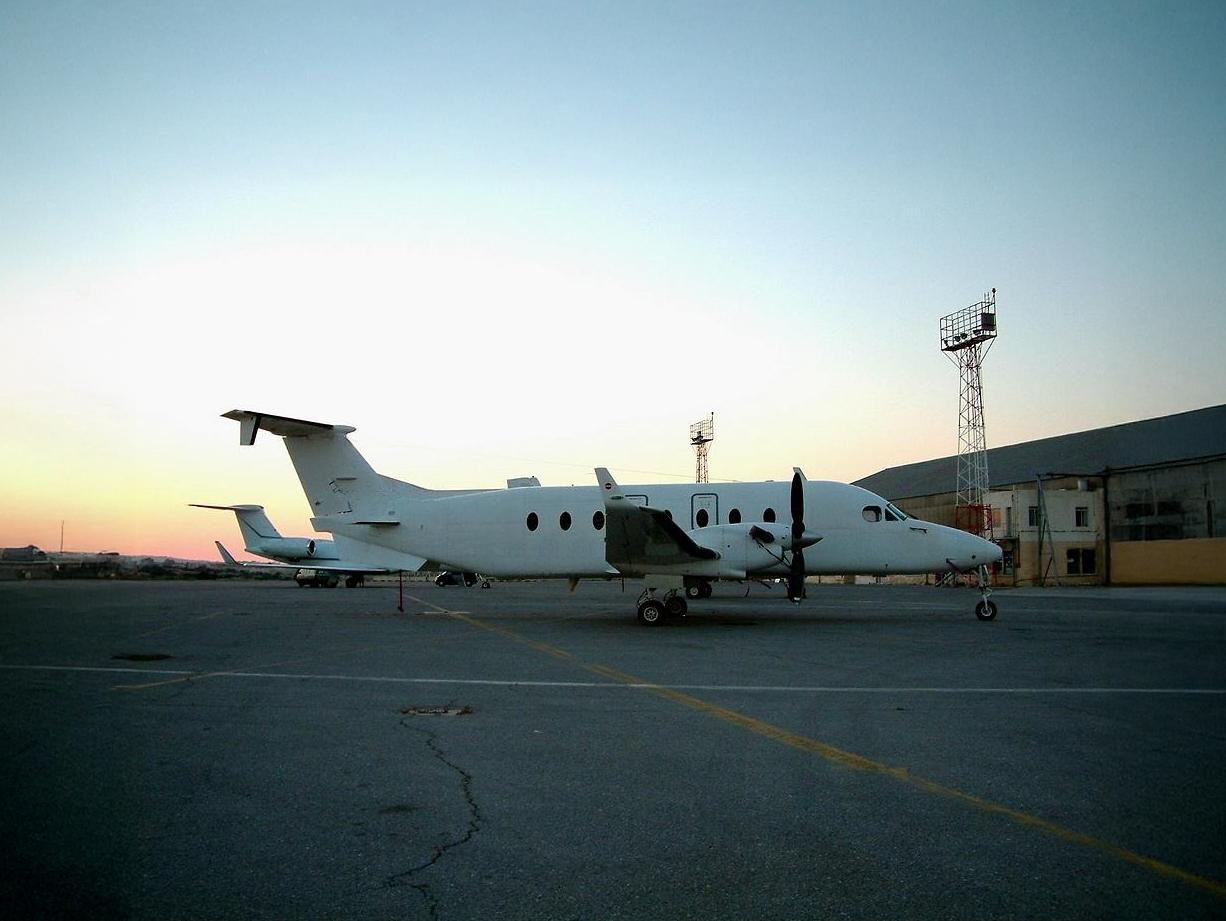


Free — save the 1900D to your watchlist and track it in one place.
More Beechcraft 1900Dmanuals & documents
See all 33 →- SAFETY INVESTIGATION REPORTOther Documents
- Fuel Consumption of the 50 Most Used Passenger AircraftOther Documents
- Type Acceptance Report TAR 98/07 – Beech 1900 SeriesOther Documents
- Airline Transport Pilot Oral Exam Guide—BE-1900 SystemsPilot's Operating Handbook
- BART: MAY - JUNE - 2020Other Documents
- THE FULLY INTEGRATED, ALL-GLASS UPGRADE FOR THE BEECH 1900D GARMIN® G950 NXi RETROFITAvionics Manual
- SERVICE BULLETIN INDEX - April 27, 2017Service Bulletins
- Master Minimum Equipment List (MMEL)Emergency Procedures
- FINAL REPORT ACCIDENT OF M/S. AIRCRAFT SALES AND SERVICES BEECHCRAFT-1900D AIRCRAFT, REG. NO. AP-BII ON 18TH MARCH, 2016 AT JIAP, KARACHIOther Documents
- Advisory Circular Subject: Airworthiness DirectivesSupplemental Type Certificate
- Aircrew Quick Reference Guide to the METAR and TAF CodesV Speeds Reference
- C&L AerospaceService Bulletins
If you fly the Beechcraft 1900D, you may also be researching these.


In this document
Maximum Takeoff Weight
The maximum takeoff weight for the Beechcraft 1900D is 19,000 pounds (8,618 kg). This limit is critical to ensure safe flight operations and must not be exceeded under any circumstances.
Center of Gravity Limits
The center of gravity (CG) limits for the Beechcraft 1900D are between 20.0 inches and 30.0 inches aft of the datum. Proper loading must be maintained to keep the CG within these limits for safe flight.
Weight Calculation Procedures
To calculate the weight and balance, operators must account for the weight of the aircraft, passengers, cargo, and fuel. A detailed procedure is provided to assist in determining the total weight and ensuring it is within the specified limits.
Loading Guidelines
The document includes guidelines for loading the aircraft to maintain balance. It emphasizes distributing weight evenly and avoiding excessive loading in the aft section of the aircraft.
Sample Weight and Balance Form
A sample weight and balance form is included to assist operators in documenting the weight and balance calculations prior to flight. This form should be completed and verified before each flight.
Safety notes
- Exceeding maximum takeoff weight can lead to unsafe flight conditions.
- Improper CG can affect aircraft handling and performance.
Full document text
PB88-910413 NATIONAL NATIONAL SAFETY TRANSPORTATION SAFETY BOARD ISPORTA, BOARD WASHINGTON, D.C. 20594 AIRCRAFT ACCIDENT REPORT RYAN AIR SERVICE, INC.. FLIGHT 103, BEECH AIRCRAFT CORPORATION 1900C, N401RA. HOMER, ALASKA. NOVEMBER 23. 1987 NTSB/AAR-88/11 UNITED STATES GOVERNMENT US DEPARTMENT OF COMMERCE NATIONAL TECHNICAL INFORMATION SERVICE SPRINGFIELD VA 2216 1. Report No. NTSB/AAR-88/11 TECHNICAL REPORT DOCUMENTATION PAGE 2. Government Accession No. PB88-910413 4. Title and Subtitle Aircraft Accident Report--Ryan Air Service, Inc., Flight 103, Beech Aircraft Corporation 1900C, N401RA, Homer, Alaska, November 23, 1987 7. Author(s) 9. Performing Organization Name and Address National Transportation Safety Board Bureau of Accident Investigation Washington, D.C. 20594 12. Sponsoring Agency Name and Address NATIONAL TRANSPORTATION SAFETY BOARD Washington, D.C. 20594 15. Supplementary Notes 3. Recipient's Catalog No. 5. Report Date December 20, 1988 6. Performing Organization Code 8. Performing Organization Report No. 10. Work Unit No. 4773 11 Contract or Grant No. 13. Type of Report and Period Covered Aircraft Accident Report November 23, 1987 14. Sponsoring Agency Code 16. Abstract: About 1825 on November 23, 1987, a Beech Aircraft Corporation 1900C (Be 1900), N401RA, operated by Ryan Air Service, Inc., crashed short of runway 3 at the Homer Airport, Homer, Alaska. Flight 103 was a scheduled Title 14 Code of Federal Regulations Part 135 flight operating from Kodiak, Alaska, to Anchorage, Alaska, with intermediate stops in Homer and Kenai Both flight crewmembers and 16 passengers were fatally injured; 3 passengers were seriously injured. The National Transportation Safety Board determines that the probable cause of this accident was the failure of the flightcrew to properly supervise the loading of the airplane which resulted in the center of gravity being displaced to such an aft location that airplane control was lost when the flaps were lowered for landing The safety issues discussed in the report include the performance of the Be 1900, the Federal Aviation Administration's oversight of Ryan, and Ryan's management of its operation. 17. Key Words: weight and balance; commuter flights; center of gravity; loading; emergency response 18. Distribution Statement This document is available to the public through the National Technical information Service, Springfield, Virginia 22161 21. No. of Pages 22. Price 19. Security Classification (of this report) UNCLASSIFIED NTSB Form 1765.2 (Rev. 5/88) 20. Security Classification (of this page) UNCLASSIFIED 96 A05 CONTENTS -NMMMMMZOND 2 1. 1.1 1.2 1.3 1.4 1.5 Personnel Information 1.5.1 The Captain 1.5.2 1.6 1.7 1.8 1.9 1.10 1.11 1.12 1.13 Fire 1.14 1.15 1.15.1 1.15.2 1.15.3 1.16 1.16.1 1.16.2 1.16.3 EXECUTIVE SUMMARY FACTUAL INFORMATION History of the Flight Injuries to Persons Damage to Aircraft Other Damage The First Officer Aircraft Information Meterological Information Navigation Aids Communications Aerodrome Information Flight Recorders Wreckage and Impact Information Medical and Pathological Survival Aspects Survivability Crash Crash/Fire Rescue Response Test and Research Information Component Disassembly Flight 103 Weight and Balance Flight Test 1.17 Other Information 1.17.1 Ryan Air Service, Inc. 1.17.2 1.17.3 FAA Surveillance 1.17.4 Ryan Weight and Balance Policies Accident History 2. ANALYSIS 2.1 2.2 2.3 2.4 2.5 2.6 2.6.1 2.6.2 3. 3.1 Mmm m 3.2 General Aircraft Performance Pilot Performance Company Management Survival Aspects Passenger Seats Extrication CONCLUSIONS Findings Probable Cause RECOMMENDATIONS FAA Surveillance 10 10 10 10 12 12 12 14 15 15 17 18 21 24. 25. 27 M3232820 32 32 33 5. APPENDIXES Appendix A--Investigation and Hearing Appendix B--Air Traffic Control Transcript Appendix C--Personnel Information Appendix D-Correspondence of Gareth Stoltzfus Appendix E--Results of FAA Special Inspection of Ryan Appendix F--Addendum #1 iv 59 60 64 562835 માં કાવાનું કહેવા EXECUTIVE SUMMARY About 1825 on November 23, 1987, a Beech Aircraft Corporation 1900C (Be 1900), N4f/1RA, operated by Ryan Air Service, Inc., crashed short of runway 3 at the Homer Airport, Homer, Alaska. Flight 103 was a scheduled Title 14 Code Federal Regulation Part 135 flight operating from Kodiak, Alaska, to Anchorage, Alaska, with intermediate stops in Homer and Kenai. Both flightcrew members and 16 passengers were fatally injured; 3 passengers were seriously injured. The National Transportation Safety Board determines that the probable cause of this accident was the failure of the flightcrew to properly supervise the loading of the airplane which resulted in the center of gravity being displaced to such an aft location that airplane control was lost when the flaps were lowered for landing. The safety issues discussed in the report include: • the performancs of the Beech 1900; • the Federal Aviation Administration's oversight of Ryan; and Ryan's management of its operation. Safety recommendations were addressed to the Federal Aviation Administration and the National Fire Protection Association. AIRCRAFT ACCIDENT REPORT RYAN AIR SERVICE, INC. FLIGHT 103 BEECH AIRCRAFT CORPORATION 1900C, N401RA HOMER, ALASKA NOVEMBER 23, 1987 NATIONALT SAFETY TATIC BOARD 1.1 History of the Flight 1. FACTUAL INFORMATION On November 23, 1987, Ryan Air Service, Inc. (Ryan), was operating a Beech (Be) 1900C, N401RA, as a regularly scheduled, passenger flight from Kodiak, Alaska, to Anchorage, Alaska, with intermediate stops in Homer and Kenai, Alaska. N401RA, as RYA 102, departed Anchorage, where its fuel tanks were filled at 1605, and it arrived in Kodiak at 1709. In Kodiak, the airplane was redesignated as RYA 103 with the same flightcrew. Seventeen male passengers, many of whom were hunters, and 2 female passengers, boarded the airplane and occupied the 19 available seats. The airplane was emptied of cargo and no fuel was added. The Kodiak station agent stated
Show full textShow less
that the first officer asked that the airplane be loaded "with 1,500 pounds of cargo." The agent thought the first officer's request was unusual because previous Be 1900 pilots, when operating with a full passenger load, had asked for 1,100 or 1,200 pounds of cargo. The station agent also said that the first officer told her, "Before we could get the 1,500 pounds on board, it would bulk out.' The baggage loader stated that, with the assistance of the captain and first officer, he loaded cargo into the compartments. In addition to suitcases, gun cases, frozen crabs, and two dogs in kennels, the cargo included “approximately 13-14 pieces” of packaged venison that weighed 795 pounds. The venison, which was destined for Kenai, had been stored overnight. The teletyped loading information from the Kodiak station egent to the Homer station agent indicated that 160 pounds of cargo was destined for Homer, 1,010 pounds for Kenai, and 267 pounds for Anchorage (a total of 1,437 pounds). The baggage loader stated that, after loading the cargo, the tailstand' was “about 1 inch from the ground," and the lowest to the ground that he had ever seen a tailstand. He stated that typically the tailstand came to within "3 to 4 inches, maybe more" of touching the ground. At 1737 (Alaska standard time), RYA 103 contacted Kodiak tower for its instrument flight rules (FR) clearance to Homer. The Anchorage Air Route Traffic Control Center (ARTCC), the controlling air traffic control facility, issued the following clearance to RYA 103 through the Kodiak tower, "Cleared to Homer via V-438, to maintain 1,000; clearance void if not off by 0244 [Universal "A tuilstand, to prevent the airplane from accidentally tipping onto its tail, was routinely used by Ryan when the Be 1900 was being loaded. 2 coordinated time]." The scheduled flight time to Homer was 33 minutes. Kodiak tow 103 for takeoff from runway 7 at 1742 (0242 Universal coordinated time (UTC). The local record ared RYA weather observation in effect at Kodiak was, in part: "sky clear, visibility 15; temperature 31°, dewpoint 14°, wind 240° at 6; altimeter 29.36.” A passanger on RYA 103 testified that he thought the airplane would "never become airborne" during the takeoff. He said that after the main gear lifted off the runway, the airplane then fell back to the runway and "accelerated for about another 15 knots" before it became airborne. The passenger stated that the airplane then seemed to climb out rather steeply. The flightcrew retracted the gear and the 10° of takeoff flaps and then contacted the Anchorage ARTCC at 1744, while the airplane was climbing through 1,900 feet. RYA 103 was instructed to maintain 4,000 feet to the 40 DME² and to expect no delay. RYA 103 requested a visual flight rules (VFR) climb, and Anchorage ARTCC cleared the flight to 12,000 feet, "cleared to Homer via V-438.“ At 1749, RYA 103 reported, "Level at 12,000 feet, on course V-438." At 1810, the Anchorage ARTCC cleared RYA 103 to descend to and maintain 6,000 feet and to expect an arrival delay at Homer due to a preceding IFR airplane. The ARTCC cleared the flight to hold on the Homer localizer, south at 7 DME, and to expect further clearance at 1825. At 1818, RYA 103 contacted the Homer Flight Service Station (FSS) and requested the position of the preceding airplane, a deHavilland of Canada DHC-6, Twin Otter. The pilot of the Twin Otter reported his position. RYA 103 then asked the Homer FSS for the current Homer weather. The FSS specialist reported the Homer weather as: "1,500 scattered, 3,500 broken, 4,500 overcast, visibility 12; temperature 31° F, dewpoint 22; wind 340 at 9, altimeter 29.31." At 1819, the Twin Otter pilot cancelled his IFR clearance, and RYA 103 was cleared for the localizer/DME approach to runway 3. At 1824, RYA 103 reported a 2-mile final. At 1825, the Homer FS$ specialist reported receiving a strong emergency locater transmitter signal on 121.5 MHz. Ground witnesses described RYA 103 when it was on a short final approach to the Homer airport. Its wings began to rock back and forth and then it dropped steeply to the ground in a rather flat attitude. The airplane struck the airport perimeter fence before sliding to a stop on its belly. The accident occurred during the hours of darkness at a latitude of 59°38.8' N and a longitude of 151°28.6' W. There was no fire. 1.2 Injuries to Persons Injuries Crew Passengers Other Total Fatal 2 16 18 Serious 0 3 0 3 Minor 0 0 0 0 None Q e Total 2 19 21 2Distance measuring equipment distance in nautical miles from a ground-based navigational aid. 3 1.3 Damage to Aircraft The airplane was destroyed in the accident. Its estimated value was $3.4 million. 1.4 Other Damage A portion of the airport's perimeter fence was damaged. 1.5 Personnel information The captain and first officer were qualified and certificated for the flight and had received the training required by current Federal regulations. (See appendix C.) 1.5.1 The Captain The captain, 26, had been hired by Ryan on April 11, 1984, and had been assigned to the Be 1900 as a first officer. His flight training records showed that he had completed captain upgrade training on May 16, 1987, and that on May 19, 1987, he received his Airline Transport Pilot Certificate and was upgraded to captain. The captain's flight times, verified by his lagbook, were as follows: Total flight time Total time in Be 1900 Pilot-in-Command time in Be 1900 7,087 hours 4,420 hours 714 hours The captain's position with Ryan Air Service was his first regional airline job. He had worked previously as a flight instructor at a local fixed-base operation. Company training records showed that the captain had received weight and balance training during his upgrade training in May 1987 and again during recurrent training in October 1987. In the previous 24 hours, 7 days, and 30 days before the accident, the captain had flown 7.5, 19, and 96 hours, respectively. There was nothing unusual reported about the captain's activities during the days before the accident. On the morning of the accident, the captain arrived at work at 0600 for the 0730 scheduled check-in. He and the first officer flew a scheduled round trip between Anchorage and lliamına, Alaska, in the morning and between Anchorage and St. Mary's, Alaska, in the early afternoon. The accident trip was the last scheduled trip of the day. Company personnel who saw the crew during the day reported nothing unusual in their behavior and said that they appeared to be working together well as a team. Crewmembers who flew with the captain described him as a capable and precise pilot who was very well trained on the operation of the aircraft. 1.5.2 The First Officer The first officer, 40, had been hired by Ryan on October 16, 1986, and was assigned as an intructor/check pilot on single and light, twin-engine airplanes, as well as a ground school instructor. He was assigned to the Be 1900 on November 21, 1986, as a first officer. He completed initial training in the Be 1900 on November 20, 1986, and performed his most recent proficiency check on November 21, 1987. The first officer received weight and balance training during his Be 1900 initial training on November 20, 1986, and during recurrent training on November 19, 1987. The first officer also had served as the company's "director of training" for at least a year before the accident. (See appendix D.) However, according to the company's president and its chief pilot, the first officer was not the director of training and his use of the title was unauthorized. There is no evidence that the company took action to prevent the first officer's use of that title. Both the Federal Aviation Administration's (FAA) principal operations inspector (POI) and the principal maintenance inspector (PMI) and other Ryan personnel stated that they considered him to be Ryan's director of training. Company records indicate that the first officer had accumulated the following flight times: Total flight time Total time in Be 1900 10,532 hours 300 hours (all as first officer) The first officer's position with Ryan was his first regional airline job. Before joining Ryan, he had more than 10 years of experience as a flight instructor. He was hired as a flight engineer on the DC-6 airplane for a local air cargo company (1980). However, he failed his FAA oral and was terminated. At the time of the accident, the first officer was an FAA-desginated pilot examiner for single-engine aircraft, for three models of multiengine aircraft (PA-23, PA-44, and P68-C), and for single-engine seaplanes. In the 24 hours, 7 days, and 30 days before the accident, the first officer flew 7.5, 13, and 27 hours, respectively. Investigation of the co-pilot's activities in the days before the accident indicated nothing unusual. The first officer's flying skills on the Be 1900 were described by the chief pilot as "average." 1.6 Aircraft Information The Beech Aircraft Corporation, 1900C was certificated under the airworthiness rules of Title 14 Code of Federal Regulation (CFR) Part 23 and was operated under 14 CFR Part 135 in passenger service. The pressurized cabin had seating for 19 passengers and 2 flightcrew members. (See figure 1.) The airplane was equipped with two Pratt and Whitney PT6A-65B turbine engines, flat-rated at 1,100 shaft horsepower, each with Hartzell four-blade, full-feathering propellers. The airplane was equipped with pneumatic deicing boots on the leading edges of the wings, horizontal stabilizers, and stabilons which permitted flight into known icing conditions. Bleed air from the engines supplied air pressure to inflate and create a vacuum to deflate the boots. A three- position switch "Single--Manual--Off" on the pilot's sub-panel controlled the deicing boots. In the "Single" position, the boots on the outboard wing would inflate for about 6 seconds and then deflate. After the outboard wing boots had deflated, the inboard wing, horizontal stabilizers, and stabilon boots would inflate and deflate. In the "Mancal" position, all the boots would inflate simultaneously and remain inflated until the switch was released. Beech recommended that to be most effective, 1 to 1 1/2 inches of ice be allowed to form on the deicing boots before inflating them. Ryan's FAA accepted weight and balance limits for the Beech 1900 were as follows: Weight (lbs) Forward Limit Limit Aft Range Center of Gravity (a) Takeoff (b) Landing 16,600 16,100 282.2 299.9 17.7 281.4 299.9 18.5 Useable fuel capacity is 2,848 pounds (425 gallons). 14'07 23'9.4" 12.25" $7'10 5 BEECHCRAFT 1900 AIRLINER SERIES of 00 10 10 .8'5.8" 54'5.8" Airplane Dimension Figure 1.--Beech 1900C. 17.25" 6.12" '1.5" DIA 3' 14'10.0" The accident airplane was equipped with three baggage compartments which had the following structural weight limit, in pounds: Nose baggage compartment Forward baggage compartment Aft cargo compartment 1) Forward section 2) Aft section Total 150 250 880 630 1,910 The incomplete weight and balance calculations displayed on flightcrew's weight and load manifest (a plasticized card on which entires were made with a grease pencil) indicated the following: Item Basic empty condition Weight (lbs.) Moment3/100 9,162 Crew and crew baggage 360 25,906 464 Passengers (19) 3,230 10,540 Nose Baggage Forward Cabin 250 409 Aft -- Cargo Fuel Less taxi fuel Takeoff condition 1,608 4,831 (-110) 15,700 (-300) The airplane's aircraft and flight log indicated the following: Takeoff weight Cargo 15,700 lbs. 1,450 lbs. Additionally, the flight log indicated a calculated center of gravity (CG) location of 299.5 inches aft of reference. (The aft CE limit for the takeoff or landing condition of the Be 1900, regardless of weight, is 299.9 inches aft of reference.) 1.7 Meterological Information The National Weather Service issued the following forecast for the Anchorage area at 2240 UTC: Hazards valid until November 24, 1100 UTC, Flight precautions, ¡FR--Cook Inlet4-- Susitna Valley -North Gulf Coast--Yukon. Kuskokwim Delta-Bristol Bay: Icing--Cook Inlet--Copper River Basin--North Gulf Coast. Turbulence--North Gulf Coast. Icing and freezing level valid until November 24, 1100 UTC. The weight of an object on an airplane multiplied by the distance of the center of mass of that object from a reference point on the airplane fuselage. On the Be 1900, the moment was measured in inch-pounds. Homer Airport is considered to be in the Cook Inlet region. 7 Cook Inlet-North Gulf Coast--Copper River Basin: Occasional moderate rime icing in clouds, in precipitation; freezing level to 10,000 feet The 1958 Homer hourly record observation stated: 1500 scattered, estimated ceiling 3,500 broken, 4,500 overcast, visibility 12; temperature 31", dewpoint 23°, wind GS0° at 10 knots, altimeter 29.32. Homer FSS issued notice to airmen (NOTAM) 11/00$ describing runway conditions as patchy, thin ice on runway, sanded. A pilot report (PIREP) from a Twin Otter at 1815 at 5,000 feet from 10 miles north of Tustumena Lake, about 40 miles north of Homer, stated light chop and light occasional moderate rime icing in clouds. There were no PIREP's on file or reported between Kodiak and Homer. Weather at Homer at the time of the accident was, in part: 1,500 scattered, 3,500 broken, 4,500 overcast; visibility--12 miles; temperature-- 31°F, dewpoint 23°, wind 050° at 10 knots, altimeter 29.37. 1.8 Navigation Aids Not applicable. 1.9 Communications There were no reported problems with airborne or ground communications equipment. 1.10 Aerodrome Information The Homer Alaska Airport is owned and maintained by the State of Alaska. It is located 2 mites east of Homer, Alaska, adjacent to the Kachemak Bay. The field elevation is 78 feet above sea level. An FAA FSS is located at the airport. The airport has one hard surfaced runway, 3/21, which is 7,400 feet long and 150 feet wide. U.S. Coast Guard and Alaska Air National Guard C-130 airplanes often operate at the airport. Additionally, three Part 135 scheduled carriers and three Part 135 nonscheduled carriers operate at the airport. The following lighting and navigational aids are available for runway 3: a medium intensity approach light system, a visual approach slope indicator, and runway edge lighting. Runway 3 is served by a localizer/DME approach. All systems were operating normally at the time of the accident, and no alarms were heard by the FSS specialist. The systems were ground-inspected after the accident and no out-of-tolerance parameters were noted. The localizer/DME facility was flight- checked by the FAA on November 25, 1987, and was found to be operating within tolerance. There was no fire or rescue equipment located at the airport, and none was required. 1.11 Flight Recorders The airplane was not equipped with either a cockpit voice recorder or a flight data recorder and neither was required. 8 1.17 Wreckage and Impact Information The airplane wreckage, located west of runway 3, was distributed along a distance of 159 feet, on a heading of approximately 335°. A video tape taken 4 hours after the accident revealed a rime ice accumulation up to 3/8 inch on the leading edges of the wings, horizontal stabilizers, stabiions, tailets, vertical stabilizer, and nose cone. No other ice accumulation was observed on the airplane. The gear actuators indicated that the gear was down and locked at impact. (See figure 2.) The propeller blades of both engines, which were composed of composite material, were broken away at their hubs and were scattered along the wreckage path. The fuselage came to rest with a slight list to the left side; the belly structure was compressed. The left side in the area of the wing was crushed by the upward displacement of the wing spar about 15 inches. The skin was wrinkled from the nose and rearward along both sides of the fuselage. A longitudinal wrinkle extended along the center of the top of the fuselage from just aft of the cabin entrance door to the dorsal fin. Both sides of the empennage were wrinkled at the pressure bulkhead joint. The lower empennage, aft of the cargo door, was crushed severely especially on the left side. The lower wing surfaces were heavily damaged from their root end to outboard of the landing għar well. Numerous ribs were broken and/or crushed. The flap handle was in the up position. The left flap actuator attachment brackets were broken. The right flap actuator was found in an intermediate position, between 7° and 12°. Company procedure was to select full (35°) flaps when landing was assured. The airplane's flight control system, including its cubles, were found intact and functioning within acceptable parameters. The cockpit stabilizer manual trim wheel and the associated trim cables were found in the full nose-down position and against the full nose-down stops, respectively. According to rescue personnel, none of the passenger seats were found attached to the floor or side wall seat tracks. Seat back frames were twisted and bent, and several had separated from the pivot bracket that attached them to the seat pan frame. Seat pan frames had separated and were bent downward. The seat pan fabric that supports the seat cushion was torn through. Several seats were missing one or both seat legs, while some seats had separated legs. The seatbelts were found attached to the seats and were fully operational. The cockpit seats were attached to their two seat tracks and were in place. The seat pan fabric was found torn on both seats. The right seat had separated downward from the front of the seatpan frame tubes. 1.13 Fire There was no fire. 1.14 Medical and Pathological The captain and 13 passengers were found fatally injured at the wreckage. The first officer and 6 passengers were alive. They were transported to local hospitals where their conditions were stabilized. The seven survivors were then transported by air to hospitals in Anchorage. The first officer and one passenger died en route and two passengers died in the Anchorage hospital on November 24. The 18 who were killed died as a result of the blunt force mucloskeletal and internal injuries that had been sustained during the impact sequence. Figure 2.--Wreckage of RYA 103. 6 10 Three passengers who survived had sustained serious injuries. A 16-year-old male in seut 3-8, a 26-year-old male seated in either seat 7A or seat BA, and a 22-year-old female who had been in seat 6B. (See figure 3.) Toxicological tests were performed on urine and other body specimens obtained from the captain and the first officer. The results were negutive on a drug screen that included alcohol, antidepressanto, sedatives, barbiturates, tranquilizers, amphetamine and methamphetamine, cocaine, marijuana metabolites, and phencycylidirvą. 1.15 Survival Aspects 1.15.1 Survivability When rescue personnel arrived at the accident site, they observed the left front cobin door opened and lying on the ground. Except for one male passenger, the remaining airplane occupants were in their seats with their seatbelts still fastered. Rescue workers removed passengers through the open left front cabin door because the left and right overwing emergency exits were too narrow to accommodate passengers on backboards end because the left rear cargo door was jammed shut. The hinges on that door had to be cut off to gain entry into the rear cabin. Rescue personnal attempted to gain access to the cabin by cutting into the left rear cargo door and widening one of the cabin windows. Lowever, they were hampered because the fuselage skin kept springing back. Because cargo and seats were blocking the way through the rear door, passengers were removed through the main cabin entry door. During the extrication process, the cabin interior was disturbed by rescue personnel and as a result, the exact position of many of the bodies and passenger seats could not be determined. 1.15.2 Crash The passenger seats were certificated according to the inertia loads in 14 CFR 23.561, i.e., 3.0 G. upward, 3.0 G. downward, 9.0 G. longitudinal, and 1.5 G. lateral. These values are increased by 1.33 to take into account the strength of the fittings or attachments for the seats. Beech exceeded the requirements 14 CFR Part 23 and statically tested the seats to the following criteria: 5.25 G. upward, 8.25 G. downward, 12 G. longitudinal, and 2.85 G. lateral. The three-place bench seat was tested to 4.2 G. upward, 7.2 G. downward, 12 G. longitudinal, and 2 4 G. lateral. Using the airplane's attitude at impact, an assumed impact velocity, and the crush damage to the fuselage, the Safety Board determined the values of the average accelerations that occurred at initial impact along the airplane's longitudinal, lateral, and vertical axes. The range of those accelerations were 7.01 to 10.40 Gs. longitudinal, 4.8-7.23 Gs. lateral, and 19.00-35.7 Gs. vertical. The vertical velocity change was about 42 feet per second. 1.15.3 Crash/Fire Rescue RespoNSE At 1825, the Horner Volunteer Fire Department was notified of the crash by the Momer police dispatch. One rescue unit, two medic units, a "retired" ambulance (used only in emergencies and on special occasions), une engine company, and two tankers arrived on scene between 1839 and 1845. Although there was no fire, the emergency medical services chief requested firefighters to apply foam on the airplane and around areas that presented a fire hazard. Two difficulties impeded rescue activities. First, the rear cargo door was deformed at the lower door latch and would not operate. Attempts to open the cargo door using a "Hurst" spreader (IL-32B) with standard tips was not successful because the fuselage ripped and reduced the force on
What's in the Beechcraft 1900D TCDS
A Type Certificate Data Sheet (TCDS) is the FAA's record of what an aircraft type was approved as. It is the source of truth for weights, seating, fuel and the rules the design was certified against. Expand any line to see what it means.
376 Beechcraft 1900D parts for sale
See all →




Parts listed for sale by vetted eBay sellers — confirmed on eBay at checkout.