BOEING 767-300ER Model Guide
BOEING 767-300ER · Model Guide
Overview
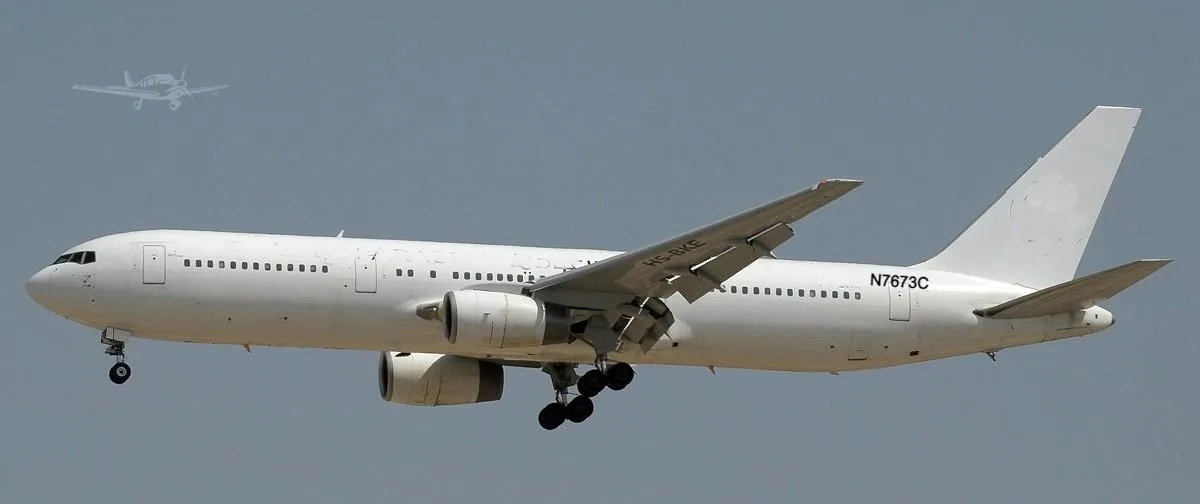
BOEING 767-300ER is a twin-engine Boeing 767 variant. The registry row for it is unreliable: it lists category single-engine-piston and engine type piston, but the family record says turbofan and the checklist covers a two-engine start. The row gives no seats, years, range or weights, so this guide uses only the three documents supplied.
- Registry data is thin and contradicts itself (piston vs turbofan). Confirm engines, seats and weights from the airframe's own records.
- Checklist speeds: V1 140, Vr 145, V2 150 KIAS; landing 145 KIAS. They come from a 2007 third-party document, not a Boeing manual.
- Boeing bulletin 767-27-0201 calls for a pogo check of six elevator actuator input rods every 12,000 flight hours or less. Its listed effectivity is 767-400ER.
- Boeing's October 2012 maintenance planning data lists airworthiness limitations and certification maintenance requirements to check against the aircraft's records.
Summary written by AI from the source document. Check the original before relying on it. See which parts of Sprinkle are written by AI.
Reference only, not for flight. Use the current approved manual for your aircraft. See terms, section 5.
Document
Source
Copy found at sprinkle.com. Sprinkle hosts a reference copy with an added summary, specifications and searchable full text.
Document details
- Type ·
- Model Guide
- Year ·
- 2026
- File size ·
- 47 KB
- Copy found at ·
- sprinkle.com
Specifications & performance
Extracted from this document.
Performance
- Cruise fl180 (kt) ·
- 332
- Cruise fl240 (kt) ·
- 343
- Cruise fl280 (kt) ·
- 325
- Cruise fl330 (kt) ·
- 292
- Climb trim rate (fpm) ·
- 1,800
- Climb trim speed (kt) ·
- 250
- Max speed above 10000 ft (kt) ·
- 300
- Max speed below 10000 ft (kt) ·
- 250
V-speeds
- V1_KTS ·
- 140
- V2_KTS ·
- 150
- VR_KTS ·
- 145
- LANDING_KTS ·
- 145
- FINAL_APPROACH_KTS ·
- 155
- FLAPS_5_RETRACT_KTS ·
- 180
- FLAPS_UP_RETRACT_KTS ·
- 210
What engines does the BOEING 767-300ER have?
For the BOEING 767-300ER, the registry row says piston, but the family record says turbofan and the checklist describes starting two engines. Treat the piston entry as an error and confirm the engines in the aircraft's records.
Does the elevator bulletin apply to the BOEING 767-300ER?
Bulletin 767-27-0201 lists 767-400ER in its effectivity. Its background cites 767-300 airplanes failing an earlier check. Ask the seller which related bulletins and ADs apply to this BOEING 767-300ER.
What is the BOEING 767-300ER Model Guide?
The BOEING 767-300ER Model Guide is a model guide for the BOEING 767-300ER, dated 2026.
What year was the BOEING 767-300ER Model Guide published?
The BOEING 767-300ER Model Guide — the BOEING 767-300ER model guide on file — is dated 2026.
Common. More common than 94% of the aircraft models we track.
Most owners only have the POH. Here's the essential set for the BOEING 767-300ER.
- Pilot's Operating Handbook / AFM
- Checklist
- Maintenance Manual
- Parts Catalog (IPC)
- Systems & Wiring
- Service Bulletins on file
- Type Certificate (TCDS)
BOEING 767-300ER for sale now


Free — save the 767-300 to your watchlist and track it in one place.
More BOEING 767-300ERmanuals & documents
If you fly the BOEING 767-300ER, you may also be researching these.




In this document
Speeds in the pilot checklist
The checklist gives climb-out trim at 250 KIAS and 1800 fpm. Maximum speed is 250 KIAS below 10000 ft and 300 KIAS above. Cruise targets are 0.68 M / 332 KIAS at FL180, 0.75 M / 343 KIAS at FL240, and 0.80 M at FL280 and FL330 (325 and 292 KIAS). Final approach is 155 KIAS and taxi speed is capped at 20 knots.
Elevator pogo check bulletin
Service Bulletin 767-27-0201 (June 27, 2007) requires a pogo check of the input rod assembly on each of the six elevator power control actuators. The repeat interval must not exceed 12,000 flight hours, and the estimate is 32.0 task hours. Its effectivity lists 767-400ER only. Ask the seller how ADs 2000-17-05 and 2001-04-09 and related bulletins were handled on this airframe.
Maintenance planning data to review
Section 9 of the 767 Maintenance Planning Data (D622T001-9, October 2012) covers structural inspections, safe life parts, and systems limits. The systems limits include fuel system ignition prevention and the nitrogen generation system. It also lists certification maintenance requirements. Freighter conversions have separate limits, for example 2,000 flight cycles for 767-300BCF landing gear, so confirm the airframe's passenger or freighter history.
Summary written by AI from the source document. Check the original before relying on it. See which parts of Sprinkle are written by AI.
Safety notes
- One operator reported a drooping left elevator at preflight, with sheared rivets in the bellcrank assemblies. The single hydraulic system check may not detect such rivets.
- Per the bulletin, several 767-200, 767-300 and 767-300F airplanes failed the one-time shear-rivet check. Verify AD 2000-17-05 and 2001-04-09 compliance records.
- The registry lists this model as single-engine piston, which conflicts with the other inputs. Do not rely on it for a purchase.
Summary written by AI from the source document. Check the original before relying on it. See which parts of Sprinkle are written by AI.
Full document text
BOEING 767-300ER Model Guide BOEING 767-300ER is a twin-engine Boeing 767 variant. The registry row for it is unreliable: it lists category single-engine-piston and engine type piston, but the family record says turbofan and the checklist covers a two-engine start. The row gives no seats, years, range or weights, so this guide uses only the three documents supplied. • Registry data is thin and contradicts itself (piston vs turbofan). Confirm engines, seats and weights from the airframe's own records. • Checklist speeds: V1 140, Vr 145, V2 150 KIAS; landing 145 KIAS. They come from a 2007 third-party document, not a Boeing manual. • Boeing bulletin 767-27-0201 calls for a pogo check of six elevator actuator input rods every 12,000 flight hours or less. Its listed effectivity is 767-400ER. • Boeing's October 2012 maintenance planning data lists airworthiness limitations and certification maintenance requirements to check against the aircraft's records. Speeds in the pilot checklist The checklist gives climb-out trim at 250 KIAS and 1800 fpm. Maximum speed is 250 KIAS below 10000 ft and 300 KIAS above. Cruise targets are 0.68 M / 332 KIAS at FL180, 0.75 M / 343 KIAS at FL240, and 0.80 M at FL280 and FL330 (325 and 292 KIAS). Final approach is 155 KIAS and taxi speed is capped at 20 knots. Elevator pogo check bulletin Service Bulletin 767-27-0201 (June 27, 2007) requires a pogo check of the input rod assembly on each of the six elevator power control actuators. The repeat interval must not exceed 12,000 flight hours, and the estimate is 32.0 task hours. Its effectivity lists 767-400ER only. Ask the seller how ADs 2000-17-05 and 2001-04-09 and related bulletins were handled on this airframe. Maintenance planning data to review Section 9 of the 767 Maintenance Planning Data (D622T001-9, October 2012) covers structural inspections, safe life parts, and systems limits. The systems limits include fuel system ignition prevention and the nitrogen generation system. It also lists certification maintenance requirements. Freighter conversions have separate limits, for example 2,000 flight cycles for 767-300BCF landing gear, so confirm the airframe's passenger or freighter history. Safety notes: • One operator reported a drooping left elevator at preflight, with sheared rivets in the bellcrank assemblies. The single hydraulic system check may not detect such rivets. • Per the bulletin, several 767-200, 767-300 and 767-300F airplanes failed the one-time shear-rivet check. Verify AD 2000-17-05 and 2001-04-09 compliance records. • The registry lists this model as single-engine piston, which conflicts with the other inputs. Do not rely on it for a purchase.