Cessna 120 Model Guide
Cessna 120 · Model Guide
Overview
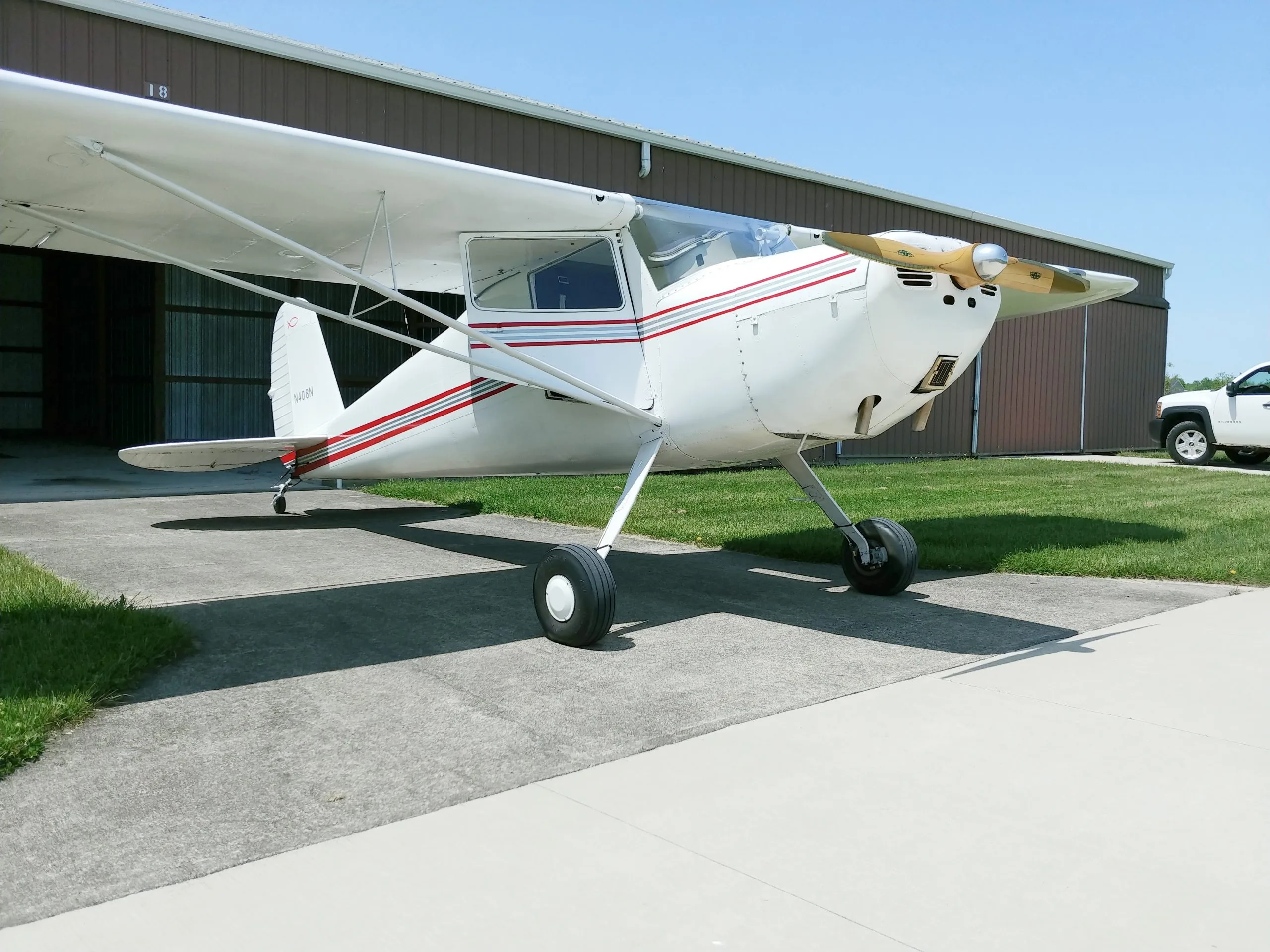
The Cessna 120 is a two-seat, single-engine piston tailwheel aeroplane built from 1946 to 1950. It is the Cessna 140 without wing flaps, and it uses a Continental C-85 engine rated at 85 hp. Registry data for the model family lists up to 106 kt cruise and 380 nm range. Confirm the real figures from the individual aircraft's papers.
- Cessna 120: 2 seats, 85 hp Continental C-85, 25 gal fuel, 1450 lbs maximum weight (landplane).
- No wing flaps are fitted, so landings carry more speed and run longer than in flapped types.
- Check the original landing gear legs for corrosion and cracks at the step bolt holes.
- Forward doorposts, drag wires and many old FAA ADs need log-book proof of compliance.
Summary written by AI from the source document. Check the original before relying on it. See which parts of Sprinkle are written by AI.
Reference only, not for flight. Use the current approved manual for your aircraft. See terms, section 5.
Document
Source
Copy found at sprinkle.com. Sprinkle hosts a reference copy with an added summary, specifications and searchable full text.
Document details
- Type ·
- Model Guide
- Year ·
- 2026
- File size ·
- 48 KB
- Copy found at ·
- sprinkle.com
Specifications & performance
Extracted from this document.
Specifications
- Engine power (hp) ·
- 85
- Max baggage (lb) ·
- 80
- Fuel capacity (gal) ·
- 25
- Max takeoff weight (lb) ·
- 1,450
Performance
- Max level flight speed (kt) ·
- 100
- Seaplane max level flight speed (kt) ·
- 91
V-speeds
- MAX_GLIDE_OR_DIVE_SPEED_KTS ·
- 122
Weight & balance
- Max baggage (lb) ·
- 80
- Max takeoff weight seaplane (lb) ·
- 1,556
- Max takeoff weight landplane (lb) ·
- 1,450
How much can a Cessna 120 carry?
The Cessna 120 seats two. Maximum weight is 1450 lbs for a landplane or skiplane and 1556 lbs for a seaplane. Baggage is limited to 80 lbs, and fuel capacity is 25 gal.
Does the Cessna 120 have flaps?
No. The Cessna 120 is the Cessna 140 without wing flaps. A pilot used to a Cessna 172 found it slowed less on landing and ran off a wet runway.
What engine does the Cessna 120 use?
The Cessna 120 specification lists a Continental C-85-12 or C-85-12F engine, rated 85 hp at 2575 rpm, on 73 minimum octane fuel. Optional engines are listed in the specification.
What should I check when buying a Cessna 120?
On a Cessna 120, check gear legs for corrosion at the step bolt holes, and check the forward doorposts and drag wires. Also check log-book records of the FAA ADs listed in the NZ schedule.
What is the Cessna 120 Model Guide?
The Cessna 120 Model Guide is a model guide for the Cessna 120, dated 2026.
What year was the Cessna 120 Model Guide published?
The Cessna 120 Model Guide — the Cessna 120 model guide on file — is dated 2026.
Common. More common than 95% of the aircraft models we track.
Most owners only have the POH. Here's the essential set for the Cessna 120.
Cessna 120 for sale now
Free — save the 120 to your watchlist and track it in one place.
More Cessna 120manuals & documents
See all 15 →- Airworthiness Directive Schedule Aeroplanes Cessna 120Service Bulletins
- AAIB Bulletin: 8/2022Service Bulletins
- Model 1500 Ski Installation Procedure: Cessna 120, 140 & 140AFlight Manual
- AAIB Bulletin No: 4/2004Maintenance Manual
- AIRWORTHINESS DIRECTIVEAirworthiness Directives
- AIRWORTHINESS DIRECTIVEAirworthiness Directives
- AIRWORTHINESS DIRECTIVE AD/CESSNA 120/9 Wing Drag Wire SystemAd
- AIRWORTHINESS DIRECTIVEAirworthiness Directives
- PROPELLER INSTALLATION REFERENCE BOOKV Speeds Reference
- Civil Aeronautics Manual 3Supplemental Type Certificate
- AIRCRAFT SPECIFICATION NO. A-768Flight Manual
- Cessna 120 140 Master ManualOther Documents
If you fly the Cessna 120, you may also be researching these.



In this document
What it carries and burns
Two seats, 80 lbs of baggage and 25 gal of fuel in two 12.5 gal tanks. Maximum weight is 1450 lbs as a landplane or skiplane, and 1556 lbs as a seaplane. The engine is a Continental C-85-12 or C-85-12F running on 73 minimum octane fuel. The specification lists optional engines.
Airworthiness items to verify
Ask for evidence of the forward doorpost inspection (serial numbers 8001 through 8799) and of the wing drag wire inspection. The Australian ADs repeat both at intervals of up to 100 hours. The NZ schedule also lists rudder cable horns, elevator spar web, aileron ribs, stabilizer bolts, mufflers and the cabin heat system.
Landing gear and landing technique
A UK accident report found a fractured gear leg on a 1946 aircraft whose original leg had never been changed. Fatigue cracking started at a corroded step bolt hole. A separate 1948 aircraft ran off a wet, downhill grass runway after a fast, long landing. The pilot was used to flaps and was near maximum weight.
Summary written by AI from the source document. Check the original before relying on it. See which parts of Sprinkle are written by AI.
Safety notes
- Inspect gear legs at the step bolt holes; corrosion there led to a leg fracture on a 1946 Cessna 120.
- A Cessna 120 has no flaps. A fast, long touchdown on wet grass led to a hedge strike near maximum weight.
- Do not skip the forward doorpost and drag wire inspections; both are repeating AD items.
Summary written by AI from the source document. Check the original before relying on it. See which parts of Sprinkle are written by AI.
Full document text
Cessna 120 Model Guide The Cessna 120 is a two-seat, single-engine piston tailwheel aeroplane built from 1946 to 1950. It is the Cessna 140 without wing flaps, and it uses a Continental C-85 engine rated at 85 hp. Registry data for the model family lists up to 106 kt cruise and 380 nm range. Confirm the real figures from the individual aircraft's papers. • Cessna 120: 2 seats, 85 hp Continental C-85, 25 gal fuel, 1450 lbs maximum weight (landplane). • No wing flaps are fitted, so landings carry more speed and run longer than in flapped types. • Check the original landing gear legs for corrosion and cracks at the step bolt holes. • Forward doorposts, drag wires and many old FAA ADs need log-book proof of compliance. What it carries and burns Two seats, 80 lbs of baggage and 25 gal of fuel in two 12.5 gal tanks. Maximum weight is 1450 lbs as a landplane or skiplane, and 1556 lbs as a seaplane. The engine is a Continental C-85-12 or C-85-12F running on 73 minimum octane fuel. The specification lists optional engines. Airworthiness items to verify Ask for evidence of the forward doorpost inspection (serial numbers 8001 through 8799) and of the wing drag wire inspection. The Australian ADs repeat both at intervals of up to 100 hours. The NZ schedule also lists rudder cable horns, elevator spar web, aileron ribs, stabilizer bolts, mufflers and the cabin heat system. Landing gear and landing technique A UK accident report found a fractured gear leg on a 1946 aircraft whose original leg had never been changed. Fatigue cracking started at a corroded step bolt hole. A separate 1948 aircraft ran off a wet, downhill grass runway after a fast, long landing. The pilot was used to flaps and was near maximum weight. Safety notes: • Inspect gear legs at the step bolt holes; corrosion there led to a leg fracture on a 1946 Cessna 120. • A Cessna 120 has no flaps. A fast, long touchdown on wet grass led to a hedge strike near maximum weight. • Do not skip the forward doorpost and drag wire inspections; both are repeating AD items.