Cessna 340 Model Guide
Cessna 340 · Model Guide
Overview
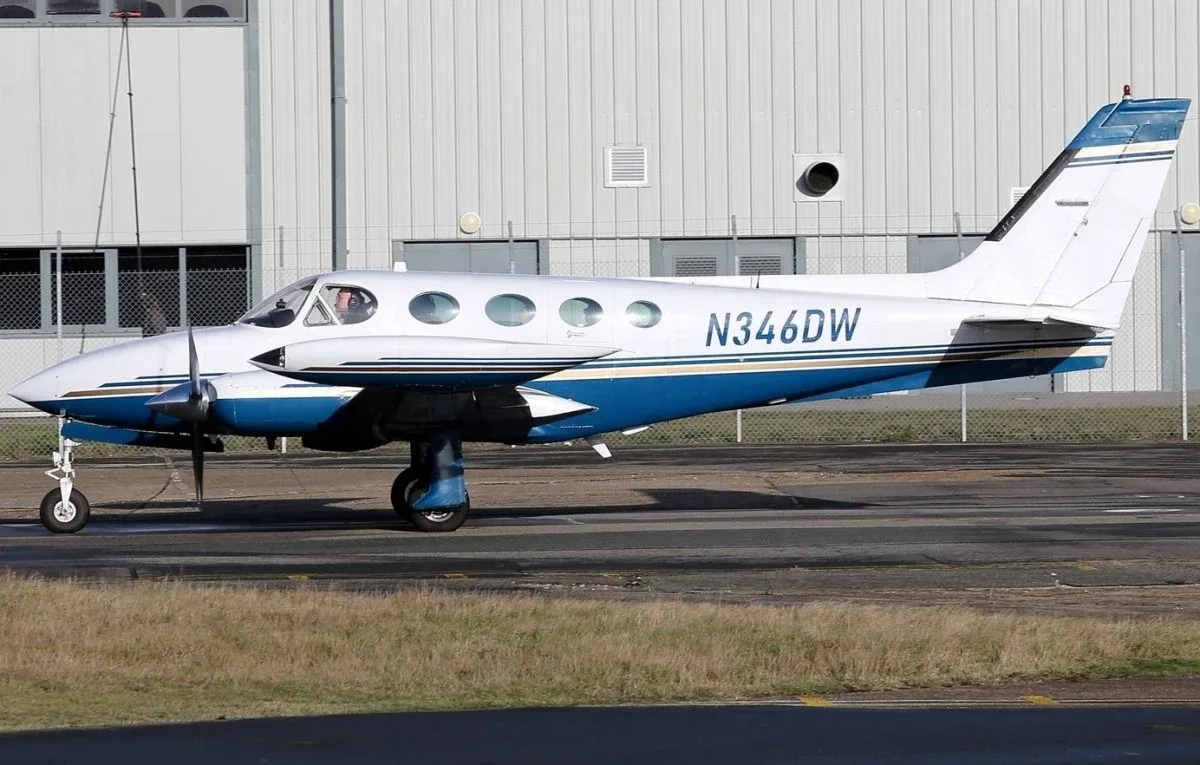
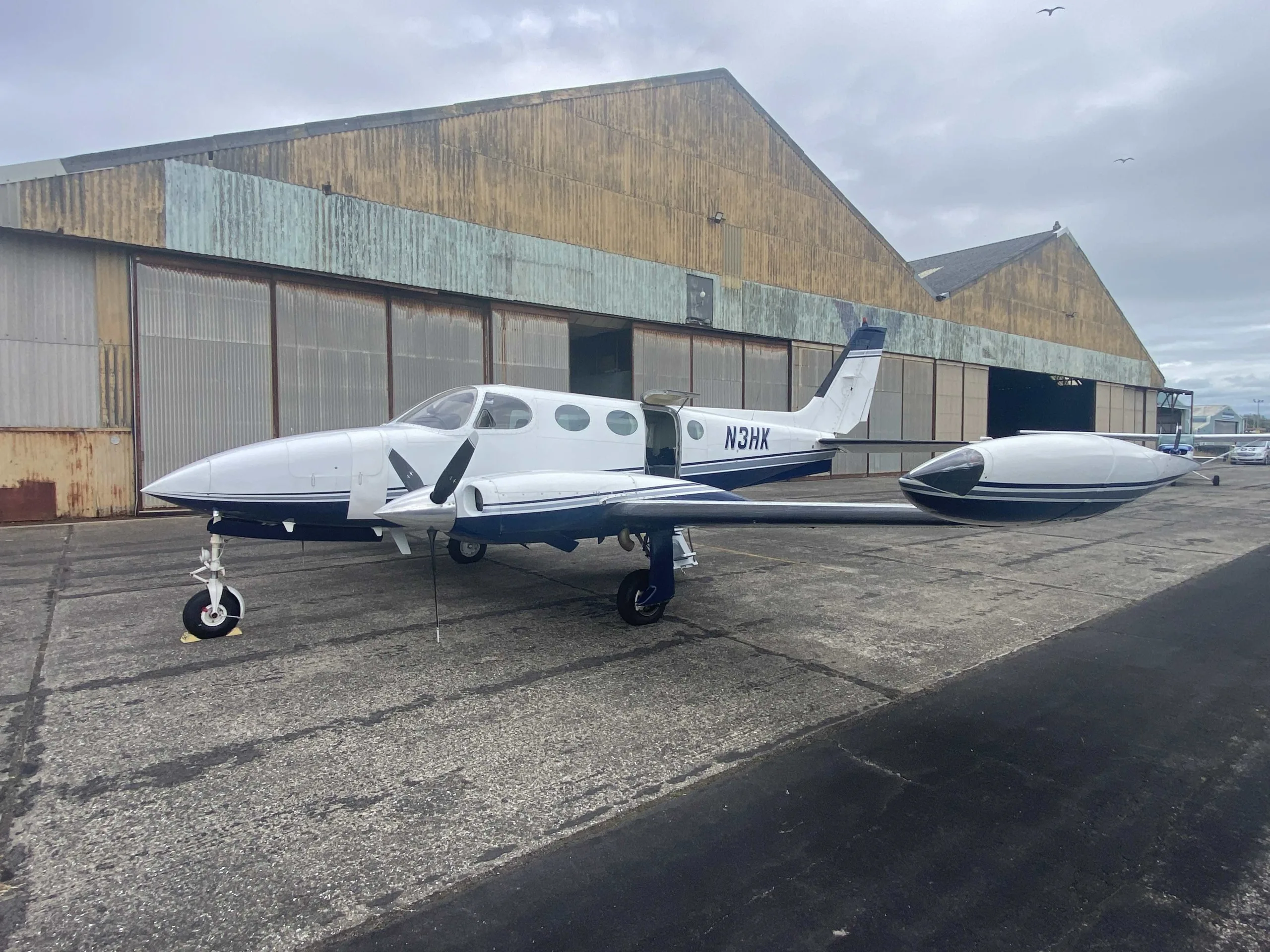
The Cessna 340 is a pressurized, turbocharged twin-engine piston airplane built from 1972 to 1984, seating 4 to 6. The registry lists two variants, the 340 and 340A. Most performance figures here come from a 1976 pilot report on the 340A, plus service, airworthiness and accident documents.
- 1976 340A flight test: 220 kt cruise, 29,800 ft service ceiling, and 861 nm range at normal cruise with 45-minute reserve.
- Useful load is 2,122 lb against a 5,990 lb maximum weight. The test aircraft sat near max weight with 163 gal, three people and baggage.
- An Australian AD sets retirement lives for the wing main spar lower cap and attachment fittings. Check logged hours and flights.
- A 2011 right main gear collapse on a 340A was never traced to a cause. Inspect the side brace, downlock link and microswitch.
Summary written by AI from the source document. Check the original before relying on it. See which parts of Sprinkle are written by AI.
Reference only, not for flight. Use the current approved manual for your aircraft. See terms, section 5.
Document
Source
Copy found at sprinkle.com. Sprinkle hosts a reference copy with an added summary, specifications and searchable full text.
Document details
- Type ·
- Model Guide
- Year ·
- 2026
- File size ·
- 50 KB
- Copy found at ·
- sprinkle.com
Specifications & performance
Extracted from this document.
Specifications
- Engine power (hp) ·
- 310
- Baggage capacity (lb) ·
- 930
- Fuel capacity optional (gal) ·
- 207
- Fuel capacity standard (gal) ·
- 102
Performance
- Cruise speed (kt) ·
- 220
- Rate of climb (fpm) ·
- 1,650
- Max level speed (kt) ·
- 242
- Service ceiling (ft) ·
- 29,800
- Takeoff over 50ft (ft) ·
- 2,175
- Range normal cruise (nm) ·
- 861
- Takeoff ground roll (ft) ·
- 1,615
- Single engine rate of climb (fpm) ·
- 315
Weight & balance
- Useful load (lb) ·
- 2,122
- Empty weight (lb) ·
- 3,868
- Baggage capacity (lb) ·
- 930
- Max takeoff weight (lb) ·
- 5,990
What does the Cessna 340 carry?
The Cessna 340 seats 4 to 6. The 1976 340A listing shows 6 people, a useful load of 2,122 lb, baggage capacity of 930 lb and a gross weight of 5,990 lb.
How fast and how far does the Cessna 340 go?
In the 1976 test, the Cessna 340A cruised at 220 kt at 77.5% power and 24,500 ft. Range at normal cruise was 861 nm with 163 gal and a 45-minute reserve. The registry lists family maxima of 1170 nm and 30000 ft, under different conditions.
What engines and props does the Cessna 340A have?
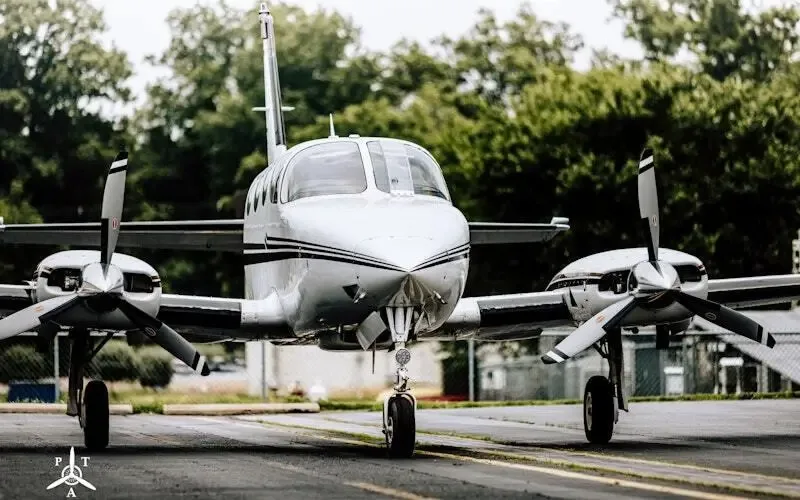
The 1976 Cessna 340A has two Continental TSIO-520-N engines at 310 hp each. They turn McCauley 3-blade, 76.5-in constant-speed, full-feathering propellers.
What experience is needed to train in a Cessna 340?
One training provider's Cessna 340 syllabus requires a private certificate or higher with an instrument rating, a current IPC and flight review, and 1000 hours total time. The course is 20 hours of ground instruction and 9 hours of flight and simulator training.
What is the Cessna 340 Model Guide?
The Cessna 340 Model Guide is a model guide for the Cessna 340, dated 2026.
What year was the Cessna 340 Model Guide published?
The Cessna 340 Model Guide — the Cessna 340 model guide on file — is dated 2026.
Common. More common than 95% of the aircraft models we track.
Most owners only have the POH. Here's the essential set for the Cessna 340.
- Pilot's Operating Handbook / AFM
- Checklist
- Maintenance Manual
- Parts Catalog (IPC)
- Systems & Wiring
- Service Bulletins on file
- Type Certificate (TCDS)
Cessna 340 for sale now
Free — save the 340 to your watchlist and track it in one place.
More Cessna 340manuals & documents
See all 13 →- Airplane Flight Manual SupplementFlight Manual
- NAVIGATION - STALL WARNING HORN REPLACEMENTService Bulletins
- Alumigrip 10P8-11 Technical Data SheetSpecifications
- Propeller Owner's Manual and LogbookMaintenance Manual
- AAIB Bulletin: 1/2012Maintenance Manual
- SCHEDULE OF AIRWORTHINESS DIRECTIVESService Bulletins
- SCHEDULE OF AIRWORTHINESS DIRECTIVESAirworthiness Directives
- SCHEDULE OF AIRWORTHINESS DIRECTIVESAirworthiness Directives
- pilot flight check: CESSNA 340AChecklist
- CESSNA 340 INITIAL SYLLABUSPilot's Operating Handbook
- Cessna 340 – RAM VIIChecklist
- Airplane Flight ManualFlight Manual
If you fly the Cessna 340, you may also be researching these.




In this document
Performance and fuel (1976 340A test)
Cruise-climb to 19,000 ft took 21 minutes. At 19,000 ft the aircraft burned roughly 30 gph at 202 kt true airspeed. Single-engine rate of climb was 315 fpm and single-engine service ceiling 15,800 ft. Each main tank holds 50 gal usable and each side's aux tank 31.5 gal usable. Use the mains for takeoff and landing.
Airframe life and service records
Australian CASA AD/CESSNA 340/32 applies to all 340 and 340A aircraft. It requires retiring the wing main spar lower cap and wing attachment fittings before 22 300 hours or 20 300 flights, whichever comes first. The airframe must be retired before 44 600 hours or 40 600 flights. Service bulletin MEB-34-06 is optional. It covers replacing the stall warning horn, because the original is no longer available. It applies to 340 serials 340-0001 thru 340-0555 and 340A serials 340A0001 thru 340A1817.
Modifications to verify
Check the paperwork for each STC. The MT-Propeller four-blade composite props (STC SA01284WI) weigh 72.8 lbs each installed. That is about 20 lbs less than the originals, and MT claims 3 to 5 kts more cruise. A Keith air-conditioning kit exists for the 340/340A. A RAM VII data sheet lists max takeoff 6390 lbs, Vmca 72 and Vyse 105. Confirm limits for any modified aircraft against its own supplements.
Summary written by AI from the source document. Check the original before relying on it. See which parts of Sprinkle are written by AI.
Safety notes
- With long-range aux tanks, use the mains for the first 90 minutes. Fuel returned from the engines goes only to the mains, and fuel can be pumped overboard.
- Test the autopilot pitch system before takeoff. Activating it in flight pitches the 340A up sharply and disengages the autopilot.
- Engine failure below Vmca (72 on the RAM VII sheet): rudder toward the operating engine, reduce power to stop the turn, lower the nose, feather the dead engine.
Summary written by AI from the source document. Check the original before relying on it. See which parts of Sprinkle are written by AI.
Full document text
Cessna 340 Model Guide The Cessna 340 is a pressurized, turbocharged twin-engine piston airplane built from 1972 to 1984, seating 4 to 6. The registry lists two variants, the 340 and 340A. Most performance figures here come from a 1976 pilot report on the 340A, plus service, airworthiness and accident documents. • 1976 340A flight test: 220 kt cruise, 29,800 ft service ceiling, and 861 nm range at normal cruise with 45-minute reserve. • Useful load is 2,122 lb against a 5,990 lb maximum weight. The test aircraft sat near max weight with 163 gal, three people and baggage. • An Australian AD sets retirement lives for the wing main spar lower cap and attachment fittings. Check logged hours and flights. • A 2011 right main gear collapse on a 340A was never traced to a cause. Inspect the side brace, downlock link and microswitch. Performance and fuel (1976 340A test) Cruise-climb to 19,000 ft took 21 minutes. At 19,000 ft the aircraft burned roughly 30 gph at 202 kt true airspeed. Single-engine rate of climb was 315 fpm and single-engine service ceiling 15,800 ft. Each main tank holds 50 gal usable and each side's aux tank 31.5 gal usable. Use the mains for takeoff and landing. Airframe life and service records Australian CASA AD/CESSNA 340/32 applies to all 340 and 340A aircraft. It requires retiring the wing main spar lower cap and wing attachment fittings before 22 300 hours or 20 300 flights, whichever comes first. The airframe must be retired before 44 600 hours or 40 600 flights. Service bulletin MEB-34-06 is optional. It covers replacing the stall warning horn, because the original is no longer available. It applies to 340 serials 340-0001 thru 340-0555 and 340A serials 340A0001 thru 340A1817. Modifications to verify Check the paperwork for each STC. The MT-Propeller four-blade composite props (STC SA01284WI) weigh 72.8 lbs each installed. That is about 20 lbs less than the originals, and MT claims 3 to 5 kts more cruise. A Keith air-conditioning kit exists for the 340/340A. A RAM VII data sheet lists max takeoff 6390 lbs, Vmca 72 and Vyse 105. Confirm limits for any modified aircraft against its own supplements. Safety notes: • With long-range aux tanks, use the mains for the first 90 minutes. Fuel returned from the engines goes only to the mains, and fuel can be pumped overboard. • Test the autopilot pitch system before takeoff. Activating it in flight pitches the 340A up sharply and disengages the autopilot. • Engine failure below Vmca (72 on the RAM VII sheet): rudder toward the operating engine, reduce power to stop the turn, lower the nose, feather the dead engine.