Cessna Flyer - September 2019
CESSNA 150 G5 · Other Documents
Overview
The document is the September 2019 issue of Cessna Flyer, the official publication of the Cessna Flyer Association. It features articles and insights relevant to Cessna aircraft owners and aviation enthusiasts, including maintenance tips, event announcements, and community news. The magazine emphasizes preventive maintenance and safety, providing valuable information for pilots operating Cessna aircraft, particularly the Cessna 150. Readers can expect to find practical advice, technical insights, and updates on aviation events and gatherings.
- Cessna Flyer is a monthly publication dedicated to Cessna aircraft owners.
- Preventive maintenance is crucial for aircraft safety and compliance with FAA regulations.
- Parts for Cessna 150 maintenance, including cowling and spinner assemblies, are detailed with pricing.
- Community events provide opportunities for Cessna owners to connect and share experiences.
Document
Source
Originally published by www.cessnaflyer.org. Sprinkle hosts a reference copy with an added summary, specifications and searchable full text.
Document details
- Type
- Other Documents
- Year
- 2019
- Pages
- 84
- File size
- 6.9 MB
- Publisher
- www.cessnaflyer.org
Common. One of the most common aircraft types we track.
Most owners only have the POH. Here's the essential set for the CESSNA 150 G5.
- Pilot's Operating Handbook / AFM
- Checklist
- Maintenance Manual
- Parts Catalog (IPC)
- Systems & Wiring
- Service Bulletins
- Type Certificate (TCDS)
CESSNA 150 G5 for sale now
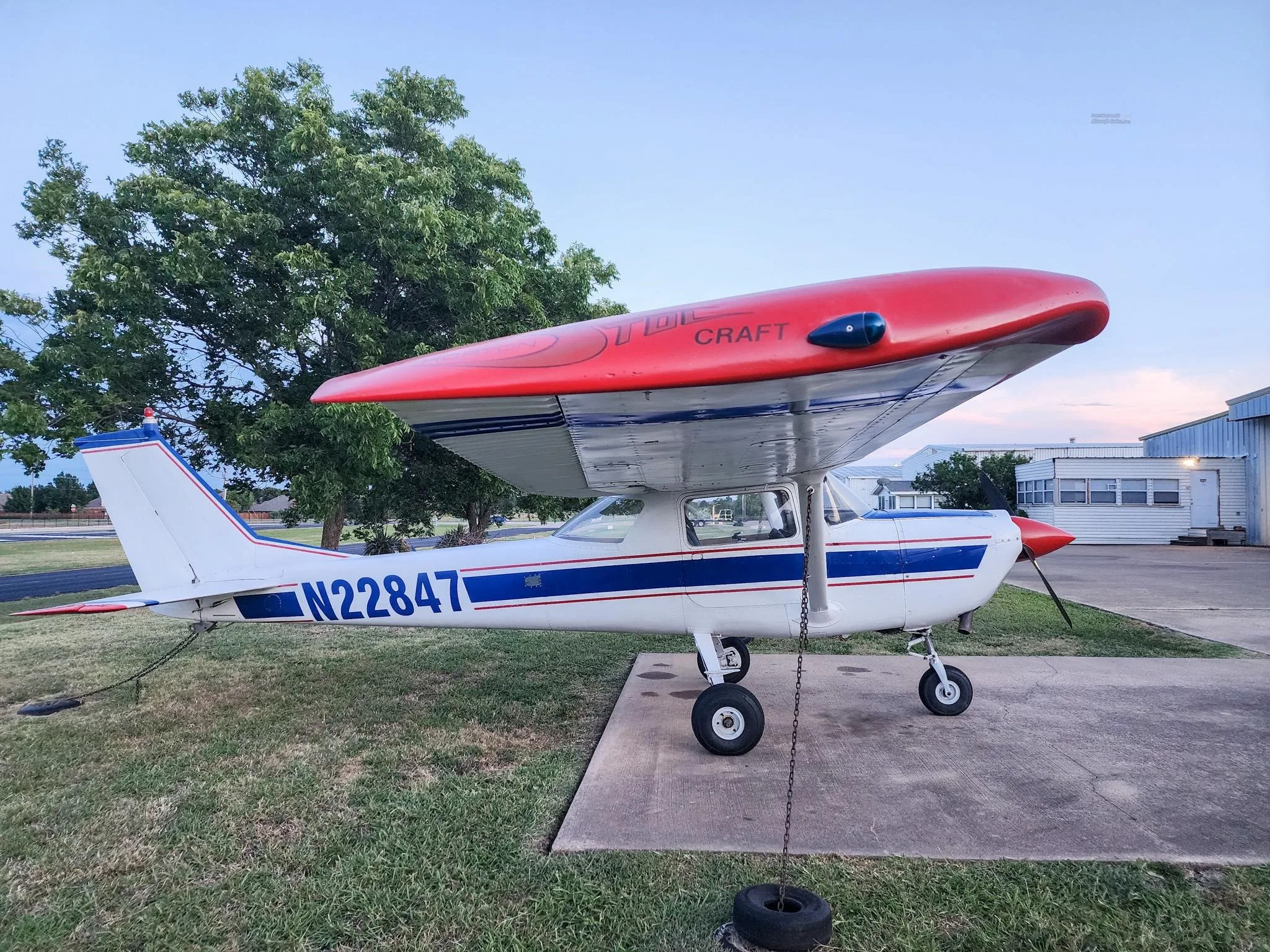
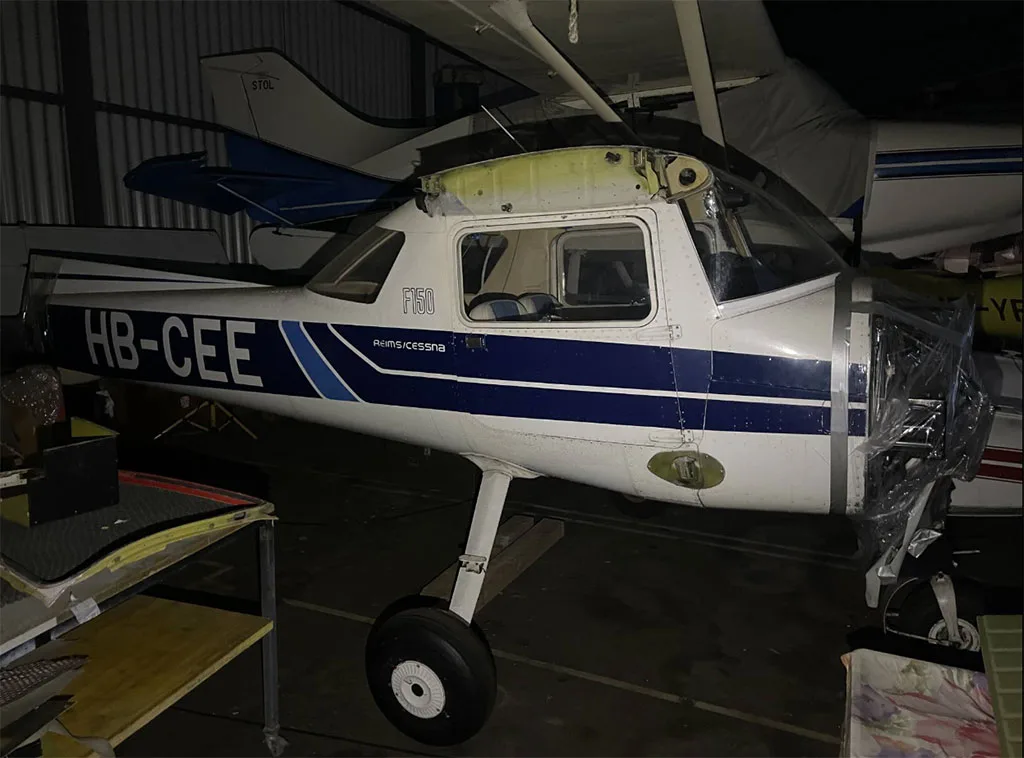

Free — save the 150 to your watchlist and track it in one place.
More CESSNA 150 G5manuals & documents
See all 20 →- NIH RPPR Instruction GuideSupplemental Type Certificate
- BULLETIN 15 (Publication 35) Qualified Products List for ConstructionChecklist
- Data Sheet AD5940/AD5941V Speeds Reference
- Product Data SheetV Speeds Reference
- Product Data SheetV Speeds Reference
- 22 mm Push Button SpecificationsService Bulletins
- Minor Change / Minor RepairService Bulletins
- STANDARD SPECIFICATIONS AND DETAILSSpecifications
- Maintenance and Service GuideParts Catalog
- A Comparison of the V2X Communication Systems: ITS-G5 and C-V2XPerformance Data
- Product Information SheetSpecifications
- KDIGO 2012 Clinical Practice Guideline for the Evaluation and Management of Chronic Kidney DiseaseV Speeds Reference
If you fly the CESSNA 150 G5, you may also be researching these.


In this document
Preventive Maintenance: Part One, Regulations and Requirements
This section discusses the importance of preventive maintenance for aircraft owners, particularly focusing on regulations and requirements that govern maintenance practices. It emphasizes the need for pilots to be familiar with FAA regulations and to maintain their aircraft in a safe and airworthy condition.
Cessna Cowling and Spinners for 120/140, 170, and 172
This section provides details on parts and pricing for cowling and spinner assemblies applicable to various Cessna models, including the Cessna 150. It lists specific part numbers and costs, which are essential for maintenance and repairs.
Upcoming Aviation Events
The magazine includes a calendar of upcoming aviation events, encouraging Cessna owners and enthusiasts to participate in fly-ins, seminars, and community gatherings. These events are opportunities for networking and sharing experiences among pilots.
Letters to the Editor
This section features correspondence from readers discussing various topics related to Cessna aircraft and aviation safety. It highlights community engagement and the sharing of knowledge among Cessna owners.
Safety notes
- Always adhere to FAA regulations regarding aircraft maintenance and safety.
- Engage with the aviation community to stay informed about best practices and safety alerts.
Full document text
24 Page THE TEXAS TAILDRAGGER C E L E B R A T I N G 1 5 Y E A R S ! VOL.16 ISSUE 09 SEPT 2019 cessnaflyer.org One Family's "One-Eighty" Preventive Maintenance: Part One, Regulations and Requirements www.aircraftspruce.com Call Toll Free 1-877-4-SPRUCE Aircraft Spruce is the leading worldwide distributor of general aviation parts and supplies. Our orders ship same day, at the lowest prices, and with the support of the most helpful staff in the industry. We look forward to our next opportunity to serve you! ORDER YOUR FREE 2019-2020 CATALOG! 1000 PAGES OF PRODUCTS! Cessna Flyer is the official publication of the Cessna Flyer Association. Cessna Flyer is published monthly by Aviation Group Limited, 1042 Mountain Ave, Ste B #337, Upland, CA 91786. POSTMASTER: Send address changes to Cessna Flyer, 1042 Mountain Ave, Ste B #337, Upland, CA 91786. Subscriptions, advertising orders and correspondence should be addressed to 1042 Mountain Ave, Ste B #337, Upland, CA 91786. Annual dues: $44.00 in the U.S.; Canada and Mexico add $15.00 per year; all others add $25.00 per year (U.S. Dollars only). Eighty percent (80%) of annual dues is designated for your magazine subscriptions. The information presented in Cessna Flyer is from many sources for this reason there can be no warranty or re- sponsibility by the publisher as to accuracy, originality or completeness. The magazine is sold with the understand- ing that the publisher is not engaged in rendering prod- uct endorsements or providing instruction as a substitute for appropriate training by qualified sources. Cessna Flyer and Aviation Group Limited will not assume responsibility for any actions arising from any information published in Cessna Flyer. We invite comments and welcome any report of inferior products obtained through our advertis- ing, so corrective action may be taken. 1042 Mountain Ave, Ste B #337 Upland, CA 91786 Toll-Free: 800.397.3920 Call or Text: 626.844.0125 www.cessnaflyer.org The Official Magazine of The Cessna Flyer Association Vol. 16 Issue 09 September 2019 PRESIDENT Jennifer Dellenbusch jen@aviationgroupltd.com VICE PRESIDENT / DIRECTOR OF SALES Kent Dellenbusch kent@aviationgroupltd.com PRODUCTION COORDINATOR Heather Skumatz CREATIVE DIRECTOR Marcus Y. Chan ASSOCIATE EDITOR Scott Kinney CONTRIBUTING EDITORS Mike Berry • Steve Ells • Kevin Garrison Michael Leighton • John Ruley • Jacqueline Shipe Dale Smith • Kristin Winter • Dennis Wolter CONTRIBUTING PHOTOGRAPHERS Paul Bowen • James Lawrence • Keith Wilson CES SNA F LYE R (04) S EPT E MB E R 2019 Texas Skyways engine conversions provide you with more horse power & better performance GO FURTHER , FASTER ! 308 BOERNE STAGE AIRFIELD BOERNE, TX 78006 800-899-7597 WWW.TXSKYWAYS.COM IO-550 • A NNUAL & PRE- PURCHASE INSPECTIONS • A IRCRAFT ACCESSORIES • P ROPELLERS & AIRFRAME REPAIR E N G I N E C O N V E R S I O N S D O N E CES SNA F LYE R (06) S EPT E MB E R 2019 56 N1564C: One Family’s “One-Eighty” by Carl Geisert Launch Your Space Coast Adventure from Valkaria Airport by Judi Oswald The Texas Taildragger by Michael Leighton Preventive Maintenance: Part One, Regulations and Requirements by Kristin Winter Cover: Cessna 150 Photo: Keith Wilson THE VIEW from HERE Jennifer Dellenbusch LETTERS to the EDITOR CESSNA FLYER EVENTS THE HIGH and the WRITEY Kevin Garrison QUESTIONS & ANSWERS Steve Ells NEWS AIRCRAFT SAFETY ALERTS ADVERTISER INDEX BACK WHEN: VINTAGE CESSNA ADVERTISING AND MARKETING 08 08 10 16 20 64 70 80 82 42 30 36 SEPTEMBER 2019 cessnaflyer.org Renovating an Interior, Part Three: Interior Removal by Dennis Wolter 24 Photo: Keith Wilson Wipaire provides award-winning paint, custom interiors, avionics, ADS-B and maintenance. Call today to schedule your aircraft! South St. Paul, MN (KSGS) 651.451.1205 wipaire.com WORLD-CLASS SERVICES Jennifer Dellenbusch THE VIEW FROM HERE Ready to Copy “Feedback is a gift. Ideas are the currency of our next success.” —Jim Trinka and Les Wallace I am a big believer in continuous improvement. Here at the Cessna Flyer Association, we are constantly tweaking, analyzing and improving our products and services. But we don’t like to do this in an echo chamber where we can only hear our own voices. We like to hear from you. This is, after all, an association built for you—and our offerings are only as good as you think they are. We do receive feedback from members in the form of letters, emails and calls and we appreciate all of it. Sometimes, though, you might be reticent to speak up, or don’t have the time. That’s where a confidential member survey can come in handy. We’ll be emailing a link to a survey soon—you may receive it about the time you receive this magazine. You can complete the survey quickly and in com- plete anonymity. The information you provide will help guide our decisions about new and existing benefits, products and services. Please take a few minutes to help us continue to craft an association that fits your needs. Blue skies, LETTERS to the EDITOR Send your letters to editor@cessnaflyer.org “Service Bulletins for Cessna 177 and 210 Wing Spar Carry-Through Inspections: What You Need to Know” by Steve Ells, August 2019 Hello Editor and Steve, I found this corrosion on a Cardinal back in 2007 requiring replacement of center section. It took us about three months to locate a good used one that did not have corrosion. This is a much bigger problem than I think anyone is really aware of, as the same billet (I found out from Cessna) was used in Cardinals and 210s. I am still in possession of the carry- through; it’s pretty impressive. I knew this was going to be a big problem back then when I found this. Letters continued on Page 78... CES SNA F LYE R (08) S EPT E MB E R 2019 • Spark Plugs • Oil Filters • Dry Air Pumps • Regulators and Manifold Valves • Pneumatic Filters and Fittings and Fittings • Carburetors • Replacement Components ® ™ • RSA Fuel Injection Systems • Replacement Components ™ • Starters
Show full textShow less
• Alternators • Temperature Probes • Instruments • Test Equipment www.tempestaero.com 800.822.3200 Quality, Innovation and Performance from the Brands you Trust. Sept. 22 — Simsbury, CT. Simsbury Airport (4B9). 33rd annual Simsbury Fly- in, Car Show and Food Truck Festival. Cessna Flyers, come and display your air- plane! We expect up to 18,000 spectators and will be displaying more than 750 beautiful airplanes and cars. Over 150 businesses are exhibitors, sponsors and advertisers. 25 food trucks offer a wide choice of great things to eat. Free semi- nars; live music; aerial demonstrations; judging and trophies for cars and air- planes; helicopter and AT-6 World War II training plane rides; gyrocopter, powered parachute and formation flight demos; radio control model aerobatics; banner tow pickup demonstration; new aircraft and car dealers; many local craftspersons and much more. For full details, visit simsburyflyin.com. Sept. 28 — Corona, CA. Aircraft Spruce West Super Sale. This is the time of year when we go all-out by offering spectacular discounts on our most popu- lar products and provide a chance for our loyal customers to meet our vendors. Manufacturers on site, raffle prizes, a Southern smokin’ cookout and more. Come make a day of it! 7 am to 3 pm. Visit aircraftspruce.com/catalog/stpages/ west_supersale.php. Oct. 22–24 — Las Vegas, NV. Las Vegas Convention Center. 2019 NBAA Business Aviation Convention and Exhibition (NBAA-BACE). For more information, visit nbaa.org. Nov. 16 — Redlands, CA. Redlands Municipal (KREI). Fifth annual Stuff a Plane with Toys for Tots Fly-in and Expo. A U.S. Marine Reserves Toys for Tots collection and old-fashioned fly-in with military aircraft, General Aviation aircraft, warbirds and helicopters; CFA EVENTS July 18–19, 2020 — Waupaca, WI. Wau- paca Municipal (KPCZ). The 16th annual Gathering at Waupaca. Save the date for CFA’s annual pre-OSH event with fun, food and friendship. Watch this space and CessnaFlyer.org in the coming months for more details. FEATURED EVENTS Sept. 13–14 — Tullahoma, TN. Tullahoma Regional Airport (KTHA). 2019 AOPA Fly-in. Special events include a STOL invitational competition to showcase the skills and aircraft of back- country flying and an engaging Friday night aviator’s party. For more informa- tion, visit aopa.org/fly-ins. SEND EVENTS to editor@cessnaflyer.org continued on Page 12... CES SNA F LYE R (10) S EPT E MB E R 2019 Cessna Cowling and Spinners for 120/140, 170, and 172 Hook and Lever Assemblies 1. Hook Assembly ................. U0452108........ $102.88 2. Lever Assembly................. U0452119........ $335.30 Detail Parts 3. Recess............................... U0452109...........$36.54 4. Lever................................. U0452110...........$27.87 5. Clip ................................... U0452111...........$26.11 6. Pin .................................... U0452112...........$15.13 7. Housing ............................ U0452113...........$28.00 8. Hook ................................. U0452114...........$36.34 9. Spring............................... U0452115...........$19.54 10. Pin ................................... U0452120...........$15.01 11. Shim................................ U0452121.............$2.09 12. Recess ............................. U0452122...........$55.73 13. Hook................................ U0452123...........$53.43 Toll Free Sales: 1-888-433-5433 Shop Online: www.univair.com 2500 Himalaya Road • Aurora, CO • 80011 Info Phone .............................. 303-375-8882 Fax .............. 800-457-7811 or 303-375-8888 Email .................................. info@univair.com ALL MERCHANDISE IS SOLD F.O.B., AURORA, CO • PRICE AND AVAILABILITY SUBJECT TO CHANGE WITHOUT NOTICE • 07-01-19 AIRCRAFT CORPORATION Cowl Latches and Details FAA/PMA For 120-140 and 170 series All Metal Cowling Parts 1946 Cowling Items Lower Cowl Skin, Left .........U0452126-3..... $1,222.48 Lower Cowl Skin, Right.......U0452126-5..... $1,222.48 Nose Cowl Only ..................... U0452124........ $886.33 1947 and 1948 Cowls Nose Cowl ............................. U0452185........ $886.33 Lower Cowl Skin -L/H .........U0452189-3..... $1,049.53 Lower Cowl Skin-R/H..........U0452189-5..... $1,049.53 For 120/140 and 140A FREE CATALOG: Call today to get your free Univair catalog featuring over 16,000 classic aircraft parts and supplies. Foreign orders pay postage. FREE SHIPPING on orders over $300 FREE FREIGHT on orders over $3,000 Restrictions apply. See website for details. Small Skull Cap Spinner Small Skull Cap Spinner Assembly ........ SM-SPIN-ASY...........$77.95 Bracket .................................. U0450281...........$19.94 Spinner Dome Only ............... U0450279...........$66.76 1. Dome .............................U0550236-8........ $466.17 2. Front Plate......................U0550321-4........ $265.59 3. Rear Plate ...................U0550321-010........ $357.92 Other 150, 170, 172 and 182 spinners available 172 Spinner Assembly FAA/PMA 3 1 2 CES SNA F LYE R (12) S EPT E MB E R 2019 Learn to Fly seminars; airport open house and more. Aircraft exhibitor awards; plus music, food, a kids’ zone, community blood drive and pet adop- tion center. Cessna Flyer Association members are invited! Admission is free; all guests and exhibitors are requested to bring a new, unwrapped toy or donate to Toys for Tots. 10 am to 3 pm. Contact Cindy Gablin, red- lands.airport.association@gmail.com. Details and updates at https://raacp.org/ stuff-a-plane-with-toys-for-tots/. OTHER EVENTS Sept. 7 — Brainerd, MN. Brainerd Lakes Regional (KBRD). 4th annual “Grass is a Gas” Poker Run. Start at KBRD; fly to four grass strips, pick up a playing card and play your hand back at Brainerd to win great prizes. Registration starts 07:30, briefing at 08:15. Registration strictly limited to 52 hands: one per per- son, two max per aircraft. Be there early to assure your spot! Last year we had 46 hands. Tons of prizes, good food at stops and all-around great fun! Contact Mike Petersen, winger701@gmail.com or phone 612-750-2981. Sept. 8 — Davis, CA. Yolo County Airport (KDWA). Airplane Wash and Pancake Breakfast. Exterior spot-free RO water, belly degrease, quality wash and wax, windows cleaned with Plexis/Pledge after rinse; interior vacuumed, plastics cleaned and UV protected, leathers cleaned and conditioned, LPS2 treatment for hinges and control rod ends. Profits support Young Eagle flight training. $25/ seat for single-engine airplanes; $30/seat for twin-engine, biplanes and turbine airplanes; $25/car. $7 pancake breakfast, eggs, sausage, coffee. 9 am to 12 pm at Midfield Transient Ramp and EAA 52 Hangar. Contact Cedric Hughes, ced- ricbarronhughes@gmail.com or call 530- 761-8293. Visit 52.eaachapter.org. Sept. 10 — Greenville, SC. Greenville Municipal (KGMU). Upstate Aviation Club. A monthly social gathering of pilots and aviation enthusiasts. Bernadette Darnell presents “Getting Involved in Angel Flight Operations.” Meeting place is the Runway Café, 21 Airport Rd; you can taxi right up front. 6 to 8 pm. Contact Chris Sullivan, drux- urb@gmail.com or phone 864-660-9188. Visit upstateaviationclub.org. Sept. 14 — Terre Haute, IN. Sky King Airport (3I3). P-Factor Days. You gotta fly… and you gotta eat… so join VAA Chapter 41 for our breakfast fly-in. Cool airplanes, fun folks, you know the deal. Give us a try! Cost is your dona- tion. 8:30 to 11 am. Contact John Ross, 520sierrabravo@gmail.com or phone 812-466-2229. Sept. 14 — Guthrie, OK. Guthrie- Edmond Regional (KGOK). Seventh annual Community Day and Fly-in. Aircraft displays, radio-controlled air- craft, Sooner Flight Academy kids’ activities, classic and exotic car show. Food and drink available for pur- chase. Free admission and parking. 9 am to 2 pm. Contact Schellon Stanley, sstanley@cityofguthrie.com or phone 405-282-2312. Visit facebook.com/ GuthrieEdmondRegionalAirport. Sept. 14 — Hood River, OR. Hood River–Ken Jernstedt Airport (4S2). Second Saturday at WAAAM Air and AIRMARK OVERHAUL, INC. “When Quality Counts” 6001 N.W. 29th Avenue Fort Lauderdale, FL 33309 Tel: 954-970-3200 Fax: 954-970-3400 Toll Free: 1-800-282-3202 www.airmarkoverhaul.com Email: airmarkoh@aol.com Approved Overhaul, Repair and Exchange Facility for: • ENGINES – Continental and Lycoming Engines • ACCESSORIES – Magnetos, Starters, Alternators, Turbos, Controllers, Wastegates, Relief Valves and Fuel Components • CYLINDERS – Continental and Lycoming Cylinders • HYDRAULICS – Britten Norman Islander Landing Gears • PARTS – Thousands of New and Serviceable Parts in Stock FAA Approved Repair Station JL4R288M • EASA 145.4115 500 Hour Magneto InspectIon & certIfIcatIon servIce wItH easa approval Starting at $390 37-Month Warranty* on all new Superior Millennium Cylinders ® for Lycoming and CMI engines 24-Month Warranty* on all new Superior piece parts for Lycoming and CMI engines *Superior warrants that each new FAA/PMA replacement Millennium Cylinders will be free from defects in material and workmanship for thirty seven (37) months of operation from the date of first operation, or recommended TBO, whichever occurs first. Superior warrants that each new FAA/PMA replacement part/piece part will be free from defects in material and workmanship for twenty four (24) months of operation from the date of first operation, or recommended TBO, whichever occurs first. Visit www.superiorairparts.com for complete warranty details. Lycoming is a registered trademark of Textron Innovations, Inc. CMI is a registered trademark of Continental Motors Inc. SUPERIOR QUALITY. SUPERIOR PERFORMANCE. SUPERIOR WARRANTY. For more information, contact your nearest Superior Air Parts distributor or visit: superiorairparts.com The number one manufacturer of FAA PMA cylinders and piece parts for Lycoming and CMI engines is now offering general aviation’s best warranties: 37 months or to TBO* on all factory-new Superior Millennium Cylinders and 24 months or to TBO* on all of Superior’s factory-new piece parts purchased after January 01, 2018. CES SNA F LYE R (14) S EPT E MB E R 2019 Auto Museum. Visitors to the museum can watch antique airplane operations up close and may get to ride in old cars, too. Open 9-5; activities 10-2; lunch 11-1. Free parking. WAAAM is located 3 miles from downtown Hood River on the north side of airport. Call 541- 308-1600 for more information or visit waaamuseum.org. Sept. 14–15 — Hammondsport, NY. Wings & Wheels and Curtiss Seaplane Homecoming. Join us at the south end of Keuka Lake. Saturday: local flying, flying contests and seaplane parade. Saturday night: cocktail hour, din- ner, guest speaker—all in the museum, seated among the antique Curtiss Hydroaeroplanes. Pilot and copilot free. Contact Ben Johnson, info@glennhcur- tissmuseum.org or phone 607-569-2160. Visit wingsandwheelshammondsport.com. Sept. 21 — Norman, OK. University of Oklahoma Westheimer Airport (KOUN). 13th annual Aviation Open House & Family Festival Fly-in. Aircraft static displays; control tower tours; kids please- touch STEM hangar; sUAS info booths and more. Free admission. For more information, contact Judy Estes at 405- 325-7233, kencarson@ou.edu. Sept. 21 — Albuquerque, NM. Double Eagle II (KAEG). 29th annual Land of Enchantment Fly-in (LOEFI). Static dis- plays (distinctive aircraft, automobiles, military vehicles and more). WINGS seminars. Exhibits by New Mexico aviation organizations and vendors. Awards for “best of category” aircraft (owner-built, LSAs, vintage, contempo- rary, warbirds, sailplanes and trikes); for oldest aircraft; and for fly-in from fur- thest away. Fly Mart. Activities for kids. Pancake breakfast and burger lunch. Hosted by EAA Chapter 179. 7 am to 3 pm. Free admission. Contact George Young, 505-933-1003 or email loefi@ eaa179.org. Visit eaa179.org. Sept. 21 — Jackson, CA. Westover Field (KJAQ). 90th Anniversary Celebration/ Wings and Wheels. All are welcome! Modern and vintage airplanes, warbirds, classic cars, hot air balloon, barbecue, drinks and much more. We welcome your vintage and warbird planes, as well as your local flying club and EAA chapter. Hosted by Westover Field EAA Chapter 1539. Free to attend. 9 am to 3 pm. Contact Westover Field Office, dsheppard@amadorgov.org or phone 209-223-2376. Sept. 21–22 — Kokomo, IN. Glenndale Airport (8I3). Glenndale Days Barbecue Bash. Join us for our annual event supporting spinal muscular atrophy (SMA). Rides in GA aircraft and World War II trainers available for purchase. Other family-centered activities avail- able; airplanes on display; food avail- able for purchase. Contact Steve Stants, steve@eaa235.org. Sept. 22 — Joliet, IL. Joliet Regional Airport (KJOT). Joliet Airport Festival. Free admission! Pancake breakfast available 8 to 11 am; lunch available 11 am to 3 pm. Static aircraft and warbird displays, children’s activi- ties. Airplane, warbird and helicopter rides for a fee. Car show featuring the Coachman Car Club. 8 am to 3 pm. Contact Loren Thompson, lthompson@ jolietpark.org or phone 815-741-7267. Visit jolietpark.org. Send events to editor@cessnaflyer.org. AV I AT I O N Learn more at Bose.com/A20. The Bose A20 Aviation Headset offers the right combination of noise reduction, clear communication and comfort. With Bluetooth® streaming for audio and communication, auto-on*, auto-off, side-swappable mic and FAA TSO and E/TSO-C139a certification, the A20 is the choice of pilots the world over. Hear the A20 difference today. Visit us at Bose.com/A20 or call 888.757.9985. Connect with us @BoseAviation © 2019 Bose Corporation. All Rights Reserved. A 2 0 AV I AT I O N H E A D S E T Technology developed over 30 years. Appreciated in seconds. *In select models Kevin Garrison’s aviation career began at age 15 as a lineboy in Lakeland, Florida. He came up through General Aviation, retired as a 767 captain in 2006 and retired from instructing airline pilots in 2017. Garrison’s professional writing career has spanned three decades. Send questions or comments to editor@cessnaflyer.org. THE HIGH AND THE WRITEY KEVIN GARRISON I was so shocked and uptight as a new copilot that I didn’t say anything to my idiot captain. Don’t fly this at home, kids Confronting hazardous attitudes in the air and on the ground. I was flying copilot on the venerable Boeing 727 into Daytona Beach, Florida, many years ago, and it turned out that I was flying with an idiot. This particular captain was well- known in our little airline pilot seniority list as “somebody that you ought to keep an eye on.” He was about to show me a maneuver that all commercial pilot applicants must learn and perform: the 180-degree power-off approach to a landing. This maneuver works great in a Cessna 172, but is not something anybody should try to do in a Boeing 727. Why should you never try to do a power-off approach in a seven-two? Because it has turbofan engines that take a while to spool up if you have to add power to go around. We would always keep the engines spooled up on approach, so we could use them if needed. Many airliners, like the MD-88 and the 777 have an “approach idle” built into their engines’ software to provide at least part of this spool-up. The approach in our 727 was excit- ing, with steep turns and an even steeper glide angle. We lived through the landing, although we landed about halfway down the runway and almost ran off the end. Our passengers also survived, but were commenting as they deplaned about “that awful landing.” It was my fault. As first officer, it was my job to point out, as forcefully as necessary, when we were doing off-the-book, unsafe things. I was so shocked and uptight as a new copilot that I didn’t say anything to my idiot captain. This particular captain went on to get fired from our airline for stealing an airplane a year later, so we have to assume that he was as terrible at honesty as he was at air- borne decision-making. Don’t just sit there Most of us have heard stories about some pilot who crashed or killed people while trying to show off. If you have been around flying for long enough—especially if you have been a flight instructor—you know these people. You may have been on board during one of their brainlessly dangerous moments. What did you do? If you are like me, you may have done noth- ing because you wanted to look cool. You don’t want to look like a nerd, and if a pilot you are fly- ing with starts buzzing the cows in a farm field, you might not say anything because you want to be known as the fun guy or gal who is cool and hip and with it and whatever else the kids are calling it nowadays. During my early teenage years in the air, I was certainly guilty of sitting quietly and not complaining when a pilot did something idiotic and dangerous. The first reason was that I was very young did not know all that much about flying. Maybe doing a loop in an Ercoupe is normal, I thought. The second reason I didn’t speak up during my aviation youth was I did not want to appear to be a chicken. This was why I did not speak up with that 727 captain. I was too ner- vous—and busy reading out sink rates and airspeeds—and did not tell him to knock it off. We have all been stupid at one time or another It’s the nature of young humans to take almost anything and willfully make it more dangerous than it ought to be. I began by doing tricks on my bicycle, which led to dumb things done on my motorcycle and even dumber things with cars. My excuse is science, which says that young people’s brains (especially young male brains) are not fully formed until their mid-20s. You would think that I had worked all of the stupid out of my system by the time I got a job as a lineboy at the local airport. You would be wrong to think that. Idiocy ensued on the ramp as well. In addition to the just plain dumb things that some avia- tors do, there is also a part of every pilot’s life that is just naturally dangerous. This is just after you get your private pilot certificate up until you complete your first hundred hours or so. Think about it. There you are, a brand-new fully qualified private pilot. You passed a checkride and everything! It is time to take all of your friends flying. You know, those friends that have been asking you for a very long time about when you could take them for a ride? Well, you can take them now, Skipper! CES SNA F LYE R (16) S EPT E MB E R 2019 You want to show off your piloting skills and establish your reputation as a steely-eyed slipper of the surlies. What are you going to show your friends on those first flights? Straight and level? Naw… you are going to do some maneuvering! Show them a stall and maybe a low-level fly-by of their house. Newly-minted pilots also tend to have trouble with weather as well, because this is the first time in their flying lives that they alone have to make go/no-go decisions. Inexperience, inse- curity, bravado and sometimes all of the above can contribute to poor weather decisions—and there’s no flight instructor on hand to provide a sanity check when they decide to launch into 40-knot winds with low visibility. Just say no way Some people at your airport are just plain dangerous and should not be flown with. You are aware of who they are because their reputation at your local field is well-known. Just don’t fly with these people. You can make up an excuse if you have to, or you can do like me and just grin and say, “No way, I’ve heard about you.” If you see somebody do something stupid, do you have a responsibility to call him or her out or turn him or her in? That is a very tough question. Maybe you should do it the way that airline pilots do. We had a professional standards committee at my airline. I used this committee to talk about the power-off approach cap- tain, because even though I thought what he did was stupid, I did not want to possibly ruin his career by reporting him to the FAA. The professional standards committee members could talk, off the record, with pilots and find out what was going on without the use of lawyers, guns or money. This official-yet-unofficial way of handling problem pilots has saved many careers. Many pilots with substance abuse issues or emotional health concerns were saved by the quiet intervention of this committee. Where is your professional standards committee? We General Aviation pilots don’t have a union-based profes- sional standards committee to go to when some other pilot scares the poo out of us, but we do have local CFIs. It is pos- sible that your problem pilot might not listen to you, but would listen to a flight instructor. Begin by keeping it low-key and local, but if the pilot keeps doing what you consider to be deadly dangerous things, you owe it to all of us to make a call to your local FSDO to clue in our buddies at the FAA. We pilots enjoy a very light hand from the FAA when it comes to our behavior being monitored. This is because pilots tend to police themselves. It is possible to have a chat with the FAA without it leading to enforcement action, but sometimes enforcement action is the only way to save lives in the air and on the ground. The best way to have a long and healthy flying life (like I have) is to be a big chicken (like I am). Turn down opportuni- ties to become a test pilot and try to become an example for other pilots. Remember, in order to be a positive example of piloting, you have to be alive. CES SNA F LYE R (18) S EPT E MB E R 2019 Installation of replacement fairings for a 182Q, mogas use and STCs for a club airplane, an issue with flaps on a 172E Hi Steve, I’m looking to buy replacement upper gear leg fairings for my 1978 Cessna 182Q Skylane. Several parts suppliers have them. Most of the new fairings are split to ease installation. Even so, the catalog photos don’t show small holes on the outside edge of the fairings for screw insertion and attachment to the aircraft frame. Do these new left- and right-hand fairings need to be drilled before installation? Do you have experience with this? Recommendations? Fairing Fred Hi Fred, It’s necessary to drill new holes into the fairings. Here’s a step-by-step guide to locating the correct position of the holes to be drilled. First, before positioning the new fairing, draw two lines on the aircraft (using pencil or masking tape) that cross at the existing screw hole. Next, position the new fairing and tape it in place. Now, using a straightedge (I use a 12-inch machinist’s scale), align it with the drawn lines. Then, extend the lines onto the new fairing. Mark and drill a hole where the lines cross. I usually start out with a drill size that’s smaller than the final size. This gives me a little wiggle room in case of a slight mis-location of the crossed lines. (A&P/IA Jacqueline Shipe illustrates this procedure in detail in “Replacing Exterior Plastic Tips, Cuffs and Fairings on Your Cessna,” which appeared in the August 2019 issue of Cessna Flyer. —Ed.) Happy flying, Steve Hi Steve, I am one of a four-member equity-type flying club. We own a nice Cessna 172M Skyhawk that has been upgraded by the installation of an Air Plains 180 hp engine with a fixed-pitch prop. It’s the perfect airplane for us. One of our members wants to start running mogas in our Steve Ells has been an A&P/IA for 44 years. He is a commercial pilot with instrument and multi-engine ratings and loves utility and bush-style airplanes and operations. Ells was a tech rep and editor for Cessna Pilots Association and associate editor for AOPA Pilot. He owns Ells Aviation (EllsAviation.com) and lives in Templeton, California. Send questions and comments to editor@cessnaflyer.org. QUESTIONS & ANSWERS STEVE ELLS CES SNA F LYE R (20) S EPT E MB E R 2019 airplane. He says it will save us money and it doesn’t have any lead in it, so the engine will run better. He sweetened the deal by telling us that he has an 80-gal- lon tank in his pickup and that he will be responsible for the mogas supply. While we think that getting rid of leaded fuel is a good idea, we’re not sure that this is the right thing to do. What do you think? Air Plains Art Dear Art, First off, I believe an Air Plains 172 is a very good airplane. I did the upgrade on one for a flight school while I was in Alaska, and overnight it became the most popular airplane in the rental fleet. The conversion, with its bigger engine and fixed-pitch prop, and the 200-pound increase in the maximum takeoff weight that is part of the upgrade STC, changed the airplane so much that it started cutting into the club’s 182 rental hours. Please understand that all mogas (auto gas) STCs are valid only when ethanol-free fuel is used. In some states, ethanol- free mogas is very hard to find. There are a couple of websites (listed in Resources) where you can find the nearest location of ethanol-free mogas at gas stations and airports. If you can find a nearby source of ethanol-free mogas, your club members need to understand some hard and fast rules regarding the use of this fuel. The best place for this informa- tion is at the Petersen Auto Fuel STC website under the “Fuel Testing” tab. (See Resources. —Ed.) Your members must test for ethanol if they’re not sure that the gas is ethanol-free. There’s a simple test kit sold on the Petersen auto fuel STC site. Let’s look at the economics of using ethanol-free mogas. Suppose your club’s 172 flies 200 hours a year, and the average fuel burn is 9 gph. That means you’ve burned 1,800 gallons of fuel. In this example, I’ll compare the cost of 100LL to the price of 87-octane ethanol-free mogas in El Dorado, Kansas. Obviously, you can run this comparison using numbers for your location. Unlike most GA airports, El Dorado (KEQA) has an ethanol- free mogas pump on the field. Cost is $2.99 per gallon. The cost of 100LL Avgas is $4.39 per gallon. Based on this scenario, the conversion would save your club members $2,520 per year. If you don’t have it already, the one-time cost of the Petersen STC for your 172 to legally run on mogas is $2 per horse- power or $360 in total for your airplane. According to the BEST CESSNAS! BEST PRICES!! BEST FINANCING!!! 4912 SOUTH COLLINS • ARLINGTON MUNICIPAL AIRPORT • ARLINGTON, TX 76018 800-759-4295 • FAX 817-468-7886 • e-mail: acsales@vanbortel.com • www.vanbortel.com follow us CES SNA F LYE R (22) S EPT E MB E R 2019 I have looked at the mechanism and I am trying to figure out how to solve the problem. I would appreciate any advice. Bob Hi Bob, The part you’re referring to is the “ratchet.” It is Cessna Part No. 0510171-1. This part is common to a wide range of Cessna single-engine airplanes that have manual flaps. It is labeled as the “Flap Lever Ratchet,” item No. 13, in the illustration below. It’s pretty easy to find a used flap lever ratchet—the parts locating service included in your Cessna Flyer Association mem- bership can help you find one. AutoFuelSTC website, there is an STC for your modified 172. I believe your engine will run better and much cleaner if you run ethanol-free mogas in your airplane. Happy flying, Steve Hi Steve, I have a 1964 Cessna 172E Skyhawk. The flaps will not stay stowed in the up position. When I retract the flaps at landing, they drop one notch as soon as I slow down. continued on Page 79... Aircraft insurance rates are on the rise. We can help. Call us today at 877.413.2922 or visit ap-aerospace.com A I AssuredPartners �, AOPA INSURANCE PARTNER Preventing inadvertent damage During an interior renovation, you will constantly be climbing in and out of the airplane, often carrying bulky items such as seats and side panels. It’s very impor- tant to protect your aircraft’s exterior paint and windows. To protect the main landing gear legs and wheel pants, cover them with quilts or moving blankets secured with mask- ing tape. Here at Air Mod, we protect windows by cutting some heavy paper or thin cardboard to the appropriate shape and taping it around the perimeter of each window, inside and out. With lots of activity happening in your cabin, you should protect the instrument panel with heavy packing paper or a painter’s tarp. I recommend covering the horizontal stabilizer and elevators with old quilts, wool army blankets or inexpensive mov- ing blankets that can be purchased from a discount tool supply store. This creates inally, it’s time to begin removing the old interior. Rule No. 1 is stay organized. Rule No. 2 is don’t throw away any old interior stuff until the proj- ect is completely finished. Rule No. 3 is don’t damage the airplane. Before continuing, I would like to make three additional suggestions. First, buy a copy of that great how-to manual published by the FAA. I’m referring to AC 43.13-1B, “Aircraft Inspection, Repair and Alterations: Acceptable Methods, Techniques and Practices.” (See link in Resources. —Ed.) This book gives in-depth information on how to properly repair and modify almost anything you or your mechanic may encounter when renovating your interior or getting involved in mainte- nance issues with your aircraft. The second piece of advice, as I’ve stated in previous articles, is to keep your mechanic involved in your project. These folks have seen a lot, and a wise owner takes advantage of their experience. The third bit of advice I have is that you familiarize yourself with the benefits as well as limitations an owner must follow under the guidelines of preven- tive maintenance, as outlined in AC 43-12A and 14 CFR Part 43, Appendix A, Paragraph C. (In addition, the first of Kristin Winter’s articles on preventive maintenance can be found on Page 30 of this issue. —Ed.) a great place to store delicate plastic win- dow trim and interior components. First steps of interior removal The first items to come out of the air- plane should be the aircraft’s documents and flight manual. If ever there is a time for those items to be misplaced, it’s dur- ing an invasive project like replacing an interior. Temporarily store those impor- tant documents in a safe place, away from the airplane. Every once in a while, we’ll get a call from a former customer trying to recreate lost records; looking for cop- ies of anything we have that will help reconstruct an airplane’s history. Missing records have a substantial negative effect on the value of your airplane! I recommend that you make copies of the airworthiness, registration and cur- rent weight and balance records. Many aircraft owners, myself included, have scanned all their aircraft documents, cre- ating a second set of records stored in a separate location. The first interior components to be removed will be the pilot and copilot seats, followed by aft seats. Before removing seats, it’s a good idea to have someone sit in the seat and actuate the tracking, reclin- ing and seat height adjustments to verify that all systems are functioning properly. Later in the renovation process, after the seats have been stripped to the bare frame, put them back in the airplane and have your A&P thoroughly inspect everything for structural and mechani- cal condition. Don’t forget to check the length and function of the seat belts and shoulder harnesses. Here’s your chance to add a little length to a seat belt to accommo- date some middle-age “growth.” Have your licensed mechanic assist in this pro- cess. They should inspect these all-impor- tant passenger restraints and mountings. Also check to see if all seat stops are still installed and that they are correct. The aircraft’s parts book will advise as to how many and what type of seat stop is required for your specific airplane. Believe it or not, we had an airplane come in with a couple of household nails run through a seat stop hole and bent back on themselves in a dangerously crude attempt to replicate a seat stop. I’m not making this stuff up! With seats out, it’s time to remove the seat belts and harnesses where they are secured to sturdy brackets on the floors and to nutplates mounted in the overhead cabin structure. Start by photographing Renovating an Interior, Part Three: INTERIOR REMOVAL F During an interior renovation, you will constantly be climbing in and out of the airplane… You’ve developed an organization plan and you are ready to begin stripping the interior. But what should come out first? A&P/IA DENNIS WOLTER of Air Mod guides you through the steps of disassembling the interior of your Cessna. CES SNA F LYE R (24) S EPT E MB E R 2019 © 2019 Garmin Ltd. or its subsidiaries. 1 All prices quoted are MSRP, installation not included. For Part 23 Class I/II aircraft (weighing less than 6,000 pounds) and experimental/amateur-built aircraft Garmin.com/GeneralAviation TOUCHSCREEN DISPLAY IFR GPS APPROACHES BUILT-IN GPS ROLL STEERING ADS-B “IN” AND “OUT” WITH GNX 375 BUILT-IN CONNEXT ® WIRELESS CONNECTIVITY MORE RUNWAYS. FOR LESS. GPS 175 AND GNX™ 375 NAVIGATORS WITH LPV APPROACH STARTING AT $4,995 1 Landing gear protected by a blanket. A detailed drawing of the seat belt configura- tion and dimensions. Plastic trim components stored on the tail. A typical piece of damaged plastic trim; a broken fragment is taped to the larger trim piece for safekeeping. CES SNA F LYE R (26) S EPT E MB E R 2019 each attachment point to aid you and your mechanic at reinstallation time. Removing and reinstalling passenger restraints, as with any seat repair, must be done by (or under the direct supervi- sion of) a licensed airframe mechanic. Check the parts book to ensure that the proper nuts, bolts, spacers and washers were used. The hardware from your local hardware store may look similar and it may fit, but it is not aircraft hardware and may not be made of the same high-strength material as aircraft hardware. AC 43.13-1B and the aircraft’s main- tenance manual have great guidelines on hardware identification and torqueing requirements. It’s not a bad idea to use the factory parts book to ensure that correct spacers and hardware are used for securing belts and harnesses at reas- sembly time. Once the seat belts and shoulder har- nesses are removed, lay them out on a table and have your mechanic inspect them for condition and certification adherence. If anything is not airworthy or if new or re-webbed belts are desired, make a sketch of each belt with dimensions before shipping them out to a certified repair station for re-webbing or replace- ment. This sketch is very useful to con- firm correct lengths and configuration when the new or re-webbed belts are returned for installation. We have found a very reliable certified repair station for re-webbing in Aviation Safety Products. (CFA supporter Wag- Aero also provides seat belt repair ser- vices; see Resources. —Ed.) Never make a field repair on any passenger restraint. This work can only be performed by a certified repair facility. This stuff is extremely important. Don’t forget to tag each belt as to where it was originally positioned in the airplane and put the mounting hardware for each belt and harness in a separate resealable clear plastic bag that is well- marked as to where it goes. It may sound like I’m being a little retentive here, but as we tear down interiors at Air Mod, we frequently find incorrect hardware holding these all- important restraints in place. There is no room for carelessness when it comes to seat belts and harnesses. In a later article, we will look at certified aftermarket iner- tia reel shoulder harness upgrades avail- able for Cessna aircraft. Trim and side panel removal Our next job is to remove all the deli- cate cabin plastic trim pieces, window CES SNA F LYE R (27) S EPT E MB E R 2019 #1 for Aircraft Parts Support Since 1984 Same-Day Worldwide Shipping We Price Match! Parts avionics EnginEs ProPs Over 5 MilliOn in-StOck PartS! Over 5 MilliOn in-StOck PartS! Search our Parts for Free 24/7 DoDSon.coM cAll uS toDAy At 785-878-8000 frames, overhead consoles, air vents and so on. These components often come into the shop already damaged (what a surprise). Be sure to preserve any broken pieces by temporarily taping the pieces together for later repair or a determina- tion that they need to be replaced. Store these delicate parts out of harm’s way on the blanket-covered tail. Now, it’s time to remove the side pan- els. Cessna side panels are fabricated out of aircraft-grade aluminum or vacuum- formed plastic. Expect to find damaged panels and take care to save any broken parts. Plastic side panels can be repaired. Aluminum panels can be repaired, or new panels can be fabricated using the originals as patterns. I’ll have more on this in a future article. Begin by removing the armrests. The aft armrests are typically secured with screws and are easily removed. The cabin door armrests installed in 1972 through early 1980s Cessna aircraft are a little tricky. They are removed by removing one screw on the forward end of the armrest and pushing the armrest outward as you shove it forward firmly. Cessna put a hook-shaped tab at the aft end, and one must push the aft arm- rest outward in order to release the tab from the slot in the mounting bracket. These tabs are often damaged. In an upcoming article we will discuss a good fix for these damaged tabs. With the armrests, window frames, heat outlets and other parts removed, the side panels can easily be removed and stored in a 4-foot by 8-foot roll-around storage box along with the seats. Smaller side panel trim parts, armrests, etc. can be stored in the side panel tub. Keep it organized! (See Dennis Wolter’s previous article in the August 2019 issue of Cessna Flyer for organization sug- gestions, including boxes, bags and bins for holding interior parts as they are removed. —Ed.) Headliner removal Now, it’s time to take out the headliner. Cessna headliners come in three varieties: sewn and stretched vinyl, hard-molded plastic and semi-rigid composite foam. The earlier Cessna singles, and all Cessna 206s and 210s, had stretched vinyl headliners supported with several spanwise tempered steel bow rods. The perimeter of these vinyl headliners is secured with metal pointed retainer strips above the cabin doors, windows and front spar carry- through. The aft edge of the headliner is often secured with contact cement. It’s now time to bring in your mechanic to inspect the cabin’s structure and systems. A broken armrest tab. The white headliner material at the top of the photo is being pulled out of the retain- ing rail, inch by inch. Headliner bow clips. A Cessna cabin after interior removal. CES SNA F LYE R (28) S EPT E MB E R 2019 The first step in removing a stretched headliner involves getting the vinyl head- liner material out of those perimeter retainer strips. This retaining system allows for the headliner vinyl to be removed by first taking a thin pointed pick and fishing out a corner of the extra material from the retainer rail. The next step in this challenging pro- cess is to hold the surplus material with one hand while you use a thin, dull putty knife to push the material back into the retainer, lifting it off the sharp points and carefully pulling the vinyl free 1 or 2 inches at a time. If it sounds tedious, it is! The bad news is that it’s easy to damage the vinyl during this removal process. It is often already damaged by a previous attempt. Be patient! The good news is that you are going to install a beautiful new undam- aged headliner, and in a later article I will show you how to fabricate a new retain- er strip that doesn’t have vinyl-damaging sharp points. Some pre-1986 Cessnas with vinyl stretched headliners employed a more enlightened system of holding the perim- eter in place using glue, eliminating the drama of the sharp points. With the perimeter of the headliner hanging loose, start at the forward end and begin to remove the spanwise bow rods by removing the No. 4 PK screws that hold the bow mounting clips in place. In later Cessnas, a simple U-shaped hook was installed. Work from front to back until all the bows are unhooked, and the headliner is in your lap. Carpet removal Having removed the seats and side panels, the floor carpet is a snap to extract from the airplane. Until the late 1960s, Cessna secured the carpets with small upholstery screws. Then, they dis- covered Velcro. Save the old carpet pieces in your large wheeled storage box. They can be used as rough patterns when fab- ricating new carpets. As we finish disassembling your inte- rior, the final task is to remove all the old CES SNA F LYE R (29) S EPT E MB E R 2019 cabin insulation. This is relatively simple and intuitive work. With the soft fiber- glass insulation removed, you will find corrosion-causing black lead-vinyl panels. Removing these bad-news panels will be discussed in a future article. Generally, the full interior disassem- bly process will take a day to complete. Your efforts are rewarded with the abil- ity to see a completely bare cabin, albeit one in need of some attention. There could be some major work ahead in the area of dirt and corrosion removal, so don’t relax yet! It is likely that no one has been able to see or access the entire cabin area of your airplane since the day it was built. It’s now time to bring in your mechan- ic to inspect the cabin’s structure and sys- tems. You may find a few surprises, but here’s your chance to thoroughly clean, corrosion-proof and repair everything. As stated earlier, with proper cleanup and corrosion prevention methods, we are helping to save these airframes for future generations of aviators. Next month, we’ll discuss the various processes of inspection and evaluation of all interior components as we put together a thorough renovation plan. Until then, fly safe! IMPORTANT: This article describes work that may need to be performed/ supervised by a certificated aviation maintenance technician. Know your FAR/AIM and check with your mechanic before starting any work. Industrial designer and aviation enthu- siast Dennis Wolter is well-known for giving countless seminars and contrib- uting his expertise about all phases of aircraft renovation in various publica- tions. Wolter founded Air Mod in 1973 in order to offer private aircraft owners the same professional, high-quality work then only offered to corporate jet opera- tors. Send questions or comments to editor@cessnaflyer.org. Resources: CFA Supporter SEAT BELT REPAIRS Wag-Aero https://www.wagaero.com/repair-sta- tion/seat-belt-and-shoulder-harnesses- repairs.html Resources: Other MAINTENANCE GUIDES AC 43.13-1B “Aircraft Inspection, Repair and Alterations: Acceptable Methods, Techniques and Practices.” https://www.faa.gov/regulations_ policies/advisory_circulars/index. cfm/go/document.information/ documentid/99861 AC 43-12A “Preventive Maintenance” https://www.faa.gov/regulations_ policies/advisory_circulars/index. cfm/go/document.information/ documentID/99859 14 CFR Part 43, Appendix A https://www.ecfr.gov/cgi-bin/retrieve ECFR?gp=&r=PART&n=14y1.0.1.3.2 1#ap14.1.43_117.a SEAT BELT REPAIRS Aviation Safety Products aircraftseatbelts.com CES SNA F LYE R (30) S EPT E MB E R 2019 is the first in a series of articles addressing—and hopefully encouraging— owner/operators to engage in preven- tive maintenance on their own airplane. Aside from saving money, the knowledge gained will make a better owner and a better pilot. This time, we will look into what an owner/operator can legally do to their airplane. Further articles will discuss how to equip oneself and how to accomplish some of the more common tasks. Let’s start with who can perform preventive maintenance. A holder of a private pilot or sport pilot certificate may perform preventive maintain on an aircraft that she/he owns or operates. As one might imagine, the holder of a sport pilot certificate is limited to a light sport aircraft which she/he owns or operates. There is one additional limitation here of note. Preventive maintenance by the owner/operator is not allowed on an air- plane which is operated under FAR Parts 121 or 135. It is worth pointing out that the term “operates” as used in this context is not clearly defined. FAR Part 1 defines “operate” as synonymous with flying the airplane. Here “operate” is used in the plural, so it is reasonable to assume that in order to legally perform preven- tive maintenance, a pilot would have to be a reasonably regular flyer of the subject aircraft. The FAA provides both a general defi- nition and specific guidelines as to what an airplane owner/operator is allowed to do. The general definition is provided in FAR Part 1, Section 1.1: “Preventive maintenance means simple or minor preservation operations and the replace- ment of small standard parts not involv- ing complex assembly operations.” This purports to contain both a definition and a limitation. However, as we will see, this is really only a limitation, as the broader defini- tion is made moot by the list of specifics. The key limitation is that any mainte- nance operation that requires “complex assembly operations” is not considered to be preventive maintenance. The upshot of that is that a procedure that is listed in FAR Part 43, Appendix A, Paragraph C, might be preventive mainte- nance on some aircraft, but not on others. FAR Part 43, Appendix A, Paragraph C, sets forth a list of tasks that can be con- sidered allowed preventive maintenance. (See “Owner Performed Maintenance Tasks: FAR Part 43, Appendix A, Paragraph C” on Page 34. —Ed.) The preamble to this list of 31 items makes clear that only these items, and not others, are considered preventive maintenance. It also states: “Preventive maintenance is limited to the following work, provided it does not involve com- plex assembly operations.” Like much of the Federal Aviation Regulations, this too is not a hallmark of clarity. The first thing that people often look for is authority to change one’s own oil. Owners commonly do their own oil changes. You might expect that changing oil would be one of the first things on the list. It is on the list, but not obviously. Subparagraph (6) allows for lubrica- …the knowledge gained [during the maintenance process] will make a better owner and a better pilot. This Preventive Maintenance: Part One, Regulations and Requirements What is preventive maintenance? Who is allowed to perform it? Is paperwork required? A&P/IA KRISTIN WINTER spells out what you as an owner/operator can do, what you can’t do and what you are required to enter into your aircraft’s logs. AN525 An AN525 washer head screw is one type of structural fastener that cannot be reinstalled under preventive maintenance guidelines. CES SNA F LYE R (31) S EPT E MB E R 2019 MS24694 MS24694 screws also cannot be reinstalled under preventive maintenance guidelines. C O N T A C T U S A T 1 . 8 0 0 . 5 4 7 . 2 5 5 8 O R O N L I N E A T W W W . P R E C I S E F L I G H T . C O M FLY HIGHER, LONGER E X T E N D S T H E D U R A T I O N O F Y O U R O X Y G E N B Y U P T O 3 0 0 % F U L L Y M E C H A N I C A L • N O B A T T E R I E S R E Q ' D N O W I N C L U D E S P R E M I U M S T O R A G E C A S E THE X3 DEMAND CONSERVER FROM PRECISE FLIGHT L I F E T I M E W A R R A N T Y FREE SHIPPING WITH CODE "FREESHIPX3" *FREE DOMESTIC GROUND SHIPPING CES SNA F LYE R (32) S EPT E MB E R 2019 MS27039 MS27039 screws cannot be reinstalled under preventive maintenance guidelines. As the LARGEST Single-Engine Cessna Used Parts Dealer IN THE WORLD, we’ll help you find everything you need ...with only ONE call! AIRFRAME Wings, Cowlings, Interiors, Control Surfaces, Landing Gear, Tail Surfaces, Engine and Flight Instruments AVIONICS King, Narco, ARC, Collins, Nav/Com, Transponder, AME, DME, Autopilot Trays and complete harness included! All units 100% satisfaction guaranteed Wentworth Aircraft Inc. • 6000 Douglas Drive N. • Crystal, MN 55429 CESSNA | PIPER | HOMEBUILTS WENTWORTH AIRCRAFT, INC. Huge Volume | Fresh Stock | 80,000 Sq. Ft. of Indoor Storage | 30-Day Satisfaction Guarantee RFQs Online, Fax or Phone Hard-to-find parts aren’t hard to find here! Phone 763-231-8484 Fax 763-231-8482 Email wentacpart@aol.com ENGINES LYCOMING O-235 to IO-540 CONTINENTAL O-200 to IO-520 Complete engines with accessories and complete logs! Also Cylinders, Mags, Accessories CES SNA F LYE R (33) S EPT E MB E R 2019 tion. Subparagraph (23) allows “Cleaning or replacing fuel and oil strainers or filter elements.” Taken together, coupled with the fact that we know that pilots are allowed to add oil to their aircraft, makes clear that changing your own oil is permissible preventive maintenance. Couldn’t they just have said so clearly? Another provision merits a bit of discussion. Subparagraph (26) allows for “Replacement or adjustment of non- structural standard fasteners incidental to operations.” What, you ask, is a non- structural standard fastener and how does one know what is structural and what is nonstructural? In short, if a fastener has a grip length, i.e., a non-threaded portion of the shank, it is likely a structural fastener. Common examples are AN bolts, AN525 washer head screws, MS27039 screws and MS24694 screws. Nonstructural fasteners are the common AN526 screws, AN507 screws and any sheet metal screws. All fasteners have a specification sheet that should state whether it is structural or not. Genuine Aircraft Hardware’s website is good for provid- ing the specifications and information on deciphering the dash number and other specifications of common aircraft hard- ware (See Resources. —Ed.). Nonstructural hardware is used in non- structural applications. Nonstructural fas- teners are the most common type of fas- tener encountered during routine aircraft maintenance. Nonstructural applications include inspection panels, fiberglass fair- ings, cowling fasteners, interior panels, etc. One caveat is that seat rails are some- times held in with structural screws, and hence fall outside of preventive main- tenance. Technically speaking, anyone can remove a structural fastener, or any other fastener. It is the installation of the fastener that makes it either maintenance requiring an A&P mechanic, or preven- tive maintenance which can be done by the owner/operator pilot. Any person, pilot or not, can work under the supervision of a properly-rated mechanic and perform any task that the supervising mechanic is authorized to perform. FAR 43.3(d) covers this, with two additional limitations which are important. The supervising mechanic must personally observe the work to the extent necessary to ensure that the work is being done properly; and the supervi- sor must also be readily available in per- son for consultation. This means that being available by smartphone and Facetime or Skype is not enough. A reasonable interpretation is that your supervising mechanic better be some- where near the airport, if not in the same hangar, while the work is being done. The last requirement of any mainte- nance, including preventive maintenance, is formally returning the aircraft to ser- vice. This is done with a logbook entry. Everyone expects a mechanic to make a logbook entry. Owners doing preventive maintenance are also required to make a logbook entry to return the aircraft to ser- vice. This requirement is often overlooked. ...a procedure that is listed in FAR Part 43, Appendix A, Paragraph C, might be preventive main- tenance on some aircraft, but not on others. (c) Preventive maintenance. Preventive mainte- nance is limited to the following work, provided it does not involve complex assembly operations: (1) Removal, installation, and repair of landing gear tires. (2) Replacing elastic shock absorber cords on landing gear. (3) Servicing landing gear shock struts by adding oil, air, or both. (4) Servicing landing gear wheel bearings, such as cleaning and greasing. (5) Replacing defective safety wiring or cotter keys. (6) Lubrication not requiring disassembly other than removal of nonstructural items such as cover plates, cowlings, and fairings. (7) Making simple fabric patches not requiring rib stitching or the removal of structural parts or control surfaces. In the case of balloons, the making of small fabric repairs to envelopes (as defined in, and in accor- dance with, the balloon manufacturers’ instructions) not requiring load tape repair or replacement. (8) Replenishing hydraulic fluid in the hydraulic reservoir. (9) Refinishing decorative coating of fuselage, balloon baskets, wings tail group surfaces (excluding balanced control surfaces), fairings, cowlings, landing gear, cabin, or cockpit interior when removal or disas- sembly of any primary structure or operating system is not required. (10) Applying preservative or protective material to components where no disassembly of any primary structure or operating system is involved and where such coating is not prohibited or is not contrary to good practices. (11) Repairing upholstery and decorative furnish- ings of the cabin, cockpit, or balloon basket interior when the repairing does not require disassembly of any primary structure or operating system or interfere with an operating system or affect the primary structure of the aircraft. (12) Making small simple repairs to fairings, non- structural cover plates, cowlings, and small patches and reinforcements not changing the contour so as to inter- fere with proper air flow. (13) Replacing side windows where that work does not interfere with the structure or any operating system such as controls, electrical equipment, etc. (14) Replacing safety belts. (15) Replacing seats or seat parts with replacement parts approved for the aircraft, not involving disassem- bly of any primary structure or operating system. (16) Trouble shooting and repairing broken circuits in landing light wiring circuits. (17) Replacing bulbs, reflectors, and lenses of posi- tion and landing lights. (18) Replacing wheels and skis where no weight and balance computation is involved. (19) Replacing any cowling not requiring removal of the propeller or disconnection of flight controls. (20) Replacing or cleaning spark plugs and setting of spark plug gap clearance. CES SNA F LYE R (34) S EPT E MB E R 2019 (21) Replacing any hose connection except hydrau- lic connections. (22) Replacing prefabricated fuel lines. (23) Cleaning or replacing fuel and oil strainers or filter elements. (24) Replacing and servicing batteries. (25) Cleaning of balloon burner pilot and main nozzles in accordance with the balloon manufacturer’s instructions. (26) Replacement or adjustment of nonstructural standard fasteners incidental to operations. (27) The interchange of balloon baskets and burn- ers on envelopes when the basket or burner is desig- nated as interchangeable in the balloon type certificate data and the baskets and burners are specifically de- signed for quick removal and installation. (28) The installations of anti-misfueling devices to reduce the diameter of fuel tank filler openings provid- ed the specific device has been made a part of the air- craft type certificiate data by the aircraft manufacturer, the aircraft manufacturer has provided FAA-approved instructions for installation of the specific device, and installation does not involve the disassembly of the existing tank filler opening. (29) Removing, checking, and replacing magnetic chip detectors. (30) The inspection and maintenance tasks pre- scribed and specifically identified as preventive mainte- nance in a primary category aircraft type certificate or supplemental type certificate holder’s approved special inspection and preventive maintenance program when accomplished on a primary category aircraft provided: (i) They are performed by the holder of at least a private pilot certificate issued under part 61 who is the registered owner (including co-owners) of the affected aircraft and who holds a certificate of competency for the affected aircraft (1) issued by a school approved under §147.21(e) of this chapter; (2) issued by the holder of the production certificate for that primary category aircraft that has a special training program approved under §21.24 of this subchapter; or (3) is- sued by another entity that has a course approved by the Administrator; and (ii) The inspections and maintenance tasks are per- formed in accordance with instructions contained by the special inspection and preventive maintenance program approved as part of the aircraft’s type design or supple- mental type design. (31) Removing and replacing self-contained, front instrument panel-mounted navigation and communica- tion devices that employ tray-mounted connectors that connect the unit when the unit is installed into the in- strument panel, (excluding automatic flight control sys- tems, transponders, and microwave frequency distance measuring equipment (DME)). The approved unit must be designed to be readily and repeatedly removed and replaced, and pertinent instructions must be provided. Prior to the unit’s intended use, and operational check must be performed in accordance with the applicable sections of part 91 of this chapter. Owner Performed Maintenance Tasks: FAR Part 43, Appendix A, Paragraph C CES SNA F LYE R (35) S EPT E MB E R 2019 HartzellProp.com/TopProp Contact us at 800-942-7767 MOST RELIABLE PROPELLER FOR CESSNA AIRCRAFT The Cessna name has always been synonymous with high quality, durability and reliability. The same can be said for Hartzell. With an investment in a Top Prop conversion for your single engine Cessna, you can make an iconic aircraft even better. When you upgrade to a Hartzell Top Prop, you not only increase performance and ramp appeal, you also gain peace of mind. Our Top Prop program offers proven 2- and 3-blade propeller conversions featuring the latest in blended airfoil scimitar technology for all single engine Cessnas. From Skyhawks, Skylanes and Skylarks to Stationairs, Skywagons, Cardinals and Cutlasses, check out our entire selection of Top Prop performance conversions. Built on Honor for over 100 years, Hartzell propellers are backed by our industry-leading, 6-year/2,400 hr. warranty. Better take-off and climb | Smooth operation and less noise | Peace of Mind STRUT WIPE TM It’s Better Than a Rag LANDING GEAR STRUT CLEANING MADE EASY! – MIL-PRF-5606 infused 100% cotton wipe – 100% satisfaction guaranteed – A&P inspired-family owned – 3 year shelf life MADE IN TUCSON AZ contact@strutwipe.com | 520-975-7286 www.StrutWipe.com Bend over and wipe! Come see us at Copper State 2020! A proper logbook entry requires, at a minimum, a description of the work performed and preferably a reference to the acceptable data (such as the aircraft service manual); the date the preventive maintenance was completed; and the sig- nature, certificate number, and the type of certificate held by the person approv- ing the work. A reference to the time in service of the aircraft is not required, but highly desirable. An example might be: May 15, 2019; Total Time – 4321; Drained oil, removed oil filter, installed new CH48110-1 oil filter, safety wired filter; serviced engine with 7 quarts of Aeroshell 15W-50 oil. Work accom- plished in accordance with Cessna 172M service manual and AC 43.13-1B. John Doe, PVT-SEL, Cert# 1234567. Tinkering with one’s airplane is the next best thing to flying it someplace fun. Now that we have covered the scope of preventive maintenance, further articles will cover such subjects as the kind of tools, equipment and supplies needed; tips on performing common tasks; and a primer on standard hardware. IMPORTANT: This article describes work that may need to be performed/ supervised by a certificated aviation maintenance technician. Know your FAR/AIM and check with your mechanic before starting any work. Kristin Winter has been an airport rat for almost four decades. She holds an ATP-SE/ME rating and is a CFIAIM, AGI, IGI. In addition, Winter is an A&P/IA. She has over 8,000 hours, and currently is serving as Director of Operations for a commuter airline in Southeastern Alaska. Send questions or comments to editor@cessnaflyer.org. Resources HARDWARE LISTINGS Genuine Aircraft Hardware Co. gen-aircraft-hardware.com Tinkering with one’s airplane is the next best thing to flying it someplace fun. N1564C: One Family’s “One-Eighty” By Carl Geisert N1564C, a 1953 Cessna 180, has been a member of the Geisert family for 51 years. Read on for a brief history of this beautifully restored award-winning aircraft. CES SNA F LYE R (36) S EPT E MB E R 2019 CES SNA F LYE R (37) S EPT E MB E R 2019 N1564C CES SNA F LYE R (38) S EPT E MB E R 2019 is a 1953 Cessna 180 originally purchased by my dad, Leroy Geisert, in 1968. Flying was just part of life in my household. For my two brothers and I, soloing on your 16th birthday and getting your pilot certificate soon afterward was an expectation we all met. My father flew Curtiss SB2C Helldiv- ers at the end of World War II and went on to fly for TWA. Growing up, flying to breakfast, airshows and my grand- mother’s farm in southern New Jersey was standard fare for the weekends. My brothers and I would take turns flying 64C on those trips, my dad making sure we each got a turn in the left seat next to him for a little coaching along the way. We moved from Long Island, New York, to Stillwater, New Jersey, in 1968. Over the next few years, we had 64C painted and upgraded the avionics with new KX 155 navcoms, S-TEC 50 autopi- lot and a Loran. Exchanging hands within the family When my dad passed away in 1998, I ended up with 64C and brought it back to Double Eagle Airport (KAEG) in Al- buquerque, New Mexico. As my kids grew, I needed more room, so I bought a Cessna T210 and my brother, Roy, had 64C in Maryland for the next five or six years. My other brother, Doug, was the next owner. He had 64C based at Sky Manor Airport (N40) in Pittstown, New Jersey. Doug passed away in late 2014, and 64C ended up back with me—but it needed some attention after sitting outside and not flying for about seven years. I was living in Arizona at the time. Or- ganizing a major aircraft restoration from across the country while working full-time seemed a bit daunting to me. Fortunately, an old family friend from Sky Manor Air- port—where 64C was based—volunteered to supervise the project. A well-supervised restoration Glenn Sinibaldi is a retired airline pilot, A&P/IA and a longtime 180 owner and expert. Glenn worked with local me- chanics Jay and Jamie at Sky Manor Air Repair over the next 10 months to bring 64C back to flying status. I visited every few months and would talk to Glenn constantly by phone. The restoration included an engine overhaul, new prop, fuel bladders, tail assembly, windows and several pages of miscella- neous new parts. The interior was still in good shape except for the headliner. The hardwood instrument panel overlay made 20 years earlier by Pflueger’s Custom Aircraft Pan- els still looked new. On May 6, 2015, I traveled back to Sky Manor to take 64C up for the first time since the restoration, and aside from my sweating palms and a bounce on landing, the flight went perfectly. My wife and I brought 64C back to Arizona in November 2015. It was a five- day trip across the country with several overnight stops to visit friends and family and one day waiting on weather. Continuing the work In February 2016, we continued cleaning up 64C with an interior paint job by Arizona Aircraft Interior Design at Falcon Field (KFFZ) in Mesa, Arizona. The interior paint at the time had decades of touchups and peeling paint; it was looking pretty rough. The folks at Falcon Field did a great job. About that time, I also added an Airwolf remote-mount oil filter, a JPI Fuel Scan 450 and Garmin GTX 345 tran- sponder to get ADS-B compliant. 64C had a new exterior paint job in the summer of 2018. The existing paint was about 25 years old. Arizona Aeropainting in Eloy, Arizona, did an amazing job on 64C. We kept the exact same design and red and white colors. I also rebuilt the fiberglass brake fair- ings and had them painted and installed as part of the job. Arizona Aeropainting’s Don Copeland added thin rubber piping around the sharp edges to prevent the fairing from scratching the wheel pants. It’s a nice touch. Arizona Aeropainting completed the paint two weeks before I left for Oshkosh—perfect timing! In January 2019, the interior was re- done in red and white leather by Arizona Aircraft Interior Design. They did an amazing job once again. Putting on the final touches The last update was a completely new avionics panel. Westwind Avionics at Deer Valley (KDVT) installed a GTN 650 GPS, new audio panel, new navcom (a Garmin 255) and two Garmin G5s for AI and DG/HSI. Chandler Avionics (KCHD) made some final adjustments on my G5s and VOR cables. Everything is working great now. (And yes, we pulled out the vacuum pump, pressure regulator and filter.) Carl Geisert’s award-winning Cessna 180 has been in the family for more than half a century. …flying to breakfast, airshows and my grandmother’s farm in southern New Jersey was standard fare for the weekends. My brothers and I would take turns flying 64C on those trips… sales@aeroleds.com www.AeroLEDs.com LESS DRAG • LESS DRAW DESIGNED & MADE IN BE SEEN. BE SAFE. with our built-in PULSE feature AeroSun CX (sold as a pair) Landing, Taxi, & Recognition lights PulsarNSP (sold as a pair) Navigation, Strobe, Position lights SunBeacon II Strobing Beacon light SunSpot 36 HX Landing & Recognition light • TSO approved Pulsar NS series, SunTail, and SunBeacon II • No Power Supply required • PMA and STC approved SunSpot 36 landing and taxi lights – replaces the 100-Watt GE4509 • SunSpot HX Series includes built-in WigWag or Pulse – draws half the power DESIGNED & MADE IN USA CES SNA F LYE R (39) S EPT E MB E R 2019 A beautiful wood veneer overlay was created by Pfleuger’s Custom Aircraft Panels in California. BOOST BEYOND COMPROMISE ©2019 Hartzell Engine Technologies LLC. All rights reserved. It’s designed and assembled for precision. A turbine of superalloy material — capable of withstanding speeds beyond 150,000 RPM. Excessive maybe, but quality has to be proven and its assurance maintained. That’s why AeroForce Turbocharging Systems are built on the principle of lifetime operational safety, and why Hartzell Engine Technologies formed the Recommended Service Facility (RSF) network. The only OEM-approved aftermarket support worthy of the AeroForce name. We’re elevating how the industry supports our product standards. Fly with us at the higher level. AeroForce.aero /RSF To find a shop nearest you, visit us at: CES SNA F LYE R (40) S EPT E MB E R 2019 The red and white leather upholstery was completed in early 2019 by Arizona Aircraft Interior Design—just in time for the Copperstate Fly-in. CES SNA F LYE R (41) S EPT E MB E R 2019 Pfleuger’s in California made beautiful new wood veneer overlays for the new panel layout. They look fantastic. Awards and accolades My dad attended EAA AirVenture at least 17 years in a row in 64C. As of 2019, the airplane has been to Oshkosh at least 21 times. 64C won “Outstanding 170/180” at AirVenture in 1991, and awards at Oshkosh again in 2018 and 2019. At the 2019 Arizona Copperstate Fly- in, we picked up awards for Best Cessna, Best Classic, and Reserve Grand Champi- on. (Cessna Flyer Association is the spon- sor of the Best Cessna award at Copper- state. —Ed.) With the long family history of this 180, it would be very difficult to sell, so we’ll just keep restoring, improv- ing, washing and waxing the old bird. Carl Geisert lives in Chandler, Arizona, with his family—which includes his award-winning 1953 Cessna 180. The aircraft is based at Chandler Municipal Airport (KCHD), home of EAA Chapter 1445. Send questions or comments to editor@cessnaflyer.org. Resources – Cessna Flyer Supporters GPS/NAV/COM/MFD (GTN 650) Garmin Ltd. buy.garmin.com/en-US/US/p/67884 NAVCOM (GNC 255) Garmin Ltd. buy.garmin.com/en-US/US/p/102764 ELECTRONIC FLIGHT INSTRUMENT (G5) Garmin Ltd. buy.garmin.com/en-US/US/p/570665 ADS-B TRANSPONDER (GTX 345) Garmin Ltd. buy.garmin.com/en-US/US/p/140949 FUEL SCAN 450 J.P. Instruments jpinstruments.com/shop/fuel-scan-450 Resources – Other REMOTE-MOUNT OIL FILTER Airwolf Filter Corp. airwolf.com/aw SERVICE AND REPAIR FACILITIES Arizona Aeropainting arizonaaeropainting.com Arizona Aircraft Interior Designs azaircraftinteriors.com Chandler Avionics chandleravionics.com Pflueger’s Custom Aircraft Panels airnav.com/airport/O86/PFLUEGERS Sky Manor Air Repair skymanorairrepair.com Westwind Avionics aea.net/memberdetails.asp?ID=5215 The Texas Taildragger By Michael Leighton What would happen if you converted a Cessna 150 to a taildragger? In the late 1970s, James Summersett Jr. and his company Custom Aircraft Conversions did just that; creating a STC for the Cessna 150 (and later, 152 and 172) which promised improved rough-field performance, faster cruise and better rates of climb. Photo: Keith Wilson CES SNA F LYE R (42) S EPT E MB E R 2019 CES SNA F LYE R (43) S EPT E MB E R 2019 H CES SNA F LYE R (44) S EPT E MB E R 2019 ot-rodding is an American tra- dition. Taking a factory-built vehicle—whether that is a car, a boat or a plane—and installing a bigger engine, tires, suspension, whatever… all in the quest for more performance… is not new. When I was a kid, I raced cars. I was fascinated with automotive designers like Caroll Shelby and Collin Chapman. Then, I discovered flying. Like tens of thousands of other pilots, my first real flight experience was in a Cessna 150. That ubiquitous little trainer did absolutely nothing outstanding. Its climb rate was mediocre. Its cruise speed was slow. Its payload was limited. And, with standard tanks, the range was short. But as a training platform, it was, and remains, possibly the best training air- craft ever produced. Many years after my first flight, I bought an A150M Aerobat, the aerobatic version of the Cessna 150. It didn’t perform any better than a stock Photo: Keith Wilson CES SNA F LYE R (45) S EPT E MB E R 2019 A simple, clean panel graces this Texas Taildragger. Astute observers may see the fuel boost pump switch; a boost pump is required for the 150 and 180 hp conversions. Photo: Keith Wilson CES SNA F LYE R (46) S EPT E MB E R 2019 airplane, but I could legally loop, spin and roll it. I taught those maneuvers in that plane for nearly 10 years. All I could think was... wow! I first became acquainted with the Texas Taildragger conversion when a student of mine purchased a rare 1965 Cessna 150E that had been converted to a tailwheel. The E model was the only year that featured the straight tail and Omni-Vision rear window. The next year, the plane was fitted with the swept tail. The E model also had manual flaps. My student’s airplane had the origi- nal Continental O-200-A engine in it. Though certainly no rocket, the perfor- mance difference between it and my 150 was obvious. Not long after that, another student purchased a 150/150, a Cessna 150 modified with a 150 hp Lycoming O-320 and converted to a tailwheel. He needed a tailwheel checkout and I needed to check out his 150. When I climbed out of that plane, all I could think was…wow! Now, this was a while ago, in the pre- GPS era, but I clearly remember climb Photo: Keith Wilson Photo: Keith Wilson CES SNA F LYE R (47) S EPT E MB E R 2019 The Texas Taildragger conversion strikes an aggressive stance. Note the excellent prop clearance. Photo: Keith Wilson This Cessna 150H has undergone a tail transplant. It left the factory with a slanted tail, but it has since been converted to a straight tail. Photo: Keith Wilson Photo: Keith Wilson CES SNA F LYE R (48) S EPT E MB E R 2019 --- www.scs-interiors.com --- --- info@scs-interiors.com --- --- 218.728.1614 --- High Quality & Customized Aircraft Interiors Over 250 different carpet, vinyl, & floor mat kits available for Cessna, Piper, Cirrus, Beech, & more... Customized Floor Mats Transform the look & feel of your plane with a new carpet kit from SCS. SCSINTERIORS CES SNA F LYE R (49) S EPT E MB E R 2019 rates in excess of 1,000 feet per minute, cruise speeds in the yellow arc and around a 160-pound increase in useful load. His plane also had the optional extended-range fuel tanks. With these tanks installed, the difference in the fuel burn between the 150 hp engine and the original 100 hp motor didn’t make much difference in its range. I thought to myself, “Someone has taken a mediocre-performing trainer and turned it into a great performer!” I never flew the 180 hp Lycoming O-360-A2A STC’d version of the Cessna 150, but the specs are nothing short of amazing with rates of climb in excess of 1,700 fpm and cruise speeds in excess of 150 mph. Learning more about the Texas Taildragger Fast forward to now. I still own a Cessna 150. I bought it to teach in. I tricked it out with new radios and inte- rior. Though it works for a living, I use it for personal transportation all the time. I would love to have the performance I know the airframe is capable of. I still re- member what I saw in that 150 hp Texas Taildragger-converted 150 I flew all those years ago. By coincidence, I was discussing this with Cessna Flyer’s Kent Dellenbusch, when he mentioned he had been CES SNA F LYE R (50) S EPT E MB E R 2019 Image courtesy of Embry-Riddle Aviation U n i v e r s i t y . Concorde RG® Batteries are the preferred OEM and PMA batteries for Cessna aircraft thanks to sustained starting performance, operating life, and power output from -40°C to 71°C. CONCORDE BATTERY CORPORATION 626.813.1234 | ISO 9001 + AS9100 www.ConcordeBattery.com RG24-16 13.6 AH | 24 Volt TSO Approved! RG24-15M 13.6 AH | 24 Volt TSO Approved! RG-35AXC 33 AH | 12 Volt contacted by James Summersett III, the son of the man responsible for the Texas Taildragger conversions. Mr. Summersett wanted to share this piece of aviation his- tory with Cessna Flyer readers. I got to speak with Summersett and he emailed me copies of many magazine articles covering the Texas Taildragger, photos of his dad and the airplanes in various stages of development, as well as the Texas Tail- dragger marketing and promotional material. James (Jim) Summer- sett Jr. started in aviation in the Air Force as a crew chief on C-97 and C-124 aircraft. He learned to fly on the GI bill and went to work for Dee Howard at the Howard Aircraft Company in San Antonio. Howard was converting Lockheed Ven- turas (also known as the Lockheed B-34 Lexington) into civilian transports and developing a nosewheel variant of the Lockheed Lodestar. Later, Howard de- veloped the Howard 500, a pressurized version of the Lodestar that competed with the original Gulfstream! Summersett worked his way up to Chief Pilot at Howard, flying sales and demonstration flights all over North and South America. Dee Howard was a genu- ine entrepreneur and some of that must have rubbed off on Summersett, who started a company that built custom inte- rior components for high-end corporate aircraft like Learjets, Mitsubishi, Merlins and Gulfstreams. Along the way, Sum- mersett developed a structural material called Featherboard by laminating Klegecell (a closed-cell foam) between two layers of fiberglass to create a su- per-light, super-strong material to build interior components. Developing the tailwheel conversion Summersett’s next endeavor was Custom Aircraft Conversions. He en- gineered a tailwheel conversion for Cessna 150s that allowed the transfor- mation to tailwheel and back to nose- wheel in less than a day. Originally, it was supposed to be a one-time modification, but Summersett applied for and received STC approval With the combination of a Texas Taildragger conversion, a 150 or 180 hp Lycoming engine and a STOL kit, like the Horton kit shown here, the little Cessna 150 becomes a backcountry- capable airplane. Photo: Keith Wilson …the conversion found great favor in South America and Alaska. CES SNA F LYE R (51) S EPT E MB E R 2019 Learn more at www.dynon.aero/cf For years, pilots of certified aircraft have been forced to choose between maintaining their outdated, legacy instrumentation or upgrading their panel with expensive, piecemeal avionics upgrades. THAT CHANGES NOW! NOW AVAILABLE FOR C172 F-S This particular Texas Taildragger conversion uses spring steel gear; the STC covered tubular gear models as well. Photo: Keith Wilson Photo: Custom Aircraft Conversions A Texas Taildragger with wide-track tubular steel gear. CES SNA F LYE R (52) S EPT E MB E R 2019 from the FAA; eventually broadening the STC to cover both spring steel gear and tubular steel gear leg models. He sold hundreds of kits all over the world and the conversion found great favor in South America and Alaska. He expanded his STC to include the Cessna 172 as well. A few years later Summersett part- nered with structural engineer Jack Sim- mons, and developed 150 hp and 180 hp conversions for the little Cessna 150s and 152s. Despite the doubts of others, the pair ultimately produced a 180 hp aircraft that delivered Cessna 182 perfor- mance on about half the fuel burn. After Jim Jr. passed, the STCs were sold. The last STC holder is listed as Del- Air in Porterville, California. Editor’s note: A call with the Porterville Airport manager confirmed that Del-Air is still in business, though they are often difficult to reach on the first try. Leave a message at the number listed in Resources and Del-Air will call you back. The availability of the Texas Taildrag- ger STC for purchase is less certain. Posts on the Backcountrypilot.org forum indi- cate that Del-Air is not producing kits at this time but will record your contact de- tails should there be enough demand for another run of the required parts. Nearly 24,000 Cessna 150s were pro- duced, not to mention more than 44,000 172s. However, only a handful of the airplanes converted under the Texas Tail- dragger STCs are still flying. The Texas Taildragger Cessnas have become some- thing of a collectors’ item. I want to thank Jim Summersett III for sharing his dad’s story with us. Men like Dee Howard and Jim Summersett Jr. had the vision to take a good airplane and make it a great airplane. Michael Leighton is a 12,000-hour, three- time Master Flight Instructor and an A&P mechanic. He operates a flight school in Spartanburg, South Carolina, and Fort Pierce, Florida. You can find him on the web at flymkleighton.net. Send questions or comments to editor@cessnaflyer.org. Resources TEXAS TAILDRAGGER STC Del-Air 559-784-9440 Texas Taildragger marketing materials CessnaFlyer.org/forum under “Magazine Extras” Go LED & Be Brighter - In Stock Go LED & Be Brighter - In Stock Premium ANR Headsets Premium ANR Lowest Prices on Radios Engine Monitoring & Flight Instruments 1-800-447-3408 TOLL FREE ORDERS WWW.CHIEFAIRCRAFT.COM The Parts to Start Everytime In Stock Garmin aera 660 GDL-39 In Stock AUDIO PANELS First Time, Every Time Hear Them Clearly... Garmin GTX ADS-B - In Stock Stratus 2S ADS-B In Photo: Custom Aircraft Conversions Texas Taildragger marketing material from Custom Aircraft Conversions. The sleek lines of converted aircraft hint at improved performance. Custom Aircraft Conversions advertised gains of 9 mph at cruise. CES SNA F LYE R (53) S EPT E MB E R 2019 PROUD SUPPORTERS RAFFLE PRIZE DONORS B E E C H C R A F T • L U S C O M B E • C E S S N A • P I P E R A I R C R A F T S A F E T Y H A R N E S S E S A N D A C C E S S O R I E S BASINC thank you to our “World’s Best Aviation Spark Plugs” PLATINUM / BUS SPONSOR 2019 sponsors T-SHIRTS GOODIE BAGS BUS SPONSOR PLATINUM SPONSOR SUNDAY BANQUET Our 15th year of seminars, food, fun and friendship was made possible through the support of these fine sponsors. We are thankful for their generosity. Launch Your Space Coast Adventure from Valkaria Airport Valkaria Airport (X59), one of the oldest airports in Florida, fell into disrepair for many years. However, in the past two decades, the airport has blossomed and now offers visitors a portal to the many attractions along Florida’s Space Coast. By Judi Oswald CES SNA F LYE R (56) S EPT E MB E R 2019 CES SNA F LYE R (57) S EPT E MB E R 2019 alkaria Airport (X59) is located on Florida’s Space Coast, on the north side of the town of Grant- Valkaria. The airport was constructed in the late 1930s as an auxiliary field supporting Melbourne Naval Air Station, now Melbourne International Airport (KMLB). Valkaria Airport was closed from 1945 to 1959; the U.S. Department of Defense then turned the airport over to Brevard County for use as a public airport. In 1995, when the movie “Operation Dumbo Drop” was seeking a rugged, remote-looking airport for its airport scenes, Valkaria Airport was selected to play the part. Since that time, under the direction of airport manager Steve Borowski, the airport has grown to become a self-sufficient airport, where revenues exceed expenses. Valkaria Airport is a little airport playing in the big leagues. There are Class B, C and D airports within 75 nm of Valkaria. Five nearby flight schools/ training centers use Valkaria airport as a pattern practice airport. The largest flight school in the area is the Florida Institute of Technology. Students are not only working on their flying skills at this non-towered airport, but also on their radio and lan- guage skills, as students come to these schools from all over the world. Flying in the X59 pattern is often like flying in international airspace! In and around X59 The airport sits on 659 acres of prop- erty, of which 200 acres are leased to a championship golf course, The Habitat. This course is open to the public, and many golfers have enjoyed watching sandhill cranes and gopher tortoises walking on the edge of the greens. According to The Habitat’s website, “The beauty of the natural hazards is an unforgettable experience for both begin- ner and pro.” On one side of the airport property is a world-class radio-controlled car racetrack where Nationals are held each year; while on the other side is a United States Auto Club “Quarter Midgets” race- track where drivers as young as age 5 hone their skills. The Space Coast Drone Test Center is based at Valkaria Airport, and has domestic, international and military customers using its facility. There are approximately 125 manned aircraft based at X59, including single and multi-engine GA aircraft, glid- ers, helicopters, powered paragliders, V Valkaria’s paved runways are 4,000 feet long and 75 feet wide. Tie down your airplane for the afternoon or for a couple of days. There’s a lot to see and do around Valkaria! CES SNA F LYE R (58) S EPT E MB E R 2019 gyrocopters and ultralights. There is also a powered paraglider training facility on site. New, improved and flourishing In the last 10 years, over $23 million have been invested in the airport. Much of this money went toward repaving Runway 14/32 and upgrading lighting systems. The airport has two asphalt runways, 14/32 and 10/28, and also has grass runways that run parallel to the main runways. The paved runways, which are in excellent shape, are 4,000 feet long and 75 feet wide. A GPS approach has been approved and funded; this approach should be active soon. There is also a helicop- ter operations area, and during many late evenings one can hear military contract helicopters practicing night vision operations. A new multi-million-dollar terminal is due to open very shortly. A pilot briefing area and pilot lounge with computers are included in the new terminal design and will be available for visiting pilots. Airlink Flight School is anticipating being based in the new terminal and will be a Part 61 and Part 141 school. Airlink is expecting to install a FAA- approved flight simulator in the fall of 2019. The airport management is also working to host an FAA testing center in the terminal. Borowski stated that all improvements at Valkaria Airport are done by grant match requirements met by airport rev- enues. No county general funds are used. In accordance with FAA grant assurances, revenues derived from the airport property must remain in the airport budget. Fuel sales run about $400,000 a year and there are 65,000 takeoffs and land- ings per year. Both 100LL Avgas and Jet A fuel are available for self-serve customers. There are asphalt and grass nightly tiedowns at a cost of $5 per night. Twenty-two new hangars are near completion with another 22 slated to be built next year. The 120 current hangars at the airport cannot keep up with the hangar waiting list. Progressive Aerodyne Inc. manufac- turers the SeaRey (LSA) amphibious airplanes here. It is a short flight to Lake Marian to test your skills for a water landing in your new SeaRey airplane. X59 also has a maintenance and avionics repair center on site. Chapter 1288 of the Experimental Aircraft Association is based at Valkaria, and will soon be starting a Young Eagles group so they can help young people Valkaria Airport as seen from over the Indian River Lagoon. CES SNA F LYE R (59) S EPT E MB E R 2019 1-800-647-6148 • www.ffcfuelcells.com All FFC fuel bladders are manufactured with REGISTERED TSO-C80 constructions... KNOW what you are installing. Quality products at competitive prices. TSO-C80 FUEL CELLS The “Rocket Garden” at Kennedy Space Center. Photo Courtesy Kennedy Space Center Visitor Complex Kennedy Space Center is located on 140,000 acres of estuaries, marshes and coastal dunes known as the Merritt Island National Wildlife Refuge. Photo Courtesy Kennedy Space Center Visitor Complex CES SNA F LYE R (60) S EPT E MB E R 2019 (ages 8–17) experience flight and learn about aviation. Chapter president Walter Hewett proudly says this is a very enthusiastic and dedicated group of members owning many experimental aircraft in different stages of comple- tion. Hewett invites everyone to come and ask questions of their group and see their aircraft. Making a visit to the Space Coast For anyone flying in and wishing to stay and visit the area, Enterprise Car Rental will bring a rental car to the airport. Holiday Inn Express, the top award-winning Holiday Inn Express in the country, is 3 miles from the airport and PK, the manager, will give you a discounted rate if you mention you flew into Valkaria. Kennedy Space Center draws millions of people to the Space Coast each year. A full day is recommended to get the most out of a visit—especially this year during the celebration of the 50 th anni- versary of the Apollo 11 moon landing. A thrill that is “out of this world” is the opportunity to see a rocket launch or meet astronauts who are scheduled to meet and greet visitors. Recently, several other pilots and I took to the air to watch the latest SpaceX launch, staying well south of the SpaceX launch from Kennedy Space Center. Photo Courtesy Kennedy Space Center Visitor Complex CES SNA F LYE R (61) S EPT E MB E R 2019 The Atlantic’s beautiful beaches are just a few miles from the airport tarmac. During the nesting season, adult sea turtles can be seen from the air. Hatchlings, such as this one, are best observed from the ground. The Indian River Lagoon is ideal for an evening paddle. Photo Courtesy Florida’s Space Coast Office of Tourism Photo Courtesy Florida’s Space Coast Office of Tourism Photo Courtesy Florida’s Space Coast Office of Tourism CES SNA F LYE R (62) S EPT E MB E R 2019 CES SNA F LYE R (63) S EPT E MB E R 2019 [Sea turtles] are easy to spot from the air as they swim close to the surface of the water. They look like big white floats—you will have no doubt as to what you are seeing. restricted area. What a sight! When no launches are scheduled, a pilot may get permission from Orlando Approach to overfly the Shuttle Landing Facility. I’ve done this twice and the runway seems to go on forever. It certainly does—it is 3 miles long! It’s only a short drive from X59 to the Atlantic Ocean with its white, sandy beaches. Several of the beaches have lifeguards and facilities. Be on the lookout for buried treasure, as there are several sunken vessels along this coast. Sometimes, pieces of treasure wash up on the shore or are buried in the sand. For those wanting to try surfing, Sebastian Inlet is a well-known local hot spot. Taking off from Runway 14 at X59, one is over Sebastian Inlet in about two minutes and pilots and passengers can see all the activity of boaters, surfers and campers at Sebastian Inlet State Park. Taking off from X59 and heading east puts one over the Indian River Lagoon and the Atlantic Ocean. It is great fun to fly down the coast and observe dolphins or right whales swimming. During nest- ing season, it’s possible to see sea turtles swimming in the ocean after laying their eggs on the beach. They are easy to spot from the air as they swim close to the surface of the water. They look like big white floats—you will have no doubt as to what you are seeing. Important field information Pilots should be ready to do a go- around if threatened sandhill cranes are walking across the runway, as they have the right of way and tend to take their time. Many pilots in the pattern think they have seen the cranes conversing and then purposely start to walk across the runway as the pilot is on final! The airport can be contacted at 321- 952-4590 and the CTAF/UNICOM/ Super AWOS is on 122.725. Airport manager Steve, assistant airport manager Zach, or assistant Liesl are thrilled to welcome you to Valkaria Airport and help you with anything you may need. Commander Bob (as he’s known to the locals because he flies a Rockwell Commander), who is the maintenance and groundskeeper for the airport, has been known to drive people who have just landed to a local restaurant for a bite to eat. This is truly a story of a little airport that could—one which has become an asset to the community and Brevard County. Judi Oswald, a high school teacher in Melbourne, Florida, is a private pilot, ground instructor and writer. Oswald flies a four-place single-engine airplane made in 1963. Send questions or com- ments to editor@cessnaflyer.org. Resources AIRPORT INFORMATION Valkaria Airport 321-952-4590 https://www.brevardfl.gov// ValkariaAirport PILOT RESOURCES Aero Valkaria aerovalkaria.com EAA Chapter 1288 1288.eaachapter.org Enterprise Car Rental 321-728-7755 Holiday Inn Express 321-220-2003 ATTRACTIONS Florida Institute of Technology fitaviation.com The Habitat Golf Course thehabitatgolf.com Kennedy Space Center kennedyspacecenter.com Kennedy Space Center launch information kennedyspacecenter.com/ launches-and-events/ events-calendar?pageindex=1 Sebastian Inlet State Park floridastateparks.org/parks-and-trails/ sebastian-inlet-state-park NEWS * (compiled from press releases) WELLINGTON, KAN., July 23, 2019 – Nolan Mayden, an A&P licensed mechanic at Air Plains Services, has been awarded a 2019 Chuck Freeland Memorial Scholarship for flight train- ing, given annually by the Aircraft Electronics Association (AEA). Air Plains Services is a world leader in General Aviation engine and avionics upgrades. “When I was 16, I had an hour and half of free flying lessons and I fell in love with it,” Mayden said. “Over my time at Air Plains, I’ve done some training at AEA and when I heard about the scholarship, I applied—and I got it.” A native of Abilene, Kansas, he moved to Wichita and earned his Airframe & Powerplant license at the National Center for Aviation Training at WSU Tech. Mayden, 23, has been with Air Plains two years. “As an installer, it is my responsibility to ensure all aircraft systems perform together and are operational before delivery to the customer,” Mayden said. “Having a pilot license will help me understand how the equipment operates in a realistic environment and would be exceedingly beneficial to help diagnose any anomalies associ- ated with the avionics installation.” The Freeland scholarship is part of the largest scholarship program for avionics and aviation maintenance technicians OSHKOSH, July 22, 2019 – Lycoming Engines, an operat- ing division of Avco Corp., introduced the Lycoming Electronic Ignition System (EIS) during its press conference at EAA AirVenture in Oshkosh, Wisconsin. The Lycoming EIS is a drop-in capable replacement for mag- netos and provides easy installation and engine startability. Lycoming’s pursuit of electrical engine technology supports improvements in aviation safety, durability and performance. As to safety, the General Aviation Joint Steering Committee (GAJSC), a public-private partnership working to improve General Aviation safety, has identified improved reliability in reciprocating engine ignition systems as a key safety enhancement. The Lycoming EIS accomplishes this enhancement by using a solid-state design that has no moving parts, is designed to go to Time Between Overhaul (TBO) and has no scheduled mainte- nance requirements. The Lycomi
What's in the CESSNA 150 G5 TCDS
A Type Certificate Data Sheet (TCDS) is the FAA's record of what an aircraft type was approved as. It is the source of truth for weights, seating, fuel and the rules the design was certified against. Expand any line to see what it means.
3,640 CESSNA 150 G5 parts for sale
See all →
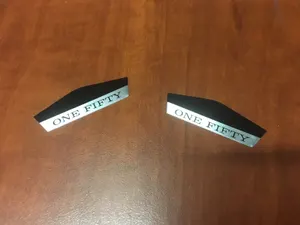

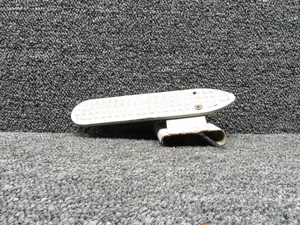

Parts listed for sale by vetted eBay sellers — confirmed on eBay at checkout.